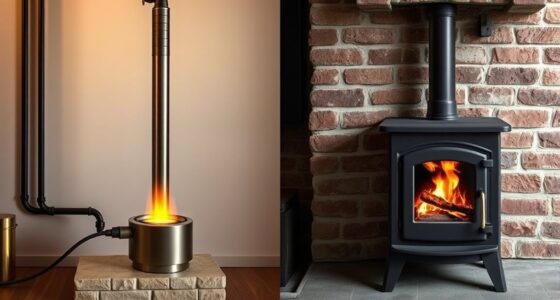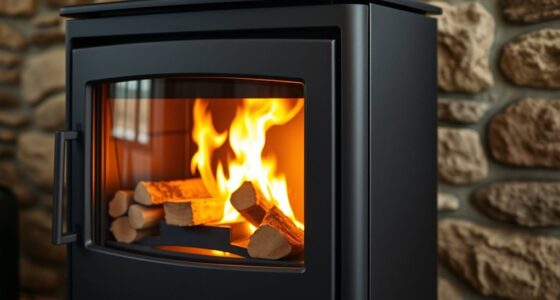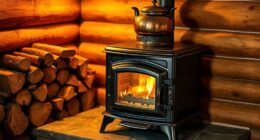

Backpacking and camping wood stoves provide a reliable, eco-friendly way to cook and stay warm using natural wood you find outdoors. They’re lightweight, easy to operate, and maximize fuel efficiency by burning small sticks and twigs completely. Built from durable materials, these stoves resist rust and handle rough terrain. They’re the perfect gear for outdoor adventures, offering sustainable warmth and cooking. Keep exploring to discover how to choose the best stove for your trip.
Key Takeaways
- Eco-friendly and sustainable, using natural wood and small branches for cooking and heating.
- Compact, lightweight, and easy to operate, ideal for backpackers and outdoor enthusiasts.
- High fuel efficiency with complete combustion, reducing wood consumption and smoke.
- Durable construction from rust-resistant materials, suitable for rugged outdoor conditions.
- Promotes sustainable camping by minimizing waste and reliance on chemical fuels.
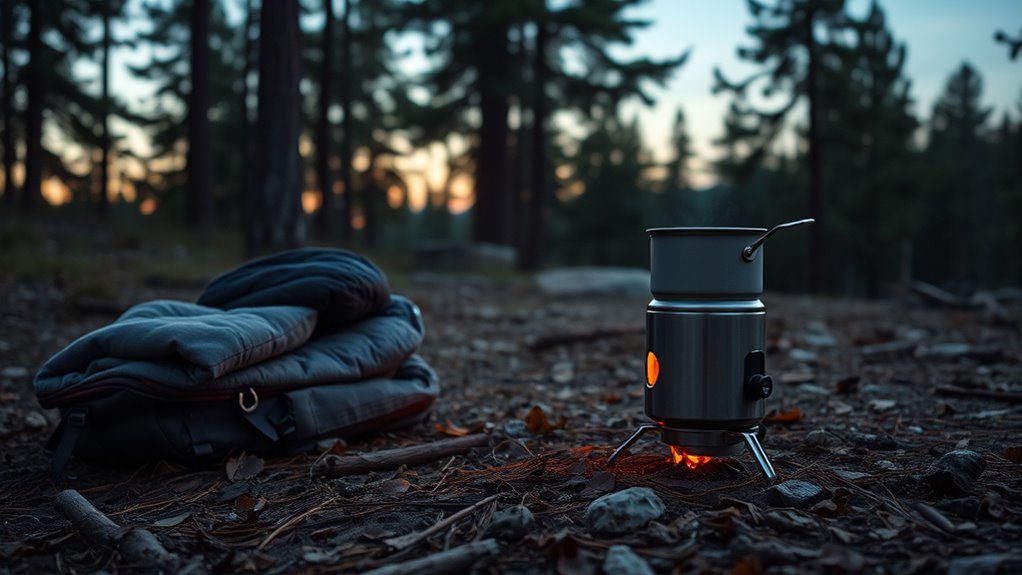
Are you looking for a reliable, eco-friendly way to cook and stay warm during your outdoor adventures? A wood stove might be just what you need. These stoves harness natural materials, making them an excellent choice for sustainable camping and backpacking. One of the key advantages is their fuel efficiency. Unlike gas or liquid fuel stoves that require you to carry fuel canisters, wood stoves utilize readily available wood, twigs, and small branches. This means you can greatly reduce your load, since you don’t need to bring fuel supplies along. Plus, as long as you have access to wood, you won’t run out of fuel mid-cook or mid-night. This makes them especially practical in forested areas where wood is abundant.
A wood stove offers eco-friendly, efficient cooking and heating with readily available fuel, ideal for outdoor adventures.
When selecting a wood stove, stove durability should be a top consideration. You want a unit built to withstand the rigors of outdoor use—whether it’s the constant heat, rough handling, or exposure to the elements. Look for models made from high-quality materials like stainless steel or cast iron, which resist rust and corrosion better than cheaper options. A durable stove not only lasts longer but also performs consistently, ensuring you can rely on it on every trip. Its construction should also include features like reinforced seams and sturdy legs to handle uneven terrain and frequent packing.
Using a wood stove requires some skill, but it’s straightforward once you get the hang of it. You’ll gather small sticks and dry wood, stacking them efficiently inside the stove’s fire chamber. Proper ventilation is essential to keep the fire burning steadily while minimizing smoke. Because of their design, these stoves often maximize heat output and promote complete combustion, which makes them more fuel-efficient. You won’t have to constantly tend the fire, and you’ll get more heat from less wood. This efficiency means less time spent gathering wood and more time enjoying your surroundings. Additionally, some models incorporate airflow control to better regulate the fire and enhance burning efficiency.
Another benefit of a good wood stove is its quiet operation and the absence of chemical smells or fumes common with some fuel types. Plus, they’re often lightweight and compact for backpacking, so they won’t weigh you down. When you choose a stove with high fuel efficiency and solid durability, you’re investing in a reliable piece of gear that enhances your outdoor experience. It’s a sustainable, cost-effective, and practical solution that keeps you warm and cooks your meals without adding unnecessary complexity or weight to your pack.
Frequently Asked Questions
How Do I Store Firewood for Camping Trips?
To store firewood for camping trips, you should keep it in a dry, well-ventilated area to prevent excess moisture, which affects burn quality. Seasonally, store your firewood off the ground on pallets or racks to avoid moisture absorption from the soil. Cover it with a breathable tarp, but leave the sides open for airflow. Proper seasonal storage guarantees your firewood stays dry, ready for a warm, efficient campfire.
Can I Use Regular Household Wood in These Stoves?
You can use regular household firewood in camping wood stoves, but it depends on the firewood types and stove compatibility. Hardwoods like oak or maple burn cleaner and longer, making them ideal, while softwoods like pine create more creosote and soot. Always check your stove’s instructions to make certain it’s compatible with household firewood. Properly seasoned wood is essential for safe, efficient burning and to avoid damaging your stove.
What Safety Precautions Should I Take When Using a Wood Stove?
You should always prioritize fire safety when using a wood stove. Keep a fire extinguisher nearby and never leave it unattended while in use. Guarantee proper stove ventilation to prevent dangerous carbon monoxide buildup. Use dry, seasoned wood for efficient burning and avoid overloading the stove. Regularly check for leaks or damage, and keep flammable materials away from the stove. These precautions will help keep you safe during use.
How Do I Clean and Maintain a Backpacking Wood Stove?
Sure, because nothing says adventure like meticulously stove cleaning in the wild. To keep your stove in prime shape, regularly remove ash and soot, and wipe down surfaces with a damp cloth. Follow maintenance tips like checking for rust and ensuring vents are clear. Store it properly when not in use, and occasionally inspect for cracks or damage. A well-maintained stove guarantees your camping culinary endeavors won’t turn into a smoky disaster.
Are There Eco-Friendly Options for Camping Wood Stoves?
Yes, you can choose eco-friendly camping wood stoves. Look for options that use biodegradable fuel, which reduces environmental impact, or consider a solar-powered stove that harnesses sunlight for cooking. These alternatives help minimize your carbon footprint and avoid harmful emissions. By selecting these eco-friendly options, you contribute to preserving natural environments while enjoying efficient cooking during your outdoor adventures.
Conclusion
A good camping or backpacking wood stove is like a trusty sidekick, ready to warm your nights and cook your meals. It’s lightweight, efficient, and eco-friendly—perfect for wilderness adventures. With the right stove, you’ll enjoy the comfort of home amidst nature’s beauty. So pack smart, choose wisely, and let your stove be your reliable companion on every trail. After all, a great stove makes every outdoor experience feel just a little more like coming home.