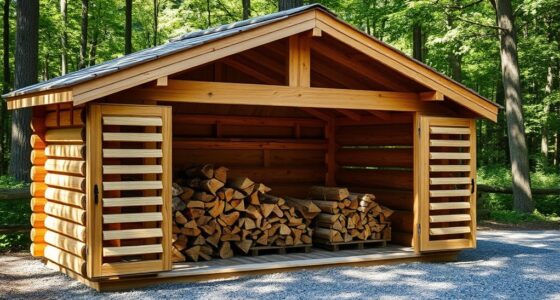
To build a compact ash disposal bin with a lid, choose durable, heat-resistant materials like galvanized steel or cast iron for the sides and lid. Design the bin with a sturdy structure, a snug-fitting lid to contain sparks, and ventilation holes for moisture control. Place it on a non-flammable surface away from flammable objects for safety. If you want detailed steps to make it easy and safe, keep exploring further.
Key Takeaways
- Select durable, heat-resistant materials like galvanized steel or cast iron for the bin’s construction.
- Design a compact, sturdy bin with a tight-fitting, secure lid to contain sparks and embers safely.
- Incorporate ventilation features such as small holes to allow moisture escape and prevent buildup.
- Place the bin on a non-combustible surface away from flammable objects or vegetation.
- Ensure the lid remains closed when not in use and use removable containers for easy ash disposal.

Have you ever struggled with where to safely dispose of ash from your fireplace or grill? If so, building a compact ash disposal bin with a lid can be a practical solution. Not only does it help you keep your outdoor or indoor space tidy, but it also plays a vital role in fire safety. When designing your bin, one of the most important considerations is material selection. You want something that’s durable, heat-resistant, and non-combustible to prevent any accidental fires. Metal, especially steel or cast iron, is ideal because it can withstand high temperatures and won’t melt or ignite if hot ashes are still present. Avoid plastics or other flammable materials that could pose a fire hazard. Choosing the right material also ensures longevity, even with regular exposure to ash, moisture, and outdoor weather. Steel, for example, is not only fire-safe but also corrosion-resistant if you opt for galvanized or coated varieties. This will prevent rust and deterioration, keeping your disposal bin functional and safe over time. When selecting materials, keep in mind that your bin will need a sturdy construction that can handle the weight of accumulated ash without tipping over or cracking. A well-built, compact design makes it easier to move and store, especially if you have limited space. The lid is equally important—it should fit tightly to contain any residual sparks or embers, reducing the risk of accidental fires and preventing ash from spilling out. Proper material protection can further extend the lifespan of your bin by shielding it from harsh environmental conditions. Additionally, choosing appropriate insulation can help manage residual heat and reduce safety hazards during handling. Incorporating ventilation features like small holes or slots can also be beneficial; they allow moisture to escape, which reduces the chances of ash becoming damp and difficult to clean. Just remember to line the interior with a heat-resistant layer or use a removable metal container that can be emptied easily. This not only makes cleanup simpler but also minimizes the handling of hot ashes. When building your bin, prioritize fire safety by ensuring that it’s placed on a non-combustible surface, away from any flammable structures or vegetation. Keep the lid securely closed when not in use to prevent sparks or embers from escaping. Ensuring proper material selection can significantly impact the safety and durability of your disposal bin.
Top picks for "build compact disposal"
Open Amazon search results for this keyword.
As an affiliate, we earn on qualifying purchases.
Frequently Asked Questions
What Materials Are Best for the Ash Disposal Bin?
You should choose fire-resistant materials and corrosion-resistant metals for your ash disposal bin. Fire-resistant materials like ceramic or fireproof concrete prevent heat transfer and reduce fire risks. Corrosion-resistant metals such as stainless steel or aluminum guarantee durability and prevent rusting from ash moisture. Combining these materials makes your bin safer, longer-lasting, and easy to maintain, ensuring it effectively contains ashes without compromising safety or durability.
How Often Should the Ash Bin Be Emptied?
Your ash bin’s capacity is your best guide—empty it at least once a week or sooner if it’s almost full, especially after heavy use. Think of it like a ticking time bomb; waiting too long risks dangerous ash spillage or fire hazards. Regular disposal helps keep your space safe and clean. Adjust disposal frequency based on your ash volume, but don’t let it sit too long!
Can the Bin Be Used Outdoors?
Yes, you can use the ash disposal bin outdoors. Make sure it’s made from durable materials that withstand outdoor conditions for outdoor durability. Keep the lid closed to prevent pests from getting in and to contain any residual ash smell. Regularly empty and clean the bin to maintain pest prevention and prevent ash buildup. Properly maintained, your outdoor ash disposal bin stays functional and safe in various weather conditions.
Is the Lid Airtight to Prevent Odors?
Imagine the faint scent of smoke fading into the breeze—that’s what you’ll experience with this bin’s lid sealing tightly. Yes, the lid is airtight, designed specifically for odor prevention. Its secure sealing keeps unpleasant smells contained, so you don’t have to worry about lingering odors outdoors or indoors. This ensures a fresher environment, making your ash disposal clean, discreet, and hassle-free every time.
How Do I Clean and Maintain the Bin?
You should regularly clean your ash disposal bin to keep it odor-free and guarantee easy ash removal. Empty it frequently, and wash it with warm soapy water, then dry thoroughly. To improve odor control, consider placing a layer of baking soda at the bottom. This routine maintenance prevents ash buildup, reduces odors, and keeps the bin in good condition, making it a practical solution for safe ash disposal.
Conclusion
Building a compact ash disposal bin with a lid not only keeps your space clean but also guarantees safety by containing hot ashes. For example, a homeowner recently made one using simple materials, preventing ash spills and odors. By following these steps, you create a reliable, space-saving solution that’s easy to maintain. Investing a little time now guarantees a safer, cleaner environment, proving that a simple DIY project can make a big difference in your daily life.