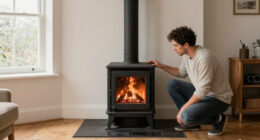
A vent-free gas stove can provide room heat without a flue, but the right choice depends on fuel compatibility, room size, controls, and local rules. My best overall pick is the Duluth Forge 26,000 BTU Dual Fuel Ventless Gas Stove, which pairs substantial heat output with remote control and dual-fuel flexibility. The Bluegrass Living Panorama stands out for its three-sided view, while the compact Pleasant Hearth 20,000 BTU is a better fit where floor space is limited. Across this group, higher output and flexible fuel options compete with room-size limits, installation requirements, and the need to follow manufacturer guidance for indoor use. Read on for the full breakdown and a buying guide to help match a stove to your home.

Get backup power and energy gear delivered free with Prime
- Fast, free delivery on millions of items
- Prime Video, Amazon Music and more included
- Member-only deals all year
Key Takeaways
- The Duluth Forge 26,000 BTU model leads for all-around flexibility: it combines remote control, dual-fuel capability, and a higher output than the 23,000–25,000 BTU options, though room sizing and fuel setup still need checking.
- The 20,000 BTU Pleasant Hearth is the clear compact choice: its smaller footprint suits tighter spaces better than the 30,000–32,000 BTU stoves, but it gives up some heating capacity.
- Controls create a meaningful split: remote, thermostat, millivolt, and manual-style setups suit different routines; buyers should prioritize how they plan to regulate heat, not just the BTU figure.
- Fuel flexibility is not universal: several models are dual fuel, while the Empire Heritage is listed for LP and the EverWarm for natural gas, so fuel type can narrow the shortlist before design does.
- Premium appeal is mostly about construction and presentation: the Empire cast-iron model and Bluegrass three-sided design offer distinctive styling, while larger-output picks may better suit buyers focused on heat coverage.


| vent free gas stove | Fuel | Dimensions | Weight | Heat output |
|---|---|---|---|---|
| Duluth Forge Dual Fuel Ventles | Natural gas or liquid propane | 26.125 × 28 × 16.875 in. | 73 lb. | — |
| ProCom Ventless Dual Fuel Gas | Natural gas or propane | 25.8 H × 32.25 W × 13 D in. | 56.5 lb. | — |
| Bluegrass Living Panorama Vent | Natural gas or liquid propane | 28.31 H × 25.75 W × 16 D in. | 66 lb. | — |
| Pleasant Hearth VFS2-PH20DT 20 | Propane or natural gas | 23.5 × 23.5 × 23.5 in. | 58 lb. | — |
| Empire Heritage Cast Iron Matt | Propane | 28.25 × 28.25 × 28.25 in. | 205 lb. | — |
| Pleasant Hearth 30,000 BTU 32- | Natural gas or propane | 14.37" D × 31.93" W × 28.27" H | 78 lb | 30,000 BTU |
| Buck Stove 25K BTU Dual Fuel V | Natural gas or propane | 25" H × 33.5" W × 13" D | 49.8 lb | 25,000 BTU |
| EverWarm Freestanding Vent-Fre | Natural gas | 26" W × 29" H × 16" D | — | 32,000 BTU |
| Duluth Forge Ventless Natural | Natural gas | 25 4/5" H × 32 1/4" W × 13" D | 56.5 lb | 25,000 BTU |
| ProCom Ventless 25,000 BTU Dua | Natural gas or liquid propane | 13" × 32.25" × 25.08" | 50 lb | 25,000 BTU |
More Details on Our Top Picks
Duluth Forge Dual Fuel Ventless Gas Stove – 26,000 BTU, Remote Control, Matte Black Finish
The Duluth Forge is my strongest all-around pick for shoppers who want substantial heat, fuel flexibility, and remote operation in one vent-free stove. Its 26,000 BTU output is the highest among these five, with listed coverage up to 1,200 square feet; that gives it more headroom than the ProCom at 25,000 BTU and 1,100 square feet. Dual-fuel operation can suit homes set up for either natural gas or propane, while the thermostat remote makes routine adjustments easier than on the Pleasant Hearth compact model. The tradeoff is a larger footprint and dependence on a 120-volt outlet, alongside batteries for the remote. Its 73-pound weight and some assembly also make setup less convenient than the lighter ProCom. I’d choose it for broad heating needs, not for a room where every inch of floor space matters.
Pros:- 26,000 BTU output and listed coverage up to 1,200 square feet exceed the figures for the ProCom.
- Dual-fuel design supports natural gas or liquid propane.
- Remote control with thermostat offers convenient heat adjustments.
- Oxygen depletion sensor and piezo ignition are specified safety and ignition features.
Cons:- Requires a 120-volt outlet, and remote operation also uses batteries.
- At 73 pounds, it is heavier to position than the ProCom.
- Some assembly is required, and side shelves are sold separately.
Best for: Households seeking higher listed coverage, a choice of natural gas or propane, and thermostat adjustments from across the room.
Not ideal for: Buyers without a nearby electrical outlet or those seeking a lighter stove that needs less assembly.
- BTU output:26,000
- Listed heating area:Up to 1,200 sq. ft.
- Fuel:Natural gas or liquid propane
- Finish:Matte black
- Remote control:Yes, with thermostat
- Safety and ignition:Oxygen depletion sensor; piezo ignition
- Power requirement:120-volt electrical outlet
- Dimensions:26.125 × 28 × 16.875 in.
- Weight:73 lb.
Our verdict“Choose the Duluth Forge if you want the strongest listed heating coverage in this group with dual-fuel flexibility and remote thermostat control.”
ProCom Ventless Dual Fuel Gas Stove – 25,000 BTU, Remote Control, Black Finish
The ProCom earns my value-focused slot by pairing useful heating capacity with dual-fuel operation and a remote, without the Duluth Forge’s higher output or larger listed coverage. It is rated at 25,000 BTU for up to 1,100 square feet, making it a practical alternative when that coverage suits the room and the extra capacity of the Duluth Forge is unnecessary. Its 13-inch depth is shallower than the Pleasant Hearth’s listed 23.5-inch dimensions, which may help in a tighter layout, though its width is more than 32 inches. The remote and oxygen depletion sensor add everyday convenience and a specified safety feature. The compromise is limited documentation here on controls beyond the remote and sensor, plus a 56.5-pound unit that may still take two people to position. It is indoor-only, so it is not a flexible choice for outdoor spaces.
Pros:- Dual-fuel operation accommodates natural gas or propane.
- Remote control supports convenient temperature management.
- Listed 99.9% efficiency and ventless design avoid a chimney requirement.
- At 13 inches deep, it is shallower than the Pleasant Hearth’s listed 23.5-inch dimensions.
Cons:- Its width of 32.25 inches may be difficult to fit in a narrow space.
- The 56.5-pound weight may call for help during setup.
- Specified for indoor use only.
Best for: Buyers with a room suited to 1,100 square feet of listed coverage who want dual-fuel flexibility and remote operation in a relatively shallow stove.
Not ideal for: Shoppers who need the lineup’s highest listed coverage, a narrow stove, or a heater for outdoor use.
- BTU output:25,000
- Listed heating area:Up to 1,100 sq. ft.
- Fuel:Natural gas or propane
- Dimensions:25.8 H × 32.25 W × 13 D in.
- Weight:56.5 lb.
- Safety feature:Oxygen depletion sensor
- Remote control:Yes
- Listed efficiency:99.9%
Our verdict“Pick the ProCom if you want remote, dual-fuel heating and its 1,100-square-foot coverage and wide, shallow footprint fit your room.”
Bluegrass Living Panorama Ventless Dual Fuel 3-Sided Gas Stove – 23,000 BTU, Remote Control, Black Finish
The Bluegrass Living Panorama is the standout when the flame should be visible from several angles, rather than viewed from just one position. Its three-sided display gives it a different role from the Duluth Forge and ProCom, both of which are better defined here by higher BTU ratings and broader listed coverage. The Panorama provides 23,000 BTU and is listed for up to 1,100 square feet, with dual-fuel compatibility and a remote featuring a thermostat and LCD display. That combination suits a shared living space where people sit around the stove and want convenient control. Its output is lower than both 25,000-BTU alternatives, however, and the product data rules it out above 4,500 feet altitude. Qualified installation is also specified, making setup less casual than the Pleasant Hearth compact option. I’d favor it for viewing flexibility, not maximum heat output.
Pros:- Three-sided flame presentation suits seating arrangements around the stove.
- Dual-fuel design works with natural gas or liquid propane.
- Remote includes a thermostat and LCD display.
- ANSI certified and PFS approved, according to the supplied product data.
Cons:- At 23,000 BTU, its output is below the Duluth Forge and ProCom.
- Not suitable for installation above 4,500 feet altitude.
- Qualified installation is specified, and use is limited to indoor settings and certain regions.
Best for: Households that want a flame view from multiple sides, remote thermostat control, and natural-gas or propane compatibility.
Not ideal for: Buyers living above 4,500 feet, seeking the highest output in this group, or planning an unqualified installation.
- BTU output:23,000
- Listed heating area:Up to 1,100 sq. ft.
- Fuel:Natural gas or liquid propane
- Flame view:Three-sided
- Dimensions:28.31 H × 25.75 W × 16 D in.
- Weight:66 lb.
- Remote batteries:4 AA and 2 AAA included
- Certification:ANSI certified; PFS approved
- Warranty:1-year limited
Our verdict“Choose the Panorama if viewing the flame from three sides matters more than matching the higher output of the Duluth Forge or ProCom.”
Pleasant Hearth VFS2-PH20DT 20,000 BTU 23.5-inch Compact Gas Vent-Free Stove
The Pleasant Hearth VFS2-PH20DT is the straightforward choice for smaller rooms where the higher-capacity Duluth Forge or ProCom would be more than the listed coverage calls for. It produces 20,000 BTU for up to 700 square feet and has thermostat control, so its appeal is focused, steady heating rather than remote features or a larger flame-viewing experience. Its compact design and freestanding installation can suit spaces where a bigger stove is hard to accommodate, although the listed dimensions are 23.5 inches on each side, so I’d check the actual footprint carefully. Unlike the remote-equipped ProCom and Bluegrass Living Panorama, this model does not offer remote control. Dual-fuel capability adds flexibility, but it still needs a propane tank or natural-gas connection, and local rules may limit where vent-free appliances can be installed.
Pros:- Listed coverage of up to 700 square feet suits more modest heating needs than the Duluth Forge’s 1,200-square-foot rating.
- Dual-fuel operation supports propane or natural gas.
- Thermostat control helps maintain a chosen temperature.
- Freestanding compact design can fit settings where a larger stove is impractical.
Cons:- No remote control, unlike the ProCom and Bluegrass Living Panorama.
- Requires a propane tank or natural-gas connection.
- Installation may be restricted by local regulations.
Best for: Owners of smaller rooms who want thermostat-regulated heat and a freestanding dual-fuel stove without paying for remote operation.
Not ideal for: People heating spaces larger than its listed 700-square-foot coverage, or buyers who want remote control or minimal fuel-infrastructure planning.
- BTU output:20,000
- Listed coverage:Up to 700 sq. ft.
- Dimensions:23.5 × 23.5 × 23.5 in.
- Weight:58 lb.
- Fuel:Propane or natural gas
- Ventilation:Vent-free
- Mounting:Freestanding
- Control:Thermostat; no remote control
Our verdict“Choose the Pleasant Hearth for a smaller space where 700-square-foot listed coverage and thermostat control matter more than a remote or higher output.”
Empire Heritage Cast Iron Matte Black VFD30CC30FP Ventless Gas Stove – LP
The Empire Heritage stands apart on construction: its cast-iron body and 205-pound weight point to a substantial, permanent-style installation, unlike the lighter ProCom or Duluth Forge. The 25,000-BTU burner offers considerable output, but the listed coverage is only 625 square feet, so I would not treat its BTU figure as proof that it suits a larger room. It is also the only propane-only option among these five; buyers with natural gas should compare it with the dual-fuel ProCom or Duluth Forge instead. Ceramic fiber logs and a matte-black finish provide a traditional stove appearance, while the vent-free design avoids a chimney requirement. The main tradeoff is practical: moving a 205-pound appliance is a significant installation task, and its listed dimensions are large. This is a better fit for buyers who value cast iron and already have propane service.
Pros:- Cast-iron construction offers a substantial build compared with the lighter ProCom.
- 25,000-BTU contour burner provides strong stated output.
- Ceramic fiber logs and matte-black finish create a traditional stove look.
- Vent-free design does not require a chimney.
Cons:- Propane-only configuration does not match the natural-gas option without conversion.
- At 205 pounds, it is difficult to move and likely requires installation help.
- Listed coverage is 625 square feet, less than the dual-fuel options in this group.
Best for: Propane-equipped buyers seeking a heavy cast-iron stove with a traditional appearance for a space within its listed 625-square-foot coverage.
Not ideal for: Natural-gas households, anyone needing easy repositioning, or buyers heating a large area based on a higher coverage rating.
- Model:VFD30CC30FP
- BTU capacity:25,000
- Listed coverage:625 sq. ft.
- Material:Cast iron
- Fuel:Propane
- Finish:Matte black
- Dimensions:28.25 × 28.25 × 28.25 in.
- Weight:205 lb.
- Ventilation:Vent-free
Our verdict“Pick the Empire Heritage if you have propane service and prioritize a heavy cast-iron build over fuel flexibility and easier installation.”
Pleasant Hearth 30,000 BTU 32-Inch Gas Vent-Free Stove, Black
The Pleasant Hearth 30,000 BTU model is the stronger fit when you want more heating capacity than the 25,000-BTU options from Buck Stove, Duluth Forge, and ProCom. Its listed coverage reaches 1,000 square feet, and the built-in thermostat can help maintain a steadier room temperature instead of leaving heat output entirely to manual adjustment. Dual-fuel operation is useful if your home’s available supply changes your choice between natural gas and propane. The tradeoff is size: at nearly 32 inches wide and 78 pounds, it takes more floor space and is less easy to reposition than the lighter Buck Stove. There is no included blower or remote, so it suits buyers who prioritize direct, thermostatic heat over extra circulation or remote convenience. Vent-free installation still calls for attention to local rules and ventilation guidance.
Pros:- 30,000-BTU output exceeds the 25,000-BTU options in this group
- Dual-fuel capability supports natural gas or propane
- Built-in thermostat helps regulate room comfort
- Listed coverage area is up to 1,000 square feet
Cons:- No blower is included to help circulate heat
- At 78 pounds and nearly 32 inches wide, it is bulky to place or move
- Vent-free use requires attention to ventilation and local requirements
Best for: Households with a suitable natural-gas or propane connection that want thermostatic heat for a larger room and can accommodate a wide, heavy stove.
Not ideal for: Buyers who need a lightweight, easily moved heater, remote operation, or a blower included for stronger heat circulation.
- Model:VFS2-PH30DT
- Heat output:30,000 BTU
- Coverage area:Up to 1,000 sq. ft.
- Fuel:Natural gas or propane
- Dimensions:14.37″ D × 31.93″ W × 28.27″ H
- Weight:78 lb
- Material and color:Cold rolled steel; black
- Ventilation:Vent-free
Our verdict“Choose this Pleasant Hearth model if you want more output than the 25,000-BTU alternatives and have room for a substantial stove.”
Buck Stove 25K BTU Dual Fuel Vent-Free Heating Stove with Logs & Thermostat
The Buck Stove 25,000 BTU model stands out for a combination that is less common among the larger-looking options here: dual-fuel operation in a stove weighing under 50 pounds. That makes it easier to handle during placement than the 78-pound Pleasant Hearth 30,000-BTU model, while its stated coverage reaches 1,100 square feet. Its realistic ventless logs give it a fire-like focal point, and the listed oxygen depletion sensor adds a safety feature. The compromise is that the lower heat output does not match the Pleasant Hearth’s 30,000 BTUs, and the supplied details do not specify thermostat controls as clearly as the Duluth Forge or ProCom listings do. It can suit a cabin or home with the right gas connection, but buyers should check installation needs and local rules before treating vent-free operation as a simple plug-in alternative.
Pros:- Dual-fuel compatibility for natural gas or propane
- At 49.8 pounds, lighter than the Pleasant Hearth 30,000-BTU model
- Listed coverage reaches up to 1,100 square feet
- Includes realistic ventless logs and an oxygen depletion sensor
Cons:- 25,000-BTU output is lower than the Pleasant Hearth and EverWarm models
- Thermostat control is not specified in the supplied product details
- Installation may call for professional help and appropriate ventilation
Best for: Cabin owners or homeowners who need natural-gas-or-propane flexibility and want a comparatively light stove rated for rooms up to 1,100 square feet.
Not ideal for: Buyers who need the roundup’s higher 30,000-plus-BTU output or want clearly specified thermostat control and straightforward DIY setup.
- Heat output:25,000 BTU
- Coverage area:Up to 1,100 sq. ft.
- Fuel:Natural gas or propane
- Efficiency:99.9%
- Safety:Oxygen depletion sensor (ODS)
- Dimensions:25″ H × 33.5″ W × 13″ D
- Weight:49.8 lb
Our verdict“Pick the Buck Stove if dual-fuel flexibility and easier handling matter more than maximum heat output or clearly specified thermostat control.”
EverWarm Freestanding Vent-Free Gas Stove on Legs – Natural Gas, 32,000 BTU, Heats Up to 1,500 Sq. Ft., Matte Black, Cast Iron Look, Millivolt Control
Among these five, the EverWarm’s 32,000 BTU output and stated coverage of up to 1,500 square feet make it the clearest choice for buyers prioritizing reach over fuel flexibility. It also differs from the Pleasant Hearth 30,000-BTU model by operating without electricity, a useful trait during outages, and its millivolt control works with standard thermostats. The freestanding cast-iron construction and realistic log set give it a more traditional stove presence than the ventless fireplace-style ProCom. Those advantages come with a firm constraint: this listing specifies natural gas, so it is not the pick for a propane-only home. Gas hookup may require professional installation, and no blower is included to move warmth farther around a room. Check the product’s exact fuel configuration and installation requirements before choosing it for a particular space.
Pros:- Highest listed heat output in this batch at 32,000 BTU
- Coverage is stated at up to 1,500 square feet
- Millivolt control can operate without household electricity
- Compatible with standard millivolt thermostats
Cons:- The supplied configuration specifies natural gas, not dual-fuel operation
- No blower is included for improved heat circulation
- Gas hookup may require professional installation
Best for: Homeowners with a natural-gas connection who want high stated coverage, thermostat compatibility, and heat controls that do not rely on household electricity.
Not ideal for: Propane-only households, buyers seeking an included blower, or anyone who needs the most compact stove in the lineup.
- Heat output:32,000 BTU
- Coverage area:Up to 1,500 sq. ft.
- Fuel:Natural gas
- Dimensions:26″ W × 29″ H × 16″ D
- Material:Cast iron
- Control:Millivolt
- Mounting:Freestanding
- Ventilation:Vent-free
Our verdict“Choose the EverWarm for broad stated coverage and power-independent millivolt control if your home has natural gas.”
Duluth Forge Ventless Natural Gas Stove – 25,000 BTU, T-Stat Control, Black Finish – Model QSN250T
The Duluth Forge QSN250T is a focused option for natural-gas homes that want thermostat control without stepping up to the higher output and larger coverage claims of the EverWarm. Its 25,000 BTUs are listed for rooms up to 1,100 square feet, and the ODS with automatic shut-off provides a clearly specified safety feature. The dual-burner flame display and hand-painted logs make it more visually detailed than the Buck Stove listing, while its 56.5-pound weight is still below the heavier Pleasant Hearth. The limitation is fuel: this model is natural-gas only, unlike the dual-fuel Buck Stove and ProCom. It also lacks an included blower, so its listed room coverage does not mean heat will circulate evenly through every adjoining area. This makes the most sense when thermostat operation and a fixed gas supply matter more than fuel choice.
Pros:- Thermostat control supports steadier room temperature
- ODS and automatic shut-off are specified safety features
- Dual-burner flame display with hand-painted logs
- Listed coverage reaches up to 1,100 square feet
Cons:- Natural-gas-only configuration limits fuel flexibility compared with Buck Stove and ProCom
- No blower is included
- 25,000-BTU output is below the Pleasant Hearth and EverWarm models
Best for: Natural-gas homeowners who want thermostat-regulated vent-free heat, specified automatic shut-off protection, and a stove for a room up to 1,100 square feet.
Not ideal for: Propane users, buyers who need a blower for heat distribution, or households needing more than 25,000 BTUs.
- Model:QSN250T
- Heat output:25,000 BTU
- Coverage area:Up to 1,100 sq. ft.
- Fuel:Natural gas
- Thermostat:Yes
- Safety features:Oxygen depletion sensor and automatic shut-off
- Dimensions:25 4/5″ H × 32 1/4″ W × 13″ D
- Weight:56.5 lb
Our verdict“Choose the Duluth Forge if you have natural gas and value specified thermostat and shut-off features over dual-fuel flexibility.”
ProCom Ventless 25,000 BTU Dual Fuel Fireplace with Thermostat, Heats up to 1,100 sq ft, Black
The ProCom 25,000 BTU model combines two useful details that the natural-gas-only Duluth Forge cannot: compatibility with both natural gas and propane, plus a built-in thermostat. That pairing gives buyers more flexibility if fuel availability shapes placement or future plans, while its stated 1,100-square-foot coverage matches the Buck Stove and Duluth Forge listings. It also has hand-painted logs and an oxygen depletion sensor, though the supplied details do not list the Duluth Forge’s automatic shut-off separately. At 50 pounds, it is lighter than the Pleasant Hearth 30,000-BTU stove, but its lower output makes it less suited to buyers prioritizing maximum heating capacity. This is described as a ventless fireplace, so its appearance may suit buyers wanting a fire feature more than a traditional freestanding stove. Installation and ventilation requirements still deserve careful attention.
Pros:- Dual-fuel compatibility supports natural gas or propane
- Built-in thermostat allows adjustable heat control
- Listed coverage reaches up to 1,100 square feet
- ODS and hand-painted logs are included in the product details
Cons:- 25,000-BTU output is lower than the Pleasant Hearth and EverWarm models
- The supplied specs do not list a blower
- Vent-free installation requires attention to ventilation and maintenance
Best for: Buyers who want thermostat-controlled vent-free heat, natural-gas-or-propane flexibility, and a fireplace-style appearance for a room rated up to 1,100 square feet.
Not ideal for: Households seeking the highest output in this group, an included blower, or a traditional cast-iron freestanding stove design.
- Heat output:25,000 BTU
- Heating area:Up to 1,100 sq. ft.
- Fuel:Natural gas or liquid propane
- Efficiency:99.9%
- Safety feature:Oxygen depletion sensor (ODS)
- Dimensions:13″ × 32.25″ × 25.08″
- Weight:50 lb
- Color:Black
Our verdict“Pick the ProCom if you want a thermostat and dual-fuel flexibility in a fireplace-style unit, rather than the roundup’s highest heat output.”

How We Picked
I compared the ten stoves on the factors that shape a vent-free purchase: fuel compatibility, stated heat output, control style, physical footprint, construction cues, and intended room coverage where supplied. I gave more weight to a useful balance of heating capacity and day-to-day control than to maximum BTU alone, since a powerful unit can be a poor match for a small room. I also treated design as a functional factor: a compact body can help in a crowded room, while a three-sided fire view or cast-iron construction may matter more to buyers choosing a focal-point heater.
The ranking favors models that appear versatile across common household needs, then separates compact, design-led, and higher-output alternatives by their best-fit buyer. Dual-fuel capability and remote or thermostat controls can widen a stove’s practical appeal, but they do not override local regulations, room sizing, or installation requirements. Product details supplied for this roundup do not establish suitability for every home, so I avoid treating listed coverage or control features as a substitute for checking the manufacturer’s instructions and local code.
| vent free gas stove | Fuel |
|---|---|
| Duluth Forge Dual Fuel Ventles | Natural gas or liquid propane |
| ProCom Ventless Dual Fuel Gas | Natural gas or propane |
| Bluegrass Living Panorama Vent | Natural gas or liquid propane |
| Pleasant Hearth VFS2-PH20DT 20 | Propane or natural gas |
| Empire Heritage Cast Iron Matt | Propane |
| Pleasant Hearth 30,000 BTU 32- | Natural gas or propane |
| Buck Stove 25K BTU Dual Fuel V | Natural gas or propane |
| EverWarm Freestanding Vent-Fre | Natural gas |
| Duluth Forge Ventless Natural | Natural gas |
| ProCom Ventless 25,000 BTU Dua | Natural gas or liquid propane |
Factors to Consider When Choosing Vent Free Gas Stove
Before choosing from these models, I would settle the home-specific questions that a product list cannot answer: what fuel is available, whether vent-free appliances are permitted, and what output suits the room. Those answers can rule out an attractive stove early and prevent buying around a headline BTU number.
Check Local Rules and Indoor-Air Requirements First
Vent-free appliances release combustion products and water vapor into the room, so local rules and the manufacturer’s installation directions matter as much as the stove’s appearance. Some jurisdictions restrict or prohibit vent-free heaters, and requirements can vary by building type or room. Check with your local building department and a qualified installer before ordering, rather than assuming a product listing means it is allowed in your home. Follow specified room-size, clearance, and ventilation guidance exactly. If your household has particular respiratory sensitivities, ask a qualified professional whether this type of heater is appropriate. A vented alternative may be the better choice when indoor-air concerns or local restrictions outweigh the convenience of avoiding a flue.
Match Fuel Type to Your Existing Supply
Dual-fuel models can offer flexibility between natural gas and propane, but that does not mean every unit arrives ready for either fuel without setup. Confirm the exact model’s approved fuel configuration and whether conversion parts or professional adjustments are required. A natural-gas-only option can make sense where a fixed gas line is already available, while an LP model suits a different supply arrangement. Avoid choosing based on a future fuel plan unless the manufacturer supports it. Also ask an installer whether the location and connection are practical; fuel access can affect installation work and ongoing convenience. Fuel compatibility should be a shortlist filter, not a detail left until checkout.
Size Output to the Room, Not the Largest Number
BTU output is only useful when paired with the room’s size, insulation, ceiling height, layout, and existing heat sources. A higher-output stove may warm a larger area, yet feel overpowering in a smaller or well-insulated room. The listed coverage figures are product claims, not a guarantee for every floor plan or climate. Measure the intended space and compare it with the manufacturer’s guidance before deciding between compact and higher-output units. Think about whether the stove will provide occasional supplemental warmth or serve as a more frequent heat source. When uncertain, get an installer’s sizing advice instead of assuming that more capacity is safer or more comfortable.
Choose Controls for the Way You Heat
Remote control is convenient when you want to adjust a stove from across the room, while thermostat control can help maintain a steadier temperature without repeated manual changes. Millivolt controls have a different operating setup, so check the manual for what they require and how they behave during a power interruption. A more feature-rich control system may add convenience, but it can also add components and operating details to learn. Consider who will use the stove, how often heat settings will change, and whether simple operation matters more than remote adjustment. Read the included control instructions before buying, especially if you expect automated temperature regulation. Do not assume every control type offers the same scheduling, sensing, or safety functions.
Account for Clearances, Footprint, and Placement
A stove’s stated width is only part of its space requirement: required clearances, access for servicing, and nearby furnishings also shape where it can go. Compact models may be easier to place in a tight room, but they still need to meet the specified distance from walls and combustible materials. Freestanding designs on legs and larger bodies can create a stronger focal point while demanding more floor area. Measure the planned location, including the path for delivery and any connection access, before settling on a style. Confirm the exact clearance rules in the manual rather than copying dimensions from a similar model. Poor placement can undermine both safe installation and the way heat circulates through the room.
Decide Whether You Are Paying for Heat or Design
Cast-iron styling, a three-sided fire view, and a classic stove silhouette can make a heater feel like a permanent room feature rather than an appliance. Those design differences do not automatically mean better heating performance, so separate visual priorities from practical ones. If the stove is mainly a supplemental heat source, you may value a suitable output and straightforward controls over elaborate presentation. If it will anchor a living space, construction and viewing angles may justify giving design more weight. Consider maintenance access and the manufacturer’s cleaning instructions as part of the purchase, not after installation. Choose the extra styling only when it improves the room you have, rather than paying for a feature that will not change how you use the stove.
Frequently Asked Questions
Can I install a vent-free gas stove in any room?
No. Local rules, manufacturer instructions, room-size requirements, clearances, and the appliance’s approved use all affect where it can be installed. A listing that names a heating area does not establish that the stove is permitted or suitable in every room. Check local code and the exact model manual before purchase, then have a qualified professional review the planned location. If the space falls outside the manufacturer’s requirements, choose another heating option rather than trying to adapt the installation.
Should I choose a dual-fuel stove if my home already has natural gas?
Dual-fuel capability can be useful if you expect your fuel supply to change or want flexibility, but it may not add value if your home will always use one fuel. Verify how the exact model is configured, whether conversion is supported, and what work a conversion requires. A natural-gas-specific stove may be a simpler match for a fixed natural-gas connection, while an LP-specific option is suited to a different setup. Compare the installation instructions and discuss compatibility with an installer before treating dual fuel as an automatic advantage.
Is a 30,000- or 32,000-BTU stove a better buy than a 20,000-BTU model?
Not by default. Higher output may better suit a larger or less insulated space, but it can be uncomfortable in a smaller room and does not guarantee even heat throughout a home. The 20,000 BTU Pleasant Hearth is the more compact choice in this lineup, while the 30,000–32,000 BTU models may suit buyers with a greater heating demand and enough space. Use room dimensions and the manufacturer’s sizing guidance to make the comparison. A qualified installer can help resolve uncertainty about output and placement.
What is the practical difference between remote and thermostat controls?
A remote control is primarily about adjusting the stove conveniently without walking to its controls; thermostat functions are intended to regulate heat around a selected temperature, depending on the model. Some products may combine control features, but names alone do not confirm the exact operating behavior. Read the manual to learn what settings are available, what sensors are used, and whether any power or battery requirements apply. If you mainly want quick adjustments, remote operation may matter most; if you want steadier room temperature, study the thermostat’s specific functions. Do not assume a remote includes programmable schedules or that a thermostat provides remote access.
When should I choose a vented heater instead of a vent-free stove?
A vented appliance may be a better fit if local rules prohibit vent-free models, the room does not meet the required conditions, or indoor-air concerns weigh heavily in your decision. Vent-free stoves avoid a flue, but they still require correct installation and use within the maker’s stated limits. A vented heater sends combustion exhaust outdoors through its approved venting system, which changes installation needs and costs. Compare the complete installation plan rather than judging by the stove alone. Ask a qualified professional to explain which type is allowed and suitable for your property.
Conclusion
For the broadest mix of output, dual-fuel flexibility, and remote operation, I would start with the Duluth Forge 26,000 BTU as the best overall pick. The Pleasant Hearth 20,000 BTU compact model is my best value-style choice for buyers who need a smaller stove and do not need the highest output; confirm current package details before deciding. For a design-led premium option, the Empire Heritage cast-iron LP model offers a more substantial traditional look, while the Bluegrass Living Panorama is the pick for a three-sided fire view. Beginners should prioritize a clear manual, installer-confirmed fuel setup, and controls they will actually use; the remote-equipped Duluth Forge or ProCom models are worth comparing on those points. For tight spaces, look to the compact Pleasant Hearth, and for natural-gas-only needs, compare the EverWarm and Duluth Forge QSN250T. Before choosing any of them, verify local approval, room suitability, and installation requirements.
Fall Picks
fall essentials
As an affiliate, we earn on qualifying purchases.