
A survival stove should match the fuel you can store or find, the meals you plan to cook, and the conditions where you may need it. I rank the Gas One GS-3400P as the best overall for its propane-or-butane flexibility, while the Coleman Cascade 18 stands out for familiar canister-fuel cooking and the Kuvik Titanium Wood Stove for a lightweight, fuel-gathering setup. The main tradeoff is between dependable, controllable gas heat and stoves that avoid pressurized fuel but rely on tablets, alcohol, or suitable dry wood. I also weigh setup, stability, maintenance, and how practical each stove is beyond a short emergency. Read on for the full comparison and guidance on matching a stove to your backup plan.

Get backup power and energy gear delivered free with Prime
- Fast, free delivery on millions of items
- Prime Video, Amazon Music and more included
- Member-only deals all year
Key Takeaways
- The Gas One GS-3400P ranks first for fuel flexibility: its propane-or-butane design offers more options than a stove tied to one fuel type, though you still need compatible fuel on hand.
- The Coleman Cascade 18 favors familiar gas cooking: its 8,000-BTU burner suits buyers who want a conventional cooktop, while its fuel dependence makes it less self-reliant than wood-burning designs.
- Wood stoves trade fuel storage for field conditions: the Kuvik Titanium model is the compact, lightweight standout, but damp or scarce kindling can limit its usefulness.
- The Coghlan’s folding stoves serve different emergency roles: the portable model uses canned heat or fuel tablets, while the emergency version includes fuel tablets; neither offers the same cooking control as a gas burner.
- Several compact options emphasize simple structure over convenience: folding steel, wood-burning, and alcohol designs can reduce reliance on gas, but buyers must account for setup, cookware stability, fuel handling, and cleanup.
| Coleman Cascade 18 1-Burner Camping Stove |  | Best for Controlled Propane Cooking | Fuel type: Propane | Power source: Gas powered | Maximum energy output: 8,000 BTUs | VIEW ON AMAZON | See Our Full Breakdown |
| Coghlan’s Portable Folding Camp Stove |  | Best Simple Solid-Fuel Backup | Fuel type: Solid fuel | Power source: Dual fuel | Cooking surface: 6.5 × 6.5 inches | VIEW ON AMAZON | See Our Full Breakdown |
| Kuvik Titanium Wood Stove |  | Best Ultralight Fuel-Independent Pick | Fuel: Natural wood and other campfire materials | Dimensions: 6.25 × 5 × 5 inches | Collapsed thickness: 0.2 inches | VIEW ON AMAZON | See Our Full Breakdown |
| Camping Wood Burning Stove with Grill, Collapsible Backpacking Survival Rocket Stove |  | Best Wood-Burning Stove for a Stable Cooktop | Fuel: Leaves, twigs, and other small wood fuel | Material: Stainless steel | Unfolded size, large: 10.6 × 7.8 × 8.3 inches | VIEW ON AMAZON | See Our Full Breakdown |
| Gas One GS-3400P Propane or Butane Stove |  | Best Dual-Fuel Emergency Option | Fuel type: Propane or butane | Power source: Gas powered | Dimensions: 13.5 × 11 × 4.45 inches | VIEW ON AMAZON | See Our Full Breakdown |
| Coghlan’s Emergency Stove – Lightweight Portable Camping Stove for Backpacking, Survival, and Outdoor Cooking, Foldable Design with 24 Fuel Tablets Included |  | Best for Compact Emergency Kits | Brand: Coghlan’s | Model: 9560 | Fuel type: Solid fuel | VIEW ON AMAZON | See Our Full Breakdown |
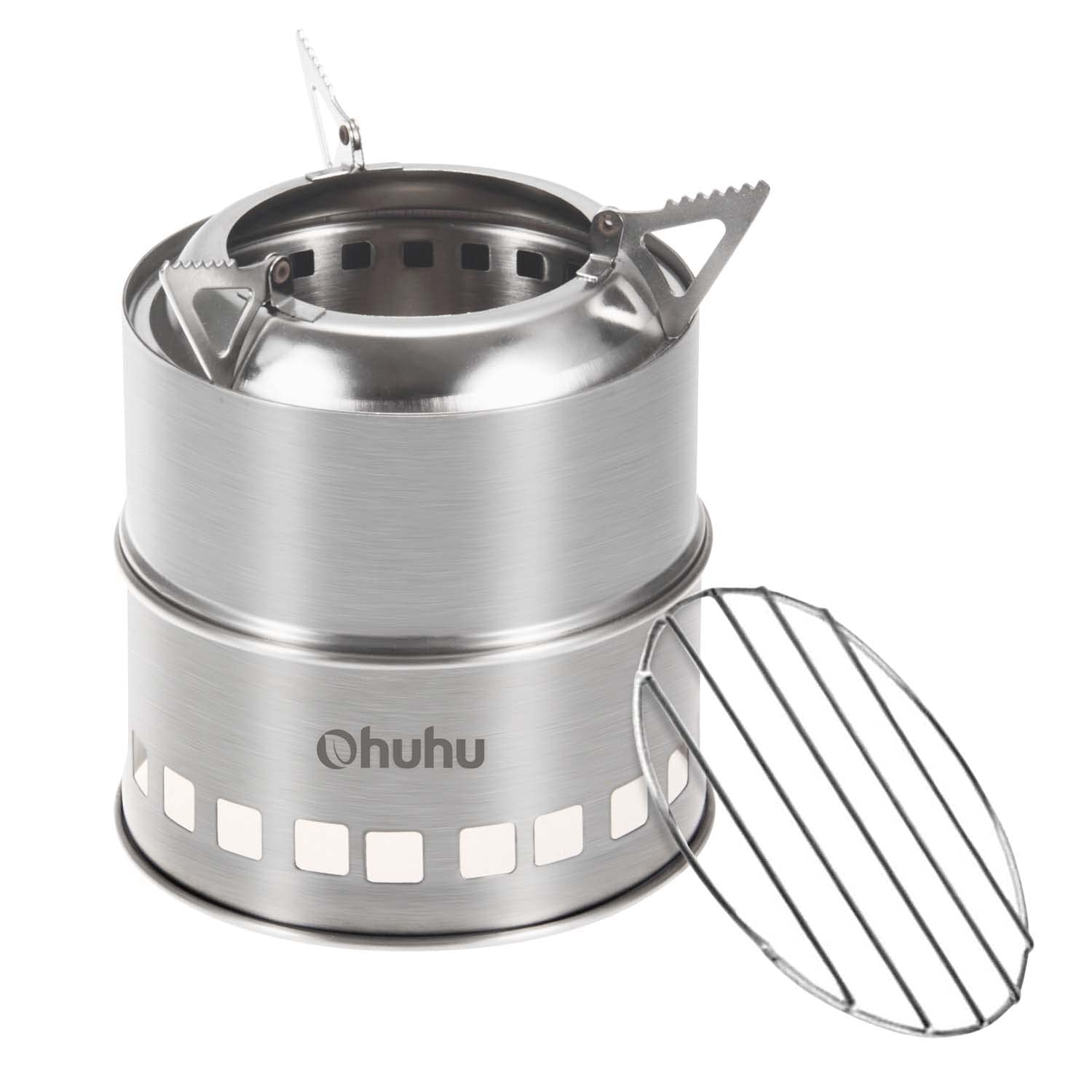
| Camping Stove, Ohuhu Portable Wood Burning Stove with Grill Grid and Carry Bag |  | Best for Fuel Flexibility | Material: Stainless steel | Weight: 0.98 pounds | Dimensions: 5.51 x 5.51 x 3.15 inches | VIEW ON AMAZON | See Our Full Breakdown |
| Portable Wood Burning Folding Camping Stove for Outdoor Hiking & Picnic |  | Best for Using Found Fuel | Fuel type: Wood | Power source: Wood | Material: Stainless steel | VIEW ON AMAZON | See Our Full Breakdown |
| ALOCS 2250W Alcohol Stove Set with Foldable Stand |  | Best for Fast, Controlled Boiling | Power output: 2250 watts | Fuel type: Alcohol | Fuel capacity: 200 ml | VIEW ON AMAZON | See Our Full Breakdown |
| REDCAMP Wood Burning Folding Camp Stove Stainless Steel Grid, Portable Collapsible Backpacking Stove Survival Rocket Stove for Hiking Outdoor Tent Camping Picnic BBQ, Samll |  | Best for a More Stable Wood-Fired Setup | Fuel type: Wood | Power source: Wood | Material: Stainless steel | VIEW ON AMAZON | See Our Full Breakdown |
| survival stove | Material | Weight | Dimensions | Fuel type |
|---|---|---|---|---|
| Coleman Cascade 18 1-Burner Ca | Alloy steel | 453.59 g | 13 × 13 × 3 inches | Propane |
| Coghlan’s Portable Folding Cam | Alloy steel | 16 oz (1 lb) | 6.5 × 6.5 × 5 inches | Solid fuel |
| Kuvik Titanium Wood Stove | Grade-1 titanium | 6.8 oz | 6.25 × 5 × 5 inches | — |
| Camping Wood Burning Stove wit | Stainless steel | — | — | — |
| Gas One GS-3400P Propane or Bu | Alloy steel and metal | 3.1 lb | 13.5 × 11 × 4.45 inches | Propane or butane |
| Coghlan’s Emergency Stove | Carbon steel | 10.08 ounces | 5.88 x 1.25 x 3.75 inches | Solid fuel |
| Camping Stove | Stainless steel | 0.98 pounds | 5.51 x 5.51 x 3.15 inches | — |
| Portable Wood Burning Folding | Stainless steel | Not specified in supplied product data | 4.9 x 4.9 x 6.3 inches | Wood |
| ALOCS 2250W Alcohol Stove Set | 304 stainless steel | 13.28 ounces | 4.7 x 4.7 x 4.68 inches | Alcohol |
| REDCAMP Wood Burning Folding C | Stainless steel | 1.9 pounds | — | Wood |
More Details on Our Top Picks
Coleman Cascade 18 1-Burner Camping Stove
The Coleman Cascade 18 is the strongest fit here for buyers who want familiar propane cooking rather than a small solid-fuel or wood fire. Its 8,000-BTU burner and simmer control give more usable heat adjustment than the Coghlan’s folding stove, which is built for simple meals with solid fuel. Matchless ignition also removes the need to carry matches for routine lighting, while the aluminized steel cooktop is designed for quick cleanup.
The tradeoff is fuel dependence: propane cylinders are sold separately, and this stove cannot use the twigs or leaves that feed the Kuvik Titanium Wood Stove. Its single burner and 12-inch pan limit suit compact camp meals, not larger cookware or multi-pot cooking. I’d choose it for a predictable cooking setup, not as the most fuel-independent survival option.
Pros:- 8,000 BTUs with temperature and simmer control for more than just boiling
- Matchless ignition simplifies lighting
- Aluminized steel cooktop is designed for quick cleanup
- Portable single-burner format fits a 12-inch pan
Cons:- Requires separately purchased propane cylinders
- Limited to one burner and pans up to 12 inches
- Grill or griddle cooking requires a separately purchased accessory
Best for: Campers and emergency-kit planners who want adjustable heat for one pan and can store compatible propane cylinders.
Not ideal for: Backpackers prioritizing minimum pack weight or people who need to cook without carrying manufactured fuel.
- Fuel type:Propane
- Power source:Gas powered
- Maximum energy output:8,000 BTUs
- Dimensions:13 × 13 × 3 inches
- Weight:453.59 g
- Material:Alloy steel
Our verdict“Choose the Coleman Cascade 18 if adjustable, propane-powered single-pan cooking matters more than fuel independence or ultralight packing.”
Coghlan’s Portable Folding Camp Stove
The Coghlan’s Portable Folding Camp Stove is a straightforward backup for boiling water or heating a modest meal when you want a stove that packs flat and does not rely on a gas canister. It accepts fuel tablets, canned heat, and other condensed solid fuels, so its usefulness depends on carrying the right fuel rather than finding dry wood. Compared with the Coleman Cascade 18, it gives up adjustable propane heat and matchless ignition, but its flat-folding steel frame is simpler to store in a compact emergency kit.
The 6.5-inch cooking surface is a real constraint: small pots work better than broad pans, and the product data gives no output rating or built-in ignition. At one pound, it is also much heavier than the 6.8-ounce Kuvik titanium stove, though it avoids needing natural tinder and gathered fuel. I’d treat it as a compact contingency burner, not a full-featured camp kitchen.
Pros:- Folds flat for compact storage
- Works with several condensed solid-fuel types
- Coated steel construction provides a stable cooking platform
- 6.5-inch surface accommodates small to medium cookware
Cons:- Fuel must be carried separately and is not included
- One-pound weight is substantial beside the Kuvik titanium stove
- Small cooking surface and unspecified output limit cooking capacity
Best for: Emergency-kit owners and casual campers who want a fold-flat stove for small pots and plan to pack compatible solid fuel.
Not ideal for: Backpackers counting every ounce, cooks using large pans, or anyone expecting a built-in ignition or specified heat output.
- Fuel type:Solid fuel
- Power source:Dual fuel
- Cooking surface:6.5 × 6.5 inches
- Dimensions:6.5 × 6.5 × 5 inches
- Weight:16 oz (1 lb)
- Material:Alloy steel
Our verdict“Pick this stove as a simple, packable backup if you are willing to carry solid fuel and cook with compact cookware.”
Kuvik Titanium Wood Stove
At 6.8 ounces and just 0.2 inches thick when collapsed, the Kuvik is the pack-weight specialist in this group. Its Grade-1 titanium body burns gathered wood, so it avoids the canister supply chain that the Gas One GS-3400P and Coleman Cascade 18 depend on. That can make it a useful backup on trips where small sticks are available and carrying a dedicated fuel supply is less appealing.
That freedom has conditions: you must find suitable fuel, manage a small fire, and account for local fire restrictions and ground conditions. The compact structure also suits small pots rather than broad cookware. Compared with the heavier stainless-steel Camping Wood Burning Stove, the Kuvik is far easier to carry, but it offers less room and no listed ash tray or grill. I’d favor it for experienced backpackers, not for someone seeking a beginner-friendly stove that lights on demand.
Pros:- Very low 6.8-ounce weight
- Collapses to a slim 0.2-inch profile
- Uses natural wood rather than carried fuel canisters
- Grade-1 titanium is corrosion resistant
Cons:- Performance depends on finding suitable natural fuel
- Small size limits cookware and cooking capacity
- Requires fire-management skills and may not suit restricted-fire areas
Best for: Experienced ultralight backpackers building a compact backup kit who expect access to small, dry natural fuel.
Not ideal for: Beginners, trips where wood is scarce or fire use is restricted, and cooks who need a larger pot platform.
- Fuel:Natural wood and other campfire materials
- Dimensions:6.25 × 5 × 5 inches
- Collapsed thickness:0.2 inches
- Weight:6.8 oz
- Material:Grade-1 titanium
Our verdict“Choose the Kuvik when minimum pack weight and the ability to burn gathered wood outweigh convenience and cooking space.”
Camping Wood Burning Stove with Grill, Collapsible Backpacking Survival Rocket Stove
This stainless-steel wood burner is the more substantial choice for buyers who want a defined cooking platform and a removable ash tray, rather than the bare-bones packability of the Kuvik Titanium Wood Stove. It burns leaves and twigs and folds down for transport; the foldable base and deployable furnace door provide a more structured setup for feeding fuel and supporting cookware. For a car-camping or prepared-outdoor kit, those details can make wood-fired cooking feel less improvised.
The cost of that structure is weight: at 5.5 pounds, it is far heavier than the Kuvik’s 6.8 ounces and is a poor match for a long backpacking route. Its small version also has a limited footprint, and the supplied description warns that larger firewood may not fit. Cleaning ash and removing the protective film add setup and upkeep. I’d rank it for portability within a sturdy wood-burning format, not for ultralight survival packing.
Pros:- Burns leaves and twigs without gas canisters
- Stainless-steel construction is intended to resist deformation
- Foldable base provides a defined support platform
- Removable ash tray can simplify ash handling
Cons:- At 5.5 pounds, it is heavy beside the Kuvik titanium stove
- Small format may not accommodate large firewood or cookware
- Ash cleanup and protective-film removal add maintenance
Best for: Car campers and emergency-preparedness buyers who want a reusable twig-burning stove with a stable base and ash tray.
Not ideal for: Long-distance backpackers or cooks who need to burn large logs or use broad cookware.
- Fuel:Leaves, twigs, and other small wood fuel
- Material:Stainless steel
- Unfolded size, large:10.6 × 7.8 × 8.3 inches
- Folded size, large:8.3 × 10.4 × 1.5 inches
- Unfolded size, small:8.3 × 5.7 × 5.5 inches
- Folded size, small:5.9 × 8.3 × 1.5 inches
- Net weight:5.5 lb (2,500 g)
Our verdict“Choose this model for a more substantial wood-burning cooktop in a camp or emergency kit, but skip it if pack weight is a priority.”
Gas One GS-3400P Propane or Butane Stove
The Gas One GS-3400P earns its place through fuel flexibility: it accepts propane or butane, unlike the propane-only Coleman Cascade 18. That gives emergency planners another option when one compatible fuel type is unavailable, while the automatic piezo ignition and listed pressure-sensor and gas-flow cut-off features make it more convenient than the Coghlan’s solid-fuel folding stove. A carrying case also keeps the stove together with emergency cooking gear.
It still depends on manufactured fuel, and neither fuel nor canisters are included. Its 3.1-pound weight is considerably above the 6.8-ounce Kuvik, so it makes more sense for a vehicle kit or home backup than a backpack. The listed canister formats are small, and the description does not specify wind protection or a heat-output figure. I’d choose it when dual-fuel compatibility and ignition convenience beat low weight and fuel independence.
Pros:- Compatible with both propane and butane
- Automatic piezo-electric ignition
- Pressure sensor and gas-flow cut-off features are listed
- Carrying case helps keep the stove packed for emergencies
Cons:- Fuel is not included and must be purchased separately
- At 3.1 pounds, it is much heavier than the Kuvik titanium stove
- Uses small canisters and has no listed wind-protection feature
Best for: Vehicle-kit owners and household emergency planners who want one compact gas stove compatible with propane and butane.
Not ideal for: Ultralight hikers, people who want to cook from gathered fuel, or buyers seeking a published heat-output figure or specified wind protection.
- Fuel type:Propane or butane
- Power source:Gas powered
- Dimensions:13.5 × 11 × 4.45 inches
- Weight:3.1 lb
- Material:Alloy steel and metal
- Ignition:Automatic piezo-electric
- Listed canister sizes:8 oz butane or 16.4 oz propane
Our verdict“Choose the GS-3400P for a stored emergency or vehicle kit if you value two gas-fuel options and easy ignition more than low weight.”
Coghlan’s Emergency Stove – Lightweight Portable Camping Stove for Backpacking, Survival, and Outdoor Cooking, Foldable Design with 24 Fuel Tablets Included
For a backup stove that can live in a go-bag, I favor the Coghlan’s Emergency Stove for its simple, fold-flat design and included solid-fuel tablets. It needs no liquid fuel, priming, or wick, so there are fewer setup steps than with the ALOCS 2250W Alcohol Stove Set. At just over 10 ounces, it is also easy to stash for a short hike or emergency water-boiling kit. The tradeoff is capacity: its small cooking surface suits a mug or compact pot, not a group meal. The 24 tablets provide a ready start, but solid fuel can be limiting on longer trips if you cannot replenish it. I would choose this for a lightweight backup, not as my main stove for extended cooking.
Pros:- Folds into a compact form that is easy to store in a pack or emergency kit.
- Weighs 10.08 ounces, keeping carry weight modest.
- Runs on solid fuel without liquid-fuel priming or a wick.
- Includes 24 fuel tablets and accepts other solid fuels.
Cons:- Small cooking surface limits pot size and meal capacity.
- Included tablets may not cover fuel needs on an extended trip.
- Solid-fuel dependence is less flexible than the Ohuhu stove’s listed multi-fuel support.
Best for: Solo hikers and emergency-kit builders who want a lightweight stove with fuel tablets included for short cooking or water-boiling needs.
Not ideal for: Groups and extended-trip users who need a larger cooking surface or a fuel supply that is easy to replenish along the route.
- Brand:Coghlan’s
- Model:9560
- Fuel type:Solid fuel
- Power source:Solid fuel tablets
- Material:Carbon steel
- Weight:10.08 ounces
- Dimensions:5.88 x 1.25 x 3.75 inches
- Included fuel:24 solid fuel tablets
Our verdict“Choose this if you want a compact, straightforward backup stove for solo use and can work within the limits of solid fuel.”
Camping Stove, Ohuhu Portable Wood Burning Stove with Grill Grid and Carry Bag
The Ohuhu Portable Wood Burning Stove earns its place for survival-minded buyers who want more than one fuel option. Its listed compatibility with wood, gas, and solid fuel tablets offers a useful fallback when one fuel source is unavailable; by comparison, the Coghlan’s Emergency Stove is centered on solid fuel. At 0.98 pounds, the Ohuhu remains portable, and its cooking grate, removable plate, and ash catcher add practical utility for small-pot cooking. That flexibility does not make it a full-size camp kitchen: the compact footprint is better suited to one or two people, and wood use can bring smoke, ash, and cleanup. I would pick it over a single-fuel tablet stove when adaptable fuel sourcing matters more than tidy operation.
Pros:- Listed support for wood, gas, and solid fuel tablets gives it more fuel options than the Coghlan’s Emergency Stove.
- Weighs 0.98 pounds and includes a carry bag for transport.
- Includes a cooking grate, removable stainless steel plate, and ash catcher.
- Stainless steel construction suits repeated outdoor setup and use.
Cons:- Compact cooking area is not suited to preparing meals for a large group.
- Wood burning can produce smoke and ash that require cleanup.
- Using natural fuel depends on finding suitable dry material at the campsite.
Best for: Solo campers and emergency planners who expect to cook small meals and want the option to use wood, gas, or solid fuel tablets.
Not ideal for: Large groups or anyone who needs clean, low-maintenance cooking without smoke, ash, or access to suitable fuel.
- Material:Stainless steel
- Weight:0.98 pounds
- Dimensions:5.51 x 5.51 x 3.15 inches
- Fuel types:Wood, gas, and solid fuel tablets
- Included components:Cooking grate, carry bag, removable stainless steel plate, ash catcher
- Cooking surface:Cooking grate
Our verdict“Pick the Ohuhu if fuel choice matters more to you than smoke-free operation or group-sized cooking capacity.”
Portable Wood Burning Folding Camping Stove for Outdoor Hiking & Picnic
This folding wood stove is aimed at hikers who would rather gather fuel than carry canisters or liquid fuel. It burns wood, twigs, leaves, or branches, which can reduce the fuel packed for a trip when suitable dry material is available. Its stainless steel build and reusable pouch support a simple, packable setup, though the listing gives no weight, so I cannot rank its carry burden against the REDCAMP Wood Burning Folding Camp Stove, which is specified at 1.9 pounds. Setup is described as taking a few minutes, and tending a small wood fire calls for more attention than using the ALOCS alcohol stove. The tradeoff is fuel independence at the campsite versus dependence on local conditions, plus smoke and ash typical of wood burning. I see it as a basic option for users comfortable managing a fire.
Pros:- Can burn wood, twigs, leaves, or branches instead of requiring carried canister fuel.
- Stainless steel construction is described as suited to rugged camping and backpacking.
- Folding design and reusable pouch support packable storage.
- Simple assembly is described as taking a few minutes.
Cons:- The supplied product data does not state its weight, making pack-weight comparisons difficult.
- Cooking depends on finding suitable dry natural fuel.
- Wood fires require tending and can leave smoke and ash.
Best for: Backpackers and picnic campers who want to use locally gathered wood and are comfortable tending a small fire.
Not ideal for: Buyers who need a documented low carry weight, fast fuel-controlled cooking, or dependable operation where dry wood is scarce.
- Fuel type:Wood
- Power source:Wood
- Material:Stainless steel
- Dimensions:4.9 x 4.9 x 6.3 inches
- Storage:Folding design with reusable pouch
- Weight:Not specified in supplied product data
Our verdict“Choose this if you prefer gathering fuel at camp and accept the uncertainty and upkeep of wood-fired cooking.”
ALOCS 2250W Alcohol Stove Set with Foldable Stand
Among these options, the ALOCS 2250W Alcohol Stove Set is the clearest fit for a buyer who values measured fuel use and a strong stated output over gathering wood. Its 200 ml tank is listed for up to 45 minutes on high or two hours on low, and the two-level flame control gives more control than the basic solid-fuel setup of the Coghlan’s Emergency Stove. The listed 2250-watt output and roughly four-minute boil claim point toward quick water preparation, though actual performance depends on conditions and cookware. At 13.28 ounces, it stays within backpacking-stove territory, but it is tied to alcohol fuel, which may be harder to source than wood on some trips. I would choose it for planned cooking with carried fuel, not as a universal emergency stove.
Pros:- Listed 2250-watt output is aimed at rapid heating and water boiling.
- 200 ml tank is specified for up to 45 minutes on high or two hours on low.
- Two-level flame control allows a choice between higher and lower heat.
- 304 stainless steel construction and foldable design keep it portable.
Cons:- Alcohol is its listed fuel, so availability can vary by location.
- At 13.28 ounces, it weighs more than the Coghlan’s Emergency Stove.
- Carrying fuel adds a separate packing and resupply requirement.
Best for: Solo backpackers who carry alcohol fuel and want a compact stove with a stated output, tank capacity, and adjustable flame levels.
Not ideal for: Emergency-kit users who need fuel available from the surroundings or cannot reliably obtain alcohol fuel.
- Power output:2250 watts
- Fuel type:Alcohol
- Fuel capacity:200 ml
- Burn time:Up to 45 minutes on high; up to 2 hours on low
- Weight:13.28 ounces
- Dimensions:4.7 x 4.7 x 4.68 inches
- Material:304 stainless steel
- Load capacity:22 pounds
- Flame control:2 levels
Our verdict“Choose the ALOCS if you want controlled alcohol-fuel cooking and can plan around carrying and replenishing that fuel.”
REDCAMP Wood Burning Folding Camp Stove Stainless Steel Grid, Portable Collapsible Backpacking Stove Survival Rocket Stove for Hiking Outdoor Tent Camping Picnic BBQ, Samll
The REDCAMP Wood Burning Folding Camp Stove makes the most sense for campers who want a defined cooking platform rather than the smallest possible emergency burner. Its cuboid frame and stainless steel grid backing plate are intended to support cookware steadily, while the 8.3 x 5.9-inch unfolded footprint offers a larger setup than the 5.51-inch-square Ohuhu Portable Wood Burning Stove. That added structure comes with a clear carrying cost: at 1.9 pounds, it is much heavier than the Ohuhu and the sub-pound ALOCS stove. It burns leaves and twigs, so it avoids carrying conventional fuel when natural material is available, but cooking still depends on dry fuel and fire tending. I would choose it for camp-based survival cooking, not for weight-sensitive long-distance backpacking.
Pros:- Cuboid design and stainless steel grid backing plate are intended to support cookware steadily.
- Uses leaves and twigs, reducing the need to carry conventional stove fuel when suitable material is available.
- Folds to 1.5 inches thick and includes a carry bag.
- Unfolded footprint is larger than the listed Ohuhu stove dimensions.
Cons:- At 1.9 pounds, it is heavier than the Ohuhu and ALOCS options.
- Wood fuel availability and dryness can affect whether it is practical to use.
- Wood burning requires fire tending and leaves ash to clean up.
Best for: Campers who want a collapsible wood stove with a more substantial cooking platform and expect to cook with gathered twigs or leaves.
Not ideal for: Ultralight backpackers or anyone who needs clean, predictable cooking without smoke, ash, or dependence on local wood.
- Fuel type:Wood
- Power source:Wood
- Material:Stainless steel
- Weight:1.9 pounds
- Unfolded dimensions:8.3 x 5.9 x 5.5 inches
- Folded dimensions:8.3 x 5.9 x 1.5 inches
- Included accessory:Carry bag
- Cooking support:Stainless steel grid backing plate
Our verdict“Choose the REDCAMP if you value a steadier wood-fired cooking platform more than minimizing pack weight.”

How We Picked
I compared each stove as an emergency cooking tool, not just as a piece of camping gear. The main criteria were fuel availability and flexibility, practical heat control, stability for cookware, portability, setup demands, and the upkeep each fuel system brings. I also looked at whether the design makes sense for a stored home kit, a backpack, or a base-camp setup; a stove that is light to carry is not automatically the easiest choice in an outage.
The Gas One GS-3400P ranks first because dual-fuel compatibility gives it a useful advantage across more preparedness plans. The Coleman Cascade 18 follows for conventional gas cooking, while the wood, alcohol, and tablet-burning options rank according to how well their lower fuel-storage burden offsets greater dependence on conditions, fuel planning, or simpler cooking control. The lineup includes ten models, but their roles are not interchangeable: I favor the one that best balances everyday usability and backup flexibility, then distinguish picks for weight, simplicity, or specific fuel preferences.
| survival stove | Fuel type | Power source |
|---|---|---|
| Coleman Cascade 18 1-Burner Ca | Propane | Gas powered |
| Coghlan’s Portable Folding Cam | Solid fuel | Dual fuel |
| Kuvik Titanium Wood Stove | — | — |
| Camping Wood Burning Stove wit | — | — |
| Gas One GS-3400P Propane or Bu | Propane or butane | Gas powered |
| Coghlan’s Emergency Stove | Solid fuel | Solid fuel tablets |
| Camping Stove | — | — |
| Portable Wood Burning Folding | Wood | Wood |
| ALOCS 2250W Alcohol Stove Set | Alcohol | — |
| REDCAMP Wood Burning Folding C | Wood | Wood |
Factors to Consider When Choosing Survival Stove
Choosing a survival stove starts with your likely conditions, not the largest burner specification. I would decide how fuel will be stored, where the stove will be used, and what kind of meal it needs to support before comparing portability or accessories.
Match the Fuel to Your Emergency Plan
Fuel determines whether a stove is useful when regular supply chains or utilities are interrupted. Canister-fuel models offer familiar, controlled cooking, but their usefulness depends on keeping compatible fuel in safe storage and replacing it before it is depleted. Dual-fuel capability broadens your choices, although it does not remove the need to keep the right fuel and connections available. Wood-burning designs can reduce dependence on stored canisters, but they need dry, accessible biomass and may be restricted where fire rules apply. Tablets and alcohol have their own storage and handling needs, so check the manufacturer’s guidance rather than assuming all solid or liquid fuels are interchangeable. Choose around the fuel you can realistically maintain, not a hypothetical source you may not find.
Plan for the Weather and Location
A stove that works well in a sheltered campsite may be awkward in wind, rain, snow, or a confined emergency setting. Outdoor combustion stoves require an appropriate open-air location; using them inside a home, tent, vehicle, or other enclosed space can cause carbon monoxide poisoning or fire. Wind can waste heat and make a small flame harder to control, while wet conditions can make natural kindling difficult to use. Check local fire restrictions before relying on a wood burner, and do not assume a portable design is suitable during a burn ban. If you expect to cook in exposed locations, plan for a stable, level surface and a safe wind-management approach approved for the stove. Your intended setting should narrow the shortlist before weight or accessories do.
Think Beyond Boiling Water
Emergency meals often need more than a quick boil: reheating, simmering, and cooking in a particular pot all call for different levels of control. A single-burner gas stove is generally a more familiar format for adjusting heat, while basic tablet and wood-burning stoves may suit simpler meals better. Consider the diameter and weight of your usual cookware, since a small support can make a large pot unstable even when the stove itself is sturdy. A grill or grate can add cooking options, but it does not guarantee even heat or easy temperature control. Before choosing, list the meals you would actually make and the smallest pot you can use comfortably. That simple check can prevent buying a compact stove that cannot support your basic cooking routine.
Weigh Portability Against Stability
Ultralight gear is useful when every ounce goes into a backpack, but a home emergency kit may benefit more from a broad, steady cooking platform. Folding designs save storage space, yet hinges and assembly steps deserve attention because a rushed setup can leave cookware poorly supported. Small stoves also place pots close to flames and may be less forgiving when stirring or moving food. Check the full packed footprint, the assembly needed before lighting, and whether the stove can sit securely on the surfaces available to you. For a fixed household kit, a little extra bulk may be a sensible exchange for easier handling. For a hiking kit, the same weight could be a reason to choose a simpler, lighter model.
Budget for Fuel, Cleaning, and Replacement
The stove is only one part of the system: fuel, cookware, ignition, and cleaning supplies affect readiness too. Gas systems require compatible canisters and safe storage; wood burners leave ash and soot; alcohol stoves require careful handling and cleanup. Fuel tablets can simplify packing, but you need to know how many are available and whether the stove accepts the intended type. Check which components can wear, corrode, clog, or become difficult to replace, and keep a small maintenance plan with the kit. Practice the setup outdoors before an emergency, following the manual and fire-safety rules. A modestly equipped stove you can operate safely may serve you better than a more capable model with missing fuel or unfamiliar parts.
Frequently Asked Questions
Is a dual-fuel stove a better emergency choice than a single-fuel model?
It can be, if you can store and obtain both compatible fuel types. The Gas One GS-3400P’s propane-or-butane design gives it more fuel options than a single-fuel setup, but that flexibility only helps when the correct fuel is available and the stove is maintained. A single-fuel model may be simpler if your emergency kit already uses one fuel consistently. Check the manual for approved fuel and connection requirements, and never improvise adapters. I would choose dual fuel for a plan built around multiple supply options, not simply because more fuel types sound convenient.
Can I use a survival stove inside my home during a power outage?
Do not use an outdoor combustion stove inside a home, tent, vehicle, or other enclosed space unless the manufacturer explicitly rates it for that setting and provides specific instructions. Carbon monoxide is odorless and can become deadly, while open flames also create fire risks. A cracked window or operating exhaust fan does not make an outdoor stove safe indoors. Plan an outdoor cooking location away from doors, windows, and combustible materials, and follow local fire guidance. For indoor emergency cooking, use only equipment specifically designed and approved for indoor use.
Should I choose a wood-burning stove if I want to avoid storing fuel?
A wood burner can reduce the amount of packaged fuel you need to keep, but it does not remove fuel planning altogether. You need dry, suitable material, time to gather and prepare it, and a location where open-fire use is allowed. Wet weather, fire restrictions, or a treeless setting can make natural fuel unreliable. Wood stoves also leave ash and soot, which add cleanup and can affect cookware. I would treat one as a useful part of a broader plan rather than assume it will replace stored fuel in every emergency.
Are fuel-tablet stoves enough for a household emergency kit?
They can work for limited cooking, such as heating a simple meal or water, provided you have the correct tablets and cookware that fits securely. They are less suited to buyers who need adjustable heat or regular multi-person cooking. The Coghlan’s emergency model includes fuel tablets, while the other Coghlan’s folding stove can use canned heat or fuel tablets, so confirm what you are buying and what fuel you will keep. Run a small outdoor practice session to learn setup and fuel consumption before relying on it. For a household, pair it with a realistic meal plan and a separate safe indoor cooking plan if needed.
What should I prioritize for a backpacking survival stove versus a home backup stove?
For backpacking, I would put packed weight, compact storage, and fuel you can carry at the top of the list. A lightweight option such as the Kuvik Titanium wood stove may appeal when you can legally gather dry fuel, while a small gas stove may suit trips where predictable cooking matters more than avoiding carried fuel. At home, stability, easy operation, fuel reserves, and the ability to cook with your normal pots often matter more than shaving weight. Consider how many people you will feed and how long your stored fuel is intended to last. The best choice changes with the job, so one stove may not be the right answer for both kits.
Conclusion
For the broadest mix of emergency flexibility and practical cooking, I recommend the Gas One GS-3400P as best overall, especially for buyers prepared to keep compatible propane and butane available. The Coleman Cascade 18 is my best value-style choice for familiar gas cooking when a single-burner format and its fuel requirements fit your plan; the Kuvik Titanium is my compact pick for weight-conscious users who can rely on suitable wood and legal burn conditions. For beginners, the Coleman Cascade 18 is the clearest route to a conventional cooktop, while the Coghlan’s emergency stove suits someone who wants a basic tablet-fuel backup. There is no distinct premium-built winner in this lineup based on the listed models alone, so I would not pay extra for a premium label here; choose by fuel plan, stability, and safe use instead. Match the stove to the conditions you can prepare for, then keep the correct fuel and practice using it outdoors.
Halloween Picks
halloween
As an affiliate, we earn on qualifying purchases.