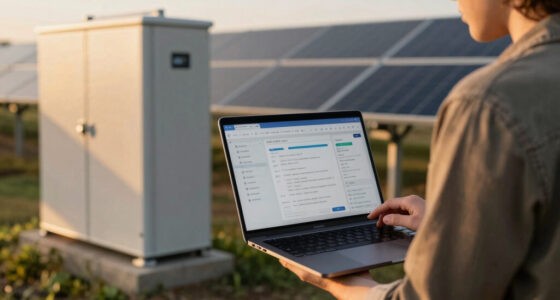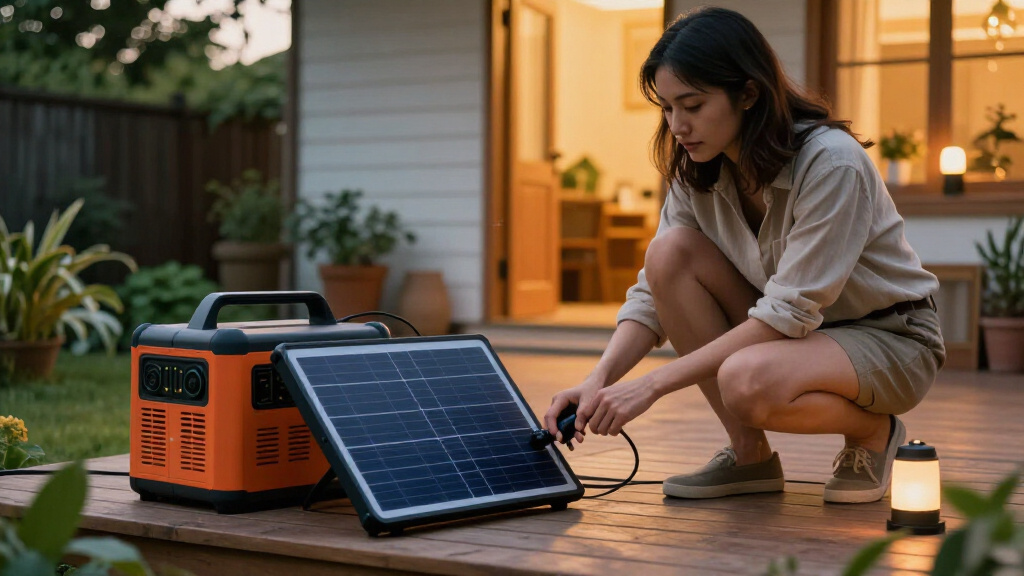
Choosing a solar backup power station is really a choice between keeping a few essential devices running and backing up a meaningful part of your home. A portable solar power station combines a battery, inverter, and charging inputs in a movable unit; a whole-home solar battery is installed with transfer equipment and, often, a home solar system. The portable option usually costs less and can go camping or between rooms, but it cannot reliably power an entire house. The installed system costs substantially more and involves professional setup, yet it can supply selected circuits or broader household loads with less hands-on effort. This comparison is for homeowners weighing practical outage coverage against cost and flexibility: choose portable for modest, mobile needs, and consider a fixed battery when outage protection for the home is the priority.

Get backup power and energy gear delivered free with Prime
- Fast, free delivery on millions of items
- Prime Video, Amazon Music and more included
- Member-only deals all year
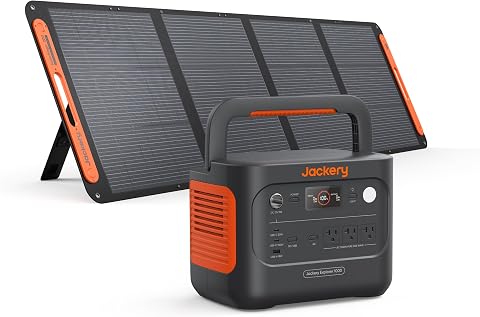
Jackery Solar Generator 1000 V2 with 200W Solar Panel
- ✔ Capacity: 1,070Wh
- ✔ AC output: 1,500W
- ✔ Surge peak: 3,000W

Jackery Explorer 300 Portable Power Station, 292Wh
- ✔ Capacity: 292Wh
- ✔ Rated output: 300W
- ✔ Peak output: 600W

ZeroKor 300W Portable Power Station with 60W Solar Panel
- ✔ Maximum power station output: 300W
- ✔ Solar panel: 60W monocrystalline, foldable
- ✔ Panel conversion efficiency: 20.5%
At a Glance
| Criteria | Portable solar power station | Whole-home solar battery system | Winner |
|---|---|---|---|
| Upfront cost | Usually lower; capacity and output vary widely by model. | Much higher; equipment, electrical work, and system design add cost. | A |
| Power and capacity | Best for electronics and selected appliances; large loads may exceed inverter limits. | Can provide substantially more stored energy and power, depending on system design. | B |
| Outage coverage | Powers devices directly or through compatible home connections; whole-house supply is uncommon. | Can back up selected circuits or more of the home through installed transfer equipment. | B |
| Solar recharging | Can charge from compatible portable panels; speed depends on panel input, sunlight, and battery size. | Can be integrated with rooftop solar and configured to recharge during daylight, subject to system design. | Depends |
| Installation and operation | Generally ready to use with minimal setup, though home integration needs compatible equipment. | Requires professional installation and planning; operation can be more automatic. | A |
| Portability and flexibility | Movable and useful at home, outdoors, or at another location. | Fixed to the property and generally not usable elsewhere. | A |
| Long-term value | Strong value when limited backup and portability meet the need. | Can justify the premium when dependable household backup and solar integration matter. | Depends |
Jackery Solar Generator 1000 V2 with 200W Solar Panel
When we want one station in this group to cover the broadest mix of backup tasks, the Jackery Solar Generator 1000 V2 is the clearest choice. Its 1,070Wh capacity and 1,500W AC output put it in a different class from the Explorer 300 and ZeroKor, both limited to 300W. That extra output can accommodate a wider range of appliances, while the larger energy reserve gives us more room to run devices for longer. It is still a portable station, not a substitute for a professionally installed home battery or a promise of whole-house coverage.The included 200W solar panel gives this bundle a more complete solar starting point than the Explorer 300, which does not include a panel. It also has a much higher stated panel wattage than ZeroKor’s 60W panel, making the 1000 V2 the stronger fit when solar replenishment is central to the plan. Actual harvest will still vary with sunlight, panel placement, and conditions. The LFP battery is rated for over 70% capacity after 4,000 charge cycles, a useful longevity detail for a unit intended to be kept for occasional outages.There are practical compromises. At 23.8 lb, the power station is far less convenient to carry than the Explorer 300, and the panel adds another item to pack and position. The one-hour AC charging claim requires emergency charging to be enabled in the app; its default charging time is listed as 1.7 hours. We should also note that the station and panel ship separately, so buyers should plan for them as a bundle rather than assume a single-package arrival. Choose this over the smaller models when output and energy reserve matter more than minimal weight.
Pros:
- 1,070Wh capacity and 1,500W AC output exceed the two 300W-class alternatives.
- Includes a 200W solar panel for a more complete solar-ready setup.
- LFP battery is rated for over 70% capacity after 4,000 charge cycles.
- Multiple AC, USB-C, USB-A, and car outputs support simultaneous devices.
Cons:
- The 23.8 lb station is less convenient to carry than the Explorer 300.
- One-hour AC charging requires enabling emergency charging in the app.
- The station and solar panel ship separately.
Best for: Buyers who want a higher-output portable station for multi-device outage backup, road trips, or camping and want a solar panel included.
Not ideal for: People who need a very light grab-and-go unit, want simple solar charging without app-dependent modes, or expect to power a whole home.
Bottom line: We rank the 1000 V2 first for its combination of useful backup capacity, higher output, and included 200W panel, provided its weight and app-based fast-charge setting suit our needs.
“We rank the 1000 V2 first for its combination of useful backup capacity, higher output, and included 200W panel, provided its weight and app-based fast-charge setting suit our needs.”
Jackery Explorer 300 Portable Power Station, 292Wh
The Jackery Explorer 300 makes the most sense when easy transport matters more than running larger appliances. At 292Wh and 300W rated output, it is suited to modest backup jobs such as charging phones, keeping small electronics powered, or supporting low-draw camping equipment within its limits. Its roughly 7-pound weight is much easier to manage than the 1000 V2, so it is the more convenient option to move between a car, campsite, or a small emergency kit.Port selection is a point in its favor for a compact unit: it has two AC outlets, 100W USB-C PD, two USB-A ports, and a 120W car port. That gives us options for different devices without stepping up to the larger station. But capacity and output define the boundary. Compared with the 1000 V2, the Explorer 300 stores far less energy and cannot supply the same appliance range. It is not the right pick for high-draw equipment or for buyers who want one station to cover several substantial loads during a prolonged outage.Solar support is useful, but the panel is sold separately, which makes this a less complete solar package than either bundled alternative. The supplied information estimates an 80% charge in about 2.8 hours using a 100W panel; treat that as a stated condition rather than a guaranteed result in variable sunlight. Product information also lists two different weights—7.5 lb in the description and 7.1 lb in the specifications—so we would not rely on a precise weight when planning a tight carry limit. Compared with ZeroKor, it has a lighter, more straightforward compact-station role, but ZeroKor includes a panel and the Explorer does not.
Pros:
- Compact, approximately 7-pound design is easier to carry than the 1000 V2.
- 292Wh capacity and 300W rated output suit many small electronics and modest loads.
- Two AC outlets plus USB-C, USB-A, and car charging offer flexible connections.
- Supports solar charging with a stated 100W-panel recharge estimate.
Cons:
- Solar panel is not included, unlike the ZeroKor and 1000 V2 bundles.
- The 300W output and 292Wh capacity limit appliance choice and runtime.
- Product information gives conflicting weights of 7.1 lb and 7.5 lb.
Best for: People who prioritize a lightweight station for phones, laptops, and other modest loads, and are willing to source a compatible solar panel separately.
Not ideal for: Buyers who need higher-wattage appliance support, long runtimes, an included panel, or a precisely documented carry weight.
Bottom line: We recommend the Explorer 300 when portability and small-device backup are the priority, but not when buyers want a complete solar kit or broader outage coverage.
“We recommend the Explorer 300 when portability and small-device backup are the priority, but not when buyers want a complete solar kit or broader outage coverage.”
ZeroKor 300W Portable Power Station with 60W Solar Panel
ZeroKor earns a place for buyers who want the panel included from the start. Its 60W monocrystalline solar panel comes with the 300W power station, alongside AC, USB, and DC outputs, a car-charging option, and a built-in flashlight with reading and SOS modes. For a modest camping setup or basic device charging away from an outlet, that bundle can be more convenient than buying the Explorer 300 and then separately finding a compatible panel.That convenience does not make it the strongest backup station here. Its 300W maximum output matches the Explorer 300’s rated output and sits well below the 1000 V2’s 1,500W AC rating. Buyers should check the running and startup demands of every intended device; a 300W ceiling rules out many higher-power appliances. The 60W panel also has a lower stated wattage than the 200W panel bundled with the 1000 V2, so solar replenishment is more modest on paper. None of these panel ratings guarantees a particular charging result under changing light.We would choose ZeroKor over the Explorer 300 if an included panel and extra camping-oriented accessories are more important than a cleaner compact-station comparison. We would choose the Explorer instead if carrying weight and its listed charging ports better match the plan, while buyers with broader backup requirements should step up to the 1000 V2. There are two details to take seriously: the panel junction box is not waterproof, so it needs protection from moisture, and the guidance recommends regular charging and discharging to avoid protection mode. Those care requirements make it less of a set-and-forget outage reserve.
Pros:
- Includes a foldable 60W monocrystalline solar panel.
- Offers AC, USB, and DC outputs plus AC, solar, and car recharge options.
- Built-in flashlight includes reading and SOS modes.
- Panel output and accessories make it a ready-to-start small camping bundle.
Cons:
- 300W maximum output is unsuitable for many higher-power appliances.
- The solar panel junction box is not waterproof.
- Product guidance recommends regular charging and discharging to avoid protection mode.
Best for: Campers and occasional users who want a low-output power station with a solar panel, car charging, and a built-in flashlight included.
Not ideal for: Anyone who needs to run higher-power appliances, leave the panel exposed to wet conditions, or store a station for long periods without following its charging guidance.
Bottom line: We favor ZeroKor as an accessible included-panel camping bundle, but its low output and upkeep caveats keep it behind the more capable 1000 V2 and the more portable Explorer 300.
“We favor ZeroKor as an accessible included-panel camping bundle, but its low output and upkeep caveats keep it behind the more capable 1000 V2 and the more portable Explorer 300.”
As an Amazon Associate we earn from qualifying purchases.
Key Differences
The most consequential difference is the scale and delivery of backup power. A portable station is a compact battery with a stated energy capacity and inverter output. It can keep phones, routers, lights, laptops, and some small appliances running, provided their combined demand stays within its limits. A whole-home system connects to home wiring through professionally selected equipment. It can restore power to chosen circuits or a wider set of loads, but the result depends on battery capacity, inverter rating, installation design, and what runs at the same time. The label “whole-home” does not mean unlimited power for every appliance.
Cost and convenience pull in opposite directions. Portable stations have a much lower entry price and need little setup, but owners may need to plug in devices, manage loads, and recharge the unit. A fixed battery requires a larger investment and electrical work, yet can switch over automatically when designed for that function. Solar charging also differs: both can use sunlight, but portable panels are typically an optional, separately sized input, while home batteries can be coordinated with rooftop solar. Neither option guarantees power through an extended outage; weather, available sunlight, consumption, and storage capacity all matter.
Detailed Comparison
Upfront cost (Portable solar power station wins — major)
Portable station wins, by a major margin. It avoids the installed-system costs associated with electrical integration and labor, although larger units and panel packages can still be expensive. A home battery system entails equipment, installation, and potentially changes to the electrical setup. The practical difference is that portable backup lets buyers start with a limited budget and cover a short list of essentials; installed backup is a substantial home-energy purchase, not simply a larger gadget. Compare complete system quotes and usable capacity rather than battery price alone.
Power and capacity (Whole-home solar battery system wins — major)
Whole-home battery wins for household-scale output, usually by a major margin. Portable stations vary considerably: a modest model may handle electronics, while larger models can support more demanding devices if their inverter and surge ratings allow it. Fixed systems can be designed around higher loads and larger storage, but capability is not automatic. A buyer must check continuous output, surge limits, usable energy, and the specific loads a system supports. For a fridge and communications equipment, a suitable portable unit may suffice; for several home circuits, installed storage is the more capable path.
Outage coverage (Whole-home solar battery system wins — major)
Whole-home battery wins, with a major practical difference for households. A portable station is most straightforward when appliances can be plugged into its outlets. Supplying home circuits may require compatible transfer equipment and qualified installation; plugging a station into a household outlet is not a safe substitute. A fixed system can connect to selected circuits or a broader panel through a designed transfer arrangement. That can reduce the need to move cords and choose devices during an outage. Coverage still depends on how the system is configured and which loads are switched on.
Solar recharging (moderate difference)
This is a close match, so the winner depends on the setup. Portable stations can pair with compatible solar panels and offer useful charging away from home, but the panel input limit and changing sunlight affect recharge time. A home battery paired with rooftop solar can be configured to store daytime generation for later use, which is more convenient for household backup when the system supports that operation. A grid-connected solar setup may shut down during an outage unless it has equipment that allows safe islanded operation. Check system specifications; owning solar panels alone does not mean they will recharge a battery during a blackout.
Installation and operation (Portable solar power station wins — moderate)
Portable station wins for simplicity, by a moderate margin. Most units are ready to use after charging, with no electrical work for ordinary plug-in loads. Users still need to understand output limits, keep the battery charged, and manage device connections. A fixed battery calls for professional design and installation, permits or utility coordination where applicable, and decisions about backed-up circuits. Once installed, however, it may provide a smoother outage experience, including automatic transfer if the system is designed for it. Portable is simpler to acquire; installed can be simpler to live with during a blackout.
Portability and flexibility (Portable solar power station wins — major)
Portable station wins, decisively. Its mobility makes it useful for camping, a workshop, a temporary work area, or backup at more than one location. It can also be stored when not in use, though its weight and size rise with capacity. A whole-home battery is fixed equipment tied to the property and electrical system. That commitment makes sense for home resilience, but it offers little flexibility if you move or need power elsewhere. Choose portable when versatility is part of the value, not merely an occasional bonus.
Long-term value (moderate difference)
There is no universal winner; the gap depends on what the buyer needs protected. A portable unit is better value when the goal is keeping a few devices available without funding a full home installation. Paying for a fixed system can be worthwhile when outages are frequent or disruptive, household circuits need backup, and solar integration will be used. Neither is automatically a financial investment that pays for itself. Compare expected use, battery lifespan and warranty, installation cost, electricity rates, and the cost of outages in your household. Pay the premium for coverage you will use, not capacity you may never need.
Portable solar power station: Pros and Cons
Pros:
- Lower entry cost than a professionally installed home battery.
- Portable for home use, travel, workspaces, and outdoor activities.
- Simple plug-in operation for compatible devices.
- Can recharge from compatible solar panels.
Cons:
- Limited by its battery capacity, inverter output, and surge rating.
- Typically backs up individual devices rather than household circuits.
- May require manual load management and solar-panel positioning.
- Larger-capacity models can become heavy and costly.
Whole-home solar battery system: Pros and Cons
Pros:
- Can supply selected home circuits or broader loads when designed for them.
- Can integrate with rooftop solar and household electrical equipment.
- May offer automatic transfer and less hands-on outage operation.
- Can be sized around household energy and backup priorities.
Cons:
- Much higher purchase and installation cost.
- Requires professional planning and electrical work.
- Fixed in place and not useful as portable power elsewhere.
- Actual backup duration and appliance coverage depend on system design and consumption.
Who Should Choose What
Choose Portable solar power station if:
- You mainly need to keep phones, internet equipment, lights, laptops, or a small number of appliances running.
- You want backup power for camping, a workshop, or more than one location as well as home use.
- Your budget does not support a major electrical installation, and you are comfortable managing which devices run.
- You can tolerate limited coverage and want to add capacity gradually.
Choose Whole-home solar battery system if:
- You want outage protection connected to household circuits rather than a collection of extension cords.
- Outages are frequent or costly for your household, and automatic operation is worth a higher upfront investment.
- You already have, or plan to install, rooftop solar and want a system designed to store and use that energy during outages.
- You need more output or stored energy than a portable unit can provide.
Skip both if: You need uninterrupted power for critical medical equipment or large loads but have not confirmed capacity, transfer arrangements, runtime, and backup procedures with a qualified professional. A generator, a hybrid backup design, or other specialized equipment may be more appropriate.
Value for Money
For most buyers with modest needs, a portable station is the better value because it provides useful backup without the cost of home electrical integration. Its value falls if the unit cannot run the devices that matter or if frequent outages make manual setup burdensome. A whole-home battery’s premium is justified for homeowners who need reliable circuit-level coverage, have a suitable installation, and will make regular use of solar storage or outage protection. Do not pay more simply for a “whole-home” label: ask which circuits are covered, what loads can run together, how long the battery lasts at realistic consumption, and what installation adds to the quote. If you need only a router, lights, and phones, the fixed system is usually excessive. If you expect to keep substantial household loads available, a small portable station may be false economy.
Final Verdict
Choose a portable solar power station if your goal is affordable, flexible backup for selected devices and you are willing to manage loads during an outage. It is the sensible starting point for renters, campers, and homeowners with limited backup needs. Choose a whole-home solar battery system if you own the property, need household circuits backed up, and can justify professional installation and the larger expense. The biggest deciding factor is not whether either product uses solar; it is how much of your home must keep working and how automatically. For the typical buyer seeking basic emergency power, start with a correctly sized portable unit. For frequent outages or essential household coverage, invest in a properly designed fixed system rather than expecting a portable battery to behave like one.
Frequently Asked Questions
Can a portable solar power station run a refrigerator?
Some can, but check the refrigerator’s startup surge, running wattage, the station’s continuous and surge output, and usable battery capacity. Runtime varies with cycling, temperature, and other connected devices. A larger capacity alone does not guarantee that the inverter can start the appliance.
Will rooftop solar panels recharge a home battery during a blackout?
Only if the solar and battery system is designed to operate safely while the grid is down. Many grid-tied solar inverters shut off during outages unless compatible islanding or backup equipment is installed. Confirm this with the installer and check the system design.
Is a whole-home battery always able to power the entire house?
No. “Whole-home” describes a system approach, not unlimited supply. The backed-up circuits, inverter output, battery capacity, and simultaneous appliance demand determine what works. Some installations cover selected circuits rather than every load.
Is it safe to connect a portable station to a wall outlet to power the house?
Do not backfeed a home through a standard outlet. That can create serious electrical hazards. Home-circuit connection requires compatible transfer equipment installed and used according to electrical codes and manufacturer instructions.
Fall Picks
fall essentials
As an affiliate, we earn on qualifying purchases.