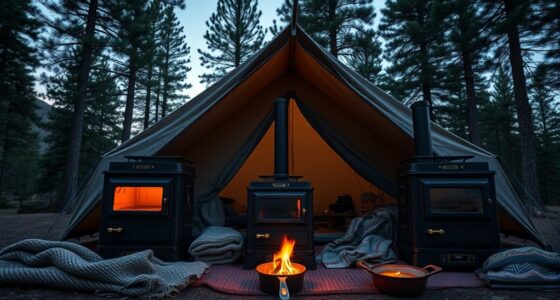
For most cabins, I’d start with the ComfortBilt Alpine HP40 Compact: its 1,500-square-foot heating claim, compact format, programmable controls, and remote make it a balanced option for modest spaces. The US Stove Wiseway stands out for cabins where avoiding electric dependence matters, while the Castle Serenity offers a larger hopper and several operating modes. The main tradeoffs are cabin size and layout, how long you need heat between refills, and whether you can rely on electricity. A stove with a larger heating claim or hopper is not automatically a better fit for a small, tightly insulated cabin. Read on for the full breakdown and guidance on choosing a stove that matches your space and power setup.

Get backup power and energy gear delivered free with Prime
- Fast, free delivery on millions of items
- Prime Video, Amazon Music and more included
- Member-only deals all year
Key Takeaways
- The two Alpine HP40 listings appear closely related: the Compact version explicitly lists programmable controls and a remote, so compare the exact included features and model details before choosing between them.
- Hopper capacity changes the refilling routine: the Castle Serenity lists 40 pounds, the Comfort Glow 60 pounds, and the Ashley Hearth 90 pounds; larger capacity can reduce refill frequency but may mean a larger stove footprint.
- The Wiseway fills a different cabin need: its non-electric design sets it apart from models that rely on powered controls or offer battery backup, though its operating experience differs from electronically controlled stoves.
- Heating claims span very different cabin sizes: the Ashley lists up to 2,200 square feet, while several compact picks list 1,500; actual suitability depends on insulation, ceiling height, climate, and layout.
- Backup power and controls are separate priorities: the Freedom Stoves Independence lists battery backup and Wi-Fi, while the Castle offers multiple controller modes; decide whether outage resilience or scheduling flexibility matters more.


| small pellet stoves for cabin | Heat output | Hopper capacity | Dimensions | Material |
|---|---|---|---|---|
| ComfortBilt Alpine HP40 Compac | 26,000 BTU per hour | 25 lbs | 17 in. W x 18 in. D x 27 in. H | Steel |
| ComfortBilt HP40 Alpine Pellet | 26,224 BTU | 25 lbs. | 21 in. D x 17 in. W x 30 in. H | Alloy steel |
| Castle Serenity Pellet Stove | 32,000 BTU | 40 lbs | — | — |
| US Stove GW1949 Wiseway Non-El | 40,000 BTU | 60 lbs | 24 in. D x 15 in. W x 52 in. H | — |
| Canyon Lodge Small Pellet Stov | 28,423 BTU | 24 lbs | 20.55 in. D x 18.23 in. W x 32.13 in. H | Carbon steel |
| Comfort Glow Pellet Stove for | — | 60 lbs | — | — |
| Ashley Hearth AP5617-W Pellet | 30,000 BTUs | 90 lbs | 24.75 in D x 23.6 in W x 32.88 in H | Stainless steel |
| Freedom Stoves Freestanding In | Up to 34,700 BTUs | — | — | — |
More Details on Our Top Picks
ComfortBilt Alpine HP40 Compact Wood Pellet Stove, Heats Up to 1,500 sq. ft., 25 lb Hopper, Programmable Controls and Remote, Black
I’d put this HP40 near the top for a cabin buyer who wants a compact footprint without giving up scheduled heating. Its listed 17-by-18-inch footprint is notably smaller than the Castle Serenity’s 40-pound-hopper setup, while its 25-pound hopper keeps the stove a manageable fit for modest spaces. Programmable controls and a remote can make temperature adjustments easier when the stove is not right beside the living area, and the removable ash pan simplifies routine cleanup. The tradeoff is capacity: its stated 1,500-square-foot coverage suits a small, reasonably insulated cabin, not a drafty or larger one that needs sustained high output. I’d also plan for pellet storage and a suitable vent installation; this is not an off-grid solution like the US Stove Wiseway.
Pros:- Compact 17-by-18-inch footprint suits tighter cabin layouts.
- Programmable controls and remote make heat adjustments more convenient.
- Removable ash pan helps simplify routine cleaning.
- 26,000 BTU output and stated 1,500-square-foot coverage suit modest spaces.
Cons:- A 25-pound hopper calls for more frequent refilling than the Castle Serenity’s 40-pound hopper.
- Pellet-only operation depends on a steady fuel supply.
- The stated coverage may be insufficient for a drafty or larger cabin.
Best for: Cabin owners heating a compact, roughly 1,500-square-foot space who want remote operation, scheduled controls, and an accessible ash pan.
Not ideal for: Off-grid cabin owners or people heating a large, poorly insulated cabin; this model depends on pellet supply and has less capacity than the US Stove Wiseway.
- Heat output:26,000 BTU per hour
- Coverage area:Up to 1,500 sq. ft.
- Hopper capacity:25 lbs
- Dimensions:17 in. W x 18 in. D x 27 in. H
- Material:Steel
- Ventilation:Direct vent
- Fuel:Pellet
- Color:Black
Our verdict“Choose this HP40 for a compact cabin where scheduled, remote-controlled pellet heat matters more than a large hopper or off-grid operation.”
ComfortBilt HP40 Alpine Pellet Stove, 1,500 sq. ft., 25 lb. Hopper, Black
This HP40 version makes the most sense for cabin owners who want more explicit control over day-to-day heating. Its five power settings, programmable thermostat, remote, and auto ignition provide a more defined operating setup than the product description for the other ComfortBilt HP40, which emphasizes programmable controls but lists fewer operating details. The 26,224-BTU maximum output and 1,500-square-foot coverage place it in the same small-cabin range, rather than the higher-output category of the Castle Serenity or US Stove Wiseway. A 25-pound hopper limits time between refills compared with the Castle’s 40-pound capacity, and the listed 167-pound weight makes moving it into a cabin a job to plan. I’d choose it for a powered cabin where convenient ignition and heat adjustment matter; it is a poor match for a site without dependable electricity.
Pros:- Five power settings let owners adjust heat output to changing cabin conditions.
- Programmable thermostat and remote support convenient temperature control.
- Auto ignition avoids the manual lighting process used by the US Stove Wiseway.
- Stated coverage of 1,500 sq. ft. fits many small cabins and workshops.
Cons:- The 25-pound hopper is smaller than the Castle Serenity’s 40-pound hopper.
- At 167 pounds, installation and moving require planning.
- Electric controls and ignition make it unsuitable for cabins without dependable power.
Best for: Owners of powered cabins who want auto ignition, thermostat control, and multiple heat settings for regular weekend or seasonal use.
Not ideal for: Off-grid buyers or anyone who needs fewer refills and a longer burn interval; the US Stove Wiseway has a 60-pound hopper and does not require electricity.
- Heat output:26,224 BTU
- Coverage:Up to 1,500 sq. ft.
- Hopper capacity:25 lbs.
- Efficiency:81%
- Dimensions:21 in. D x 17 in. W x 30 in. H
- Weight:167 lbs
- Material:Alloy steel
- Ventilation:Direct vent
Our verdict“Pick this HP40 when programmable control and auto ignition matter more than hopper capacity or off-grid independence.”
Castle Serenity Pellet Stove – 1,500 sq ft Heating, Smart Controller, Manual, Weekly, Thermostat & Eco Modes, 40lb Hopper, Easy Clean, Black
The Castle Serenity is my pick for cabin owners who value longer stretches between hopper top-ups. Its 40-pound capacity is substantially larger than either ComfortBilt HP40’s 25-pound hopper, a useful difference when the cabin is occupied for a full weekend or frequent trips to the pellet store are inconvenient. The smart controller offers manual, thermostat, weekly, and eco modes, giving it more schedule options than the HP40 descriptions provide. A tubeless fire chamber is designed to make cleaning easier, though a 77-watt, 120-volt electrical requirement means it is not an off-grid substitute for the US Stove Wiseway. Its 32,000-BTU output is strong for the stated 1,500-square-foot range, but the coverage limit still matters in a large or poorly insulated cabin. I’d favor it for powered cabins where hopper capacity and flexible scheduling outrank compact dimensions.
Pros:- 40-pound hopper holds more than the 25-pound hoppers on both ComfortBilt HP40 models.
- Manual, thermostat, weekly, and eco modes support varied heating schedules.
- Tubeless fire chamber is designed to simplify cleaning.
- 32,000 BTU provides more listed output than the ComfortBilt HP40 models.
Cons:- Requires 120-volt electricity, unlike the non-electric US Stove Wiseway.
- The stated heating limit is 1,500 sq. ft., which may not suit larger or draftier cabins.
- A larger hopper does not make it a compact-footprint leader among these options.
Best for: Cabin owners with dependable 120-volt power who want a larger hopper, scheduled operation, and fewer refills during regular stays.
Not ideal for: Off-grid users, buyers prioritizing the smallest listed footprint, or owners whose cabin exceeds the stated 1,500-square-foot heating range.
- Heating capacity:Up to 1,500 sq. ft.
- Heat output:32,000 BTU
- Hopper capacity:40 lbs
- Wattage:77 W
- Voltage:120 V
- Efficiency:Greater than 75%
- Fire chamber:Tubeless design
Our verdict“Choose the Castle Serenity if your powered cabin needs a larger hopper and flexible schedules more than off-grid capability or the smallest footprint.”
US Stove GW1949 Wiseway Non-Electric Pellet Stove
For a remote cabin where electricity is unavailable or unreliable, the Wiseway solves a problem the ComfortBilt and Castle stoves cannot: it uses a natural gravity feed and needs no electricity to operate. Its 60-pound hopper and stated burn time of up to 30 hours also reduce the need for constant tending, outlasting the smaller-hopper HP40 models on paper. At 40,000 BTU and coverage up to 2,000 square feet, it offers more heating capacity than the other compact-focused options here, but that strength comes with a tall, narrow form: it stands 52 inches high. Manual lighting with a propane torch is a real inconvenience, and its specified three-inch venting narrows installation choices. I’d rank it first for power independence, not for the easiest startup or most flexible controls.
Pros:- Gravity-feed operation does not require electricity.
- 60-pound hopper and stated burn time of up to 30 hours support longer operation between refills.
- 40,000 BTU and up to 2,000-square-foot coverage exceed the listed capacity of the other stoves here.
- Steel construction and a 15-inch width suit a narrow floor area.
Cons:- Manual lighting requires a propane torch.
- Three-inch venting and specific installation requirements limit placement flexibility.
- At 52 inches tall, it may not suit cabins with limited vertical clearance.
Best for: Owners of off-grid or blackout-prone cabins who need pellet heat without electrical power and value long intervals between refills.
Not ideal for: Buyers who want auto ignition, thermostat scheduling, or a low-profile stove; the ComfortBilt HP40 offers remote controls, while the Wiseway is 52 inches tall and manually lit.
- Model number:GW1949
- Heat output:40,000 BTU
- Heating area:Up to 2,000 sq. ft.
- Hopper capacity:60 lbs
- Burn time:Up to 30 hours
- Venting:3-inch venting
- Dimensions:24 in. D x 15 in. W x 52 in. H
- Weight:131 lbs
Our verdict“Choose the Wiseway for a cabin without reliable electricity, provided you can accommodate its height, venting needs, and manual startup.”
Canyon Lodge Small Pellet Stove
The Canyon Lodge is a strong fit for buyers whose cabin is smaller than the 1,500-square-foot spaces targeted by the ComfortBilt and Castle models. Its stated 800–1,200-square-foot range aligns more closely with a compact retreat, while Whisper Quiet Blower Technology may make the stove less intrusive in a small room where fan noise carries. Smart home compatibility adds remote-control convenience, though the product details do not specify particular control modes as the Castle Serenity does. A 24-pound hopper is the smallest listed here, so owners should expect more frequent refills than with the Castle or Wiseway. The stove weighs nearly 150 pounds, which complicates placement, and its listing calls the ventilation type “vent free”; I’d verify venting requirements with the manufacturer and a qualified installer before choosing it for a cabin.
Pros:- Stated 800–1,200-square-foot coverage is suited to smaller cabins.
- Whisper Quiet Blower Technology may be more comfortable in compact living areas.
- Smart home compatibility offers connected control.
- Cast iron fire pot is a durable feature listed in the product description.
Cons:- The 24-pound hopper is smaller than every other listed model’s hopper.
- At 149.9 pounds, moving and installation require planning.
- The listed “vent free” description warrants confirmation of actual venting requirements before purchase.
Best for: Owners of smaller cabins, roughly 800–1,200 square feet, who prioritize quiet operation and smart-home compatibility.
Not ideal for: Buyers needing a large hopper, off-grid operation, or clearly documented venting requirements; the Wiseway has a much larger hopper and explicit venting details.
- Heat output:28,423 BTU
- Coverage:Up to 1,200 sq. ft.
- Hopper capacity:24 lbs
- Ventilation type:Vent free (as listed)
- Fuel:Pellet
- Dimensions:20.55 in. D x 18.23 in. W x 32.13 in. H
- Weight:149.9 lbs
- Material:Carbon steel
- Mounting type:Floor mount
Our verdict“Choose the Canyon Lodge for a smaller, powered cabin where quiet operation matters more than hopper size or off-grid use.”
Comfort Glow Pellet Stove for Home Heating, Remote, 60 lb Hopper – CGPS2100
The Comfort Glow CGPS2100 sits between the smaller 1,500-square-foot stoves in this roundup and the larger-hopper Ashley Hearth AP5617-W. Its 60 lb hopper is rated for up to 30 hours of burning, reducing how often cabin owners need to reload without taking on Ashley’s 90 lb capacity. Coverage up to 2,200 square feet makes it better suited to a roomy, open-plan cabin than a compact retreat, and the remote control lets you adjust settings without walking back to the stove. The 200 CFM blower supports heat circulation, while the viewing window adds a visual feature absent from the more utilitarian US Stove GW1949 Wiseway listing. The tradeoff is limited published detail on warranty and installation; I would verify both before choosing it for a remote cabin.
Pros:- 60 lb hopper is rated for up to 30 hours of continuous burn
- Coverage up to 2,200 square feet suits larger cabin layouts
- Remote control and digital panel offer convenient adjustments
- 200 CFM blower and large viewing area combine heat circulation with a visible flame
Cons:- Its 2,200-square-foot capacity may be excessive for a genuinely small cabin
- Warranty information is limited in the provided product details
- Installation requirements are not specified in the provided product details
Best for: Owners of larger, open-plan cabins who want a remote-controlled stove and fewer hopper refills than compact 25–40 lb models require
Not ideal for: Small cabins with modest heating needs, or buyers who need clearly documented warranty and installation details before purchase
- Heating capacity:Up to 2,200 sq ft
- Hopper capacity:60 lbs
- Burn time:Up to 30 hours
- Blower:200 CFM
- Controls:Digital control panel with remote
- Approval:Mobile home approved
Our verdict“Choose the CGPS2100 for a larger cabin where a 60 lb hopper and remote control matter more than compact sizing or fully specified ownership details.”
Ashley Hearth AP5617-W Pellet Stove with 90 Lb. Hopper, 2200 Sq. Ft. Heating Capacity
Among these three larger-capacity options, the Ashley Hearth AP5617-W is the pick for cabin owners who want to stretch the time between pellet loads: its 90 lb hopper exceeds the Comfort Glow CGPS2100’s 60 lb capacity. It is rated for 30,000 BTUs and up to 2,200 square feet, making it a better match for a substantial, open cabin than for a small, divided layout where heat may not spread evenly. Wi-Fi, Bluetooth, and digital controls offer more ways to manage operation than the Comfort Glow’s listed remote and panel. That added capacity comes with practical costs: the stove weighs 210 lb, freight delivery is curbside only, and the chimney system is not included. I’d favor it over the Freedom Stoves PS21 only when hopper size matters more than battery backup.
Pros:- 90 lb hopper offers more capacity than the Comfort Glow CGPS2100
- 30,000 BTU output and stated coverage of up to 2,200 sq ft suit larger spaces
- Wi-Fi, Bluetooth, and digital controls provide several operating methods
- Smart technology is described as adjusting fuel consumption for efficiency
Cons:- At 210 lb, it is difficult to move into place without help
- Freight delivery is curbside only, so the buyer must plan for handling
- Chimney system is not included and requires additional installation
Best for: Owners of large cabins who want fewer pellet reloads and multiple connected control options, and can arrange freight handling and installation
Not ideal for: Owners of small or hard-to-access cabins who need a lightweight, simple-to-install stove or included venting components
- Heat output:30,000 BTUs
- Coverage area:Up to 2,200 sq ft
- Hopper capacity:90 lbs
- Dimensions:24.75 in D x 23.6 in W x 32.88 in H
- Weight:210 lbs
- Material:Stainless steel
- Controls:Wi-Fi, Bluetooth, and digital controls
Our verdict“Pick the AP5617-W if your cabin is large and extended time between refills is the priority, provided you can manage freight delivery and separate venting installation.”
Freedom Stoves Freestanding Independence PS21 Pellet Stove with Battery Backup, Wi-Fi, and Removable Legs – Heats up to 1800 sq ft (Sandstone Grey)
The Freedom Stoves Independence PS21 stands apart from the Comfort Glow CGPS2100 and Ashley Hearth AP5617-W by addressing a cabin-specific problem: keeping the stove operating through a power outage. Its battery backup runs on two 12V batteries, sold separately, while Wi-Fi, a touchscreen, and a remote provide several control options. Rated at 34,700 BTUs for spaces up to 1,800 square feet, it covers less area than either 2,200-square-foot model, which may suit a smaller cabin better but gives less stated capacity for a large open interior. Removable legs and swappable side panels add setup and appearance flexibility, and the listed five-year warranty is more explicit than the warranty information supplied for the Comfort Glow. The tradeoffs are battery cost, potentially complex setup, and a vent-free listing that buyers should verify against local requirements.
Pros:- Battery backup is designed to keep the stove running during power outages
- Wi-Fi, touchscreen, and remote give several control options
- Removable legs and swappable side panels allow design and placement flexibility
- Five-year warranty is clearly stated in the provided product details
Cons:- Two 12V batteries are required and sold separately
- Setup may be complex for buyers seeking a straightforward installation
- Its 1,800-square-foot rating is below the 2,200-square-foot Comfort Glow and Ashley models
Best for: Cabin owners in areas with recurring power interruptions who want connected controls, design flexibility, and a stated five-year warranty
Not ideal for: Buyers seeking the largest stated coverage area, a simple setup, or a stove that does not depend on separately purchased backup batteries
- Heat output:Up to 34,700 BTUs
- Heating area:Up to 1,800 sq ft
- Battery backup:Uses two 12V batteries, sold separately
- Controls:Wi-Fi, touchscreen, and remote
- Design:Sandstone Grey with swappable side panels and removable legs
- Warranty:5 years
- Ventilation type:Listed as vent free
- Mounting type:Freestanding
Our verdict“Choose the PS21 for a cabin where outage resilience and flexible controls matter more than maximum coverage or a simpler setup.”

How We Picked
I ranked these stoves for cabin use by weighing the fit between the listed heating capacity and a modest floor plan, then comparing practical ownership details: hopper size, controls, power dependence, cleaning access, and portability or installation flexibility where specified. Cabin buyers often have limited floor space and less reliable electricity than homeowners, so a large hopper or high heating claim only helps when the stove’s dimensions, venting plan, and operating needs suit the site.
The ranking favors balanced cabin fit over maximum capacity alone. The Alpine HP40 Compact leads for its combination of a compact designation, moderate listed capacity, and programmable controls with a remote. The Wiseway and Castle rank as strong alternatives for distinct power and control preferences; larger-capacity options sit lower because they can be excessive for a small cabin or bring tradeoffs in space and fuel handling. Product listings provide different levels of detail, so I avoid treating unlisted features as included and recommend confirming specifications, installation requirements, and local code rules before purchase.
| small pellet stoves for cabin | Material |
|---|---|
| ComfortBilt Alpine HP40 Compac | Steel |
| ComfortBilt HP40 Alpine Pellet | Alloy steel |
| Castle Serenity Pellet Stove | — |
| US Stove GW1949 Wiseway Non-El | — |
| Canyon Lodge Small Pellet Stov | Carbon steel |
| Comfort Glow Pellet Stove for | — |
| Ashley Hearth AP5617-W Pellet | Stainless steel |
| Freedom Stoves Freestanding In | — |
Factors to Consider When Choosing Small Pellet Stoves For Cabins
Choosing a cabin pellet stove is less about picking the biggest number and more about matching the appliance to the building and how you use it. I’d work through these factors before deciding, since they can change which model makes sense more than a feature list does.
Match Heating Capacity to the Cabin, Not the Listing
Square-foot heating claims are estimates, not promises for every cabin. A drafty structure with high ceilings and open stairs can lose heat much faster than a well-insulated cabin of the same floor area. Cold-climate location, window quality, room layout, and the stove’s placement all affect comfort. A stove that is too powerful may cycle or make the main room uncomfortably warm before distant rooms heat up. Avoid choosing by maximum capacity alone; compare the claim with an installer’s assessment and the cabin’s heat-loss needs. If the cabin is exceptionally small or tightly insulated, ask a qualified installer whether the unit can run comfortably at a low output.
Plan for Electricity Before Comparing Controls
Many pellet stoves use electricity for feed systems, fans, or electronic controls, so an outage can affect heat even when the fuel is on hand. A cabin with frequent outages may favor a non-electric design or a model with a specified battery backup, but those approaches are not interchangeable. Ask what functions remain available during an outage, how long backup power lasts, and whether the system needs a separate battery or generator. Wi-Fi and remote features can make scheduled use easier, yet they depend on power and may rely on a working connection. A common mistake is treating a remote control as outage protection. Choose the power arrangement around the cabin’s actual grid reliability and your backup plan.
Treat Hopper Size as a Convenience Tradeoff
A larger hopper can reduce how often you refill, which helps when the cabin is occupied for long stretches or the stove runs overnight. It can also increase the appliance’s footprint, and a full hopper still does not tell you exactly how long a burn will last. Burn duration varies with heat setting, pellet quality, weather, and how much heat the building loses. Check how much clear space the stove needs for loading and cleaning, not just its exterior width. Think through where pellets will be stored and how you will carry them inside, especially in a compact cabin. The right hopper is the one that fits your routine without crowding the room.
Check Installation and Service Access Early
Vent routing, clearances to walls and furnishings, floor protection, and local building rules can constrain where a pellet stove goes. Those requirements may rule out a preferred corner or demand more space than the product’s footprint suggests. Before buying, ask a qualified installer to review the cabin and confirm the venting plan, required clearances, and any permit or inspection needs. Also check how the burn pot, ash areas, and other routine-cleaning points are accessed. An easy-clean claim can help, but it does not remove the need for regular maintenance or proper vent care. Planning around installation first can prevent an otherwise suitable stove from becoming a poor fit.
Choose Controls for How You Use the Cabin
A cabin used only on weekends has different control needs from one occupied throughout winter. Programmable schedules and thermostat modes can help manage heat when routines are predictable, while simple manual operation may appeal to buyers who prefer fewer electronic features. Wi-Fi can be useful for remote monitoring or adjustment if the cabin has dependable connectivity, but it should not be the reason to buy a stove that does not fit the space. Ask whether the controls are intuitive for everyone who will use the stove and whether a manual operating option is available. More modes add flexibility, but they can also add setup and troubleshooting. Prioritize controls that solve a real part of your cabin routine.
Compare Fuel Supply and Ongoing Upkeep
Pellet availability can vary by region, and a remote cabin may make restocking inconvenient during bad weather. Check local supply before committing and plan dry storage that protects pellets from moisture. Ask the manufacturer or installer which pellet types and quality standards the stove accepts, since poor fuel can affect operation and cleaning demands. Routine ash removal and periodic vent cleaning remain part of ownership even when a model advertises easy cleaning. Consider who will handle maintenance if the cabin sits unused for long periods or is rented to guests. A stove that suits the fuel supply and maintenance routine is often a better long-term choice than one selected for capacity alone.
Frequently Asked Questions
Can I run a pellet stove in a cabin during a power outage?
That depends on the stove’s design and its backup arrangement. A non-electric model such as the Wiseway is listed as non-electric, while the Freedom Stoves Independence specifically lists battery backup; other electronically controlled models may need an external source of power to operate key components. Confirm exactly what runs on backup, how long it can run, and whether the battery is included or sold separately. If outages are common, plan a tested backup method rather than assuming a small battery will cover a long cold spell. Follow the manufacturer’s instructions for safe operation and venting.
Is a 1,500-square-foot stove too large for a small cabin?
It may be, but the floor-area claim alone cannot answer that. Insulation, air leaks, ceiling height, outdoor temperatures, and whether the cabin has open or divided rooms all affect the heat required. A high-capacity unit in a tight, compact space can make the stove room too warm even while other rooms remain cool. Ask an installer to estimate the cabin’s heat loss and check the stove’s minimum output and operating range. If the cabin is very small, prioritize controllable low heat rather than choosing a model by its maximum coverage claim.
Does a larger pellet hopper mean I can leave the cabin unattended longer?
Not by itself. A larger hopper holds more fuel, but actual run time depends on the heat setting, fuel quality, weather, and the building’s heat loss. The stove still needs appropriate supervision, maintenance, and a safe operating plan; a larger hopper does not make it suitable to leave running without following the manufacturer’s guidance. Check whether the stove has the controls and safety features you need, and ask how it should be managed when the cabin is unoccupied. Use the listed hopper capacity as a refill convenience measure, not as a guarantee of unattended heating time.
Should I choose a stove with Wi-Fi or a remote for a weekend cabin?
Choose remote features when they solve a practical problem, such as adjusting heat without walking to the stove or managing a predictable arrival routine. Wi-Fi features are useful only if the cabin has reliable connectivity and the stove’s remote functions work as expected with that connection. A handheld remote, programmable schedule, and app-based control are different conveniences, so confirm which one is actually included. None replaces local controls, safe installation, or a backup plan for power loss. If you visit sporadically and connectivity is weak, simple controls may be more useful than connected features.
What should I verify before ordering a pellet stove for a remote cabin?
Confirm that a qualified installer can service your location and approve the proposed vent route, clearances, hearth protection, and local code requirements. Check delivery access, since a stove may be difficult to move into a cabin with narrow doors, stairs, or a remote driveway. Verify electrical needs, pellet availability, maintenance access, and whether any advertised accessories or backup components are included. Ask how warranty service works when the cabin is far from a dealer. Resolving these details before purchase can prevent delays and avoid choosing a model that cannot be installed or supported at the site.
Conclusion
For the best overall cabin fit, I’d choose the ComfortBilt Alpine HP40 Compact for its compact positioning, moderate listed heating capacity, and programmable controls with a remote. The best value in practical versatility is the Castle Serenity for buyers who want a 40-pound hopper and several operating modes, provided its installation needs suit the cabin. For beginners who want familiar electronic controls, the Alpine’s remote and programmable operation are a straightforward starting point; verify the exact listing and included features before ordering. For power-conscious cabins, the non-electric Wiseway is the standout, while the Freedom Stoves Independence is the pick for buyers seeking listed battery backup and Wi-Fi. Choose the best premium-style feature set by need rather than size: the Ashley’s 90-pound hopper and higher heating claim suit larger spaces and longer refill intervals, but may be excessive in a small cabin. In every case, let a site-specific installation and heat assessment settle the final choice.
Veterans Day Picks

Shark Matrix Plus 2-in-1 Robot Vacuum and Mop with 60-Day Self-Emptying Base
As an affiliate, we earn on qualifying purchases.