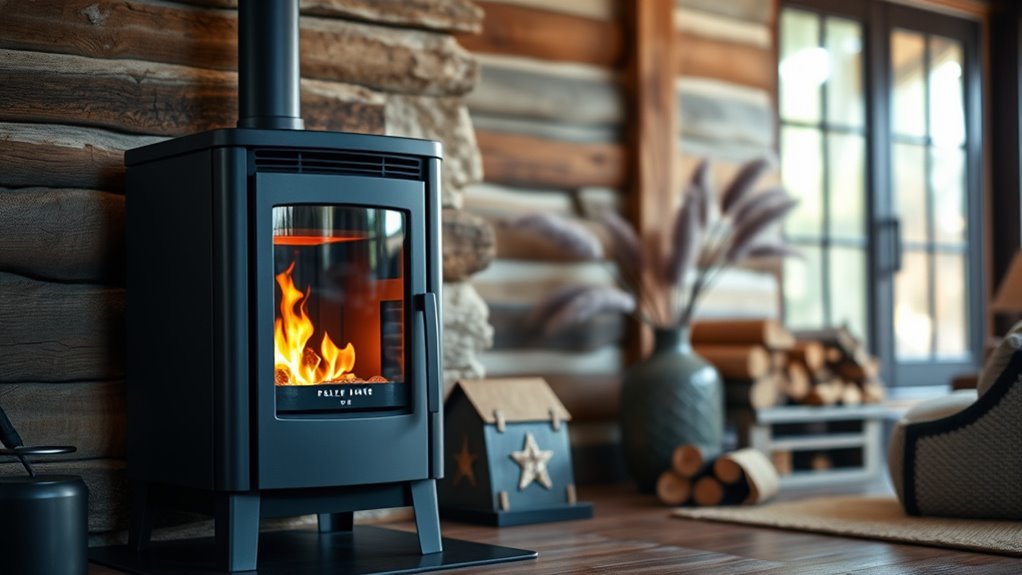
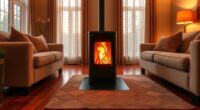
Finding a heater that balances warmth with environmental responsibility is the primary goal for many homeowners today. Among the options reviewed, the Ashley Hearth AP5622-W stands out as the Best Overall for its exceptional coverage and massive hopper capacity, making it ideal for whole-home heating. For those prioritizing simplicity and reliability, the US Stove GW1949 Wiseway offers a unique non-electric design that eliminates power dependency. The main tradeoff in this category involves choosing between advanced smart controls, which increase upfront costs, and mechanical simplicity, which lowers maintenance risks. Readers should continue reading to understand how these models compare on emission standards, efficiency, and long-term usability.

Get backup power and energy gear delivered free with Prime
- Fast, free delivery on millions of items
- Prime Video, Amazon Music and more included
- Member-only deals all year
Key Takeaways
- Non-electric models like the US Stove GW1949 offer reliability during power outages but lack the precise temperature control of digital units.
- Hopper size directly correlates with maintenance frequency; larger hoppers on models like the Ashley Hearth AP5622-W reduce daily refilling burdens.
- Smart controller integration, seen in the Castle Serenity, adds convenience but introduces potential electronic failure points not present in dial-controlled units.
- High-efficiency models often require stricter venting requirements and higher-quality pellets to maintain their low-emission certifications.
- Insert models like the ComfortBilt HP22i are cost-effective for retrofitting but often lose heat efficiency compared to freestanding units.
| Canyon Lodge Generation 2 1,500 sq. ft. Small Pellet Stove with 50 lb. Hopper |  | Best Overall for Connected, Moderate-Size Heating | Heat output: 34,172 BTUs | Heating area: Up to 1,500 sq. ft. | Hopper capacity: 50 lb. | VIEW ON AMAZON | See Our Full Breakdown |
| US Stove GW1949 Wiseway Non-Electric Pellet Stove |  | Best for Off-Grid, Power-Free Heating | Model: GW1949 | Heat output: 40,000 BTUs | Heating area: Up to 2,000 sq. ft. | VIEW ON AMAZON | See Our Full Breakdown |
| Canyon Lodge Small Pellet Stove |  | Best Compact Pick for Smaller Heated Areas | Heat output: 28,423 BTU | Heating area: Up to 1,200 sq. ft. | Hopper capacity: 24 lb. | VIEW ON AMAZON | See Our Full Breakdown |
| ComfortBilt HP50S Pellet Stove, 2,200 sq. ft., 47 lb. Hopper, Burgundy |  | Best for Large Spaces with Programmable Heat | Heat output: 41,000 BTU per hour | Heating area: Up to 2,200 sq. ft. | Hopper capacity: 47 lb. | VIEW ON AMAZON | See Our Full Breakdown |
| Castle Serenity Pellet Stove with Smart Controller, 1,500 sq ft Heating, 40lb Hopper, Black |  | Best for Flexible Scheduling and Easier Cleaning | Model: 41278 | Heat output: 32,000 BTU | Heating area: Up to 1,500 sq. ft. | VIEW ON AMAZON | See Our Full Breakdown |
| ComfortBilt HP50S Pellet Stove, Heats up to 2,200 sq. ft., 47 lb. Hopper, Black |  | Best for Flexible Zone Heating | Heat output: 41,000 BTU per hour | Coverage area: Up to 2,200 sq. ft. | Hopper capacity: 47 lbs. | VIEW ON AMAZON | See Our Full Breakdown |
| PelPro PP150 Pellet Stove for Home Heating – 150 lb Hopper, 49,200 BTU, Heats up to 2,500 sq. ft., Easy Dial Temp Control, Built-in Thermostat, Auto-Ignition, Quiet Blower |  | Best for Long Runs Between Refills | Heat output: 49,200 BTU | Heating area: Up to 2,500 sq. ft. | Hopper capacity: 150 lbs.; expandable to 350 lbs. with optional extension | VIEW ON AMAZON | See Our Full Breakdown |
| ComfortBilt HP40 Alpine Pellet Stove, 1,500 sq. ft., 25 lb. Hopper, Black |  | Best Compact Fit for Smaller Spaces | Heat output: 26,224 BTU | Coverage area: 1,500 sq. ft. | Hopper capacity: 25 lbs. | VIEW ON AMAZON | See Our Full Breakdown |
| PelPro PP70 Pellet Stove for Home Heating – 70 lb Hopper, 42,500 BTU Heats up to 2,000 Sq. Ft., Easy-Dial Temp Control, Built-in Thermostat with Auto-Ignition, Variable Speed Blower |  | Best Low-Emission Choice with Published Data | Heat output: 42,500 BTU | Heating capacity: Up to 2,000 sq. ft. | Hopper capacity: 70 lbs. | VIEW ON AMAZON | See Our Full Breakdown |
| ComfortBilt HP22 Pellet Stove, 2,800 sq. ft., 55 lb. Hopper, Black |  | Best for Broad Coverage with Remote Control | Coverage area: 2,800 sq. ft. | Heat output: 41,000 BTU/hr | Hopper capacity: 55 lbs. | VIEW ON AMAZON | See Our Full Breakdown |
| Ashley Hearth AP5622-W Pellet Stove |  | Best for Large-Space Efficiency | Heat Output: 33,000 BTU | Coverage Area: Up to 3,000 sq ft | Hopper Capacity: 170 lb | VIEW ON AMAZON | See Our Full Breakdown |
| Cleveland Iron Works Large Pellet Stove |  | Best for Durability and Quiet Operation | Brand: Cleveland Iron Works | Model Number: PS130W | Heat Output: 29,501 BTU | VIEW ON AMAZON | See Our Full Breakdown |
| ComfortBilt HP22i Pellet Stove Fireplace Insert |  | Best for Retrofitting Existing Fireplaces | Heat Output: 41,000 BTU | Coverage: 2,800 sq ft | Hopper Capacity: 47 lbs | VIEW ON AMAZON | See Our Full Breakdown |
| Canyon Lodge Bayfront Pellet Stove |  | Best for Aesthetics and Ambiance | Heat Output: 30,173 BTU | Coverage Area: Up to 2,500 sq ft | Hopper Capacity: 66 lbs | VIEW ON AMAZON | See Our Full Breakdown |
| Freedom Stove PS21 Pellet Stove |  | Best for Reliability During Outages | Heat Output: 34,700 BTUs | Coverage Area: 800-1,800 sq ft | Backup Battery: 40+ hours runtime | VIEW ON AMAZON | See Our Full Breakdown |
| low emission pellet stove | Heat output | Hopper capacity | Dimensions | Weight |
|---|---|---|---|---|
| Canyon Lodge Generation 2 1,50 | 34,172 BTUs | 50 lb. | 21.25" D x 18.12" W x 35.18" H | 170 lb. |
| US Stove GW1949 Wiseway Non-El | 40,000 BTUs | 60 lb. | 24" D x 15" W x 52" H | 131 lb. |
| Canyon Lodge Small Pellet Stov | 28,423 BTU | 24 lb. | 20.55" D x 18.23" W x 32.13" H | 149.9 lb. |
| ComfortBilt HP50S Pellet Stove | 41,000 BTU per hour | 47 lb. | 24" D x 20.5" W x 36" H | 240 lb. |
| Castle Serenity Pellet Stove w | 32,000 BTU | 40 lb. | — | — |
| ComfortBilt HP50S Pellet Stove | 41,000 BTU per hour | 47 lbs. | 28" D x 21" W x 36" H | 240 pounds |
| PelPro PP150 Pellet Stove for | 49,200 BTU | 150 lbs.; expandable to 350 lbs. with optional extension | 24-1/2" W x 38-1/2" H x 22-7/8" D | — |
| ComfortBilt HP40 Alpine Pellet | 26,224 BTU | 25 lbs. | 21" D x 17" W x 30" H | 167 pounds |
| PelPro PP70 Pellet Stove for H | 42,500 BTU | 70 lbs. | 22" W x 33" H x 22" D | — |
| ComfortBilt HP22 Pellet Stove | 41,000 BTU/hr | 55 lbs. | 25" D x 24" W x 32.5" H | 273 pounds |
| Ashley Hearth AP5622-W Pellet | 33,000 BTU | 170 lb | — | — |
| Cleveland Iron Works Large Pel | 29,501 BTU | 130 lbs | — | 209.4 lbs |
| ComfortBilt HP22i Pellet Stove | 41,000 BTU | 47 lbs | 18"D x 19"W x 25"H | 273 lbs |
| Canyon Lodge Bayfront Pellet S | 30,173 BTU | 66 lbs | 24.57"D x 26.18"W x 30.43"H | 231.5 lbs |
| Freedom Stove PS21 Pellet Stov | 34,700 BTUs | — | — | — |
More Details on Our Top Picks
Canyon Lodge Generation 2 1,500 sq. ft. Small Pellet Stove with 50 lb. Hopper
The Generation 2 stands out for pairing a 50 lb. hopper with Wi-Fi scheduling in a stove sized for spaces up to 1,500 sq. ft. The larger fuel reserve can mean fewer reloads than the original Canyon Lodge Small Pellet Stove, which has a 24 lb. hopper, while smart controls make it easier to set heating around a household’s routine. Its stated 34,172 BTU output and high-efficiency designation suit buyers prioritizing controlled, everyday heat, though the supplied data does not give an emissions rate or EPA certification, so I would not treat those claims as proof of lower emissions. Compared with the non-electric US Stove Wiseway, this model offers more automation but depends on power. At 170 pounds and floor-mount-only, installation is less flexible than its app control suggests.
Pros:- 50 lb. hopper reduces refill frequency compared with the 24 lb. Canyon Lodge Small Pellet Stove.
- Wi-Fi connectivity and smart scheduling provide convenient control.
- Designed to heat areas up to 1,500 sq. ft. with 34,172 BTUs.
- Upgraded firepot and ash pan are described as easier to maintain.
Cons:- The 170-pound weight can complicate delivery and installation.
- Wi-Fi and controls require electrical power.
- The provided product data does not include a numerical emissions rate or EPA certification.
Best for: Households heating a space around 1,500 sq. ft. that want app-based scheduling and fewer hopper refills than a compact stove requires.
Not ideal for: Off-grid buyers, people who need heat during power outages, and shoppers requiring documented emissions figures before choosing a stove.
- Heat output:34,172 BTUs
- Heating area:Up to 1,500 sq. ft.
- Hopper capacity:50 lb.
- Ventilation:Direct vent
- Efficiency:High efficiency (as described)
- Dimensions:21.25″ D x 18.12″ W x 35.18″ H
- Weight:170 lb.
- Warranty:5-year limited
Our verdict“Choose this Canyon Lodge for connected, moderate-size heating and a generous hopper, but not for off-grid operation or emissions claims that require published figures.”
US Stove GW1949 Wiseway Non-Electric Pellet Stove
The Wiseway earns a distinct place in a low-emission-focused shortlist because its gravity-feed design needs no electricity and runs quietly without a powered blower. Its 40,000 BTU output and stated 2,000 sq. ft. coverage give it more reach than the Canyon Lodge Generation 2, while the 60 lb. hopper is listed for up to 30 hours of burn time. The product description also identifies it as EPA-certified, a more specific emissions-related credential than the other models here disclose; buyers should still check the certification and installation requirements for their location. The tradeoff is less convenience: lighting is manual and requires a propane torch, and gravity feeding does not offer the app scheduling found on Canyon Lodge models. Its 52-inch height also calls for careful space and vent planning.
Pros:- EPA certification is stated in the product description.
- Gravity feed operates without electricity.
- Silent operation avoids powered-blower noise.
- 60 lb. hopper is listed for up to 30 hours of burn time.
Cons:- Manual lighting requires a propane torch.
- Does not provide the automated scheduling or smart controls available on the Canyon Lodge Generation 2.
- Requires vented installation, and its 52-inch height can restrict placement.
Best for: Rural or outage-prone households that want EPA-certified pellet heating without relying on electricity or a powered blower.
Not ideal for: Buyers who want automatic ignition, app control, or a simple plug-in installation; lighting requires a propane torch and venting is required.
- Model:GW1949
- Heat output:40,000 BTUs
- Heating area:Up to 2,000 sq. ft.
- Hopper capacity:60 lb.
- Listed burn time:Up to 30 hours
- Venting:3-inch venting
- Weight:131 lb.
- Dimensions:24″ D x 15″ W x 52″ H
- Power:Non-electric gravity feed
Our verdict“Pick the Wiseway when power independence and its stated EPA certification matter more than automatic lighting and smart controls.”
Canyon Lodge Small Pellet Stove
For buyers who need less heating capacity, this Canyon Lodge is the lineup’s compact, lower-output option: 28,423 BTUs and coverage up to 1,200 sq. ft. That scale can better match a smaller home than the US Stove Wiseway, rated for up to 2,000 sq. ft., helping avoid choosing a much larger unit than the stated space requires. Smart-home control and a whisper-quiet blower add convenience, while the included EPA-approved fresh air kit supports a dedicated source of combustion air. That kit is not an emissions rating, however, and the supplied data does not state an EPA certification or numerical emissions result for this stove. Its 24 lb. hopper is notably smaller than the Generation 2’s 50 lb. capacity, so expect more frequent refills; at nearly 150 pounds, it is compact in output, not easy to move.
Pros:- Lower 28,423 BTU output and stated 1,200 sq. ft. coverage suit smaller heating zones.
- Whisper-quiet blower is intended to reduce operating noise.
- iOS and Android smart-home connectivity adds remote control.
- Includes an EPA-approved fresh air kit.
Cons:- 24 lb. hopper is smaller than the Generation 2’s 50 lb. hopper and requires more frequent attention.
- Nearly 150-pound weight makes installation and repositioning difficult.
- The supplied data gives no numerical emissions rate or stated EPA certification for the stove.
Best for: Owners of smaller homes or defined living areas up to 1,200 sq. ft. who want app control, quiet operation, and a fresh-air kit.
Not ideal for: Buyers heating larger open-plan spaces, seeking long intervals between refills, or requiring published emissions data before purchase.
- Heat output:28,423 BTU
- Heating area:Up to 1,200 sq. ft.
- Hopper capacity:24 lb.
- Ventilation:Vent free (as listed)
- Mounting:Floor mount
- Firepot material:Cast iron
- Dimensions:20.55″ D x 18.23″ W x 32.13″ H
- Weight:149.9 lb.
- Included accessory:EPA-approved fresh air kit
Our verdict“Choose this model for a smaller area where quiet, connected operation matters more than hopper capacity or documented emissions figures.”
ComfortBilt HP50S Pellet Stove, 2,200 sq. ft., 47 lb. Hopper, Burgundy
The burgundy HP50S is the capacity pick here, with 41,000 BTUs and stated coverage up to 2,200 sq. ft. That gives it more heating reach than the Canyon Lodge Generation 2, which is rated for 1,500 sq. ft., and can suit a larger home that needs a programmable thermostat rather than app-first controls. Auto ignition, multiple power settings, and a removable ash pan put routine operation and cleanup ahead of the Wiseway’s power-free simplicity. Its 47 lb. hopper is substantial, though the listed burn time is up to 23 hours, shorter than the Wiseway’s stated 30 hours. At 240 pounds, installation is a serious logistical task. The supplied data calls it high efficiency but offers no numerical emissions rate or certification, so capacity alone should not decide a low-emission purchase.
Pros:- 41,000 BTU output and stated coverage up to 2,200 sq. ft.
- Programmable thermostat, multiple settings, and auto ignition simplify routine heating.
- 47 lb. hopper is listed for up to 23 hours of burn time.
- Removable ash pan supports cleanup.
Cons:- At 240 pounds, it is the heaviest option among these five and difficult to install without assistance.
- Listed burn time is shorter than the Wiseway’s stated maximum of 30 hours.
- The supplied data does not provide a numerical emissions rate or EPA certification.
Best for: Owners of larger homes who need up to 2,200 sq. ft. of stated coverage, programmable temperature control, and automatic ignition.
Not ideal for: Buyers with limited installation help, smaller heating zones, or a requirement for disclosed emissions measurements or certification.
- Heat output:41,000 BTU per hour
- Heating area:Up to 2,200 sq. ft.
- Hopper capacity:47 lb.
- Listed burn time:Up to 23 hours
- Ventilation:Direct vent
- Dimensions:24″ D x 20.5″ W x 36″ H
- Weight:240 lb.
- Efficiency:High efficiency (as described)
- Mounting:Freestanding
Our verdict“Choose the HP50S for a larger space and programmable, automatically ignited heating, provided you can manage its weight and verify emissions documentation separately.”
Castle Serenity Pellet Stove with Smart Controller, 1,500 sq ft Heating, 40lb Hopper, Black
The Serenity suits buyers who want several ways to manage a moderate heating load: its controller offers manual, thermostat, weekly, and eco modes, and the tubeless design is intended to make cleaning less involved. With 32,000 BTUs and coverage up to 1,500 sq. ft., it sits close to the Canyon Lodge Generation 2 in stated area, but its 40 lb. hopper is smaller and its listed efficiency is 75% or more. That published figure gives buyers a concrete efficiency point absent from the other supplied descriptions, though it is not a pollutant-emissions measurement or EPA certification. The 40 lb. hopper is listed for up to 24 hours of operation, making it less hands-off than the Wiseway’s stated 30-hour maximum. The main compromise is the one-year limited warranty, shorter than the Generation 2’s five-year limited warranty.
Pros:- Manual, thermostat, weekly, and eco modes offer flexible operating schedules.
- Tubeless design is intended to simplify cleaning.
- 40 lb. hopper is listed for up to 24 hours of operation.
- Product data states efficiency of 75% or more.
Cons:- One-year limited warranty is shorter than the Generation 2’s five-year limited warranty.
- Coverage is limited to a stated maximum of 1,500 sq. ft.
- Efficiency data does not establish pollutant emissions or EPA certification.
Best for: Households heating up to 1,500 sq. ft. that value multiple scheduling modes, a stated efficiency figure, and simpler cleaning.
Not ideal for: Buyers who need documented emissions certification, a longer stated warranty, or enough output for areas larger than 1,500 sq. ft.
- Model:41278
- Heat output:32,000 BTU
- Heating area:Up to 1,500 sq. ft.
- Hopper capacity:40 lb.
- Listed operation time:Up to 24 hours
- Efficiency:75%+
- Electrical requirements:77 W; 120 V
- Warranty:1-year limited
Our verdict“Pick the Serenity for flexible scheduling and easier routine cleaning in a moderate-size space, but verify emissions credentials and weigh its short warranty.”
ComfortBilt HP50S Pellet Stove, Heats up to 2,200 sq. ft., 47 lb. Hopper, Black
The HP50S pairs 41,000 BTU output with five power settings and a programmable thermostat, giving buyers more ways to match heat delivery to changing conditions than a basic dial-controlled stove. Its stated coverage reaches 2,200 square feet, while the 47-pound hopper is more modest than the PelPro PP150’s 150-pound capacity; expect more frequent refills than with that larger-hopper option. The slim 21-inch width can help in tighter installation areas, but the 240-pound body still makes placement a substantial job. Automatic ignition and a remote add convenience, though the controls may take more time to learn than the PelPro PP70’s easy-dial approach. The product data lists high efficiency but does not provide an emissions rate, so buyers prioritizing a verified low-emission figure should compare it with models that publish one.
Pros:- Five power settings and a programmable thermostat allow more tailored heat control.
- Slim 21-inch width can suit narrower installation spaces.
- Remote control and auto ignition simplify day-to-day operation.
- Rated to heat spaces up to 2,200 square feet.
Cons:- The 47-pound hopper needs more frequent refilling than the PelPro PP150’s 150-pound hopper.
- At 240 pounds, moving and positioning it can require assistance.
- The supplied product data does not give a numerical emissions rate.
Best for: Homeowners or cabin owners who want thermostat-led heat control for a space up to 2,200 square feet and have room for a vented installation.
Not ideal for: Buyers who need a documented emissions rate, a very large fuel reservoir, or a stove that is easy to move and set up without help.
- Heat output:41,000 BTU per hour
- Coverage area:Up to 2,200 sq. ft.
- Hopper capacity:47 lbs.
- Dimensions:28″ D x 21″ W x 36″ H
- Weight:240 pounds
- Material:Alloy steel
- Ventilation:Vented
- Efficiency:High efficiency; numerical figure not provided
Our verdict“Choose the HP50S for adjustable, thermostat-guided heating in a large space, but compare emissions data and hopper size before choosing it over the PelPro models.”
PelPro PP150 Pellet Stove for Home Heating – 150 lb Hopper, 49,200 BTU, Heats up to 2,500 sq. ft., Easy Dial Temp Control, Built-in Thermostat, Auto-Ignition, Quiet Blower
For buyers who want to reduce refill interruptions, the PP150 makes its case with a 150-pound hopper, expandable to 350 pounds with an optional extension, plus a stated 0.53 g/hr emissions rate. Its 88% efficiency and EPA certification offer more emissions-specific information than the ComfortBilt HP50S, whose supplied data lists no numerical emissions figure. A 49,200 BTU rating and coverage up to 2,500 square feet put it among the stronger choices here, while the easy dial and built-in thermostat keep the control scheme relatively direct. The tradeoff is scale: the large hopper needs room and its extension is separate, and installation requires assembly. Its emissions figure is slightly higher than the PelPro PP70’s 0.49 g/hr, so buyers focused on the lowest listed rate may prefer that smaller-hopper model.
Pros:- 150-pound hopper supports longer operating stretches between refills.
- EPA-certified design lists 88% efficiency and emissions of 0.53 g/hr.
- Easy-dial temperature control and built-in thermostat keep operation straightforward.
- 49,200 BTU output and stated coverage up to 2,500 square feet suit larger spaces.
Cons:- The optional hopper extension is sold separately.
- Assembly and installation add setup work.
- Its listed emissions rate is higher than the PelPro PP70’s 0.49 g/hr.
Best for: Households heating a large home, cabin, or workshop that want fewer hopper refills and a published emissions figure.
Not ideal for: Buyers with limited installation space, those seeking the lowest listed emissions rate in this lineup, or anyone unwilling to handle assembly and venting setup.
- Heat output:49,200 BTU
- Heating area:Up to 2,500 sq. ft.
- Hopper capacity:150 lbs.; expandable to 350 lbs. with optional extension
- Efficiency:88%
- Emissions:0.53 gram/hr.
- Dimensions:24-1/2″ W x 38-1/2″ H x 22-7/8″ D
- Blower:265 CFM
- Auto ignition:300W
Our verdict“Pick the PP150 if long stretches between refills matter more than a smaller footprint or the lowest listed emissions rate.”
ComfortBilt HP40 Alpine Pellet Stove, 1,500 sq. ft., 25 lb. Hopper, Black
The HP40 Alpine is the lineup’s smaller-space choice: it is rated for up to 1,500 square feet and measures just 17 inches wide, making it a more practical fit than the 24-inch-wide ComfortBilt HP22 for rooms with limited floor space. Five power settings, a programmable thermostat, remote, and auto ignition provide control options usually associated with larger units. For emissions-conscious buyers, though, the published 81% efficiency is the key figure available; the supplied data gives no grams-per-hour emissions rate or EPA certification claim. Its 25-pound hopper is also much smaller than the PelPro PP70’s 70-pound reservoir, so frequent use can mean more refills. A removable ash pan helps with cleanup, but the 167-pound stove still calls for careful planning during installation.
Pros:- 17-inch width suits tighter spaces than larger models such as the ComfortBilt HP22.
- Five power settings and a programmable thermostat support tailored heat output.
- Remote control and auto ignition add convenience.
- Removable ash pan simplifies ash handling.
Cons:- The 25-pound hopper is substantially smaller than the PelPro PP70’s 70-pound capacity.
- Coverage is limited to a stated 1,500 square feet.
- The supplied product data provides no numerical emissions rate.
Best for: Owners of smaller homes, cabins, or workshops who need a narrower stove and want thermostat control without a large unit.
Not ideal for: Buyers heating more than 1,500 square feet, seeking a long interval between pellet refills, or requiring a published emissions rate.
- Heat output:26,224 BTU
- Coverage area:1,500 sq. ft.
- Hopper capacity:25 lbs.
- Efficiency:81%
- Dimensions:21″ D x 17″ W x 30″ H
- Weight:167 pounds
- Ventilation:Direct vent
- Material:Alloy steel
Our verdict“Choose the HP40 Alpine for a compact installation and moderate heating needs, not for maximum coverage or a long refill interval.”
PelPro PP70 Pellet Stove for Home Heating – 70 lb Hopper, 42,500 BTU Heats up to 2,000 Sq. Ft., Easy-Dial Temp Control, Built-in Thermostat with Auto-Ignition, Variable Speed Blower
The PP70 earns the strongest low-emission distinction in this group on the figures provided: it lists 0.49 g/hr emissions and 89% EPA-certified efficiency, edging the PP150’s 0.53 g/hr rate while using a smaller 70-pound hopper. That capacity is a useful middle ground: it holds far more than the ComfortBilt HP40 Alpine’s 25 pounds without the bulk of the PP150’s 150-pound reservoir. A built-in thermostat, easy dial with 10 heat settings, and variable-speed blower make day-to-day adjustment simpler than the more feature-dense ComfortBilt HP50S controls. Its stated heating capacity reaches 2,000 square feet, but the product data calls for a fresh-air kit and the installation may need professional help. The emissions figure makes it the clearest fit for this roundup’s focus, though buyers should still confirm local installation requirements.
Pros:- Listed emissions rate of 0.49 g/hr is lower than the PelPro PP150’s 0.53 g/hr.
- 89% EPA-certified efficiency is explicitly stated in the product data.
- 70-pound hopper balances capacity with a smaller footprint than the PP150.
- Easy dial, 10 heat settings, thermostat, and variable-speed blower support straightforward heat adjustment.
Cons:- A fresh-air kit is required for safe indoor use, according to the product data.
- Professional installation may be needed, adding setup complexity.
- Its 70-pound hopper is smaller than the PP150’s 150-pound capacity.
Best for: Buyers who want a published low emissions rate, EPA-certified efficiency, and a mid-sized hopper for a home, cabin, or garage up to 2,000 square feet.
Not ideal for: Households needing coverage beyond 2,000 square feet, a very large hopper, or a stove that can be installed without planning for a fresh-air kit.
- Heat output:42,500 BTU
- Heating capacity:Up to 2,000 sq. ft.
- Hopper capacity:70 lbs.
- Efficiency:89% EPA-certified
- Emissions:0.49 g/hr
- Dimensions:22″ W x 33″ H x 22″ D
- Blower:Variable speed
- Auto-igniter:300 W
Our verdict“For buyers prioritizing documented emissions performance and practical home heating, the PP70 is the most directly supported low-emission pick in this batch.”
ComfortBilt HP22 Pellet Stove, 2,800 sq. ft., 55 lb. Hopper, Black
The HP22 is the coverage-focused ComfortBilt in this group, with a stated reach of 2,800 square feet, a 41,000 BTU-per-hour output, and a 55-pound hopper. That makes it a better fit for broad-area heating than the HP40 Alpine, but the PelPro PP150 offers a larger hopper and a published emissions rate—useful advantages for buyers comparing fuel intervals and emissions evidence. The HP22 is listed as EPA and CSA certified and includes five power settings, a programmable thermostat, remote, auto ignition, room blower, and removable ash pan. Those controls and cleanup features are appealing, but no numerical emissions rate or efficiency percentage is supplied here, so the certification alone does not let buyers compare its emissions directly with the PelPro figures. At 273 pounds, this is also a substantial freestanding installation, not a casual move-in.
Pros:- Stated coverage up to 2,800 square feet is the broadest among these five products.
- EPA and CSA certifications are listed in the product data.
- Remote control, programmable thermostat, and auto ignition support convenient operation.
- Removable ash pan and room blower add practical operating features.
Cons:- The 55-pound hopper is smaller than the PelPro PP150’s 150-pound capacity.
- At 273 pounds, positioning and installation require substantial planning.
- No numerical emissions rate or efficiency percentage is supplied for direct comparison.
Best for: Owners of large, open homes who want broad stated coverage, remote operation, and EPA/CSA certification in a freestanding pellet stove.
Not ideal for: Buyers who need a published emissions rate, a very large hopper, or a compact, lightweight appliance that is simple to position.
- Coverage area:2,800 sq. ft.
- Heat output:41,000 BTU/hr
- Hopper capacity:55 lbs.
- Dimensions:25″ D x 24″ W x 32.5″ H
- Weight:273 pounds
- Ventilation:Direct vent
- Mounting type:Freestanding
- Certifications:EPA, CSA
Our verdict“Choose the HP22 when wide stated coverage and built-in convenience matter most, but favor the PelPro PP70 or PP150 if published emissions figures are your priority.”
Ashley Hearth AP5622-W Pellet Stove
This model stands out for its massive 170-lb hopper, which delivers roughly 80 hours of continuous burn time. For buyers tired of daily refills, this is a significant advantage over smaller units like the ComfortBilt HP22i, which requires much more frequent attention. The Smart Stove Technology automatically adjusts the pellet feed, helping to maximize fuel efficiency in large, open-plan homes up to 3,000 square feet. However, the tradeoff is logistical: this unit ships freight-only and demands professional installation, making it less accessible for DIY enthusiasts compared to the Freedom Stove PS21. While the connectivity features are robust, the sheer size and installation complexity mean this is a serious commitment for homeowners seeking high-output, low-maintenance heating.
Pros:- Extended 80-hour runtime reduces refill frequency significantly
- Smart technology optimizes fuel consumption for cost savings
- High 33,000 BTU output effectively heats large areas
- Comprehensive connectivity via WiFi, Bluetooth, and remote
Cons:- Freight-only shipping complicates delivery logistics
- Requires professional installation and separate chimney parts
Best for: Homeowners with large, open floor plans who prioritize long runtime over installation ease.
Not ideal for: DIY installers or those with tight delivery access, as freight shipping and professional setup are mandatory.
- Heat Output:33,000 BTU
- Coverage Area:Up to 3,000 sq ft
- Hopper Capacity:170 lb
- Runtime:~80 hours
- Connectivity:WiFi, Bluetooth, Remote
- Certification:EPA 2020 Compliant
Our verdict“Ideal for large-home owners who want minimal maintenance and maximum burn time, provided they can handle professional installation.”
Cleveland Iron Works Large Pellet Stove
The Cleveland Iron Works No.205 distinguishes itself with a cast iron construction that suggests superior longevity compared to the thinner steel bodies found in many competitors. While the Ashley Hearth AP5622-W offers a larger hopper, the Cleveland’s quiet blower technology makes it a better fit for living spaces where noise is a concern. It heats 2,000 to 3,000 square feet effectively, though its 130-lb hopper requires more frequent refilling than the Ashley. The built-in Wi-Fi allows for remote monitoring, matching the convenience of the Canyon Lodge Bayfront. However, its substantial weight of over 200 pounds demands a sturdy floor and careful placement, making it less flexible for small or older homes with limited structural capacity.
Pros:- Robust cast iron build promises extended lifespan
- Quiet blower minimizes operational noise
- Built-in Wi-Fi enables remote control and monitoring
- Efficient heating range of 2,000-3,000 sq ft
Cons:- Heavy 209-lb weight limits placement options
- Higher initial cost compared to basic models
Best for: Buyers prioritizing long-term durability and quiet operation in medium-to-large spaces.
Not ideal for: Those with limited floor strength or who prefer lightweight, easily movable units.
- Brand:Cleveland Iron Works
- Model Number:PS130W
- Heat Output:29,501 BTU
- Coverage:2000-3000 sq ft
- Hopper Capacity:130 lbs
- Material:Cast Iron
- Weight:209.4 lbs
Our verdict“A solid choice for those who value a quiet, durable stove and don’t mind a heavier installation footprint.”
ComfortBilt HP22i Pellet Stove Fireplace Insert
This unit serves a specific niche: converting an existing masonry fireplace into a high-efficiency heat source. Unlike the freestanding Cleveland Iron Works, the HP22i is designed for zero-clearance installation, making it ideal for homes without dedicated stove pads. It delivers a powerful 41,000 BTU output, heating up to 2,800 square feet, which outpaces the Canyon Lodge Bayfront in raw power. The tradeoff is its small 47-lb hopper, which necessitates daily refilling compared to larger hoppers like the Ashley Hearth. While it offers high performance, the compact design means less storage for pellets, requiring a consistent supply routine. This is the go-to solution for those who want modern efficiency without demolishing their existing fireplace structure.
Pros:- High 41,000 BTU output for rapid heating
- Fits existing fireplace openings easily
- Compact footprint saves floor space
- Direct vent design improves indoor air quality
Cons:- Small 47-lb hopper requires daily refilling
- Installation requires precise fireplace compatibility
Best for: Homeowners looking to upgrade an existing fireplace into an efficient pellet heater.
Not ideal for: Those with open floor plans needing long runtime, as the small hopper requires frequent refills.
- Heat Output:41,000 BTU
- Coverage:2,800 sq ft
- Hopper Capacity:47 lbs
- Dimensions:18″D x 19″W x 25″H
- Weight:273 lbs
- Ventilation:Direct Vent
- Mounting:Freestanding/Insert
Our verdict“Perfect for fireplace owners who want high heat output without the bulk of a freestanding stove.”
Canyon Lodge Bayfront Pellet Stove
The Bayfront is designed for those who view the stove as a focal point rather than just a utility. Its three large viewing windows create a visual experience closer to a traditional fireplace than the enclosed look of the ComfortBilt HP22i. With Wi-Fi connectivity and a quiet blower, it offers modern convenience similar to the Cleveland Iron Works. However, the vent-free configuration listed in its specs is a critical distinction; unlike the direct-vent models, this requires careful adherence to local codes regarding indoor air quality. It heats up to 2,500 square feet but has a smaller 66-lb hopper, meaning more frequent refills than the Ashley Hearth. This is for buyers who prioritize visual appeal and smart features over maximum runtime.
Pros:- Three large windows enhance visual appeal
- Wi-Fi connectivity for app-based control
- Quiet operation suits living areas
- Durable cast iron and steel construction
Cons:- Vent-free design may face regulatory hurdles
- Smaller hopper requires more frequent refilling
Best for: Style-conscious buyers who want a decorative focal point with smart controls.
Not ideal for: Users in regions with strict vent-free restrictions or those needing long uninterrupted burn times.
- Heat Output:30,173 BTU
- Coverage Area:Up to 2,500 sq ft
- Hopper Capacity:66 lbs
- Dimensions:24.57″D x 26.18″W x 30.43″H
- Weight:231.5 lbs
- Connectivity:iOS and Android
- Material:Metal
Our verdict“The best pick for those who want a beautiful, smart stove that doubles as a room centerpiece.”
Freedom Stove PS21 Pellet Stove
The PS21 addresses a critical pain point for pellet stove owners: power dependency. Its battery-ready backup system allows the stove to run for over 40 hours during outages, a feature absent in the Ashley Hearth AP5622-W. This makes it uniquely suited for areas prone to storms or grid instability. While its 34,700 BTU output heats 800 to 1,800 square feet—less than the Cleveland Iron Works—the tradeoff is worth it for security-conscious buyers. The vintage red design and DIY-friendly installation offer a distinct advantage over the professional-installation requirements of larger units. However, the need to purchase separate batteries adds to the initial setup complexity and cost, distinguishing it from turnkey solutions.
Pros:- Battery backup ensures heat during power failures
- DIY-friendly installation saves labor costs
- Smart controls via WiFi, touchscreen, and remote
- Distinctive vintage red aesthetic
Cons:- Batteries sold separately, adding to total cost
- Smaller coverage area than high-output competitors
Best for: Rural homeowners or those in areas with frequent power outages needing reliable heat.
Not ideal for: Buyers seeking a large-area solution or those who want a fully included backup system.
- Heat Output:34,700 BTUs
- Coverage Area:800-1,800 sq ft
- Backup Battery:40+ hours runtime
- Control Options:WiFi, Touchscreen, Remote
- Design:Freestanding Steel
- Warranty:5 Years
- Color:Red Vintage
Our verdict“The go-to choice for peace of mind in unreliable grid areas, offering robust backup features in a stylish package.”

How We Picked
My selection process focused on three critical pillars: emission compliance, operational efficiency, and user maintenance burden. I prioritized units that meet or exceed EPA 2020 standards, ensuring they qualify for local air quality incentives and minimize particulate matter. Efficiency was judged not just by BTU output, but by the consistency of heat distribution and the effectiveness of the blower systems in large spaces. I also weighed the practicality of hopper capacity against physical footprint, recognizing that a larger hopper reduces the frequency of refills, a key factor for long-term satisfaction.
Beyond raw specs, I evaluated the balance between technological complexity and reliability. Models with extensive digital interfaces were compared against mechanical counterparts to highlight where smart features add genuine value versus where they create unnecessary points of failure. This ranking aims to serve different buyer profiles, from those seeking a set-and-forget solution to hobbyists who appreciate manual control and minimal electronics.
Factors to Consider When Choosing Low Emission Pellet Stoves
Selecting a pellet stove involves more than just matching BTUs to square footage. The following factors highlight the hidden tradeoffs that impact daily life and long-term costs.Understanding Emission Standards And Certifications
Low emission does not just mean cleaner air; it often signals higher combustion efficiency. Look for units certified under the EPA 2020 standards, which limit particulate matter to 1.3 grams per hour or less. Many buyers overlook that stricter emissions usually require higher-quality pellets with lower ash content to prevent clogging and maintain efficiency. If you live in an area with air quality alerts, choosing a certified low-emission model may be a legal requirement for installation. Ignoring this can lead to failed inspections or inability to claim energy tax credits. Always verify if the specific model you choose is eligible for local incentives before purchasing.
The Tradeoff Between Digital Controls And Mechanical Reliability
Modern pellet stoves often feature Wi-Fi connectivity and app-based controls, offering convenience at the cost of complexity. Digital boards are the most common point of failure in electric pellet stoves, requiring professional repair if they malfunction. Mechanical or dial-controlled units, like the PelPro series, lack these smart features but offer superior reliability and easier DIY troubleshooting. If you reside in an area with frequent power surges or unstable voltage, a simpler electronic system may save you significant maintenance headaches. Consider whether remote control capabilities justify the potential downtime and repair costs associated with complex circuit boards.
Hopper Capacity And Maintenance Frequency
The size of the hopper dictates how often you must refill the stove, directly impacting your daily routine. A small 25-lb hopper might require daily refilling during peak winter, while a 100-lb hopper can last several days. However, larger hoppers also mean more ash accumulation in the burn pot, necessitating more frequent cleaning cycles. Buyers often underestimate the physical effort of lifting 40-pound bags of pellets, especially for stoves with top-loading hoppers. Choose a capacity that aligns with your physical ability and schedule, ensuring you do not neglect maintenance due to refill fatigue.
Non-Electric Versus Electric Models For Backup Heating
Most pellet stoves rely on electricity to feed pellets and blow heat, rendering them useless during power outages. Non-electric models like the US Stove GW1949 use natural convection and gravity feed, providing heat even when the grid fails. This makes them ideal for rural areas or emergency backup heating scenarios. The downside is that non-electric units typically heat smaller areas and offer less precise temperature regulation. If your primary goal is whole-home comfort, an electric model is superior, but if resilience is your priority, a non-electric unit is the safer bet.
Installation Requirements And Venting Complexity
Low-emission stoves require precise venting to maintain their efficiency ratings and safety standards. Improper venting length or diameter can cause incomplete combustion, leading to higher emissions and reduced heat output. Some models allow for flexible venting, which simplifies installation in existing masonry chimneys, while others require rigid pipe. Insert models like the ComfortBilt HP22i are designed for existing fireplaces, potentially lowering installation costs, but they often lose efficiency due to heat loss through the flue. Always consult a professional installer to ensure your chosen model meets local building codes and venting specifications.
Frequently Asked Questions
Do low emission pellet stoves require specific types of pellets?
Yes, low emission models are engineered to burn cleaner, which often requires pellets with lower ash content and higher density. Using poor-quality pellets can clog the burn pot and reduce efficiency, negating the benefits of the low-emission design. Look for pellets certified by the Pellet Fuel Institute (PFI) with an ash content below 1%. While premium pellets cost slightly more, they reduce cleaning frequency and extend the life of the stove’s internal components. Sticking to high-quality fuel is vital for maintaining the manufacturer’s warranty and emission compliance.Is a non-electric pellet stove right for my home?
A non-electric stove is ideal if you need reliable backup heat during power outages or live in off-grid locations. These units rely on natural draft and gravity feed, meaning they operate without fans or augers. However, they typically heat smaller areas and offer less control over temperature fluctuations compared to electric models. If your primary need is consistent, zoned heating for a large home, an electric model with a variable-speed blower is a better fit. Consider a non-electric unit primarily as a safety net or for supplemental heating in cabins and rural properties.How much maintenance do low emission stoves require compared to traditional wood stoves?
Low emission pellet stoves require more frequent, but less intense, cleaning than traditional wood stoves. You will need to clean the ash pan every few days and the burn pot daily or every other day, depending on usage. Unlike wood stoves, you do not need to split wood or stack logs, which reduces physical labor. The hopper and exhaust vent also require regular inspection to prevent blockages. While the daily tasks are shorter, they are more consistent, so consistency in maintenance is key to preventing mechanical issues.Can I install a pellet stove insert in any existing fireplace?
Not every fireplace is suitable for a pellet stove insert. You must verify that the fireplace dimensions match the insert specifications and that the chimney liner is compatible with the stove’s exhaust requirements. Many older masonry fireplaces may need a new stainless steel liner to ensure proper draft and safety. Additionally, you will need an electrical outlet nearby to power the stove’s fan and auger. It is advisable to have a certified technician assess your fireplace before purchasing an insert to avoid costly modifications later.Do smart controllers significantly improve the efficiency of a pellet stove?
Smart controllers do not inherently increase the thermal efficiency of the stove’s combustion process, but they can improve overall system efficiency. By allowing precise temperature targeting and scheduling, they prevent the stove from running at high output when less heat is needed. This reduces fuel waste and maintains a more consistent room temperature. However, the efficiency gain is marginal compared to choosing a high-efficiency stove model itself. The primary benefit of smart controllers is convenience and remote monitoring, not a substantial boost in BTU output per pound of pellet.Conclusion
Choosing the right low emission pellet stove depends largely on your heating priorities and tolerance for maintenance. For most homeowners seeking a balance of power and convenience, the Ashley Hearth AP5622-W is the Best Overall choice due to its vast coverage and large hopper. If you prioritize reliability and simplicity, the PelPro PP70 offers a robust mechanical design that minimizes electronic failures. For those in areas prone to power outages, the US Stove GW1949 Wiseway is the Best for Backup Heating, providing essential warmth without electricity. Beginners looking for a user-friendly entry point should consider the Canyon Lodge Generation 2 for its straightforward operation and manageable size. Ultimately, align your choice with your local climate, fuel availability, and willingness to perform routine maintenance to maximize both comfort and efficiency.