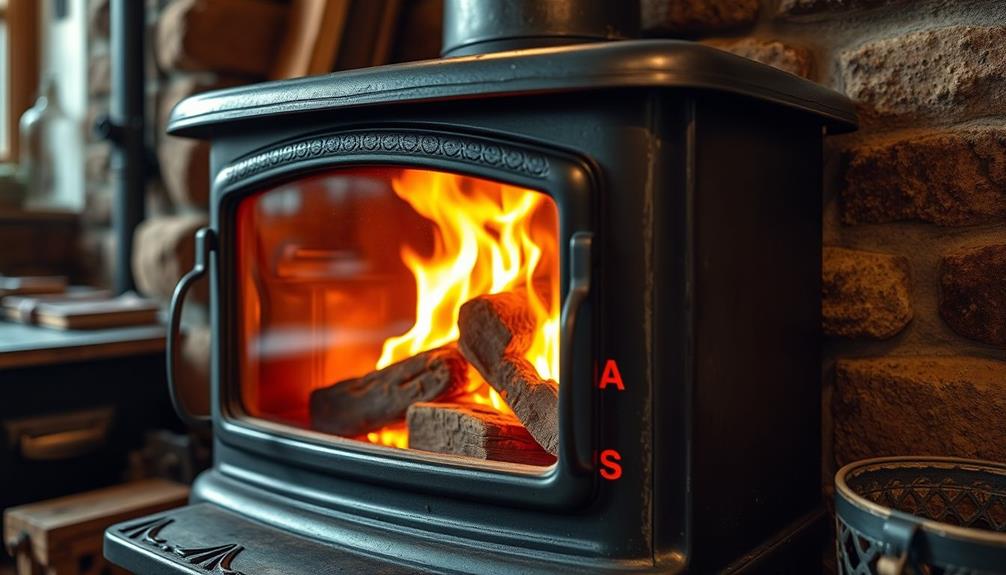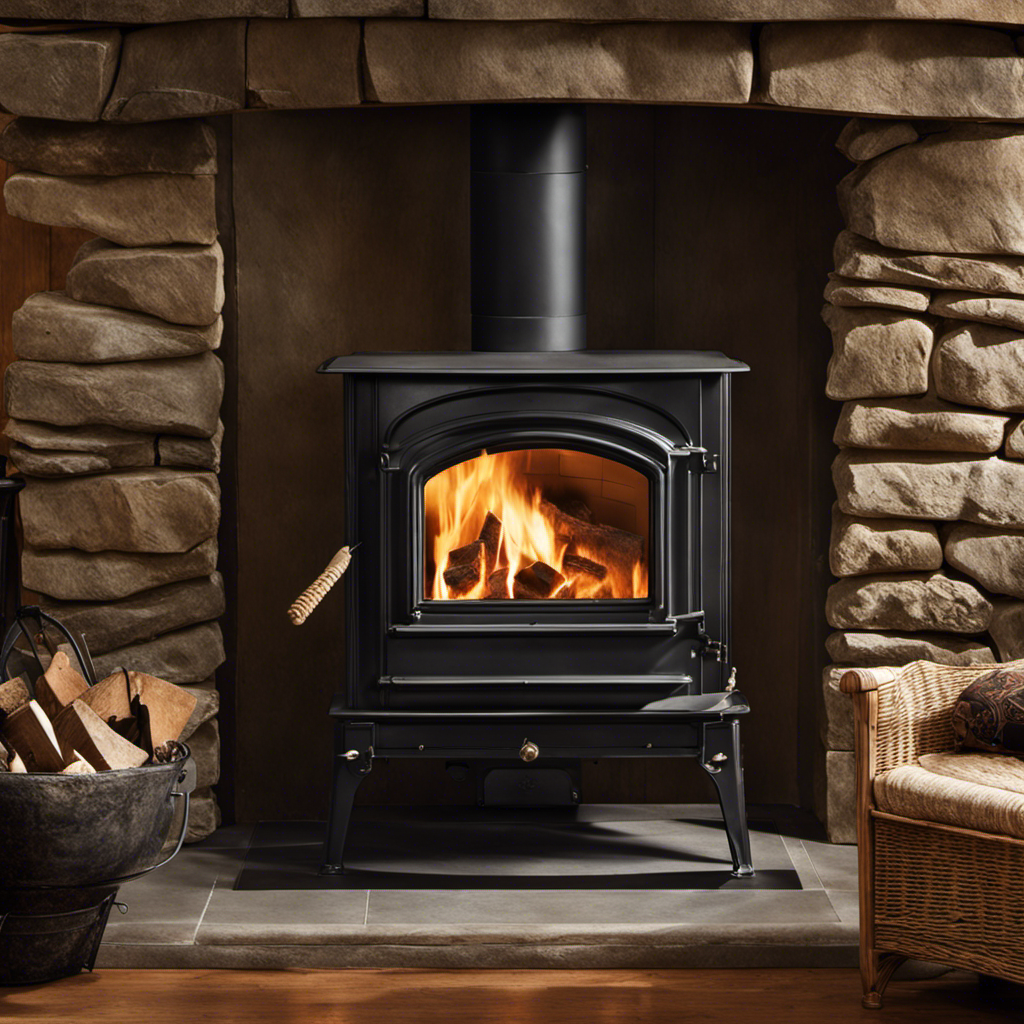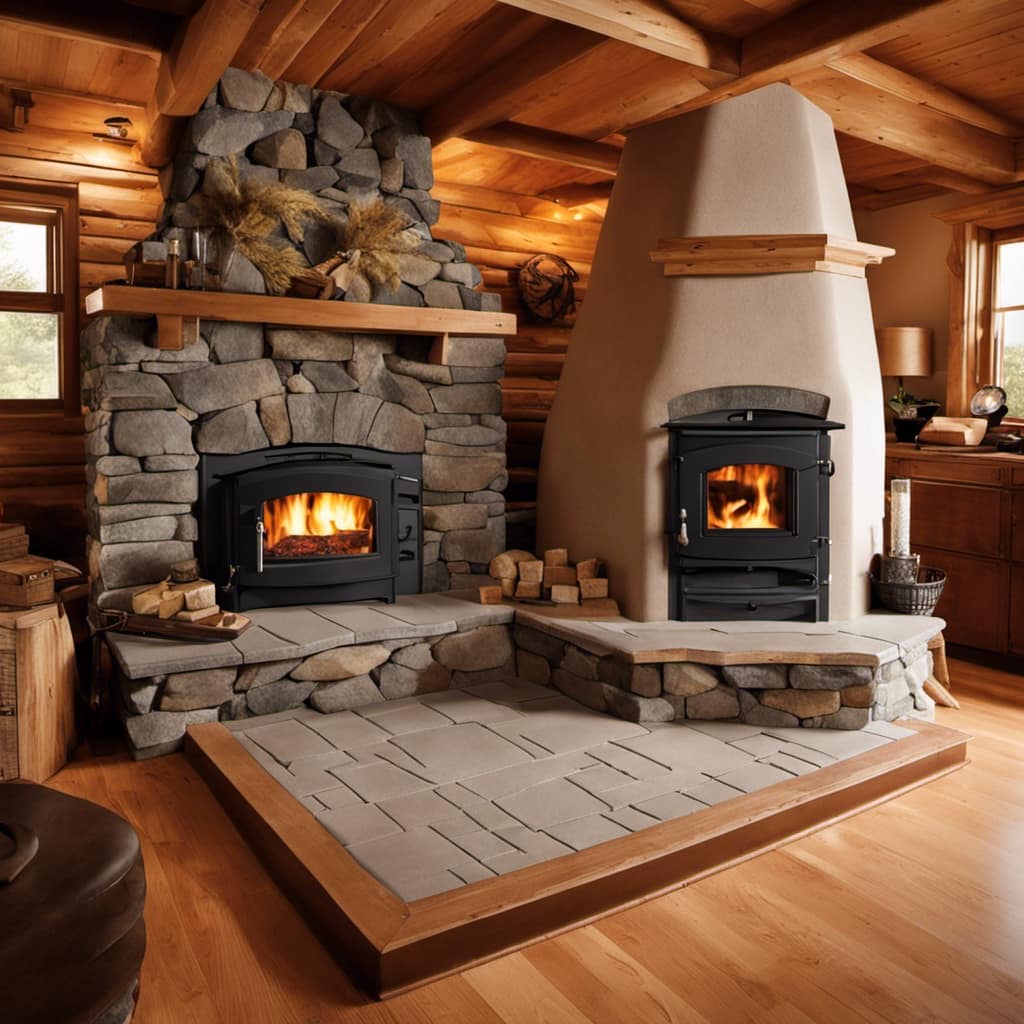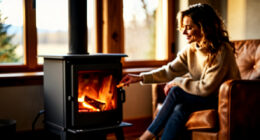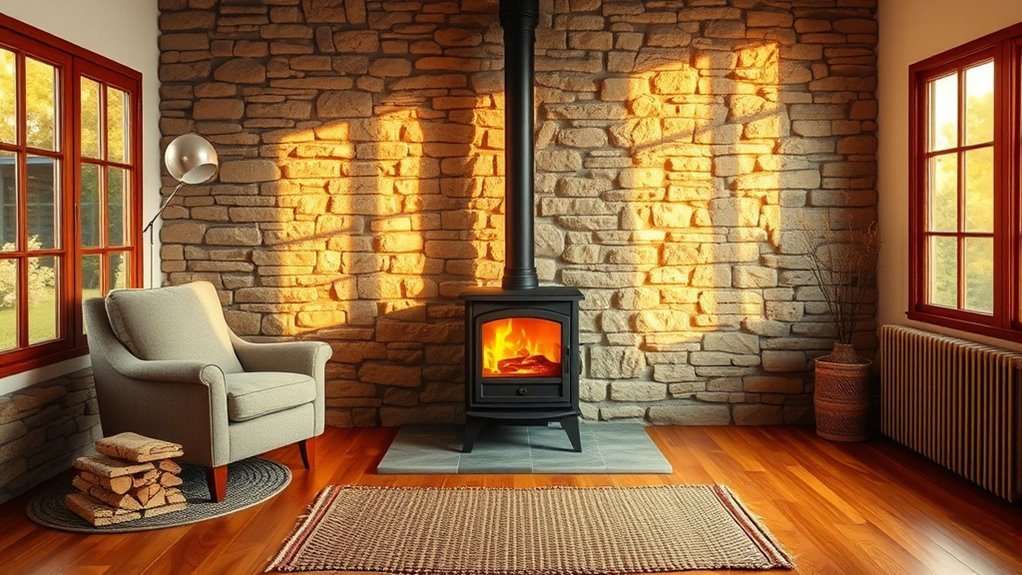

To choose the best spot for your wood stove, prioritize a safe, well-ventilated, and easily accessible location near a chimney or flue that meets safety standards. Consider placing it in a spot that blends with your home’s style, provides enough clearance from combustible materials, and allows smooth household flow. Also, select a site close to your wood supply for convenience. Keep in mind these factors to optimize safety, efficiency, and aesthetics as you plan your setup.
Key Takeaways
- Ensure proper ventilation and chimney placement to vent smoke and gases safely outside.
- Choose a location that complements your home’s aesthetic and provides central or strategic heating.
- Maintain safe clearances from combustible materials, following manufacturer and building code guidelines.
- Position near main living areas for easy access, operation, and effective household flow.
- Select a spot with convenient access to wood storage and ease of maintenance tasks.
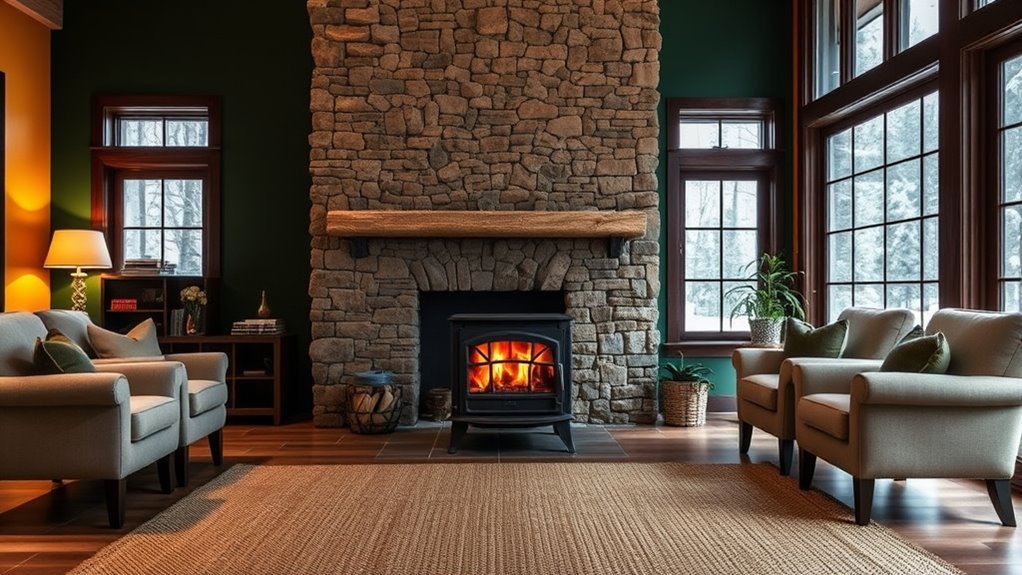
Choosing the best location for a wood stove is vital to maximize safety, efficiency, and comfort in your home. The spot you select can influence how well the heat circulates, how safe the setup is, and how it complements your interior design. When deciding, you need to take into account ventilation requirements carefully. Proper ventilation is essential to ensure smoke, gases, and other byproducts of combustion are safely vented outside. You’ll want to position the stove near a chimney or flue that’s appropriately rated for your unit, and make sure the ventilation path is direct, unobstructed, and compliant with local building codes. This not only keeps your home safe but also enhances the stove’s efficiency by reducing draft issues and ensuring a steady airflow.
Beyond safety, aesthetic considerations play a significant role in your decision. The location should blend seamlessly with your home’s style and layout, making the stove a focal point or a subtle addition, depending on your preference. Think about where it will look best and how it fits with existing furniture and room features. For example, placing a stove in a central location can create a cozy, inviting atmosphere and help distribute heat evenly. On the other hand, you might prefer a corner setup that minimizes visual impact but still provides effective heating. Remember, the stove’s appearance should complement your interior design, whether you favor rustic charm, modern minimalism, or traditional elegance.
As you plan, consider the proximity to combustible materials, ensuring you maintain safe clearances as specified by the manufacturer. This not only safeguards your home but also helps you avoid potential hazards. You’ll also want to evaluate how the stove’s placement affects the movement of your household. For instance, placing it near a main living area allows for easy access and control, but you’ll need to account for clearance space and proper venting routes. Think about the natural flow of your space and how the stove’s location interacts with doors, windows, and other structural elements. Additionally, selecting a location that considers wood supply accessibility can facilitate easier fueling and maintenance.

DURAVENT 6" DURAPLUS Through The Wall KIT
6 In. inner diameter
As an affiliate, we earn on qualifying purchases.
As an affiliate, we earn on qualifying purchases.
Frequently Asked Questions
How Does Local Climate Influence Stove Placement?
Your local climate greatly influences stove placement. In colder regions, you should position the stove where insulation considerations are maximized, helping retain heat. If you’re in an area with outdoor exposure, place the stove away from windows and doors to prevent heat loss and drafts. Climate factors also dictate whether you need extra shielding or ventilation to guarantee efficient heating and safety, making thoughtful placement essential for peak performance.
Can a Wood Stove Be Installed in a Basement?
Yes, you can install a wood stove in your basement, but you must follow fire safety guidelines and maintain proper wood stove clearance. Make certain the basement has adequate ventilation and a non-combustible floor, and check local codes before installation. Regularly inspect the stove and chimney for safety, keep combustibles away, and use a carbon monoxide detector. Prioritize safety to enjoy warmth without risks.
What Are the Ventilation Requirements for Different Locations?
You need proper ventilation for your wood stove to guarantee safety and indoor air quality. Check chimney clearance requirements to prevent fire hazards, and make sure your chimney is properly vented to the outside. Adequate airflow reduces smoke buildup and improves indoor air quality. Always follow local codes and manufacturer instructions for ventilation, including clearance distances and airflow paths, to keep your home safe and comfortable.
How Does Furniture Placement Affect Stove Safety?
Furniture placement directly impacts fire safety around your wood stove. Keep combustible items like sofas, curtains, and chairs at least three feet away to prevent fire hazards. While arranging furniture, consider aesthetic factors to maintain a cozy look without compromising safety. Proper spacing minimizes heat buildup on furniture, reducing risks. Always follow safety guidelines, and guarantee your setup balances both fire safety and aesthetic appeal for a warm, stylish, and safe environment.
Are There Zoning Restrictions for Stove Placement?
Yes, zoning restrictions can affect where you place your stove. You need to verify local building codes and fire safety regulations, which may specify minimum distances from walls and combustible materials. These rules protect your home and ensure safety compliance. While considering aesthetic considerations, always prioritize safety by following zoning laws, and avoid placing the stove where it could pose fire hazards or violate local restrictions.

Aboniris Hearth Tidy Set, All Black, Wood Stove Tool Set, Fireplace Companion Set
All black finish
As an affiliate, we earn on qualifying purchases.
As an affiliate, we earn on qualifying purchases.
Conclusion
Remember, the right placement of your wood stove can make all the difference in heating efficiency and safety. Did you know that properly positioned stoves can reduce energy costs by up to 20%? By choosing a central, accessible spot away from combustible materials, you’ll maximize warmth and minimize hazards. Take the time to plan your setup carefully—your comfort and safety depend on it. A well-placed stove keeps your home cozy all winter long.

Plexon 32" x 28" Thermal Stove Board and Wall Floor Protector – Durable, Heat-Resistant Fire Board for Wood Stoves, Hearth Pads and Pellet Stoves
Built from high-quality non-combustible materials, ensuring safe indoor use with wood stoves, pellet stoves, and other heaters
As an affiliate, we earn on qualifying purchases.
As an affiliate, we earn on qualifying purchases.

6 Inch Round Chimney Cap,Cone Top Chimney Cap with Screen,Roof Rain Wood Stove Pipe Cover Guard Outside Topper,Fireplace Exhaust Cover for 6" Stove Pipe-Galvanized Steel,Maximize Airflow Better Vent
Chimney Protector & Better Ventilation: 6 inch round chimney cap keep the leaves rain,snow and small animals from…
As an affiliate, we earn on qualifying purchases.
As an affiliate, we earn on qualifying purchases.