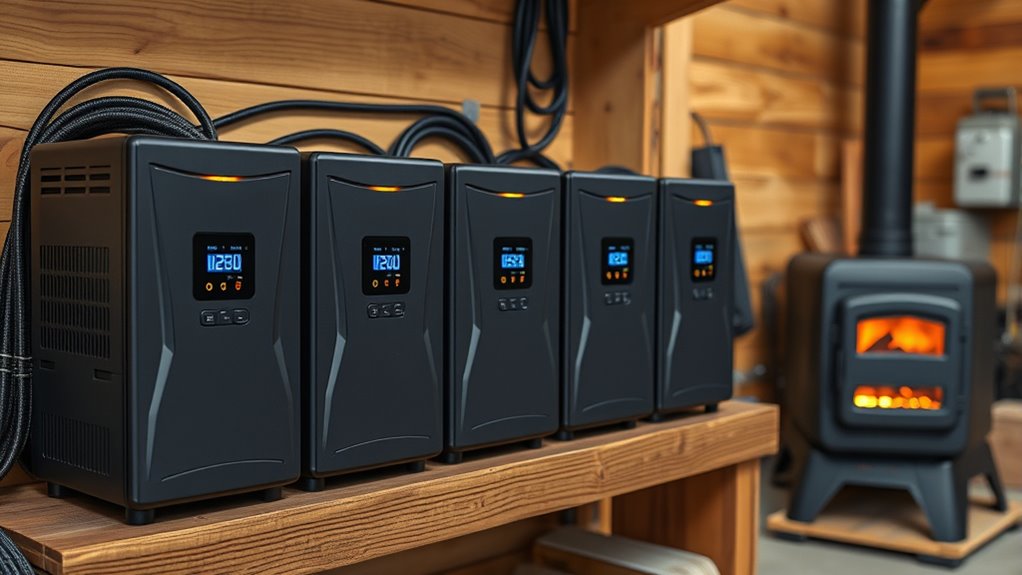

The best overall 24V battery backup for a pellet stove in this roundup is the 24V 100Ah LiFePO4 battery with APP monitoring: it pairs useful capacity with low-temperature protection and app-based status checks. For longer outages, the 24V 200Ah battery offers much more stored energy, while the UPSPro 24V outdoor UPS is a more integrated option for modest loads, though its 100W output may limit stove compatibility. The main tradeoffs are battery capacity, inverter and load compatibility, cold-weather charging, and whether you want a standalone battery or a packaged UPS. A battery labeled 24V is not automatically a complete pellet-stove backup system. Read on for the full comparison and the setup checks that matter before you buy.

Get backup power and energy gear delivered free with Prime
- Fast, free delivery on millions of items
- Prime Video, Amazon Music and more included
- Member-only deals all year
Key Takeaways
- The 24V 100Ah APP-monitoring battery is the roundup’s best overall fit for buyers who want practical capacity, status visibility, and low-temperature protection in one battery.
- The 24V 200Ah model leads on listed energy capacity at 5,120Wh, making it the clearest choice here for buyers prioritizing longer potential runtime over compactness.
- The UPSPro is the only listed product presented as an outdoor UPS system, but its 100W output means buyers need to verify the stove’s startup and running loads before choosing it.
- The LiTime 230Ah model stands out for cold-weather use because it includes self-heating; buyers should still check its charging limits and whether heating draws from available battery capacity.
- Most of the lineup consists of batteries, not complete stove-ready systems, so an appropriately sized pure sine wave inverter, safe wiring, and compatible charging equipment may be separate purchases.


| 24v battery backup systems for pellet stove | Capacity | Voltage | Battery chemistry | BMS |
|---|---|---|---|---|
| 2 Pack 25.6V 100Ah LiFePO4 Lit | 100Ah per battery | 25.6V | LiFePO4 | Built-in 100A |
| 24V 200Ah LiFePO4 Lithium Batt | 200Ah | 25.6V | LiFePO4 | Built-in 200A |
| UPSPro 24V 18Ah 432Wh Outdoor | 18Ah | — | — | — |
| 24V 100Ah LiFePO4 Lithium Batt | 100Ah | 24V | LiFePO4 | — |
| LiTime 24V 230Ah Self-heating | 230Ah | 25.6V | LiFePO4 | 200A, IP65 |
| Dyness 24V 100Ah LiFePO4 Lithi | 100Ah | — | LiFePO4 | — |
| ECO-WORTHY 24V 100Ah Lithium B | 100Ah | 24V | — | Built-in 100A BMS |
More Details on Our Top Picks
2 Pack 25.6V 100Ah LiFePO4 Lithium Battery with Built-in 100A BMS
This two-battery set is a flexible starting point for a pellet-stove backup system when you want to build capacity in stages. Each battery stores 2,560Wh, and the stated series-and-parallel support allows expansion up to 2S4P; compared with the single-unit 24V 100Ah battery from the same roundup, this pack gives you two separate batteries to arrange around your system design. The built-in 100A BMS and 5-year warranty add practical protection and support, but the supplied information does not specify inverter compatibility or runtime with a stove. I would confirm that the stove’s startup draw and inverter requirements fit before buying. Cold-weather performance below 5°C may also limit where the batteries can be installed, and a multi-battery setup calls for careful wiring.
Pros:- Two 100Ah batteries provide flexibility in system layout.
- Series and parallel expansion is supported up to 2S4P.
- Built-in 100A BMS provides battery protection.
- 5-year warranty is specified.
Cons:- The supplied data does not state pellet-stove runtime or inverter compatibility.
- Performance may vary below 5°C.
- Series and parallel setup requires careful handling and wiring.
Best for: Pellet-stove owners planning a scalable 24V backup bank who can verify inverter compatibility and handle battery wiring.
Not ideal for: Buyers who need a ready-to-connect UPS or who cannot provide a temperature-controlled battery location and safe installation.
- Voltage:25.6V
- Capacity:100Ah per battery
- Battery count:2
- Battery chemistry:LiFePO4
- Maximum continuous power:2,560W
- BMS:Built-in 100A
- Supported configuration:Up to 2S4P
- Weight:41.07 lb
- Warranty:5 years
Our verdict“Choose this set if you want two modular 24V batteries for a system you can size and configure yourself.”
24V 200Ah LiFePO4 Lithium Battery, 5120Wh Deep Cycle with Built-in 200A BMS, IP65 Waterproof, Suitable for Trolling Motor, Solar, RV, Marine, Off-Grid, Home Backup
For a pellet-stove owner prioritizing stored energy in one battery, this 200Ah model offers 5,120Wh—twice the stated energy of the 24V 100Ah APP-monitoring battery in this roundup. That extra capacity can support longer outages, though actual runtime depends on the stove’s draw, inverter losses, and any other connected loads. Its 200A BMS is a stronger current rating than the 100A units listed here, while the IP65 rating suits installations where dust or water exposure is a concern. The tradeoff is that the supplied product details do not give dimensions, expansion limits, or a direct pellet-stove runtime estimate. I would check the battery’s charging and inverter requirements before treating it as a drop-in home backup solution.
Pros:- 5,120Wh capacity exceeds the 100Ah batteries listed in this roundup.
- Built-in 200A BMS supports higher current than the 100A alternatives.
- IP65 rating provides protection against dust and water exposure.
- LiFePO4 chemistry is specified for deep-cycle use.
Cons:- No pellet-stove runtime estimate is provided.
- Dimensions and expansion configuration are not specified in the supplied data.
- A high-capacity battery still needs a compatible inverter and charging setup.
Best for: Owners with longer or more frequent outages who want substantial energy in a single 24V battery and can size the inverter separately.
Not ideal for: Buyers seeking a complete plug-and-play UPS, a compact battery, or clearly documented stove-specific runtime.
- Voltage:25.6V
- Capacity:200Ah
- Energy:5,120Wh
- Battery chemistry:LiFePO4
- BMS:Built-in 200A
- Ingress protection:IP65
- Weight:36.94kg
Our verdict“Pick this battery when maximizing stored energy in a single unit matters more than having a complete backup system.”
UPSPro 24V 18Ah 432Wh Outdoor UPS System with 24V 100W Out, PWM Charge Controller, and Enclosure
Unlike the larger LiFePO4 batteries in this roundup, the UPSPro is an assembled outdoor UPS with a weatherproof, lockable enclosure, charger, and PWM charge controller. That makes it a more self-contained choice for a small, compatible 24V load, but its 100W continuous output and 432Wh capacity sharply limit its fit for pellet stoves. Many stoves need an inverter-based AC supply, and this unit’s stated output is 24V DC; I would only consider it after checking the stove’s power input and startup demand. The 24V 200Ah battery stores far more energy, while the UPSPro’s advantage is its enclosure and included charging hardware. Its 36-inch enclosure also needs a suitable mounting location.
Pros:- Includes a PWM charge controller and 120/240VAC battery charger.
- Weatherproof, lockable polycarbonate enclosure is suited to outdoor mounting.
- Supports pole or wall mounting.
- Stated 24V DC output avoids adding a separate inverter for compatible loads.
Cons:- 100W continuous output may not support a pellet stove’s full operating or startup demand.
- 432Wh capacity is much lower than the larger battery options in this roundup.
- The 36-inch enclosure requires space and appropriate installation.
Best for: Buyers needing an enclosed outdoor 24V DC backup for a low-power component or a stove accessory confirmed to run within the 100W output limit.
Not ideal for: Pellet-stove owners whose appliance requires AC from an inverter, draws more than 100W, or needs backup for an extended outage.
- Output voltage:24V
- Capacity:18Ah
- Energy:432Wh
- Continuous load:100W
- Charge controller:PWM with status display
- Battery charger:120/240VAC, 24V, 120W lead-acid charger
- Enclosure:Weatherproof, lockable polycarbonate
- Mounting:Pole or wall mount
- Enclosure size:36 inches
Our verdict“Choose the UPSPro only for a low-power 24V DC load that fits its output limits, not as a general pellet-stove backup.”
24V 100Ah LiFePO4 Lithium Battery with APP Monitoring, 100A BMS, 2560Wh, Expandable to 2S4P, 5000+ Cycles, Low-Temp Protection, for RV, Solar, Trolling Motor, Camping, Off-Grid & Home Backup
This 100Ah battery is the most informative pick for owners who want to check battery status from a phone: Bluetooth app monitoring pairs with a 100A BMS, and the stated 2,560Wh capacity gives a clear starting point for estimating backup needs. Compared with the two-battery 100Ah set, this model puts monitoring and a specified low-temperature cutoff at the center rather than offering two batteries in the box. Its expansion support up to 2S4P can suit a growing system, but adding batteries and configuring an inverter still takes planning. The listed cutoff of -4°F is useful in colder spaces, though charging behavior and installation conditions should be verified for the intended setup. I would skip it if app access is a nuisance or if you want a complete UPS rather than a battery.
Pros:- Bluetooth app provides real-time battery monitoring.
- 2,560Wh capacity is clearly stated for backup planning.
- Low-temperature cutoff is specified at -4°F.
- Expansion support up to 2S4P allows a larger battery bank.
Cons:- The app may not suit owners who want on-device monitoring.
- Expansion and inverter integration require system planning.
- The supplied data does not include dimensions or an exact weight.
Best for: Pellet-stove owners building a 24V backup bank who want phone-based status checks and a stated low-temperature cutoff.
Not ideal for: Buyers who prefer a standalone UPS with included enclosure and charger, or who do not want to rely on a smartphone app for monitoring.
- Voltage:24V
- Capacity:100Ah
- Energy:2,560Wh
- Battery chemistry:LiFePO4
- BMS current:100A
- Cycle life:5,000+ cycles
- Low-temperature cutoff:-4°F
- Maximum expansion:2S4P
Our verdict“Choose this 100Ah battery if app monitoring and cold-weather protection matter more than a ready-made UPS enclosure.”
LiTime 24V 230Ah Self-heating Lithium Battery for Off-Grid, RV, Marine
The LiTime combines the largest stated capacity in this group—5,888Wh—with self-heating for charging conditions down to -20°C. For a pellet-stove backup installed in a cold outbuilding, that heating feature is a meaningful distinction from the 24V 200Ah battery, which lists IP65 protection but no self-heating. Bluetooth monitoring and a 200A BMS add useful system information and protection, while the stated expansion options support a larger bank. The compromises are physical: at 84.1lb, this is much heavier than the 100Ah options, and its listed dimensions may rule out tight battery cabinets. It is still a battery, not a complete UPS, so I would confirm inverter compatibility, charging needs, and the stove’s startup load before choosing it.
Pros:- 5,888Wh is the highest stated energy capacity among these five products.
- Self-heating supports operation in cold conditions down to -20°C.
- Bluetooth 5.0 app offers real-time monitoring.
- 200A BMS and IP65 protection are specified.
Cons:- At 84.1lb, installation may require help or careful handling.
- Its 20.47-inch length may not fit compact battery spaces.
- A compatible inverter and charging system are still needed.
Best for: Owners in cold climates who need high stored energy and can accommodate a heavy battery in a compatible 24V inverter system.
Not ideal for: Buyers with limited installation space, difficulty handling an 84.1lb battery, or a need for an assembled UPS system.
- Voltage:25.6V
- Capacity:230Ah
- Energy:5,888Wh
- Battery chemistry:LiFePO4
- Cycle life:4,000+ cycles at 100% DOD
- BMS:200A, IP65
- Self-heating range:-20°C to 5°C
- Weight:84.1lb
- Expandable configuration:Up to 4P2S
Our verdict“Choose the LiTime if cold-weather performance and maximum capacity outweigh its weight and space demands.”
Dyness 24V 100Ah LiFePO4 Lithium Battery Deep Cycle for Marine, RV, Solar
The Dyness makes the most sense for a pellet-stove setup that may grow into a wider off-grid battery bank. Its 25.6V, 100Ah LiFePO4 capacity and support for 4P2S configurations allow expansion beyond a single-battery installation, while the built-in smart BMS adds protection during routine charging and discharge. The stated 4,000+ deep-cycle life suits owners planning regular backup use rather than occasional emergency power alone. Compared with the UPSPro 24V 18Ah outdoor UPS, this is a battery for a separately configured system, not a ready-to-connect UPS; you will need compatible charging and inverter equipment for a pellet stove. Its listed 100A maximum discharge current also sets a boundary, and it is not intended for engine starting or other high-drain loads. Check your stove’s startup demand and system compatibility before choosing it.
Pros:- 25.6V and 100Ah capacity provides a substantial battery foundation for a 24V backup system.
- Supports 4P2S configurations for expansion up to the stated 20.48kWh.
- Smart BMS provides built-in battery protection.
- Stated service life exceeds 4,000 deep cycles.
Cons:- Requires a separate compatible inverter, charger, and system setup for pellet-stove backup.
- 100A maximum discharge current may not suit high-demand combined loads.
- Not suitable for engine starting, and the product data warns of fire risk if mishandled.
Best for: Pellet-stove owners building an expandable 24V off-grid battery bank who already have, or plan to select, a compatible inverter and charger.
Not ideal for: Buyers seeking a complete plug-and-play UPS, or anyone whose stove and other loads may exceed the battery’s 100A maximum discharge current.
- Nominal voltage:25.6V
- Capacity:100Ah
- Battery chemistry:LiFePO4
- Maximum discharge current:100A
- Deep-cycle life:4,000+ cycles
- Expansion support:4P2S, up to 20.48kWh
- Weight:9.9kg
- Dimensions:8.11 × 20.9 × 8.54 in
Our verdict“Choose the Dyness if you want a cycle-rated 24V battery that can grow into a larger backup bank and are prepared to configure the supporting equipment.”
ECO-WORTHY 24V 100Ah Lithium Battery Pack (2 Pack) with Metal Case and Bluetooth 5.1
This ECO-WORTHY package is aimed at buyers who want two 24V, 100Ah battery packs and a more visible way to keep tabs on their system. Bluetooth 5.1 monitoring can help you check battery status from a phone, while the metal cases, low-temperature cutoff, and safety switch add practical protections for an installation that may sit in a garage or utility area. The stackable design also gives this set room to expand, with the product data stating support up to 10.24kWh. Compared with the single Dyness 24V 100Ah battery, this package offers two units and phone monitoring, but the listed warranty is three years and Bluetooth may require troubleshooting. It is still a battery pack rather than a complete pellet-stove UPS: you must supply a compatible LiFePO4 charger and suitable inverter, and confirm the system configuration works for your stove.
Pros:- Two 24V 100Ah battery packs provide a larger starting setup than a single 100Ah battery.
- Bluetooth 5.1 supports real-time monitoring from a phone.
- Metal casing, low-temperature cutoff, and safety switch add useful installation and operating safeguards.
- Stackable design supports expansion up to the stated 10.24kWh.
Cons:- A dedicated LiFePO4 charger is required for optimal charging.
- The product may arrive with a low charge and need charging before use.
- Bluetooth connectivity can require troubleshooting, and the stated warranty is three years.
Best for: Pellet-stove owners who want a two-battery 24V storage setup with phone-based monitoring, low-temperature cutoff, and a physical safety switch.
Not ideal for: Buyers who need a complete backup appliance, do not want to configure a battery bank, or prefer a system with no reliance on Bluetooth troubleshooting.
- Voltage:24V
- Capacity:100Ah
- Pack quantity:2
- Dimensions:15.36 × 11.82 × 5.79 in
- Bluetooth:5.1
- BMS:Built-in 100A BMS
- Low-temperature cutoff:Yes
- Safety switch:Yes
- Warranty:3 years
Our verdict“Pick this two-pack if phone monitoring and built-in safety features matter more to you than a plug-and-play UPS or a longer stated warranty.”

How We Picked
I ranked these seven options by how clearly their stated features address a pellet stove’s backup needs: adequate usable energy, suitable voltage, dependable discharge capability, battery protection, and practical monitoring or cold-weather features. I also gave weight to whether a product is a packaged UPS or just a battery, since buyers can mistake a 24V battery for a complete backup setup. Product claims alone cannot confirm compatibility with a specific stove, so the ranking favors features that help buyers evaluate fit rather than assuming every unit will run every appliance.
The 24V 100Ah battery with app monitoring leads for its mix of capacity, low-temperature protection, and visibility into battery status. The 200Ah battery ranks strongly for energy capacity, while the UPSPro earns a place for its integrated format but is limited by its stated 100W output. The self-heating LiTime is a distinct cold-weather option; the other 100Ah batteries and paired packs offer alternatives, but their value depends on system configuration, included hardware, and verified electrical specifications. I would confirm inverter requirements and stove loads before treating any ranking as a guarantee of runtime.
Factors to Consider When Choosing 24v Battery Backup Systems For Pellet Stoves
Choosing a battery for a pellet stove means sizing a complete electrical path, not matching a battery label to the stove’s voltage. I would check the stove manual, the inverter, charging conditions, and the expected outage before comparing capacity alone.
Check the Stove’s Power Draw and Startup Demand
Find the stove’s running watts and startup or ignition demand in its manual or on its electrical label. Fans, augers, and ignition elements can create a different load profile from a steady low-watt appliance, so a battery’s amp-hour figure cannot answer whether it will start the stove. The inverter must handle both the continuous load and any short surge, with suitable headroom rather than a rating that barely matches normal operation. Confirm whether the manufacturer specifies a pure sine wave inverter; many electronic controls and motors are designed around clean AC power. If the manual gives only amperage, use the stated voltage and current to estimate watts, then verify the inverter’s surge specification separately. When the stove’s requirements are unclear, ask its manufacturer before purchasing.
Estimate Runtime From Usable Energy, Not the Label Alone
A battery’s advertised watt-hours describe stored energy, not the exact energy that reaches the stove. Inverter losses, battery limits, temperature, and the stove’s cycling pattern all affect real runtime. A useful first estimate divides usable battery watt-hours by the stove’s average watt draw, then reduces the result to account for conversion losses and reserve capacity. Do not assume the stove draws its maximum rated watts continuously, but do not size around an unusually low idle figure either. A larger battery such as the listed 200Ah option may extend outage coverage, while a paired battery setup can add capacity only when its wiring and configuration are supported. I would plan around the longest outage I need to cover and keep a margin for cold conditions or changing load.
Treat the Inverter and Battery as Separate Compatibility Checks
Most products in this roundup are batteries rather than complete AC backup systems, so the inverter, cables, fuse, and charging source may need to be selected separately. Match the inverter’s DC input to the battery’s nominal voltage and confirm that the battery’s BMS can support the inverter’s current demand. A 24V label alone does not establish that a unit has AC outlets, automatic transfer, or the output waveform a stove requires. Packaged equipment such as the UPSPro can simplify some of the system choices, but its stated 100W AC output may be too low for a particular stove. Check whether the backup system switches over automatically or requires manual intervention during an outage. Before use, verify grounding and wiring requirements with the equipment manuals or a qualified installer.
Plan for Cold Charging and Battery Placement
Winter outages can coincide with temperatures that affect lithium-battery charging, even when the battery can still discharge. Look for explicit low-temperature charging protection or a self-heating feature, and read the manufacturer’s temperature limits rather than relying on a product name. The LiTime’s self-heating feature addresses a different need from the APP battery’s low-temperature protection, so buyers should check how each function operates and whether heating consumes stored energy. A garage or shed can expose a battery to colder conditions than the stove room, while indoor placement may raise ventilation, clearance, and wiring questions. Never bypass a BMS temperature cutoff to force charging. Choose a location and charging plan that stay within the battery maker’s instructions.
Compare Monitoring, Expansion, and Maintenance Needs
App monitoring and Bluetooth can help you check state of charge without opening an enclosure, but reported data is only useful if the connection works where the battery is installed. Expansion claims also need careful reading: confirm permitted series and parallel configurations, compatible battery models, and any limits on cable length or protection. A two-pack does not automatically function as a single higher-voltage battery, and the wrong connection can damage equipment or create a hazard. Ask how the battery is recharged after an outage, whether the charger supports the chemistry, and whether periodic inspection is recommended. Buyers who want fewer separate components may favor an integrated UPS, while system builders may prefer a standalone battery with a separately selected inverter. Compare the added convenience against the flexibility and extra setup work each route requires.
Choose Capacity Around the Outage You Need to Cover
Paying for more capacity makes sense when outages are long, the stove has a higher average draw, or you need to power other essential loads at the same time. It adds less value if the local outage pattern is brief or the stove’s electrical demand is modest, especially when the inverter or wiring is the actual bottleneck. Decide whether the backup must run only the stove controls and fans or also other devices; every additional load changes the runtime estimate. A larger battery can also bring more weight and installation demands, while a compact UPS may be easier to place but offer less energy and output. Build a load list before choosing a capacity tier. That step helps prevent buying a large battery that cannot work with an undersized inverter or a small system that runs out before the outage ends.
Frequently Asked Questions
Can any 24V battery in this roundup run my pellet stove by itself?
No. Most entries are batteries, and a typical pellet stove needs an inverter to provide AC power unless the stove is specifically designed for direct DC operation. You also need to match inverter voltage, continuous output, surge capability, and waveform to the stove’s manual. Check the battery BMS discharge limit against the inverter’s likely current draw, especially during startup. The UPSPro is described as an outdoor UPS, but its 100W output still needs to be checked against your stove’s loads. Confirm the complete setup with the stove and battery instructions before connecting equipment.
How do I estimate whether 100Ah is enough for an overnight outage?
Start with the battery’s watt-hour capacity and the stove’s average—not just peak—electrical draw. Divide usable energy by average watts, then allow for inverter losses, battery reserve, temperature, and changes in stove cycling. The 24V 100Ah options list about 2,560Wh, but the usable amount at the AC outlet will be lower. If your estimate is close to the outage duration you need to cover, choose more capacity or reduce other loads rather than relying on a best-case calculation. A measured watt draw or manufacturer data gives a more dependable estimate than a general runtime claim.
Is a 24V 200Ah battery automatically a better choice than a 100Ah model?
It offers more listed energy capacity, but that only helps if the rest of the system can use it and you need the extra runtime. The inverter still has to meet the stove’s surge and continuous demands, and the charger must be suitable for the battery. A larger unit may add weight, take more room, and cost more to install or recharge, even when those factors are not reflected in capacity figures. If outages are short and the stove’s load is modest, a 100Ah battery may be a better fit. Compare expected runtime and installation needs instead of choosing by amp-hours alone.
What should I check before using a lithium battery in an unheated shed?
Read the battery’s permitted charging and discharging temperature ranges, since charging limits can differ from discharge limits. Look for a documented low-temperature cutoff or self-heating function, and learn whether heating draws energy from the battery. The LiTime self-heating model and the APP-monitoring battery with low-temperature protection address cold-weather concerns in different ways; neither removes the need to follow its manual. Keep the charger and battery within their approved temperature conditions, and do not defeat a BMS cutoff. If the shed regularly falls outside those limits, relocate the battery or ask the manufacturer about an approved heated enclosure.
Do two 24V batteries make a 48V system, and can I connect them in parallel?
Two batteries connected in series can raise system voltage, while parallel wiring keeps voltage the same and increases available capacity. That does not mean every battery or product pack supports either arrangement. Check the manufacturer’s approved configuration, matching requirements, BMS limits, and wiring protections before connecting units; the ECO-WORTHY and two-pack listings should not be treated as proof that every connection pattern is supported. A pellet-stove inverter must also match the resulting system voltage. If the documentation does not clearly permit the planned wiring, do not connect the batteries until the manufacturer or a qualified installer confirms it.
Conclusion
For most buyers who want a balanced battery rather than a specialized large-capacity setup, I would start with the 24V 100Ah APP-monitoring battery as my best overall pick. The 24V 200Ah battery is my choice for buyers who need more stored energy, while the LiTime 230Ah self-heating battery suits cold locations where its documented heating and charging behavior match the installation. For a more integrated, modest-output format, beginners can examine the UPSPro, but only if its 100W output meets the stove’s verified requirements; it is not a substitute for checking compatibility. For value-focused buyers, compare the paired 25.6V batteries or ECO-WORTHY two-pack against the complete cost and complexity of a supported inverter, charger, wiring, and enclosure rather than judging by pack size alone. Before choosing any option, confirm the stove’s startup load, inverter specifications, and battery connection rules.
Fall Picks
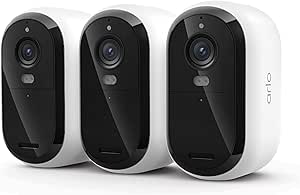
Arlo Essential Wireless Security Camera 2K (3rd Gen), 3-Camera Set with Yard Sign
As an affiliate, we earn on qualifying purchases.