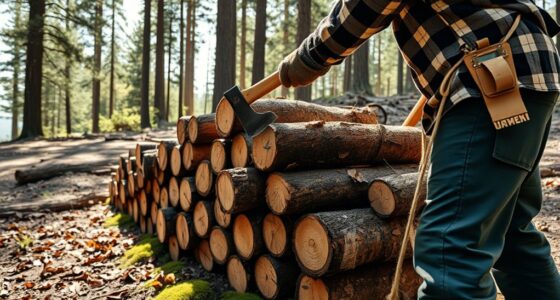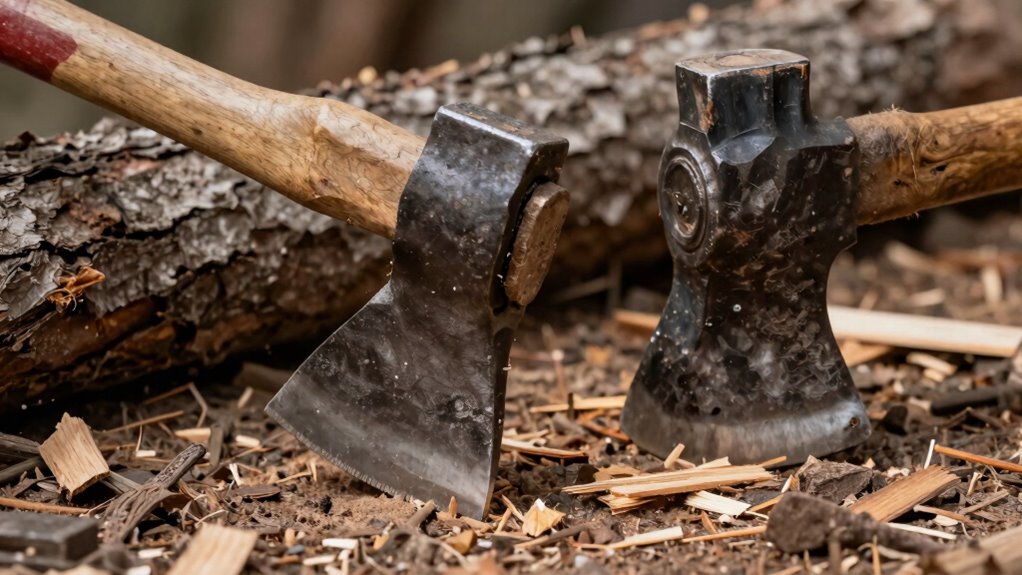

Choosing the wrong splitting tool, like a maul with a blunt blade or an axe with a narrow edge, wastes your energy fast. A wedge-shaped blade on a splitting axe helps you cut through wood more easily, reducing effort and fatigue. A longer handle provides better leverage for big logs, while a shorter one offers more control on smaller pieces. Making the right choice can turn tough splits into manageable tasks — keep exploring to learn more.

Get backup power and energy gear delivered free with Prime
- Fast, free delivery on millions of items
- Prime Video, Amazon Music and more included
- Member-only deals all year
Key Takeaways
- Using a maul with a broad, blunt blade for small or straight logs wastes more effort than a wedge-shaped splitting axe.
- Choosing a tool with an inappropriate handle length reduces leverage and increases fatigue during splitting tasks.
- Selecting the wrong tool, such as a maul for delicate splits, leads to unnecessary energy expenditure.
- Mismatched blade design and handle length decrease efficiency, causing faster fatigue and poorer splitting results.
- Proper tool selection, matching wedge blades with suitable handle length, minimizes energy waste and reduces user fatigue.
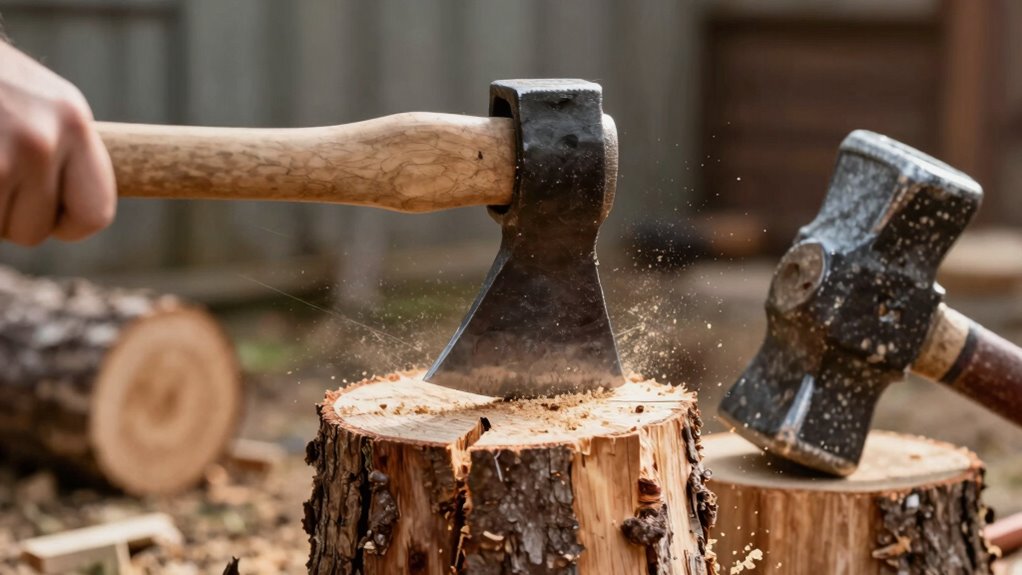
When it comes to splitting firewood, choosing the right tool can make all the difference. Your goal is to split efficiently without wasting energy, and the key lies in understanding the differences between splitting axes and mauls. One of the most important factors to consider is blade design. A splitting axe typically features a wedge-shaped blade that concentrates force along a narrow edge, allowing it to penetrate the wood fibers more easily. This design helps you make cleaner splits with less effort, especially on seasoned, straight-grained logs. On the other hand, a maul’s blade is broader and blunter, which can be effective for splitting tougher or knotty wood but often requires more force from you. The blade design directly impacts how much energy you need to apply; a well-designed wedge reduces fatigue and speeds up the process. Additionally, understanding the blade geometry can help you select the most effective tool for your needs. Proper technique, combined with the right blade design, can further improve your splitting efficiency and reduce unnecessary effort.
Another crucial aspect is handle length. When choosing between a splitting axe and a maul, you need to consider handle length because it influences your leverage and control. Longer handles provide greater leverage, helping you generate more force with less physical strain. This is especially true if you’re splitting larger logs or denser wood. A longer handle also allows you to stand further back, giving you more swing power. However, it can be harder to control for finer, more precise splits, so if you’re working on smaller pieces or want more maneuverability, a shorter handle might be better. The handle length also affects fatigue; a handle that’s too long for your height can tire you out quicker, while a handle that’s too short may force you to use more effort than necessary. Balance is key—choose a handle length that matches your strength and the size of the wood you’re splitting. Handle ergonomics are also worth considering to ensure comfort during extended use.
In essence, selecting between a splitting axe and a maul isn’t just about size or weight. It’s about matching blade design and handle length to your specific needs. If you want an easier, more efficient split, look for a tool with a wedge-shaped blade and a handle length that provides good leverage without sacrificing control. Remember, the wrong pick wastes your energy fast, leaving you exhausted before the job’s done. The right tool, on the other hand, can turn a tough chore into a manageable task, saving you time and energy. So, consider these factors carefully, and you’ll find yourself splitting firewood more effectively with less fatigue and more satisfaction.
As an affiliate, we earn on qualifying purchases.
Frequently Asked Questions
Which Tool Is Better for Splitting Small, Seasoned Logs?
For splitting small, seasoned logs, a splitting axe is your best choice. It offers better tool efficiency because its design focuses on precise, controlled strikes, making log splitting easier and faster. Unlike a maul, which is heavier and better suited for larger logs, a splitting axe reduces fatigue and energy waste. You’ll enjoy smoother, more effective log splitting with a tool designed specifically for smaller, seasoned logs.
Can Using the Wrong Tool Cause Safety Hazards?
Using the wrong tool can definitely cause safety hazards. When you choose a tool that isn’t suited for the task, it increases the risk of injury, like slips or missed strikes. Proper tool safety and injury prevention depend on picking the right equipment for the job. Always inspect your tools, wear safety gear, and use the correct tool to reduce accidents and stay safe while working.
How Do Weather Conditions Affect Tool Performance?
Weather impact gently whispers on your tools, influencing their dance with durability. Cold temperatures can make metal brittle, risking breaks during use, while moisture invites rust, dulling edges and weakening performance. Hot, dry conditions may cause wood handles to crack or splinter. To keep your tools thriving, store them properly and select weather-appropriate gear. Protecting your equipment ensures longevity and safety, even when nature’s moods shift unexpectedly.
Are There Maintenance Tips to Prolong Tool Lifespan?
To prolong your tool’s lifespan, regularly perform tool lubrication to prevent rust and guarantee smooth operation. Keep blades sharp through consistent sharpening, which reduces effort and prevents damage. Store tools in a dry, protected area and inspect them frequently for wear or damage. Proper maintenance not only extends their life but also improves safety and efficiency during use. Taking these steps saves you time and money in the long run.
What Is the Optimal Technique for Swinging Each Tool?
You should focus on maintaining blade sharpness and proper swing mechanics. For splitting axes, use a controlled, straight swing, driving the blade with your hips and shoulders, ensuring consistent contact. With a maul, swing with a smooth, full-body motion, letting your body weight do much of the work. Keep your grip firm but relaxed, and always check blade sharpness to maximize efficiency and reduce energy waste.
Conclusion
Choosing between a splitting axe and a maul depends on your needs, but remember, don’t put all your eggs in one basket. If you pick the wrong tool, you’ll be working twice as hard and wasting precious energy. Whether you go for the precision of an axe or the brute force of a maul, use what suits your task best. After all, it’s better to be safe than sorry—don’t bite off more than you can chew.
Halloween Picks
halloween
As an affiliate, we earn on qualifying purchases.