To handle ashes safely, use fire-resistant containers like ash buckets with tight-fitting lids to prevent hot embers from escaping. For removal, choose specialized shovels with heat-resistant blades designed for ashes, and use an ash vacuum with HEPA filters once ashes are fully cooled. Proper tools and disposal methods help prevent fires and injuries. Keep exploring to discover more essential safety tips and best practices for ash cleanup and disposal.
Key Takeaways
- Use fire-resistant ash buckets with tight-fitting lids for safe, contained disposal of cooled ashes.
- Select specialized ash shovels with heat-resistant blades to handle ashes safely without scattering embers.
- Employ vacuums designed for ashes, equipped with HEPA filters, only when ashes are completely cool.
- Always allow ashes to cool fully before transferring them into containers or using tools.
- Follow safety protocols to prevent fires, including proper disposal and regular inspection of tools.
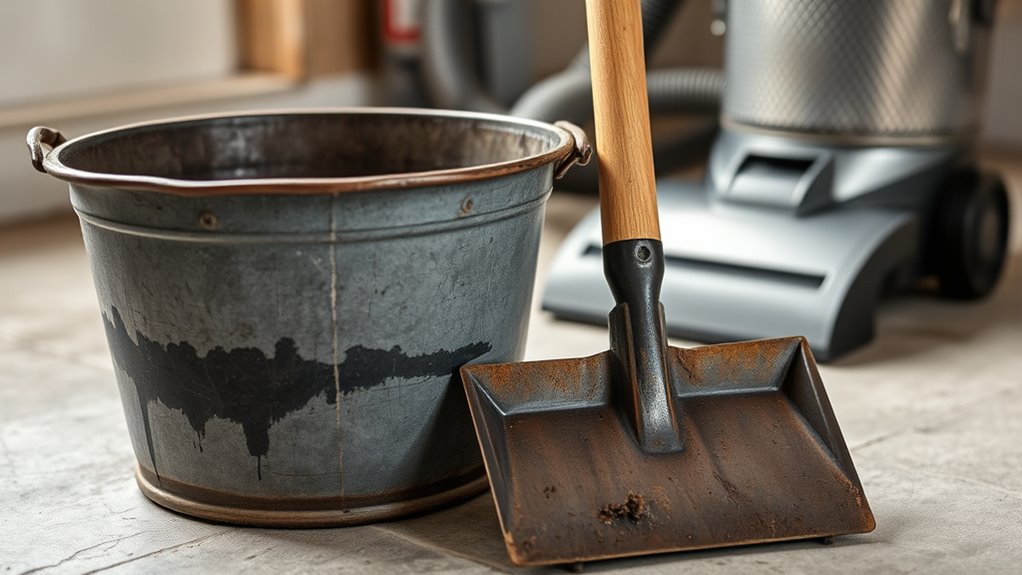
When dealing with the aftermath of a cozy fire or a wood stove, having the right tools makes cleanup safer and more efficient. Fire safety should always come first, and that means using the appropriate cleaning tools to handle ashes safely. An ash bucket is indispensable for this task. Designed specifically for ashes, these buckets are made from fire-resistant materials like steel or metal, preventing any accidental fires. You’ll want one with a tight-fitting lid to contain hot embers and reduce the risk of sparks spreading. When you’re finished burning, allow the ashes to cool completely before transferring them into the bucket — never dump hot ashes directly into a trash can or combustible container. Proper disposal is vital to prevent accidental fires, especially if ashes are still warm.
Using the right cleaning tools also means having sturdy shovels designed for ash removal. An ash shovel typically features a flat, wide blade that makes gathering and transferring ashes easier. Its materials are resistant to heat and corrosion, ensuring durability over time. Always handle the shovel carefully, especially when the ashes are still warm, to avoid stirring up dust or embers. When you scoop ashes, do so gently to prevent scattering hot particles, and deposit them into your ash bucket for safe storage. Remember, never use a regular shovel meant for dirt or coal for ashes — specialized ash shovels are safer and more effective.
Vacuuming ashes is another cleaning method, especially for those fine, powdery remnants that settle into cracks and crevices. Investing in a vacuum specifically designed for ashes is a smart move. These vacuums are equipped with HEPA filters that trap tiny particles and prevent dust from escaping back into the air, which is important for maintaining fire safety and indoor air quality. Regular household vacuums aren’t suitable because hot ashes could damage them or ignite dust. When using an ash vacuum, ensure the ashes are completely cool before vacuuming. Always follow the manufacturer’s instructions to avoid damage and keep your home safe.
Frequently Asked Questions
What Materials Are Best for Heat Resistance in Ash Buckets?
For heat resistance in ash buckets, you should choose materials like steel or cast iron, as they can withstand high temperatures without melting or warping. Fireproof ceramic and refractory bricks are also excellent heat resistant options, offering even better protection. These ash bucket materials guarantee safety and durability, especially when handling hot ashes. Always prioritize heat-resistant options to prevent accidents and prolong the lifespan of your ash storage container.
How Do I Prevent Shovels From Rusting Over Time?
Did you know that proper shovel storage can extend its lifespan by up to 50%? To prevent rusting, you should dry your shovel thoroughly after each use and apply a light coating of oil or rust inhibitor. Store it in a dry, covered area away from moisture. Regularly inspect and clean the shovel to catch rust early, ensuring rust prevention and keeping your tools in top condition for years to come.
Are Vacuum Cleaners Safe for Ash Removal From Delicate Surfaces?
Vacuum cleaners are generally safe for ash removal from delicate surfaces if they have a high-efficiency particulate air (HEPA) filter. Make sure your vacuum’s filters are designed to handle fine ash particles, preventing damage and dust escape. Use proper ash disposal methods, like sealing the ash in a metal container, and avoid overfilling the vacuum. This way, you protect your vacuum and keep your surfaces safe.
What Maintenance Tips Extend the Lifespan of Ash Shovels?
To extend your ash shovel’s durability, regularly clean off ash residue after use and dry it thoroughly to prevent rust. Avoid using harsh chemicals that could weaken the material. Store your shovel in a dry, sheltered spot to prevent corrosion. Proper ash disposal practices, like avoiding overloading, reduce strain on the shovel. These tips help maintain your shovel’s strength, ensuring it stays reliable for future ash removal tasks.
Can Vacuum Models Handle Both Wet and Dry Ashes Effectively?
A dual-purpose vacuum is your best bet for handling both wet and dry ashes effectively. It’s like a Swiss Army knife, versatile and reliable. With wet-dry capability, it can suck up fine ashes and stubborn damp residues without clogging or losing power. Just make certain you choose a model specifically designed for ash cleanup, and always follow the manufacturer’s instructions to keep it functioning smoothly and extend its lifespan.
Conclusion
So, next time you’re battling ashes, just remember: you’ve got the mighty arsenal of buckets, shovels, and vacuums at your command. Who knew cleaning up after a blaze could feel like preparing for an epic battle? With these tools, you’re basically a firefighter in disguise—minus the sirens. So go ahead, conquer that ash pile like a hero, and enjoy the sweet victory of a spotless hearth. You’re practically unstoppable.