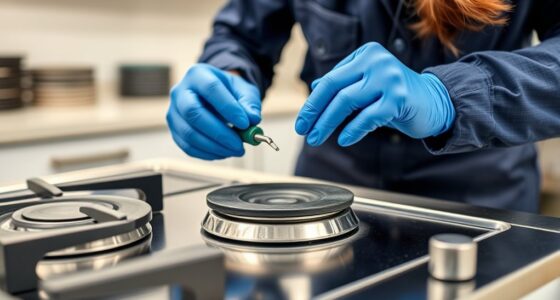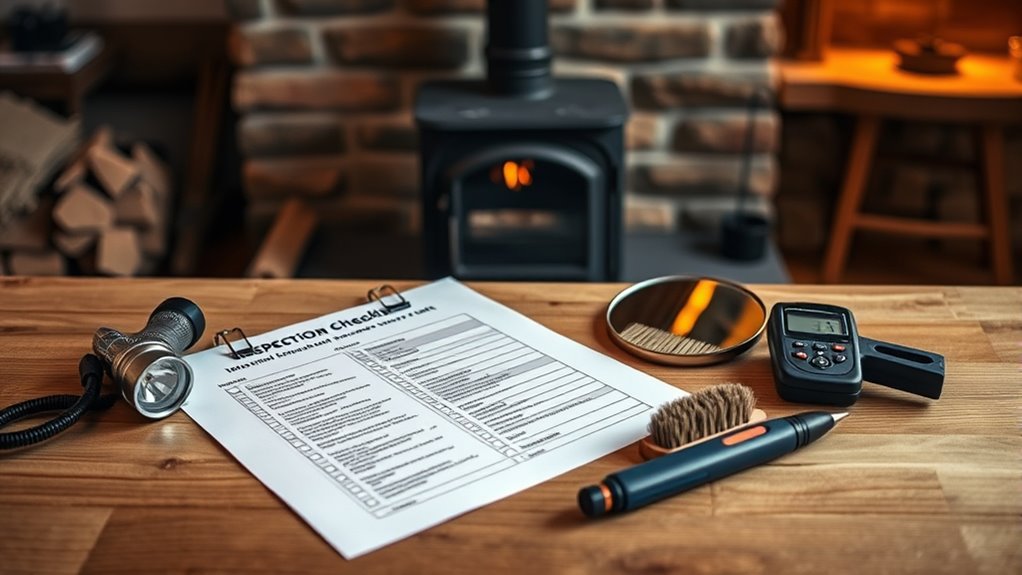

To keep your wood stove and chimney safe and efficient, perform an annual inspection that covers both exterior and interior checks. Examine the chimney crown, vent cap, and surrounding structure for cracks or blockages. Clean out creosote buildup and guarantee proper airflow within the chimney. Check your stove’s seals, glass, and air vents, and test smoke and carbon monoxide detectors. Regular inspections help prevent hazards and prolong your equipment’s lifespan; continue for more detailed tips.
Key Takeaways
- Inspect exterior chimney crown, vent cap, and for blockages or damage to ensure proper airflow and safety.
- Check interior chimney for creosote buildup, soot, cracks, and signs of corrosion; clean or repair as needed.
- Examine wood stove door seals, ash removal, glass cleanliness, and unobstructed vents for efficient operation.
- Test smoke and carbon monoxide detectors; replace batteries and ensure all safety devices function properly.
- Record inspection findings, address minor issues promptly, and schedule professional cleaning or repairs annually.
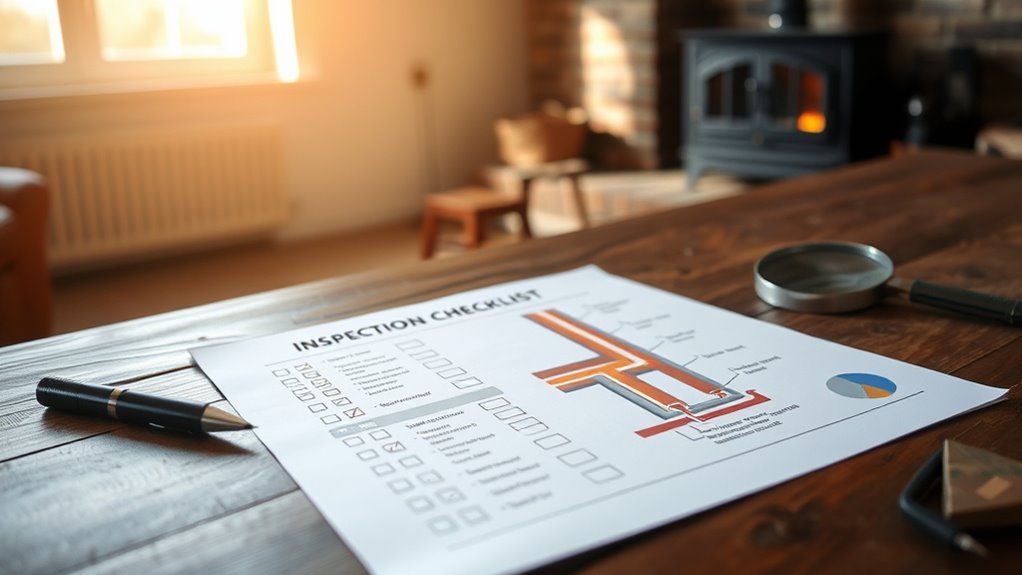
Regularly inspecting your wood stove and chimney is essential for safety and efficiency, especially before the heating season begins. Taking the time to perform a thorough check helps prevent dangerous situations like chimney fires and ensures your heating system operates at its best. When focusing on fire safety, you want to look for any signs of creosote buildup, cracks, or other damage that could pose a risk. Chimney maintenance becomes a key part of this process, as many hazards develop silently over time. By staying proactive, you reduce the chance of smoke or carbon monoxide leaks, keeping your home and loved ones safe.
Start your inspection outside by examining the chimney crown and exterior vent cap. Look for cracks, deterioration, or blockages caused by debris or animal nests. A damaged or blocked vent cap can restrict airflow, causing poor draft, smoke spillage, and increased fire risk. Next, inspect the chimney’s interior if accessible, checking for creosote deposits, soot, or any signs of corrosion. Creosote buildup is a major concern because it’s highly flammable; regular chimney maintenance includes removing this accumulation to prevent chimney fires. If you notice excessive creosote or hardened deposits, it’s wise to schedule a professional cleaning. Maintaining proper ventilation and airflow is crucial for safe operation and efficient burning.
Inside your home, inspect the wood stove itself. Ensure that the door seals tightly and that there are no cracks or warping. A loose or damaged door seal can lead to inefficient burning and increased smoke. Check the ash pan and remove any excess ash, which can obstruct airflow if left unchecked. Clean the glass door to remove soot and ensure you can monitor the fire safely. Additionally, verify that the stove’s air inlets and vents are unobstructed, as proper airflow is essential for safe and efficient operation.
Don’t forget to review your smoke and carbon monoxide detectors. Test them to confirm they’re functioning correctly and replace batteries if needed. These safety devices are your first line of defense in case of a fire or gas leak, so maintaining them is a key part of your annual inspection routine. Document any issues you discover during your check and address them promptly, either by doing minor repairs or scheduling professional services for more complex repairs or chimney cleaning. Staying vigilant with regular inspections not only enhances your fire safety but also extends the lifespan of your wood stove and chimney, ensuring a warm, safe home throughout the heating season.

Protalwell Wood Stove Gasket, 1/2" Wood Stove Door Gasket Kit, High Temperture Resistant Gasket Rope Replacement for Stove or Fireplace Doors, Grey Color Fiberglass Gasket
High Temperature Resistance Gasket Rope – Made by Graphite Impregnated Fiberglass, will not burn and withstand to temperatures…
As an affiliate, we earn on qualifying purchases.
As an affiliate, we earn on qualifying purchases.
Frequently Asked Questions
How Often Should I Replace My Chimney Cap?
You should replace your chimney cap whenever you notice signs of damage or corrosion, which can compromise chimney cap maintenance. Regular inspections help identify issues early, but generally, chimney cap replacement is needed every 5 to 10 years, depending on weather conditions and material quality. Make sure to check for rust, cracks, or loose fittings, and replace your chimney cap promptly to keep your chimney safe and functioning properly.
Can I Perform Inspection Myself or Need a Professional?
Think of inspecting your chimney as giving it a health check-up. While you can do a DIY safety inspection, it’s best to call in a professional for a thorough look. Professionals have the tools and expertise to spot hidden issues, ensuring safety and efficiency. If you’re unsure or uncomfortable, don’t hesitate—prioritize a professional inspection to keep your home safe and your stove running smoothly.
What Are Signs of Chimney Liner Damage?
You’ll notice signs of chimney liner damage if you see chimney deterioration or liner rust. Cracks, holes, or loose sections indicate deterioration, while rust spots suggest moisture issues that weaken the liner. You might also observe smoke smells, poor draft, or soot buildup outside the chimney. If you spot these signs, it’s best to contact a professional to inspect and repair your chimney to guarantee safe operation.
Are There Specific Safety Precautions During Inspection?
During inspection, you should prioritize fire safety by wearing appropriate protective gear and ensuring the area is clear of combustibles. Use proper inspection tools like flashlights and mirror tools to thoroughly examine the chimney and stove. Always turn off the stove and disconnect power before starting. Keep a fire extinguisher nearby, and work slowly to identify any issues safely, preventing potential hazards during your inspection.
How Do I Choose the Right Inspection Service?
Choosing the right inspection service is like finding a trustworthy guide for a safe journey. Look for providers with solid inspection checklists and a reputation for thoroughness. Ask for service recommendations from friends or online reviews to guarantee reliability. You want a team that prioritizes safety, knows chimney systems well, and offers transparent, detailed assessments. Trust your instincts and pick someone who makes you feel confident about your stove’s safety.

8 Inch Chimney Cap, 8" Stainless Steel Cone Top Chimney Cap with Screen, Adjustable and Reinforced Round Chimney Cap, Chimney Cover for Vents,Rain Cap for All-Round Chimney,8 Inch Round Chimney Cap
【304 Stainless Steel Material】8 inch chimney cap Upgraded with 304 stainless steel, round chimney cap is more stable…
As an affiliate, we earn on qualifying purchases.
As an affiliate, we earn on qualifying purchases.
Conclusion
Think of your chimney as the backbone of your cozy home’s warmth, much like a lighthouse guiding ships safely ashore. Regular inspections ensure it stays sturdy and reliable through winter’s storms. By catching issues early, you prevent costly repairs and keep your family safe. So, embrace this checklist as your trusted map, guiding you to a season of warmth and peace. After all, a well-maintained chimney is the silent guardian of your home’s comfort.

Rutland Creosote Remover, Fireplace, Wood Stove & Chimney Cleaner, 2 lb Tub
Creosote remover penetrates the sticky, tar-like creosote and turns it into a loose, powdery, non-adhering ash that can…
As an affiliate, we earn on qualifying purchases.
As an affiliate, we earn on qualifying purchases.

Kidde Carbon Monoxide Detector, Plug-In with 9V Battery Backup, Digital Display, 85 dB Alarm, LED Status Light Indicators, 3rd Edition
Easy Installation – simply plug-in to a standard, 120V outlet in your home
As an affiliate, we earn on qualifying purchases.
As an affiliate, we earn on qualifying purchases.