To perform an annual chimney sweep, start by gathering tools like a chimney brush with extension rods, a scoop or shovel, and a HEPA-filtered vacuum. First, inspect your chimney for creosote buildup, blockages, and damage. Then, carefully insert the brush into the flue, scrubbing with firm strokes to remove soot. Afterward, vacuum up debris and check your fireplace for needed repairs. Keep in mind, mastering these steps will help keep your fireplace safe and efficient.
Key Takeaways
- Gather essential tools: chimney brush, extension rod, scoop/shovel, HEPA vacuum, and safety gear.
- Inspect the chimney using a flashlight for creosote buildup, blockages, and damage before cleaning.
- Attach the brush to the extension rod and scrub the flue walls with firm, steady strokes from the firebox upward.
- Remove debris with a scoop/shovel and vacuum the area thoroughly with a HEPA filter vacuum.
- Perform routine inspections and maintenance post-cleaning to ensure safety and prolong chimney lifespan.
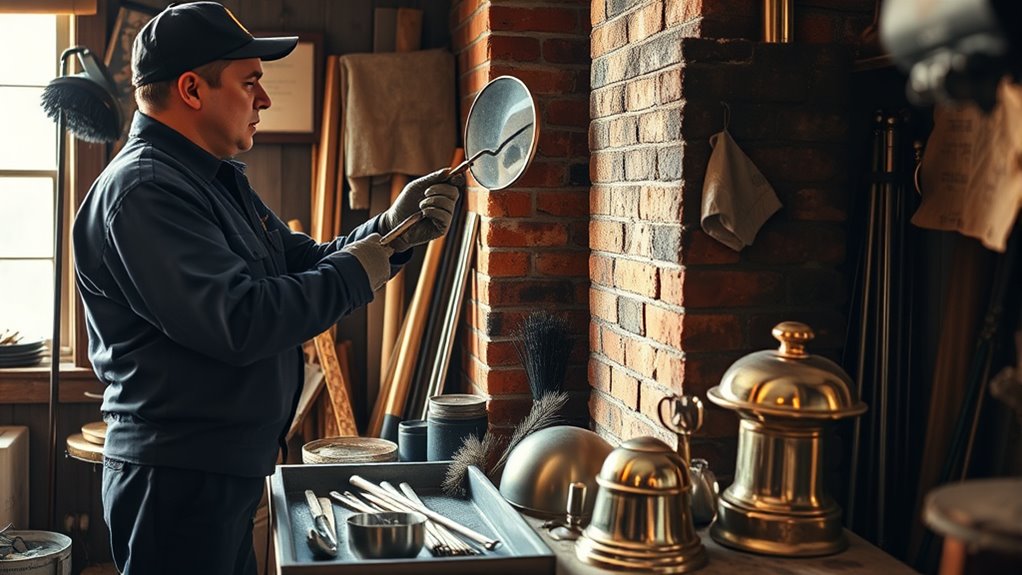
Cleaning your chimney thoroughly requires the right tools and a clear step-by-step process. When it comes to fireplace maintenance, taking the time to do it properly guarantees your home stays safe and your fireplace functions efficiently. Before you start, it’s imperative to understand the safety precautions involved. Always wear protective gear like gloves, goggles, and a dust mask to shield yourself from soot, debris, and potential hazards. Make sure your workspace is well-ventilated and that the area around your fireplace is clear of clutter. If you’re unfamiliar with chimney cleaning or unsure about safety, consider consulting a professional.
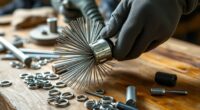
Once you’re prepared, gather the necessary tools. A chimney brush with stiff, durable bristles is your primary cleaning instrument. Usually, you’ll need a brush that fits the diameter of your chimney flue. Attach a sturdy extension rod to reach the entire length of the chimney from the firebox to the top. A chimney scoop or shovel is useful for removing loose soot and ash from the firebox. Additionally, a shop vacuum equipped with a HEPA filter helps clean up residual dust and debris once you’ve finished scrubbing. Drop cloths or tarps protect your flooring from soot and ash, and a flashlight or headlamp will help you see clearly inside the dark chimney interior.
Gather essential tools: chimney brush, extension rod, scoop, vacuum, drop cloths, and a flashlight.
Start your chimney maintenance by inspecting the interior for creosote buildup, blockages, or damage. Use a flashlight to check the flue lining, and look for excessive soot or cracks. Once inspected, attach the chimney brush to the extension rod, and carefully insert it into the chimney from the firebox. Using firm, steady strokes, scrub the flue walls to loosen soot and creosote deposits. Work your way up and down, making sure to cover the entire surface. If you encounter stubborn buildup, apply gentle but persistent pressure. Be cautious not to damage the lining. Regular chimney maintenance can help prevent dangerous fires and ensure optimal performance. Incorporating proper cleaning techniques reduces the risk of unsafe buildup and prolongs the life of your chimney. Additionally, understanding chimney safety can help prevent fires and improve overall home safety.
After scrubbing, remove the chimney brush and use a shop vacuum to clean out loose soot and debris from the firebox and around the opening. Dispose of the collected debris safely, following local regulations. It’s also beneficial to schedule professional inspections periodically to identify issues that may not be visible during routine cleaning. Wipe down the firebox and surrounding area, and inspect for any signs of damage or needed repairs. Remember, regular chimney maintenance not only prevents dangerous creosote fires but also extends the lifespan of your chimney. Always adhere to safety precautions throughout the process, and if you notice significant damage or persistent issues, don’t hesitate to call in a professional chimney sweep. Proper tools, careful steps, and safety awareness ensure your chimney remains clean, safe, and efficient for years to come.
Frequently Asked Questions
How Often Should I Schedule a Chimney Sweep?
You should schedule a chimney sweep at least once a year to maintain proper chimney maintenance and guarantee safe operation. If you use your fireplace frequently or burn seasoned hardwood, consider increasing the cleaning frequency to twice a year. Regular chimney cleaning helps prevent creosote buildup, reduces fire risks, and keeps your home safe. Don’t wait until you notice problems; routine chimney maintenance is essential for peace of mind.
Are DIY Chimney Cleaning Methods Effective?
Are DIY chimney cleaning methods effective? You might think so, but without proper tools and techniques, you risk incomplete soot removal or damaging your chimney. A thorough chimney inspection is essential first, ensuring safety and proper maintenance. While small DIY cleanings can help, professional chimney sweeps are best for extensive soot removal and inspection. Relying on experts guarantees your chimney stays safe, efficient, and free from hidden hazards.
What Are Signs My Chimney Needs Cleaning?
You’ll notice signs like smoke backing up into your home, a strong odor, or excessive soot on your fireplace glass, indicating your chimney needs cleaning. Regular chimney maintenance tips include checking for creosote buildup and blockages to make certain fireplace safety. If you see these signs, don’t delay—clean your chimney promptly to prevent fire hazards, improve efficiency, and keep your home safe during colder months.
Can a Chimney Sweep Improve My Fireplace’s Efficiency?
Did you know that regular chimney maintenance can boost your fireplace’s efficiency by up to 30%? Yes, a professional chimney sweep can markedly improve your fireplace’s performance by removing creosote and soot buildup, ensuring better airflow. This not only makes your fireplace burn hotter and cleaner but also reduces fire risks. So, scheduling an annual chimney sweep can keep your fireplace running smoothly and efficiently all year round.
Is Chimney Cleaning Safe for Older Homes?
Chimney cleaning is generally safe for older homes if you hire professionals experienced with historical techniques and familiar with various chimney materials. They carefully assess your chimney’s condition, using appropriate tools to avoid damage. Older chimneys may require special attention to preserve their integrity, so it’s essential to select experts who understand the unique needs of your home’s chimney system. Proper cleaning ensures safety and prolongs your chimney’s lifespan.
Conclusion
Remember, a stitch in time saves nine. Regular chimney sweeping with the right tools and steps keeps your fireplace safe and efficient. Don’t wait until soot builds up or problems arise—stay proactive. With a little effort now, you’ll enjoy cozy fires without worries. Keep your chimney clean and your home warm, because a well-maintained chimney is the key to lasting comfort and safety. Stay vigilant, and your fireplace will serve you well for years to come.