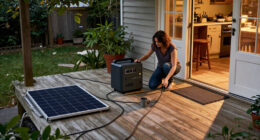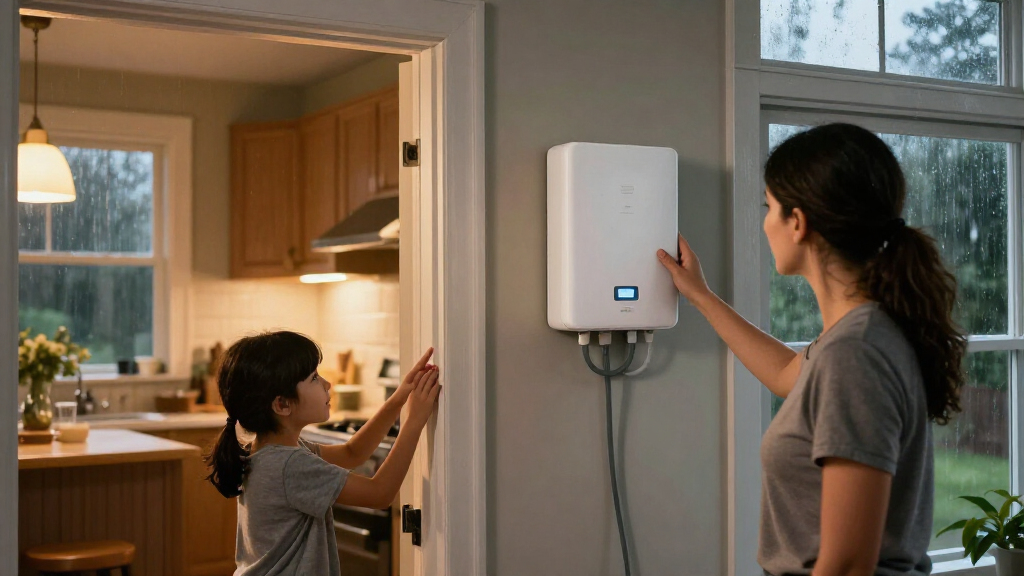
For a system that can back up selected home circuits with dedicated transfer equipment, I rank the EF ECOFLOW TITAN 10kWh Home Backup System with Smart Home Panel 10 as the best overall pick in this lineup. The ECO-WORTHY 48V systems stand out for buyers prioritizing larger battery capacity and a 10kW inverter, while the Anker SOLIX E10 offers an unusually wide stated capacity range for homes planning to scale. The main tradeoff is between portable stations that are simpler to place and expandable battery systems that require more planning, wiring, and installation. Capacity alone does not tell you which appliances can run at once, or how long they will last. Continue reading for a comparison of all 11 systems and guidance on matching backup equipment to your home’s actual loads.

Get backup power and energy gear delivered free with Prime
- Fast, free delivery on millions of items
- Prime Video, Amazon Music and more included
- Member-only deals all year
Complete the kit


Key Takeaways
- The EcoFlow TITAN package leads for integrated home backup: its listed 10kWh capacity, extra battery, and Smart Home Panel 10 make it the clearest packaged option here for backing up selected circuits.
- ECO-WORTHY’s 48V systems emphasize inverter capacity and battery scale: the 10kW inverter models suit buyers comparing larger fixed setups, but product configurations differ, so verify exactly which batteries are included.
- Portable stations are not automatically whole-house systems: the DELTA Pro and Jackery HomePower models offer 3.6kWh-class storage, but home-circuit integration and simultaneous loads depend on compatible equipment and setup.
- Extra batteries address runtime, not every power limit: the Jackery 7168Wh bundle and ECO-WORTHY two-battery options add stored energy, while inverter output and circuit design still shape what can run together.
- The Anker SOLIX E10 is the scale-focused outlier: its stated 12–90kWh range may suit phased capacity planning, whereas the Anker F3800 Plus package is a more contained portable-station-and-panel approach.
| EF ECOFLOW DELTA Pro Portable Power Station, 3600Wh, 120V, 3600W AC Output | 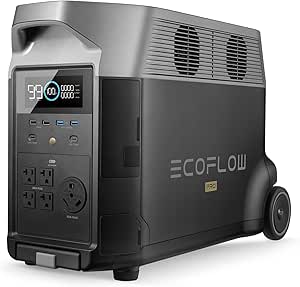 | Best Portable Expandable Backup | Battery capacity: 3,600Wh | Battery type: LFP | AC output: 3,600W at 120V | VIEW LATEST PRICE | See Our Full Breakdown |
| ECO-WORTHY 48V Home Backup Power System with 10kW Inverter and 10.24kWh Battery |  | Best Value Complete Home Kit | Battery chemistry: LiFePO4 | Battery configuration: Two 51.2V, 100Ah batteries | Total energy capacity: 10,240Wh | VIEW LATEST PRICE | See Our Full Breakdown |
| ECO-WORTHY PowerMega 48V 314Ah LiFePO4 Energy Storage System with 10kW Hybrid Inverter |  | Best Single-Battery High-Capacity System | Battery chemistry: LiFePO4 | Battery capacity: 314Ah at 51.2V | Usable energy: 16.1kWh | VIEW LATEST PRICE | See Our Full Breakdown |
| Jackery HomePower 3600 Plus Portable Power Station, 3584Wh |  | Best Portable Entry Point | Battery capacity: 3,584Wh | Output wattage: 3,600W | Parallel output: 7,200W | VIEW LATEST PRICE | See Our Full Breakdown |
| Jackery HomePower 3600 Plus Portable Power Station with Extra Battery, 7168Wh, 3600W |  | Best Portable Runtime Bundle | Battery chemistry: LFP | Capacity: 3,584Wh; 7,168Wh with extra battery | AC output: 3,600W | VIEW LATEST PRICE | See Our Full Breakdown |
| ECO-WORTHY 48V 314Ah LiFePO4 Battery System with 10kW Hybrid Inverter (2 Batteries) |  | Best Integrated High-Capacity System | Battery chemistry: LiFePO4 | Battery configuration: 2 batteries, 314Ah each | Battery voltage: 51.2V | VIEW LATEST PRICE | See Our Full Breakdown |
| ECO-WORTHY Powermega 48V 314Ah LiFePO4 Battery, 2-Pack |  | Best for Expandable Battery Storage | Battery chemistry: LiFePO4 | Pack size: 2 batteries | Voltage: 51.2V | VIEW LATEST PRICE | See Our Full Breakdown |
| Anker SOLIX F3800 Plus Portable Power Station and Home Power Panel, 3,840Wh |  | Best Modular Entry to Home-Circuit Backup | Battery capacity: 3,840Wh | Battery chemistry: LiFePO4 | Output: 6,000W | VIEW LATEST PRICE | See Our Full Breakdown |
| EF ECOFLOW TITAN 10kWh Home Backup System with Extra Battery and Smart Home Panel 10 |  | Best Preconfigured Multi-Circuit Backup | Battery capacity: 10,017Wh | Battery chemistry: LiFePO4 | Output: 7,200W | VIEW LATEST PRICE | See Our Full Breakdown |
| EF ECOFLOW Smart Home Panel 2 Whole-Home Backup System Hub |  | Best for EcoFlow System Integration | Product type: Residential smart home backup panel | Compatibility: DELTA Pro Ultra, DELTA Pro 3, compatible solar generators, and gas generators | Sub-panel circuits: 12 | VIEW LATEST PRICE | See Our Full Breakdown |
| Anker SOLIX E10 Power Dock and Extra Battery System, 12–90 kWh |  | Best for Expandable Whole-Home Backup | Brand and model: Anker SOLIX E10; model A17E1 | Included battery capacity: 12 kWh | Expandable capacity: Up to 90 kWh | VIEW LATEST PRICE | See Our Full Breakdown |
| whole house battery backup system | Battery chemistry |
|---|---|
| EF ECOFLOW DELTA Pro Portable | — |
| ECO-WORTHY 48V Home Backup Pow | LiFePO4 |
| ECO-WORTHY PowerMega 48V 314Ah | LiFePO4 |
| Jackery HomePower 3600 Plus Po | — |
| Jackery HomePower 3600 Plus Po | LFP |
| ECO-WORTHY 48V 314Ah LiFePO4 B | LiFePO4 |
| ECO-WORTHY Powermega 48V 314Ah | LiFePO4 |
| Anker SOLIX F3800 Plus Portabl | LiFePO4 |
| EF ECOFLOW TITAN 10kWh Home Ba | LiFePO4 |
| EF ECOFLOW Smart Home Panel 2 | — |
| Anker SOLIX E10 Power Dock and | — |
More Details on Our Top Picks
EF ECOFLOW DELTA Pro Portable Power Station, 3600Wh, 120V, 3600W AC Output
The DELTA Pro is the most flexible pick here for buyers who want to start with a portable battery and build capacity over time. Its 3.6kWh battery and 3,600W output can cover selected household loads, while compatible batteries and smart generators raise capacity to 25kWh. Compared with the ECO-WORTHY 10kW systems, it is easier to deploy without starting with a large fixed setup, but its standard output is 120V rather than split-phase 120/240V. Five charging methods, including solar and EV charging stations, give it more ways to replenish power than the Jackery HomePower 3600 Plus. The tradeoff is weight: at 99 pounds, it is portable mainly in the sense that it can be moved, not comfortably carried. Whole-house coverage also depends on compatible expansion and a suitable connection plan.
Pros:- 3,600Wh LFP capacity with expansion up to 25kWh using compatible equipment.
- Five charging methods, including solar, wall power, and EV charging stations.
- Fifteen output options support several devices at once.
- Wi-Fi and Bluetooth app connectivity for monitoring and power settings.
Cons:- Standard 120V output does not provide split-phase household power on its own.
- At 99 pounds, moving it can be difficult without help.
- Maximum capacity requires compatible extra batteries or smart generators.
Best for: Homeowners who want a movable battery for selected circuits and the option to add storage or charging sources later.
Not ideal for: Buyers seeking a ready-to-install 120/240V whole-home system or a lightweight unit they can carry frequently.
- Battery capacity:3,600Wh
- Battery type:LFP
- AC output:3,600W at 120V
- Expandable capacity:Up to 25kWh
- Charging methods:EV station, solar, wall outlet, smart outdoor generator, car outlet
- AC charging time:1.8 hours at 3,000W; 2.7 hours at 1,800W
- Output ports:15 total
- Weight:99 lb
Our verdict“Choose the DELTA Pro if you want a flexible, expandable portable battery and can work around its 120V-only standard output.”
ECO-WORTHY 48V Home Backup Power System with 10kW Inverter and 10.24kWh Battery
This ECO-WORTHY kit earns its place by pairing a 10kW inverter with two LiFePO4 batteries in one system, rather than asking buyers to piece together the core hardware. Its 10.24kWh storage and 120/240V split-phase output make it a more direct fit for household backup wiring than the portable DELTA Pro, which supplies 120V standard output. Two independent MPPT controllers also suit a setup that draws from solar, while Wi-Fi, Bluetooth, and CAN/RS485 give owners several monitoring and communication options. Expansion is a notable strength: the system supports up to six inverters and 32 batteries. The tradeoff is a substantial installation footprint in practice—the listed system weight is 265.5 pounds—and reaching that expansion ceiling means adding substantial compatible equipment. Buyers should also confirm the 57.6V recommended charging voltage fits their planned configuration.
Pros:- Includes a 10kW inverter and two LiFePO4 batteries totaling 10.24kWh.
- Supports 120V single-phase or 120/240V split-phase output.
- Two independent MPPT controllers support solar charging arrangements.
- Can expand to six parallel inverters and 32 batteries.
Cons:- Listed system weight is 265.5 pounds, making placement and installation a major undertaking.
- Expansion to the stated maximum requires many additional batteries and inverters.
- The recommended battery charging voltage of 57.6V calls for configuration compatibility checks.
Best for: Homeowners planning a permanently installed backup setup who want split-phase power, included batteries, and room to expand.
Not ideal for: Renters, buyers who need a plug-and-play portable station, or households unable to accommodate a heavy installed system.
- Battery chemistry:LiFePO4
- Battery configuration:Two 51.2V, 100Ah batteries
- Total energy capacity:10,240Wh
- Maximum AC output:10,000W
- Peak output power:20,000W
- Output voltage:120V single-phase or 120/240V split-phase
- MPPT controllers:Two independent controllers
- Maximum expanded storage:163.84kWh
- System weight:265.5 lb
Our verdict“Pick this kit for a fixed home backup project when split-phase output and an included inverter-and-battery package matter more than portability.”
ECO-WORTHY PowerMega 48V 314Ah LiFePO4 Energy Storage System with 10kW Hybrid Inverter
For buyers who want more stored energy in the initial package, the PowerMega pairs a 16.1kWh usable battery with a 10kW hybrid inverter. That gives it a substantial storage advantage over the two-battery ECO-WORTHY kit’s 10.24kWh, while retaining 120V single-phase and 240V split-phase output. Its active-balancing BMS, built-in breaker, and aerosol fire suppression are useful protections in a fixed home-energy setup, and LCD, Wi-Fi, and Bluetooth monitoring make system status easier to check. Unlike the Jackery HomePower 3600 Plus, this is not a wheeled portable station; it is aimed at installed backup, off-grid, or solar storage. The package’s main limitation is its one-battery configuration: parallel connection cables are not included, so buyers planning expansion need to account for that separately. Freight delivery may also involve separate arrivals.
Pros:- Provides 16.1kWh usable energy alongside a 10kW hybrid inverter.
- Supports 120V single-phase and 240V split-phase output.
- Includes active balancing, a built-in breaker, and aerosol fire suppression.
- LCD, Wi-Fi, and Bluetooth provide several monitoring options.
Cons:- Parallel connection cables are not included with the single-battery package.
- A fixed energy-storage setup is less suited to moving between rooms or locations than the Jackery portable units.
- Truck freight delivery can mean large packages arrive separately.
Best for: Homeowners building a fixed solar or backup system who want higher starting storage and 240V capability from one battery package.
Not ideal for: People who need portable backup, or buyers who expect to add parallel batteries immediately without sourcing extra cables.
- Battery chemistry:LiFePO4
- Battery capacity:314Ah at 51.2V
- Usable energy:16.1kWh
- Inverter power:10,000W
- Output voltage:120V single-phase and 240V split-phase
- Monitoring:LCD, Wi-Fi, and Bluetooth
- Battery cycle life:9,000+ cycles at 80% depth of discharge
- Safety features:Active-balancing BMS, circuit breaker, aerosol fire suppression, and buzzer alarm
- Warranty:10 years
Our verdict“Choose the PowerMega when you want a high-capacity installed system with split-phase output and can plan for expansion hardware separately.”
Jackery HomePower 3600 Plus Portable Power Station, 3584Wh
The single-unit HomePower 3600 Plus is the more approachable Jackery choice for buyers who want portable backup first and the option to expand later. Its 3,584Wh capacity and 3,600W output are close to the DELTA Pro’s core figures, but the Jackery weighs 77.2 pounds and adds wheels and a telescopic handle, making repositioning less awkward. It supports AC, solar, gas-generator, and hybrid charging, though solar panels are optional. On its own, the unit is a 120V station; 240V operation and 7,200W output require units connected in parallel. That makes it less turnkey for whole-house split-phase loads than the ECO-WORTHY PowerMega, which includes 240V output in its listed system. Expansion reaches 21kWh per unit, but buyers should treat home-wide coverage as dependent on added equipment and installation planning.
Pros:- 3,584Wh capacity and 3,600W output in a portable battery station.
- Wheels and a telescopic handle make relocation easier than carrying the DELTA Pro.
- Supports AC, solar, gas-generator, and hybrid charging.
- Can expand to 21kWh per unit and support 240V operation in parallel.
Cons:- Standard output is 120V; 240V requires parallel-connected units.
- Solar panels are optional, adding separate equipment for solar charging.
- At 77.2 pounds, it remains heavy to lift despite its wheels.
Best for: Homeowners who want a wheeled battery for outages and occasional use, with a path to parallel expansion later.
Not ideal for: Buyers who need 240V split-phase from one unit or expect a complete whole-home installation out of the box.
- Battery capacity:3,584Wh
- Output wattage:3,600W
- Parallel output:7,200W
- Voltage:120V; 240V in parallel
- Expandable capacity:Up to 21kWh per unit or 43kWh with multiple units
- Charging methods:Hybrid AC+DC, AC, solar, gas generator
- Battery cycle life:6,000 cycles
- Weight:77.2 lb
Our verdict“Choose this Jackery as a movable starting point for backup, not as a standalone 240V whole-house system.”
Jackery HomePower 3600 Plus Portable Power Station with Extra Battery, 7168Wh, 3600W
This bundle is the better Jackery choice for buyers who want more stored energy from the start: the included extra battery brings listed capacity to 7,168Wh, double the single-unit HomePower 3600 Plus. Output remains 3,600W, however, so the added battery extends runtime rather than raising the power available to run several heavy loads at once. Compared with the ECO-WORTHY PowerMega, it is easier to reposition and offers several charging routes, but it does not provide 240V from one unit; parallel setup is needed for that. The wheeled design helps with movement, though 77.2 pounds is still a substantial lift. Its stated expansion ceiling of 21kWh per unit and 43kWh across multiple units leaves room to grow, but this remains a portable power-station approach rather than an integrated home inverter-and-battery kit.
Pros:- Included extra battery raises listed storage to 7,168Wh.
- 3,600W AC output supports a range of backup loads.
- AC, solar, gas-generator, and hybrid AC/DC charging offer multiple replenishment options.
- Wheels and a telescopic handle aid movement around the home.
Cons:- The extra battery adds runtime, not a higher 3,600W output rating.
- Standard output is 120V; 240V operation requires a parallel setup.
- The 77.2-pound listed weight makes lifting difficult.
Best for: Households that want longer portable backup runtime than a single 3.6kWh station provides, especially for essential appliances and devices.
Not ideal for: Buyers whose main need is higher simultaneous load capacity, single-unit 240V output, or a fixed installed whole-home system.
- Battery chemistry:LFP
- Capacity:3,584Wh; 7,168Wh with extra battery
- AC output:3,600W
- Parallel output:7,200W
- Voltage:120V; 120V and 240V in parallel
- Expandable capacity:Up to 21kWh per unit; up to 43kWh with multiple units
- Charging methods:Hybrid AC/DC, AC, solar, gas generator
- Battery cycle life:6,000 cycles
- Operating temperature:Down to -4°F
Our verdict“Pick this bundle over the single-battery Jackery when longer runtime matters more than higher output or standalone 240V capability.”
ECO-WORTHY 48V 314Ah LiFePO4 Battery System with 10kW Hybrid Inverter (2 Batteries)
For buyers who want batteries and a split-phase inverter in one package, this ECO-WORTHY system pairs two 314Ah LiFePO4 batteries with a 10kW hybrid inverter and more than 30kWh of usable energy. That makes it a stronger starting point for extended household backup than the Anker SOLIX F3800 Plus, which begins with 3,840Wh and needs added batteries to approach long-duration coverage. The inverter’s 120V/240V output is suited to a broader range of home circuits than a 120V-only setup, while Wi-Fi and Bluetooth support remote monitoring. Its protection features and active-balancing BMS add useful safeguards, but buyers should plan around a substantial fixed installation rather than portable convenience. Delivery may arrive in separate packages, and the inverter exterior version can vary.
Pros:- Two batteries provide more than 30kWh of usable energy for longer backup periods.
- Included 10kW inverter supplies 120V single-phase and 240V split-phase output.
- Wi-Fi and Bluetooth enable app-based system monitoring.
- Active-balancing BMS, circuit breaker, and aerosol fire suppression add integrated protection.
Cons:- A high-capacity fixed system needs suitable installation space and electrical integration.
- The batteries and inverter may arrive in separate shipments.
- The inverter exterior version is shipped at random.
Best for: Homeowners seeking a bundled 48V battery-and-inverter system for extended 120V/240V backup or off-grid use.
Not ideal for: Renters and buyers who need a portable, ready-to-use power station or want a guaranteed inverter exterior configuration.
- Battery chemistry:LiFePO4
- Battery configuration:2 batteries, 314Ah each
- Battery voltage:51.2V
- Usable energy:30kWh+
- Inverter capacity:10,000W
- Peak output:20,000W
- Output voltage:120V single-phase / 240V split-phase
- Communications:RS485, CAN, RS232, Bluetooth, and Wi-Fi
- Battery protection:Active-balancing BMS, circuit breaker, aerosol fire suppression, and buzzer alarm
Our verdict“Choose this bundled system if you want substantial 120V/240V storage and inverter capacity together, and can accommodate a fixed installation.”
ECO-WORTHY Powermega 48V 314Ah LiFePO4 Battery, 2-Pack
This two-battery pack is a better fit for buyers who already have a compatible 48V inverter or want to choose that equipment separately. Its 32.14kWh combined capacity gives it more stored energy than the Anker SOLIX F3800 Plus in its base configuration, but this product is battery storage, not a complete backup system: the inverter and home-circuit integration are not included. That distinction makes it flexible for a planned system, while adding work and compatibility checks for anyone starting from scratch. The pack supports expansion to as many as 15 units, and each battery includes Wi-Fi and Bluetooth monitoring, a touchscreen, and active cell balancing. At about 280 pounds per battery, though, delivery access, placement, and installation logistics matter as much as the impressive capacity.
Pros:- Two batteries provide 32.14kWh of stated energy capacity.
- Supports parallel expansion to as many as 15 units.
- UL 1973 certification, active-balancing BMS, circuit breaker, and aerosol fire suppression.
- Touchscreen, Wi-Fi, and Bluetooth support local and remote monitoring.
Cons:- No inverter or home power panel is included, so it is not a standalone whole-house backup system.
- Each battery weighs about 280 pounds and requires planning for freight delivery and placement.
- Large dimensions demand significant installation space.
Best for: Homeowners with a compatible 48V inverter who want substantial storage now and room to expand their battery bank.
Not ideal for: Buyers seeking a turnkey whole-house system, or anyone without suitable access and equipment for handling very heavy batteries.
- Battery chemistry:LiFePO4
- Pack size:2 batteries
- Voltage:51.2V
- Capacity per battery:314Ah / 16.07kWh
- BMS:200A smart BMS with active cell balancing
- Expansion:Up to 15 units; up to 241kWh
- Monitoring:7-inch touchscreen, Wi-Fi, and Bluetooth
- Communications:RS485, CAN, and RS232
- Weight per battery:About 280 pounds
Our verdict“Pick this pack when you already have, or are deliberately designing, a compatible inverter-based system and need expandable storage.”
Anker SOLIX F3800 Plus Portable Power Station and Home Power Panel, 3,840Wh
The Anker SOLIX F3800 Plus suits buyers who want a portable power station that can also connect to selected home circuits through the included Home Power Panel. Its 6,000W output and 120V/240V support give it a wider household-load range than a small 120V-only station, but the 3,840Wh base capacity is far below the ECO-WORTHY 48V system’s 30kWh-plus reserve. Expansion can extend runtime to a stated 53kWh, so this is a modular route rather than a high-capacity system from day one. Solar, generator, and AC charging give owners several ways to replenish it. The tradeoff is practical: at 135.6 pounds, moving it is not casual, and connecting the panel requires a licensed electrician and a separately purchased 100A circuit breaker.
Pros:- Provides 6,000W output with 120V/240V support.
- Expandable capacity reaches up to 53kWh with additional batteries.
- Can recharge from solar, a generator, a home power panel, or an AC outlet.
- LiFePO4 battery chemistry and smart temperature management support household backup use.
Cons:- The 3,840Wh base capacity is modest beside the ECO-WORTHY systems’ large battery banks.
- At 135.6 pounds, it is difficult to move frequently.
- Home Power Panel installation requires a licensed electrician, and a 100A circuit breaker is sold separately.
Best for: Homeowners who want a movable 120V/240V power station for selected circuits, with the option to add storage over time.
Not ideal for: Households needing long-duration whole-home coverage from the base unit or buyers who cannot arrange panel installation.
- Battery capacity:3,840Wh
- Battery chemistry:LiFePO4
- Output:6,000W
- Voltage:120V / 240V
- Solar input:3,200W
- Expandable capacity:Up to 53kWh
- Recharge methods:Solar, generator, home power panel, and AC outlet
- Weight:135.6 pounds
- Home panel installation:Licensed electrician required; 100A circuit breaker sold separately
Our verdict“Choose the F3800 Plus if you value a modular, movable 240V-capable backup source more than high base capacity.”
EF ECOFLOW TITAN 10kWh Home Backup System with Extra Battery and Smart Home Panel 10
EcoFlow’s TITAN bundle makes the connection between stored energy and household circuits more direct: it includes a 10,017Wh LiFePO4 battery system and a Smart Home Panel 10 designed to back up 10 circuits. Its 7,200W split-phase output exceeds the Anker SOLIX F3800 Plus’s 6,000W figure, while the Anker offers a much higher stated maximum expansion capacity. EcoFlow’s system can grow to 30kWh, making it a middle ground between a compact power station and the ECO-WORTHY 30kWh-plus battery-and-inverter package. AC, solar, and generator charging give owners multiple replenishment paths, but the panel still needs installation to connect household circuits. The 119-pound system also calls for a planned location rather than frequent repositioning.
Pros:- Included Smart Home Panel 10 is designed to back up 10 household circuits.
- 7,200W output supports 120V/240V split-phase loads.
- Battery capacity can expand to 30kWh.
- AC, solar, and generator charging provide several replenishment options.
Cons:- The Smart Home Panel requires installation to connect household circuits.
- At 119 pounds, the system is not convenient to move regularly.
- Its 30kWh expansion ceiling is below the stated 53kWh maximum for the Anker SOLIX F3800 Plus.
Best for: Homeowners who want a bundled battery and panel for backup across selected circuits, with expansion beyond the included capacity.
Not ideal for: Buyers who need to back up more than 10 circuits or want a lightweight, frequently moved power source.
- Battery capacity:10,017Wh
- Battery chemistry:LiFePO4
- Output:7,200W
- Output voltage:120V / 240V
- Expansion capacity:Up to 30kWh
- Smart Home Panel:10 circuits
- AC charging input:Up to 7.6kW
- Solar input:Up to 4kW
- Weight:119 pounds
Our verdict“Choose this bundle if a preconfigured 10-circuit panel and 240V output matter more than maximum expansion or portability.”
EF ECOFLOW Smart Home Panel 2 Whole-Home Backup System Hub
The Smart Home Panel 2 is an integration hub, not a battery or inverter, so it only makes sense alongside compatible EcoFlow backup equipment. For owners building around supported units such as the DELTA Pro Ultra or DELTA Pro 3, it can manage 12 sub-panel circuits, coordinate solar and generator inputs, and switch to backup power in a stated 20 milliseconds. That circuit-management role differs from the bundled EcoFlow TITAN system, which includes its own Smart Home Panel 10 and battery capacity. The Panel 2 supports larger compatible configurations, but its stated maximum storage is 36kWh, below the Anker SOLIX F3800 Plus system’s stated 53kWh expansion ceiling. Professional installation and restricted compatibility make this a system-planning choice, not a stand-alone purchase for immediate backup.
Pros:- Supports backup management for 12 sub-panel circuits.
- Stated automatic outage switchover time is 20 milliseconds.
- Works with compatible EcoFlow inverters, batteries, solar, and gas generators.
- App supports Backup Reserve, Self-Power, Scheduled Tasks, and TOU modes.
Cons:- It is a hub and does not include a battery or inverter.
- Compatibility is limited to supported EcoFlow systems and listed power sources.
- Professional installation is required.
Best for: Owners of compatible EcoFlow inverters and batteries who want app-managed backup across 12 sub-panel circuits.
Not ideal for: Buyers without supported EcoFlow equipment, or anyone looking for a self-contained battery backup package.
- Product type:Residential smart home backup panel
- Compatibility:DELTA Pro Ultra, DELTA Pro 3, compatible solar generators, and gas generators
- Sub-panel circuits:12
- Automatic switchover:20 milliseconds
- Maximum supported storage:36kWh
- Maximum configuration:Up to 3 inverters and 15 stackable 6kWh batteries, or 3 DELTA Pro 3 units with 6 Extra Batteries
- Energy management:EcoFlow app with Backup Reserve, Self-Power, Scheduled Tasks, and TOU modes
- Power sources:Solar, gas, and other compatible power sources
- Installation:Professional installation required
Our verdict“Buy the Panel 2 only if you are building around compatible EcoFlow equipment and need centralized circuit management.”
Anker SOLIX E10 Power Dock and Extra Battery System, 12–90 kWh
I’d shortlist the Anker SOLIX E10 for buyers who want a system sized around whole-home coverage rather than a portable power station. Its included two B6000 battery modules provide 12 kWh, and the system can expand to 90 kWh—far beyond the capacity of the Jackery HomePower 3600 Plus options listed here. The 200 A Power Dock is designed to connect backup power across the home, while switchover in 20 ms or less helps limit interruptions to connected circuits.
That scale comes with installation demands: whole-home integration may call for a professional, and the power module and battery may ship separately. Its 7.6 kW continuous output per unit and solar input support substantial loads, but buyers seeking a simpler, portable setup may prefer the Anker SOLIX F3800 Plus. I’d choose the E10 when expandable capacity and a dedicated home connection matter more than plug-and-play convenience.
Pros:- Expandable capacity from 12 kWh up to 90 kWh can support larger backup plans.
- The 200 A Power Dock is designed for whole-home coverage.
- Up to 7.6 kW continuous output per unit, with higher scaling across multiple units.
- LFP batteries, solar charging, and weather-rated components support varied installation needs.
Cons:- Whole-home integration may require professional installation.
- The power module and extra battery may be dispatched separately.
- The system is less suited to buyers who need a compact, portable backup unit.
Best for: Homeowners planning whole-home backup who want to start at 12 kWh and expand capacity as their loads or backup goals grow.
Not ideal for: Renters or buyers seeking a portable, plug-and-play power station; whole-home integration may require professional installation, and the system is designed around a Power Dock.
- Brand and model:Anker SOLIX E10; model A17E1
- Included battery capacity:12 kWh
- Expandable capacity:Up to 90 kWh
- Continuous output:7.6 kW per unit; scales to 22.8 kW
- Turbo output:10 kW per unit; scales to 30 kW with three units
- Solar input:9 kW per unit
- Whole-home connection and switchover:200 A Power Dock; 20 ms or less
- Installation and warranty:Wall- or floor-mount options; 5-year E10 warranty and 10-year Power Dock warranty
Our verdict“Choose the E10 if you want a Power Dock-connected whole-home system with substantial room to expand, and skip it if portability or a simple DIY setup is your priority.”
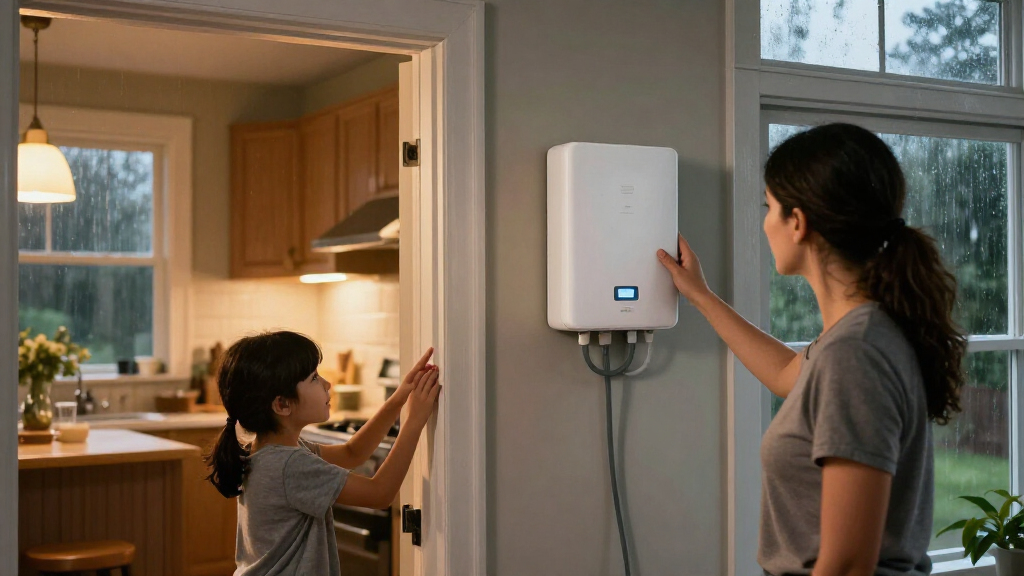
How We Picked
I compared these systems as home-backup choices, not just as battery products. The ranking weighs stated energy capacity and AC output, whether a home power panel or other integration equipment is included, expansion options, and how clearly each product configuration communicates what the buyer receives. I also considered practical ownership factors: whether the setup is portable or intended for fixed installation, how much planning may be needed to connect household circuits, and whether a larger system offers a meaningful advantage for the intended load.
The order favors systems that present a coherent route to home-circuit backup, then separates them by capacity, integration, and setup demands. That puts the EcoFlow TITAN package first for its bundled battery and Smart Home Panel 10, while the 10kW ECO-WORTHY systems rank strongly for buyers seeking a larger inverter-and-battery arrangement. Portable stations rank lower as whole-house solutions unless paired with suitable transfer or panel equipment. Product names and bundle contents can differ; I would verify included batteries, panel compatibility, output limits, and installation requirements before choosing.
| whole house battery backup system | Battery chemistry |
|---|---|
| EF ECOFLOW DELTA Pro Portable | — |
| ECO-WORTHY 48V Home Backup Pow | LiFePO4 |
| ECO-WORTHY PowerMega 48V 314Ah | LiFePO4 |
| Jackery HomePower 3600 Plus Po | — |
| Jackery HomePower 3600 Plus Po | LFP |
| ECO-WORTHY 48V 314Ah LiFePO4 B | LiFePO4 |
| ECO-WORTHY Powermega 48V 314Ah | LiFePO4 |
| Anker SOLIX F3800 Plus Portabl | LiFePO4 |
| EF ECOFLOW TITAN 10kWh Home Ba | LiFePO4 |
| EF ECOFLOW Smart Home Panel 2 | — |
| Anker SOLIX E10 Power Dock and | — |
Factors to Consider When Choosing Whole House Battery Backup Systems
Choosing a whole-house battery backup system starts with the home’s electrical needs, not the biggest capacity figure on a product page. I would separate the decision into three questions: what must stay on, how much power those loads need at the same time, and how long they need to run. The points below help prevent common mismatches between a battery’s headline specs and the backup experience a household expects.
Decide Which Circuits Need Backup
“Whole house” can mean every circuit is available during an outage, or it can mean a selected group of essential circuits. List the loads you care about, such as refrigeration, lighting, communications, a well pump, or heating controls, and ask an electrician which can be backed up together. Large heating and cooling equipment can change system requirements sharply, so do not assume a battery can run every appliance just because it connects to a home panel. A critical-loads plan can keep a smaller system useful without paying for capacity aimed at rarely used circuits. A common mistake is buying a battery first and discovering later that the desired circuits need a different panel, wiring plan, or inverter size.
Compare Continuous Output With Starting Loads
Battery capacity describes stored energy, while inverter output describes how much power the system can supply at once. Motors and compressors may draw a brief surge when starting, so a refrigerator, pump, or air conditioner can demand more than its running wattage suggests. Check both continuous and surge ratings, and compare them with the appliances you expect to operate simultaneously. If you plan to stagger heavy loads, a lower-output setup may still cover your needs; if several major loads must run together, prioritize output and circuit planning. Avoid treating a 10kW inverter as proof that every home appliance can run at once, since wiring, circuit limits, and load behavior still matter.
Estimate Runtime From Real Consumption
Capacity figures in kilowatt-hours are a starting point, not a runtime promise. Estimate daily energy use for the backup loads, then account for conversion losses and the fact that some appliances cycle while others run continuously. A larger battery can extend outage coverage, but adding storage does not raise the inverter’s ability to power loads simultaneously. This distinction is especially useful when comparing single-battery and extra-battery bundles such as the Jackery 3600 Plus options. Build a short list of essential loads and their expected hours of use before deciding whether added capacity is worth the extra space and system complexity.
Choose Portable or Fixed Integration Deliberately
Portable power stations can offer placement flexibility and may be easier to move for other uses, but connecting them to home circuits often calls for compatible transfer equipment or a home power panel. Fixed battery-and-inverter systems are more purpose-built for household backup, yet they can bring more installation planning and electrical work. Confirm whether a listed panel or hub is included, sold separately, or compatible only with particular equipment. Ask an installer to confirm the transfer method, circuit coverage, and any required permits before purchase. A frequent buying error is comparing a standalone power station with a complete panel-based package as if they provide the same level of home integration.
Check Expansion Limits and Bundle Contents
Expansion is useful when a household wants to start with essential loads and add storage later, but advertised ranges do not guarantee every configuration is available or compatible. Confirm the maximum supported battery count, any required accessories, and whether the base unit can supply the output your future loads need. Read bundle details closely: similarly named ECO-WORTHY listings include different battery arrangements, and the Jackery packages differ in included storage. A second battery generally adds runtime rather than changing the inverter’s rated output. If future expansion is a priority, get the full system configuration and installation plan in writing before buying the initial unit.
Plan for Installation, Location, and Maintenance
Battery placement affects access, cable routing, temperature exposure, and the installer’s ability to connect the system safely. Ask about the manufacturer’s operating and storage limits, required clearances, and whether the intended location suits the equipment. Confirm who handles electrical installation, commissioning, and service if a component needs attention. Portable units may reduce fixed-installation demands, but they do not remove the need for a safe, code-compliant connection when powering household circuits. The best choice is not only the one that fits the outage plan; it is the one your home can accommodate and maintain.
Frequently Asked Questions
Can a portable power station back up my entire house?
Not by itself in every home. A portable station’s output and stored energy limit which appliances can run and for how long, while household circuit connection usually requires compatible transfer equipment or a home power panel. Some homes may use a portable unit for a carefully selected set of loads rather than every circuit. Check the station’s continuous and surge output against the appliances you intend to operate, then confirm the connection method with a qualified electrician. Do not treat a portable power station’s capacity figure as proof of whole-house coverage.
Should I choose a larger battery or a higher-output inverter?
Choose based on the problem you need to solve. More battery capacity generally extends runtime for the loads the system can already power, while a higher-output inverter supports a larger or more demanding set of simultaneous loads. If your planned appliances exceed the inverter’s output, added storage will not fix that limit. If the inverter can handle your loads but the system runs out too soon, added capacity may help. Write down both the appliances’ starting and running needs and the number of hours you want them backed up before comparing systems.
Do I need a home power panel to use a battery system during an outage?
It depends on how you plan to power the home. A compatible panel or transfer setup can connect the battery to selected household circuits, while some buyers may instead power individual devices directly from a portable station. The correct approach depends on the equipment, wiring, and circuits involved; never connect a power station to home wiring through an improvised method. Check whether the product bundle includes the required panel or hub and whether it works with the exact model you are buying. An electrician can confirm circuit coverage and installation requirements for your home.
How should I compare systems when one listing includes extra batteries?
Compare the complete configuration rather than the product name alone. Check total usable capacity where provided, inverter output, included batteries, included panel equipment, and expansion limits. An extra battery can raise runtime without increasing the amount of power available at once, so it may not help with a load that exceeds the inverter rating. The Jackery 3600 Plus bundles illustrate how one model family can be offered with different storage totals, while ECO-WORTHY listings also vary by battery count. Verify the contents of the specific package and ask the seller or manufacturer to clarify any unclear component.
What should I prepare before asking for an installer’s recommendation?
Prepare a list of the circuits and appliances you want backed up, along with their wattage or model numbers if available. Mark which loads must operate at the same time and which can be switched on in sequence. Include any large motors, pumps, heating equipment, or cooling equipment, since their starting demands can affect the system choice. Share your preferred backup duration and the likely installation location, then ask the installer to review panel compatibility, circuit coverage, and local requirements. This information makes the recommendation more useful than choosing a battery based only on a capacity target.
Conclusion
For most buyers seeking a packaged route to home-circuit backup, I would start with the EF ECOFLOW TITAN 10kWh system, which pairs an extra battery with the Smart Home Panel 10. For a best-value direction, compare the ECO-WORTHY 48V configurations by included battery count and installation needs rather than assuming similarly named bundles are identical. The best premium, scale-focused choice is the Anker SOLIX E10 for buyers planning around its stated 12–90kWh range, while the best beginner-friendly portable starting point is the Jackery HomePower 3600 Plus if its capacity and output suit a defined set of essential loads. For buyers who need more stored energy in a portable package, the Jackery 7168Wh bundle is the specific-capacity pick; for buyers prioritizing a 10kW inverter, compare the ECO-WORTHY systems. Before ordering, match the exact package to your load plan and have a qualified installer verify circuit connection and compatibility.