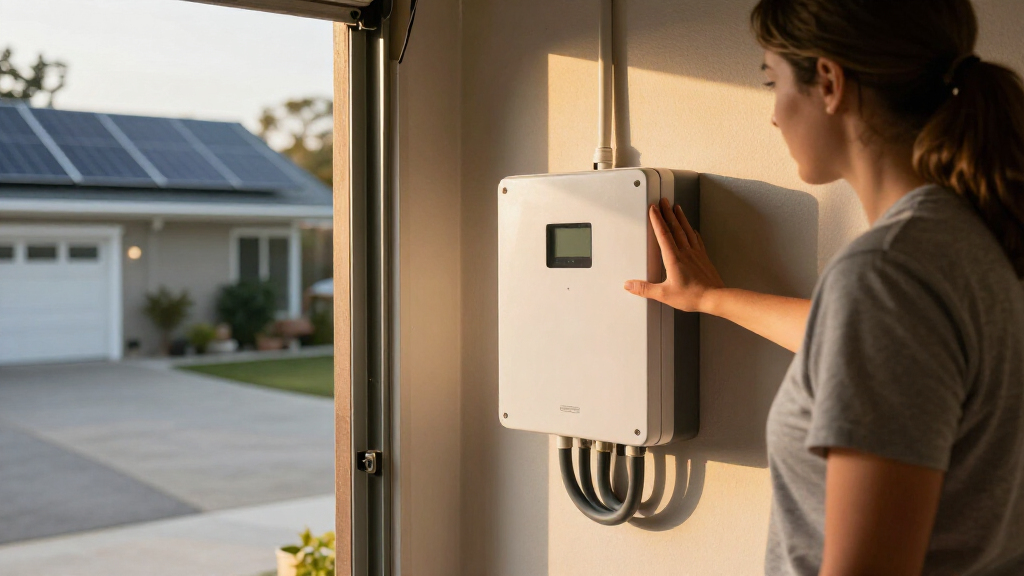

Battery backup systems for home solar range from integrated 48V battery-and-inverter setups to portable power stations that pair with solar panels. My best overall pick is the ECO-WORTHY 48V 314Ah Battery System with 10kW Hybrid Inverter, which brings substantial storage and a high-output inverter together for a more complete home setup. The Jackery Solar Generator 5000 Plus stands out for buyers who want a simpler packaged system, while the EcoFlow DELTA Pro offers a portable format for flexible backup. The main tradeoff is between whole-home capacity and installation complexity on one side, and easier setup but more limited output or expansion on the other. Read on for the full comparison, selection criteria, and guidance on matching a system to your essential loads.

Get backup power and energy gear delivered free with Prime
- Fast, free delivery on millions of items
- Prime Video, Amazon Music and more included
- Member-only deals all year
Key Takeaways
- The 48V ECO-WORTHY systems are the most home-focused choices. The 314Ah battery-and-inverter system and the Liber 10KP pair substantial storage with 10kW-class inverter output, unlike the smaller portable stations.
- High inverter output and stored energy are separate measures. A 10kW inverter can support substantial simultaneous loads, but runtime still depends on battery capacity and what the home is running.
- Packaged systems favor convenience over component flexibility. The Jackery 5000 Plus and portable solar bundles bring power station and panels together, while standalone batteries and hybrid-inverter kits suit buyers planning a more integrated system.
- Portable stations make more sense for selective backup than whole-home coverage. Models such as the Jackery Explorer 1000 V2 and EcoFlow DELTA 3 Classic are easier to place and move, but their smaller capacities call for disciplined load choices.
- Panel bundles do not automatically mean solar independence. Actual recharge depends on sunlight, panel placement, conversion losses, and household use; the listed panel wattage alone cannot predict overnight runtime or daily energy balance.
| ECO-WORTHY 10 kW Off-Grid Solar System Kit with Split-Phase Inverter, Batteries, and Solar Panels |  | Best Complete Off-Grid Solar Kit | Inverter continuous output: 10,000 W | Inverter peak output: 20,000 W | Output voltage: 120 V/240 V split-phase | VIEW LATEST PRICE | See Our Full Breakdown |
| ECO-WORTHY Powermega 48V 314Ah LiFePO4 Battery, 2-Pack |  | Best for Expandable Battery Storage | Chemistry: LiFePO₄ | Nominal voltage: 48 V (51.2 V) | Capacity: 314 Ah per battery | VIEW LATEST PRICE | See Our Full Breakdown |
| ECO-WORTHY 48V 314Ah LiFePO4 Battery System with 10kW Hybrid Inverter |  | Best High-Capacity Hybrid Package | Battery chemistry: LiFePO₄ | Battery configuration: 2 × 314 Ah at 51.2 V | Usable system energy: 30 kWh+ | VIEW LATEST PRICE | See Our Full Breakdown |
| ECO-WORTHY 10 kW Off-Grid Solar System Kit with 9.36 kWh Daily Output |  | Best for Smaller Panel Arrays | Maximum inverter output: 10,000 W | Daily energy output: Up to 9.36 kWh under 4 hours of full sunshine | Solar panel configuration: 12 × 195 W | VIEW LATEST PRICE | See Our Full Breakdown |
| Jackery Solar Generator 5000 Plus with Two 200W Solar Panels, 5040Wh |  | Best Portable Backup with 240 V Output | Model: JE-5000A | Battery capacity: 5,040 Wh | Battery type: LiFePO₄ | VIEW LATEST PRICE | See Our Full Breakdown |
| ECO-WORTHY 10 kW Off-Grid Solar Panel Kit with 16 kWh Battery |  | Best for a Permanent Off-Grid Installation | Inverter continuous output: 10,000 W | Inverter peak output: 20,000 W | Output voltage: 120 V or 120/240 V split phase | VIEW LATEST PRICE | See Our Full Breakdown |
| Jackery Solar Generator 1000 V2 with 200W Solar Panel |  | Best Compact Solar Backup | Battery capacity: 1,070 Wh | AC output: 1,500 W | Surge peak: 3,000 W | VIEW LATEST PRICE | See Our Full Breakdown |
| ABOK Ark3600 Portable Power Station with Three 200W Solar Panels |  | Best Expandable Portable Backup | Battery capacity: 3,840 Wh; expandable to 11,520 Wh | Peak output: 7,200 W | Voltage: 120 V | VIEW LATEST PRICE | See Our Full Breakdown |
| Jackery HomePower 3600 Plus Portable Power Station with Two 200W Solar Panels |  | Best Portable Home Backup Bundle | Battery capacity: 3,584 Wh | AC output: 3,600 W | Expandable capacity: Up to 21 kWh per unit; 43 kWh with multiple units | VIEW LATEST PRICE | See Our Full Breakdown |
| Jackery HomePower 3600 Plus Portable Power Station, 3584Wh, 3600W |  | Best for Flexible Charging and Expandable Storage | Battery capacity: 3,584 Wh | Output: 3,600 W; 7,200 W parallel output | Voltage: 120 V; 240 V in parallel | VIEW LATEST PRICE | See Our Full Breakdown |
| EF ECOFLOW DELTA Pro Portable Power Station, 3600Wh, 3600W AC Output | 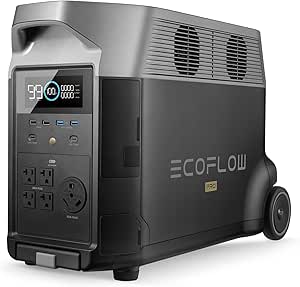 | Best for Expandable Portable Backup | Battery capacity: 3,600Wh | Battery type: LFP | AC output: 3,600W | VIEW LATEST PRICE | See Our Full Breakdown |
| ECO-WORTHY 48V Home Backup Power – 10240Wh Battery – Liber 10KP 10kW Inverter |  | Best for High-Power Home Backup | Battery capacity: 10.24kWh | Battery configuration: Two 51.2V, 100Ah LiFePO4 batteries | Continuous inverter output: 10kW | VIEW LATEST PRICE | See Our Full Breakdown |
| Jackery Explorer 2000 v2 Portable Power Station with Two 200W Solar Panels |  | Best Solar Starter Bundle | Battery capacity: 2,042Wh | Battery chemistry: LiFePO4 | AC output: 2,200W | VIEW LATEST PRICE | See Our Full Breakdown |
| EcoFlow DELTA 3 Classic Solar Generator with 220W Solar Panel, 1024Wh |  | Best for Fast-Recharging Essential Backup | Battery capacity: 1,024Wh | Battery type: LiFePO4 | Continuous output: 1,800W | VIEW LATEST PRICE | See Our Full Breakdown |
| Jackery HomePower 3000 Portable Power Station with Two 200W Solar Panels |  | Best Portable High-Capacity Bundle | Battery capacity: 3,072Wh | Battery type: LiFePO4 | AC output: 3,600W | VIEW LATEST PRICE | See Our Full Breakdown |
| battery backup systems for home solar | Battery capacity |
|---|---|
| ECO-WORTHY 10 kW Off-Grid Sola | — |
| ECO-WORTHY Powermega 48V 314Ah | — |
| ECO-WORTHY 48V 314Ah LiFePO4 B | — |
| ECO-WORTHY 10 kW Off-Grid Sola | 10.24 kWh |
| Jackery Solar Generator 5000 P | 5,040 Wh |
| ECO-WORTHY 10 kW Off-Grid Sola | — |
| Jackery Solar Generator 1000 V | 1,070 Wh |
| ABOK Ark3600 Portable Power St | 3,840 Wh; expandable to 11,520 Wh |
| Jackery HomePower 3600 Plus Po | 3,584 Wh |
| Jackery HomePower 3600 Plus Po | 3,584 Wh |
| EF ECOFLOW DELTA Pro Portable | 3,600Wh |
| ECO-WORTHY 48V Home Backup Pow | 10.24kWh |
| Jackery Explorer 2000 v2 Porta | 2,042Wh |
| EcoFlow DELTA 3 Classic Solar | 1,024Wh |
| Jackery HomePower 3000 Portabl | 3,072Wh |
More Details on Our Top Picks
ECO-WORTHY 10 kW Off-Grid Solar System Kit with Split-Phase Inverter, Batteries, and Solar Panels
For a buyer building a substantial off-grid home system, this kit puts the main pieces together: a 10,000 W split-phase inverter, nine bifacial panels, and 20.48 kWh of LiFePO₄ storage. That combination can serve 120 V and 240 V loads while storing solar energy for use after generation falls. Its 5,310 W of panel capacity is a more substantial array than the 2,340 W supplied with the ECO-WORTHY 10 kW Off-Grid Solar System Kit with 9.36 kWh Daily Output, though actual production depends on sunlight and installation.
The tradeoff is the scale of the project: panels nearly 90 inches long ship by pallet, and professional installation is recommended. The bifacial panels may add output in suitable conditions, but the stated maximum gain is not a guaranteed daily result. I’d choose this over a portable station when the goal is a permanently installed solar-and-storage system, not movable backup.
Pros:- Complete package includes inverter, batteries, panels, and cables.
- 20.48 kWh of LiFePO₄ storage supports longer backup than smaller portable systems.
- 120 V/240 V split-phase output suits a wider range of household circuits.
- CAN/RS485 communication and app monitoring support system management.
Cons:- Large panels require truck delivery and suitable space for handling and installation.
- Professional installation is recommended, adding project complexity.
- Solar output varies with conditions; the bifacial gain and daily production are not guaranteed.
Best for: Homeowners planning a professionally installed off-grid system who need split-phase power and substantial included battery storage.
Not ideal for: Renters or buyers seeking a portable, plug-in backup option, or anyone without room and access for pallet-delivered panels.
- Inverter continuous output:10,000 W
- Inverter peak output:20,000 W
- Output voltage:120 V/240 V split-phase
- Solar panels:9 × 590 W
- Total PV capacity:5,310 W
- Battery configuration:4 × 48 V 100 Ah LiFePO₄
- Total battery storage:20.48 kWh
- Panel efficiency:23.23%
Our verdict“Choose this kit if you want a large, integrated off-grid solar system with split-phase output and can accommodate professional installation.”
ECO-WORTHY Powermega 48V 314Ah LiFePO4 Battery, 2-Pack
This two-battery pack is for buyers who already have, or are planning, a compatible 48 V inverter and want storage without buying another inverter or panel array. At 16.07 kWh per battery, the pair provides substantial capacity; expansion to as many as 15 units also leaves room to grow a home backup bank over time. That makes it a more modular storage choice than the ECO-WORTHY 48V 314Ah LiFePO4 Battery System with 10kW Hybrid Inverter, which bundles an inverter but gives buyers less freedom to select one separately.
The 200 A active-balancing BMS, aerosol fire suppression, and RS485/CAN connections add useful protection and integration features, while the touchscreen and wireless monitoring make status easier to check. Those extras do not make it a complete solar backup system: panels, inverter, and installation planning remain the buyer’s responsibility. Each battery is large and heavy enough that delivery access matters, so this is a poor match for anyone expecting a compact, ready-to-use power station.
Pros:- Two batteries provide 32.14 kWh of stated combined energy capacity.
- Supports parallel expansion up to 15 units.
- 200 A active-balancing BMS and aerosol fire suppression add battery-management features.
- Touchscreen, Wi-Fi, Bluetooth, RS485, and CAN offer multiple monitoring and communication paths.
Cons:- Does not include an inverter, solar panels, or a complete backup system.
- Large batteries require suitable delivery access and handling.
- Compatibility with the buyer’s inverter and system setup must be checked.
Best for: Homeowners with a compatible 48 V inverter who want high-capacity storage and the option to expand their battery bank.
Not ideal for: Buyers looking for an all-in-one backup unit or those unable to accept and handle large pallet-delivered batteries.
- Chemistry:LiFePO₄
- Nominal voltage:48 V (51.2 V)
- Capacity:314 Ah per battery
- Pack size:2 batteries
- Energy capacity:16.07 kWh per battery
- BMS:200 A with active cell balancing
- Parallel expansion:Up to 15 units
- Communications:RS485, CAN, and RS232
Our verdict“Choose this pack when you need scalable 48 V storage and already have a compatible inverter or plan to source one separately.”
ECO-WORTHY 48V 314Ah LiFePO4 Battery System with 10kW Hybrid Inverter
This package pairs a 10 kW hybrid inverter with two 314 Ah LiFePO₄ batteries and more than 30 kWh of stated usable energy, making it the strongest fit here for buyers prioritizing long-duration home backup in a fixed system. It also supports 120 V AC and 240 V split-phase loads, so it offers broader household coverage than the Jackery Solar Generator 5000 Plus, whose included battery capacity is much smaller before expansion.
Battery monitoring through Bluetooth and Wi-Fi, multiple inverter communication ports, and active balancing give system builders useful management options. The listed 9,000+ cycle rating at 80% depth of discharge is a durability specification, not a promise of identical service life in every installation. This bundle is less suitable for someone who wants a simple, movable backup unit: packages may arrive at different times, and the inverter exterior version is shipped randomly. Unlike a full panel-and-battery kit, the supplied details do not list solar panels, so buyers need to plan the PV array separately.
Pros:- More than 30 kWh of stated usable energy supports extended backup needs.
- 10 kW inverter with 120 V and 240 V split-phase support.
- Active balancing, alarms, circuit breakers, and fire suppression are built into the battery system.
- Bluetooth, Wi-Fi, RS485, CAN, and RS232 support monitoring and system communication.
Cons:- Solar panels are not listed among the included components.
- System components may arrive in separate shipments at different times.
- Inverter exterior version is shipped randomly.
Best for: Homeowners building a fixed solar-storage setup who need high battery capacity, a 10 kW inverter, and 240 V support.
Not ideal for: Buyers who need a portable, ready-to-use solar generator or want panels included in the same package.
- Battery chemistry:LiFePO₄
- Battery configuration:2 × 314 Ah at 51.2 V
- Usable system energy:30 kWh+
- Inverter power:10,000 W
- Peak output power:20,000 W
- Output voltage:120 V AC; supports 240 V split-phase
- Certification:UL 1973
Our verdict“Pick this bundled inverter-and-battery system if long-duration stationary backup matters more than portability or having panels included.”
ECO-WORTHY 10 kW Off-Grid Solar System Kit with 9.36 kWh Daily Output
This kit combines a 10,000 W inverter, 2,340 W of bifacial panels, and 10.24 kWh of battery capacity in one package. Its 12 smaller panels are easier to handle than the 590 W modules in the ECO-WORTHY 10 kW Off-Grid Solar System Kit with Split-Phase Inverter, Batteries, and Solar Panels, which supplies more than twice the PV capacity and twice the storage. That makes this model a better fit when a buyer wants a bundled system but has a more limited panel-installation plan.
The stated up to 9.36 kWh daily output assumes four hours of full sunshine; shade, orientation, and weather can reduce production. Its 120 V/240 V output and app-based battery monitoring are useful for a household-scale installation, and up to six inverters can be connected in parallel. The tradeoff is the smaller array and battery bank compared with higher-capacity kits. Installation also calls for solar and electrical planning, so this is not a plug-in alternative to the Jackery Solar Generator 5000 Plus.
Pros:- Includes panels, lithium batteries, inverter, mounting brackets, and accessories.
- 120 V/240 V output supports a range of household loads.
- Twelve smaller panels may be easier to handle than the 590 W panels in the larger ECO-WORTHY kit.
- Battery monitoring is available through a mobile app.
Cons:- The 2,340 W array and 10.24 kWh battery capacity are lower than the larger ECO-WORTHY kit’s figures.
- Daily production depends on receiving the stated full-sun conditions.
- Professional installation is recommended.
Best for: Homeowners seeking a bundled off-grid kit with split-phase output and a smaller, lower-capacity panel array than larger ECO-WORTHY packages.
Not ideal for: Households needing extended backup from a large battery bank or buyers who need reliable daily production regardless of weather and sunlight.
- Maximum inverter output:10,000 W
- Daily energy output:Up to 9.36 kWh under 4 hours of full sunshine
- Solar panel configuration:12 × 195 W
- Total PV capacity:2,340 W
- Battery configuration:2 × 48 V 100 Ah lithium batteries
- Battery capacity:10.24 kWh
- Output voltage:120 V/240 V AC
- Panel protection:IP68
Our verdict“Choose this kit if you want a bundled off-grid system with manageable panel modules and can work within its more modest array and storage capacity.”
Jackery Solar Generator 5000 Plus with Two 200W Solar Panels, 5040Wh
The Jackery 5000 Plus is the most portable-style choice in this group for buyers who want a packaged power station rather than a permanently installed battery bank. It provides 7,200 W rated AC output, 120 V/240 V support, and a 14,400 W surge rating, while the included two 200 W panels offer a starting point for solar charging. Compared with the ECO-WORTHY 48V 314Ah LiFePO4 Battery System with 10kW Hybrid Inverter, it has far less included storage and lower stated continuous output, but it is a more self-contained option for buyers who value a packaged unit.
Expansion to up to 60 kWh gives it a path toward longer backup, though that requires additional capacity beyond the included 5,040 Wh. Solar input can reach 4,000 W, so the two bundled panels alone are not the full input potential. At 134.5 pounds, the unit is heavy to move, and the power station and panels ship separately. I’d favor it for flexible backup over a fixed off-grid installation, not as a lightweight camping station.
Pros:- 7,200 W rated output and 120 V/240 V support cover a broad range of loads.
- Capacity can expand to 60 kWh.
- Accepts up to 4,000 W of solar input.
- Includes two 200 W solar panels and uses LiFePO₄ battery chemistry.
Cons:- Included battery capacity is substantially below the large ECO-WORTHY fixed-system packages.
- The 134.5-pound unit is difficult to move without help.
- Power station and solar panels ship separately.
Best for: Homeowners who want a packaged, movable backup unit with 120 V/240 V output and a future expansion path.
Not ideal for: Buyers needing more than 5.04 kWh without purchasing expansion batteries, or those expecting an easy-to-carry power station.
- Model:JE-5000A
- Battery capacity:5,040 Wh
- Battery type:LiFePO₄
- Surge output:14,400 W
- Voltage:120 V and 240 V
- Maximum solar input:4,000 W
- Expandable capacity:Up to 60 kWh
Our verdict“Choose the Jackery if you want a packaged 120 V/240 V backup station with expansion potential and can manage its weight.”
ECO-WORTHY 10 kW Off-Grid Solar Panel Kit with 16 kWh Battery
For a buyer building a fixed 120/240 V off-grid system, this kit brings the main components together: panels, a 16.076 kWh LiFePO₄ battery, and a 10,000 W split-phase inverter. That inverter output can serve larger household loads than the portable Jackery HomePower 3600 Plus, while the battery’s monitoring options and parallel expansion leave room to grow storage later.
The key mismatch is between the 2,950 W solar array and the inverter’s much higher output rating. The panels are estimated to generate up to 11.8 kWh per day under optimal conditions, so the inverter’s capacity does not mean the array can refill the battery quickly. Large, palletized components and the recommendation for professional installation also make this a more involved choice than a portable station.
Pros:- Bundles panels, battery, inverter, and cables as a coordinated system
- 10,000 W inverter provides 120 V or 120/240 V split-phase output
- 16.076 kWh LiFePO₄ battery supports monitoring and parallel expansion
- Battery capacity can be expanded with up to 15 parallel batteries
Cons:- The 2,950 W array is modest relative to the inverter’s 10,000 W output rating
- Large components ship by truck on a pallet and require suitable delivery access
- Professional installation is recommended, adding complexity compared with portable systems
Best for: Homeowners setting up a professionally installed off-grid system who need split-phase output and substantial battery storage.
Not ideal for: Renters or buyers seeking a simple, movable backup unit, or households that need a large solar array to recharge storage quickly.
- Inverter continuous output:10,000 W
- Inverter peak output:20,000 W
- Output voltage:120 V or 120/240 V split phase
- Solar array:5 panels at 590 W each; 2,950 W total
- Estimated daily generation:Up to 11.8 kWh under optimal conditions
- Battery:48 V, 314 Ah LiFePO₄; 16.076 kWh
- Battery management system:PACE 200 A BMS
- Maximum parallel expansion:15 batteries; 6 inverters
Our verdict“Choose this kit for a permanent off-grid home setup where split-phase power and expandable storage matter more than a high panel-to-inverter ratio or easy installation.”
Jackery Solar Generator 1000 V2 with 200W Solar Panel
The Solar Generator 1000 V2 is the most portable option in this group, pairing a 1,070 Wh LFP power station with a 200 W panel in a 23.8 lb package. Its 1,500 W AC output and 3,000 W surge rating suit smaller essentials and selected appliances during an outage, while the varied AC, USB, and DC ports make it useful away from home as well. Compared with the 3,584 Wh Jackery HomePower 3600 Plus, it gives up substantial runtime and output in exchange for easier carrying.
The smaller battery also limits its role as a household solar backup: it is better for targeted loads than running several major appliances for long periods. The advertised one-hour recharge depends on enabling emergency charging in the app; the default estimate is 1.7 hours. The included panel is a useful start, but its 200 W rating makes replenishment dependent on favorable sunlight and time.
Pros:- 23.8 lb weight is easier to carry and store than the larger backup stations
- 1,500 W AC output with a 3,000 W surge peak
- LFP battery is rated for 4,000 charge cycles
- Includes a 200 W panel and offers app-controlled charging modes
Cons:- 1,070 Wh capacity provides much less stored energy than the HomePower 3600 Plus
- One-hour charging requires emergency charging to be enabled in the app
- Generator and solar panel ship separately
Best for: Campers and households that want a lightweight solar-charged unit for phones, lights, networking equipment, and a few smaller appliances.
Not ideal for: Homeowners seeking multi-day household backup, high-output support for several appliances, or storage that can expand with demand.
- Battery capacity:1,070 Wh
- AC output:1,500 W
- Surge peak:3,000 W
- Battery type:LFP
- Solar panel:200 W
- Weight:23.8 lb
- Ports:3 AC outlets, 2 USB-C, 1 USB-A, 1 DC car port
- Warranty:5 years
Our verdict“Pick the Solar Generator 1000 V2 when portability and backup for a few essential devices matter more than extended home runtime.”
ABOK Ark3600 Portable Power Station with Three 200W Solar Panels
The Ark3600 offers a useful middle ground between a compact power station and a fixed home battery: it starts with 3,840 Wh of LiFePO₄ storage, delivers 3,600 W rated output, and can expand to 11,520 Wh. That capacity gives it a stronger household-backup role than the Jackery Solar Generator 1000 V2, while its 15 ports help serve multiple devices without frequent swapping. App control adds remote monitoring and scheduled charging for users managing solar input around household routines.
Its 120 V output keeps it simpler than a split-phase system such as the ECO-WORTHY 10 kW kit, but it cannot provide that kit’s 120/240 V supply. At 92 lb, the Ark3600 is portable in name more than in everyday handling; it is better parked near the loads it serves. The three included panels are rated at 200 W each, and actual recharge time depends on sunlight and available input.
Pros:- 3,840 Wh capacity expands to 11,520 Wh
- 3,600 W rated output and 7,200 W peak output
- 15 output ports support several devices at once
- LiFePO₄ battery includes BMS protections and is rated for 4,000 cycles
Cons:- At 92 lb, moving it between rooms or vehicles is difficult
- 120 V output does not match the split-phase capability of the ECO-WORTHY kit
- Recharge speed depends on sunlight and input power
Best for: RV owners and homeowners who want substantial, expandable 120 V backup with multiple ports and app-based monitoring.
Not ideal for: Buyers who need 240 V household circuits, frequent one-person carrying, or a clearly stated fast solar recharge under variable conditions.
- Battery capacity:3,840 Wh; expandable to 11,520 Wh
- Peak output:7,200 W
- Voltage:120 V
- AC and solar input:Up to 3,500 W combined
- Solar panels:Three 200 W monocrystalline panels
- Battery chemistry and cycle life:LiFePO₄; 4,000 cycles
- Weight:92 lb
Our verdict“Choose the Ark3600 for expandable 120 V backup with ample ports, provided you can keep its heavy chassis mostly in one place.”
Jackery HomePower 3600 Plus Portable Power Station with Two 200W Solar Panels
This bundle pairs a 3,584 Wh battery and 3,600 W output with two 200 W solar panels, making it a more ready-to-use solar backup choice than the HomePower 3600 Plus sold without panels. Its wheels and telescopic handle help with repositioning a 77.2 lb unit, and its AC, solar, gas-generator, and hybrid charging options give owners alternatives when rooftop or portable solar input is limited. The 6,000-cycle LFP rating also exceeds the 4,000-cycle rating listed for the ABOK Ark3600.
It remains a portable station rather than a hardwired home battery: 240 V operation requires paired units, and the included 400 W of panels is a modest charging source for a 3,584 Wh store. Jackery lists four hours for solar charging, but actual conditions and input affect that estimate. The panels may arrive separately, so this bundle is not always ready on the same delivery schedule.
Pros:- 3,584 Wh capacity and 3,600 W output support a range of backup loads
- Includes two 200 W solar panels
- AC, solar, gas-generator, and hybrid charging provide input flexibility
- Wheels and telescopic handle aid movement; LFP battery is rated for 6,000 cycles
Cons:- 240 V operation requires pairing units
- The 77.2 lb chassis can still be difficult to lift
- Power station and panels may arrive in separate packages
Best for: Homeowners wanting a wheeled portable backup with included solar panels and multiple ways to recharge during an outage.
Not ideal for: Buyers who need single-unit 240 V output, a hardwired home battery, or a panel array sized for rapid replenishment of several kilowatt-hours.
- Battery capacity:3,584 Wh
- AC output:3,600 W
- Expandable capacity:Up to 21 kWh per unit; 43 kWh with multiple units
- Battery chemistry and cycle life:LFP; 6,000 cycles
- Included solar panels:Two 200 W panels
- Charging options:AC, solar, gas generator, and hybrid
- Weight:77.2 lb
- Warranty:5 years
Our verdict“Choose this bundle for portable 120 V backup with included solar panels and flexible recharging, but not for single-unit 240 V service.”
Jackery HomePower 3600 Plus Portable Power Station, 3584Wh, 3600W
For buyers who already have solar panels or want to choose their own, this HomePower 3600 Plus supplies the same 3,584 Wh capacity and 3,600 W output as the bundled version without including panels. Its charging choices span AC, solar, gas generator, and hybrid AC-plus-DC, with a listed two-hour hybrid recharge time. Expansion is a further advantage: capacity is specified at up to 21 kWh per unit and 43 kWh across multiple units. Compared with the bundled model, this version suits buyers who value input flexibility more than getting panels in the box.
The tradeoff is that solar generation requires separate panels, so the station is not a complete solar bundle on arrival. It also delivers 120 V on its own; 240 V operation requires parallel pairing. At 77.2 lb, the wheels and telescopic handle help with rolling but do not make lifting easy. Its 6,000-cycle figure and 10-year lifespan are manufacturer claims, not a substitute for checking the system’s fit with the loads you plan to back up.
Pros:- 3,584 Wh capacity and 3,600 W output
- Supports AC, solar, gas-generator, and hybrid AC-plus-DC charging
- Expandable to 21 kWh per unit and 43 kWh with multiple units
- Wheels and telescopic handle ease rolling; LFP battery is rated for 6,000 cycles
Cons:- Solar panels are optional, unlike those included with the bundled HomePower 3600 Plus
- 240 V operation requires pairing units
- 77.2 lb weight makes lifting and carrying challenging
Best for: Solar owners who want a high-output portable battery, multiple charging routes, and the option to add storage without needing included panels.
Not ideal for: First-time solar buyers who want panels in the same bundle, or households requiring 240 V output from a single unit.
- Battery capacity:3,584 Wh
- Output:3,600 W; 7,200 W parallel output
- Voltage:120 V; 240 V in parallel
- Expandable capacity:21 kWh per unit; 43 kWh with multiple units
- Battery type and cycle life:LFP; 6,000 cycles
- Charging options:Hybrid AC+DC, AC, solar, and gas generator
- Listed charging times:2 hours hybrid; 2.5 hours AC or gas generator; 4 hours solar
- Weight and warranty:77.2 lb; 5 years
Our verdict“Pick this version if you already own suitable solar panels or want to select them separately and value expandable, multi-source charging.”
EF ECOFLOW DELTA Pro Portable Power Station, 3600Wh, 3600W AC Output
The DELTA Pro is a strong fit for solar owners who want a portable starting point that can grow into longer-duration backup. Its 3,600Wh LFP battery and 3,600W AC output can support a broader mix of household loads than the smaller EcoFlow DELTA 3 Classic, while expansion to 25kWh gives buyers a path to more stored energy. Five charging methods and app monitoring add flexibility when solar production changes or the system needs a top-up from another source. The tradeoff is that this is not a light grab-and-go unit: at 99 pounds, moving it takes planning, and its larger capacity depends on buying compatible expansion equipment. Choose it for modularity, not a finished whole-home installation.
Pros:- 3,600Wh LFP battery with expansion potential up to 25kWh.
- 3,600W AC output supports more demanding loads than smaller portable units.
- Five charging methods include solar, wall outlet, EV station, car outlet, and compatible generator.
- Wi-Fi and Bluetooth app connectivity allow remote monitoring and control.
Cons:- At 99 pounds, it is cumbersome to move regularly.
- Reaching expanded capacity requires compatible batteries or generators purchased separately.
- Portable power station format is less suited to a fixed, professionally integrated home backup installation.
Best for: Solar households that want portable backup now and the option to add compatible batteries or generators as their storage needs grow.
Not ideal for: Buyers who need a permanently installed home battery, frequent easy lifting, or a complete expanded system without purchasing extra equipment.
- Battery capacity:3,600Wh
- Battery type:LFP
- AC output:3,600W
- Maximum output:4,500W with X-Boost
- Expandable capacity:Up to 25kWh
- AC outlets:5
- Charging methods:EV station, solar, wall outlet, smart outdoor generator, and car outlet
- Weight:99 lbs
- App connectivity:Wi-Fi and Bluetooth
Our verdict“Choose the DELTA Pro if you want substantial portable solar backup with room to expand, and can handle its weight and add-on requirements.”
ECO-WORTHY 48V Home Backup Power – 10240Wh Battery – Liber 10KP 10kW Inverter
For a solar-equipped home with substantial backup loads, this ECO-WORTHY system is in a different class from portable choices such as the EF ECOFLOW DELTA Pro. It pairs two 51.2V, 100Ah LiFePO4 batteries with a 10kW pure sine wave inverter, giving it the output to handle larger loads and the stored energy for more than a brief outage. UL1973 and UL1741 certifications, plus CAN/RS485 interfaces, make it a more installation-oriented option for integration with compatible solar equipment. That capability brings a real setup burden: at 265.5 pounds, it is not something to reposition casually, and its communication interfaces may call for experienced installation help. Buyers seeking a simple plug-in backup should favor the Jackery Explorer 2000 v2 instead.
Pros:- 10.24kWh of stated battery capacity from two LiFePO4 batteries.
- 10kW continuous inverter output with 20kW peak capability described in the product information.
- UL1973 and UL1741 certifications are listed for the battery and inverter.
- CAN/RS485 interfaces and expansion support suit solar and off-grid integration.
Cons:- At 265.5 pounds, installation and relocation are difficult.
- Setup and communications integration may require professional assistance.
- A fixed-system design is less convenient than portable options for buyers who need simple, movable backup.
Best for: Homeowners with compatible solar equipment who need high continuous output, substantial battery storage, and a system suited to a fixed installation.
Not ideal for: Renters, portable-power buyers, or households without the space and technical support for installing and integrating a 265.5-pound system.
- Battery capacity:10.24kWh
- Battery configuration:Two 51.2V, 100Ah LiFePO4 batteries
- Continuous inverter output:10kW
- Peak output:20kW (as stated in product description)
- Output voltage:120V AC
- Certifications:UL1973 and UL1741
- Communication interfaces:CAN and RS485
- Expansion:Up to six inverters and 32 batteries
- Weight:265.5 lbs
Our verdict“Pick the ECO-WORTHY Liber 10KP for a high-output, expandable home installation, not for portable or plug-and-play backup.”
Jackery Explorer 2000 v2 Portable Power Station with Two 200W Solar Panels
The Explorer 2000 v2 makes sense for buyers who want a portable solar kit without stepping up to the size and output of the Jackery HomePower 3000. Its 2,042Wh LiFePO4 battery, 2,200W AC output, and two included 200W panels provide a practical base for essential devices and moderate loads, while 20ms UPS switching can help keep connected electronics running during a power interruption. The 39.5-pound station is also easier to place or move than the 59.5-pound HomePower 3000. That smaller footprint means less stored energy and lower output for larger household demands, and the included 400W of panels take about six hours to recharge the station under stated conditions. Choose it for a portable starter setup, not long-duration whole-home coverage.
Pros:- Includes two 200W solar panels for a ready-made solar charging setup.
- 2,042Wh LiFePO4 battery and 2,200W AC output suit many essential devices.
- 20ms UPS switching offers backup support for connected electronics.
- At 39.5 pounds for the station, it is lighter than the Jackery HomePower 3000.
Cons:- Less battery capacity and AC output than the Jackery HomePower 3000.
- Solar charging takes about six hours with the included 400W of panels under stated conditions.
- Station and panels may ship separately.
Best for: Solar beginners who want a bundled, portable system for essential electronics, modest household loads, and occasional off-grid use.
Not ideal for: Households seeking multi-day backup, high-demand appliance support, or faster solar recovery than the included 400W array provides.
- Battery capacity:2,042Wh
- Battery chemistry:LiFePO4
- AC output:2,200W
- AC ports:3
- Solar panels:2 × 200W
- UPS switching:20ms
- Solar recharge time:About 6 hours with 400W panels
- USB-C PD output:100W
- Station weight:39.5 lbs
Our verdict“Choose the Explorer 2000 v2 bundle for approachable portable solar backup when lighter handling matters more than extended runtime.”
EcoFlow DELTA 3 Classic Solar Generator with 220W Solar Panel, 1024Wh
The DELTA 3 Classic prioritizes quick recovery and sensitive-device continuity over long runtime. Its 1,024Wh LiFePO4 battery is much smaller than the Jackery Explorer 2000 v2, so it stores less energy for an extended outage; in return, the EcoFlow reaches 80% charge from AC in 45 minutes and includes a 220W solar panel rated to recharge it in about 5.8 hours. Its under-10ms UPS switch is the standout for electronics that benefit from a fast handoff, while 1,800W continuous output and 2,600W boosted output cover a useful range of smaller backup loads. This is best treated as a fast-charging essential-load station, not a substitute for a large home battery. Solar results still depend on available sunlight.
Pros:- Reaches 80% charge from AC in 45 minutes, reducing downtime between uses.
- Under-10ms UPS switching suits sensitive electronics.
- Includes a 220W bifacial solar panel with stated full solar recharge time of about 5.8 hours.
- 1,800W continuous output and 2,600W boosted output cover a range of moderate loads.
Cons:- 1,024Wh capacity is substantially lower than the Jackery Explorer 2000 v2 and larger backup systems.
- Solar recharge time depends on sunlight and conditions.
- The solar panel and generator may ship separately.
Best for: People who need a compact backup source for sensitive electronics and essential devices, with quick AC recharge between outages.
Not ideal for: Households that need long runtimes for multiple appliances or substantial stored energy through prolonged low-sun periods.
- Battery capacity:1,024Wh
- Battery type:LiFePO4
- Continuous output:1,800W
- Surge output:3,600W
- Boosted output:2,600W with X-Boost
- Solar panel power:220W
- AC charging time:0–80% in 45 minutes
- Solar recharge time:About 5.8 hours for a full charge
- UPS switch time:Under 10ms
Our verdict“Choose the DELTA 3 Classic when fast AC recovery and rapid UPS switching matter more than long-duration capacity.”
Jackery HomePower 3000 Portable Power Station with Two 200W Solar Panels
The HomePower 3000 balances substantial stored energy with a portable format, making it a stronger match for longer essential-load outages than the Jackery Explorer 2000 v2. Its 3,072Wh battery and 3,600W output give buyers more headroom for appliances, while a 7,200W surge rating helps with brief startup demands. The included two 200W panels make solar charging possible without sourcing panels separately, and the LiFePO4 battery is rated for 4,000 cycles to 70% capacity. This is still a 59.5-pound station, not an installed home battery, and its included panels may take up to nine hours to reach 80% charge. Compared with the EcoFlow DELTA Pro, it has less stated expansion potential, so it suits buyers who prefer a substantial self-contained bundle.
Pros:- 3,072Wh capacity and 3,600W AC output provide more headroom than the Explorer 2000 v2.
- Two 200W solar panels are included for charging from sunlight.
- LiFePO4 battery is rated for 4,000 cycles while retaining 70% capacity.
- AC, USB-C, USB-A, DC, and TT-30 RV outlets accommodate varied loads.
Cons:- At 59.5 pounds, the station is heavy to move frequently.
- Included solar panels can take up to nine hours to recharge to 80%.
- The station and panels may arrive in separate packages.
Best for: Households wanting a portable, higher-capacity solar bundle for essential appliances and electronics during outages.
Not ideal for: Buyers who need a fixed, expandable home battery system, frequent easy lifting, or rapid solar recovery from the included panels.
- Battery capacity:3,072Wh
- Battery type:LiFePO4
- AC output:3,600W
- Surge output:7,200W
- Solar panels:2 × 200W
- UPS switching:20ms or less
- Solar recharge:Up to 80% in 9 hours with included panels
- Weight:59.5 lbs
Our verdict“Choose the HomePower 3000 for a portable solar bundle with more stored energy and output than a starter unit, accepting slow included-panel charging and limited portability.”
How We Picked
I ranked these options by how well they serve solar-backed home power, not by capacity claims alone. I compared battery storage, inverter output, included solar equipment, system format, and the likely fit for essential-load backup versus broader household use. I also weighed how much equipment a buyer gets in one package against the flexibility of building around separate batteries and an inverter.
The order gives priority to systems that combine meaningful storage and home-suitable output, with practical component pairing and clear use cases. Portable power stations remain useful picks for smaller loads, temporary backup, or buyers who value mobility, but they rank below the larger 48V systems for sustained household coverage. Product names and listed specifications guide this comparison; installation requirements, compatibility, backup behavior, and expansion limits should be confirmed with the manufacturer and a qualified installer before purchase.
Factors to Consider When Choosing Battery Backup Systems For Home Solar
Choosing among these systems starts with the jobs you expect the battery to do, not the largest number on the box. I would map essential loads and charging options before comparing formats, because a portable station and a fixed 48V setup solve different backup problems.
Size Backup Around Essential Loads and Runtime
Write down the appliances you want to run during an outage, then note each device’s running watts, startup surge, and hours of use. Add the energy demand across the period you care about; battery capacity in watt-hours helps estimate runtime, but usable energy can be lower after conversion losses and reserve settings. A refrigerator and a few lights call for a different plan than heating, cooking, or multiple large appliances. A common mistake is to choose capacity based on the number of appliances without accounting for how long they run. I would also plan for cloudy days, when solar recharge may be much lower than expected. If outage coverage matters most, prioritize a realistic essential-load plan over a long list of rarely used devices.
Separate Inverter Output From Battery Capacity
Inverter output describes how much power a system can supply at once, while battery capacity describes how much energy it can store. A high-output inverter may start or run more equipment simultaneously, but it cannot provide long runtime if the battery is small. Conversely, a large battery paired with a modest inverter may run essential loads for hours while limiting which appliances can operate together. Check both continuous output and surge capability against the loads you plan to use. Do not assume a 10kW label means a system can run every household circuit without a load plan. For homes with pumps, compressors, or other motor-driven equipment, confirm startup requirements with the manufacturer or installer.
Check Solar Charging Against Real Conditions
Panel wattage is a rated peak, not a promise of daily energy production. Roof direction, shade, season, weather, panel temperature, and charging losses all affect how much energy reaches the battery. Bundled panels can simplify a starter setup, but the included array may not recharge a large battery quickly enough for your household’s daily use. Compare expected solar harvest with the energy you plan to consume and the time available for charging. Buyers with an existing rooftop array should verify inverter compatibility and whether the battery system can connect to that equipment. Avoid treating a solar bundle as proof of off-grid capability without checking the full system design.
Choose Between a Fixed System and a Portable Station
A fixed battery-and-inverter setup can better suit a home backup plan with larger loads, dedicated circuits, and room for future system design. Portable stations are easier to move and may require less setup, making them appealing for essentials, temporary outages, or use beyond the house. Those formats are not interchangeable: a portable unit may not connect to household circuits in the same way as a professionally installed system. Before buying, ask how the system supplies power during an outage, whether it supports the connection method you need, and what installation work is required. Consider where the equipment will sit, how it will be protected, and how cables will reach the loads. Convenience matters, but so does the path from stored power to the appliances you intend to run.
Verify Compatibility, Expansion, and Installation
Separate batteries and inverters can offer more design flexibility, but only when their voltage, communications, charging profiles, and operating limits match. A battery labeled 48V is not automatically compatible with every 48V inverter. Packaged systems may reduce component-matching work, though they can limit choices for replacement parts or later expansion. Ask which batteries can be added, what the maximum supported capacity is, and whether firmware or additional equipment is required. For a permanent home installation, check local electrical requirements, permits, transfer equipment, and installer support before ordering. Treat compatibility and service documentation as part of the system rather than an afterthought.
Decide When More Storage Is Worth Paying For
Extra capacity is useful when you need longer coverage, expect repeated outages, or cannot count on prompt solar recharge. It brings more weight, space requirements, and upfront system complexity, and it may sit unused if your backup needs are limited to short interruptions. A smaller portable station can be a better fit when the goal is to keep communications, lights, and selected devices running. Buyers seeking broad household backup may value a larger battery and inverter combination more than a panel bundle with modest storage. Compare the cost of adding capacity later with buying the intended configuration now, and check whether expansion is actually supported. The right size comes from your outage plan and recharge conditions, not from choosing the biggest available battery.
Frequently Asked Questions
Can a portable power station run my whole house during an outage?
Usually, a portable station is better suited to selected devices than whole-house backup. Its continuous output, stored energy, and connection method all limit what it can support, even if it includes solar panels. List the circuits and appliances you need, then compare their combined running and startup demands with the unit’s specifications. Whole-house coverage may call for a higher-output system, suitable transfer equipment, and professional installation. Confirm the manufacturer’s approved connection method before connecting any power station to household wiring.
Is a 10kW inverter enough, or should I focus on battery capacity?
You need to check both, because they answer different questions. Inverter output sets the power available at a given moment, while battery capacity affects how long that power can be supplied. A 10kW inverter can be useful for running several loads together, but a limited battery can still run down quickly. A larger battery paired with a lower-output inverter may provide longer coverage for a narrower set of appliances. Match inverter output to simultaneous loads and battery capacity to the hours of backup you want.
Can I connect one of these systems to my existing rooftop solar panels?
Possibly, but the system’s compatibility with your existing panels and inverter must be checked first. Confirm voltage and charging requirements, the supported solar input range, and whether the battery can work with your current equipment during an outage. Some grid-tied solar systems shut down when the grid fails unless paired with compatible backup equipment. A portable station may need a separate solar input arrangement rather than connecting directly to rooftop wiring. Ask the battery or inverter manufacturer and a qualified installer to confirm the design before purchasing.
How much solar panel capacity do I need to recharge a home battery?
There is no single panel size that suits every battery or household. Start with the energy you expect to use each day and how quickly you need to replenish it, then account for local sunlight, shade, season, panel orientation, and system losses. The listed panel rating represents peak conditions rather than guaranteed daily production. A large battery paired with a small array may take longer to recharge than you expect, particularly after several cloudy days. Use local solar estimates and the system’s input limits to size the array, and leave room for a backup charging plan if outages are extended.
Should I buy a bundled solar generator or separate batteries and an inverter?
A bundle can be a straightforward choice if its output, storage, and solar input suit your planned loads and you value a more unified package. Separate batteries and an inverter can give a home-focused system more flexibility, but you take on the work of checking compatibility and installation needs. Bundles may also limit panel selection or future component choices, while separate systems can require additional wiring and professional support. Compare the complete setup, including connection equipment, solar charging, expansion options, and service support. The better choice depends on whether you prioritize simpler setup or control over system design.
Conclusion
For buyers planning substantial home backup, my best overall choice is the ECO-WORTHY 48V 314Ah Battery System with 10kW Hybrid Inverter, which pairs sizable storage with high inverter output. The best value in capability is the ECO-WORTHY Liber 10KP 10kW setup for shoppers comparing a bundled home-oriented battery and inverter, though they should verify installation and compatibility needs. For a best premium packaged option, the Jackery Solar Generator 5000 Plus suits buyers who want a larger portable-style system with panels in the package. The best choice for beginners is the Jackery HomePower 3600 Plus with solar panels, a simpler starting point for selective backup than assembling separate components. For specific needs, choose the Jackery Explorer 1000 V2 or EcoFlow DELTA 3 Classic for lighter, portable backup, and look to the ECO-WORTHY 48V battery-and-inverter options when higher household output matters most. Before deciding, match the system to your essential loads, expected runtime, solar recharge, and approved home connection method.