
TL;DR

Get backup power and energy gear delivered free — and shop member deals
- Fast, free delivery on millions of items
- Access to Prime Big Deal Days deals on October 6–7
- Prime Video, Amazon Music and more included
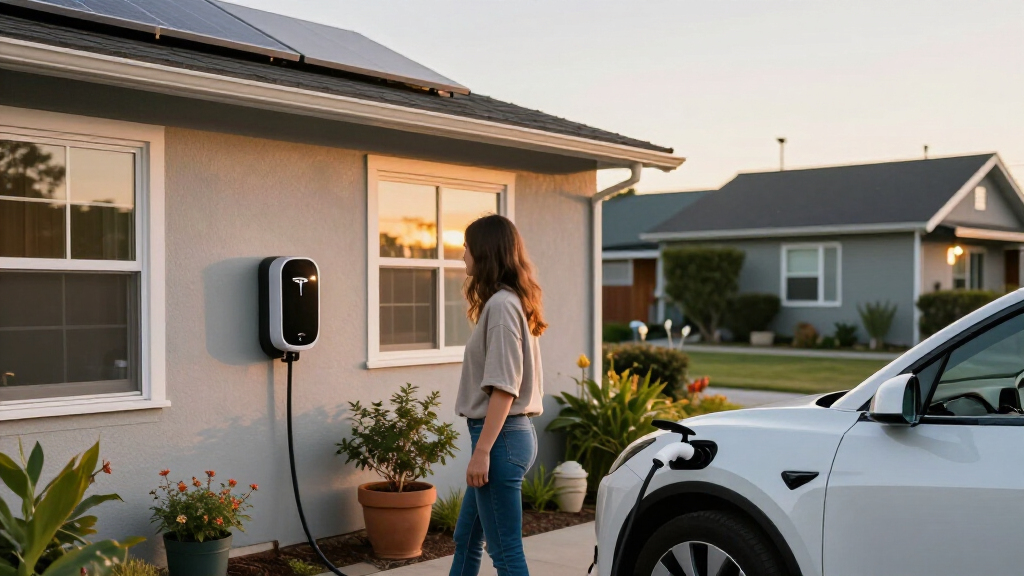
Tesla has expanded vehicle-to-home backup capability to its latest Model 3 and Model Y vehicles, which can send power to a home when paired with a Powerwall 3 and a standard Wall Connector. Tesla’s approach puts power-conversion hardware in the vehicles, potentially reducing equipment costs compared with systems that use separate bidirectional chargers; availability, compatibility details and wider adoption remain developing.
Tesla is extending vehicle-to-home backup power to its latest Model 3 and Model Y electric vehicles, allowing them to supply electricity to a home when paired with a Powerwall 3 and Tesla’s standard Wall Connector. The change matters because Tesla says its cars handle power conversion onboard, avoiding the costly separate bidirectional charger commonly required by other U.S. vehicle-to-home systems.
Tesla announced the expansion on Tuesday, according to Canary Media. The automaker already offered home-backup capability through its Cybertruck; the announcement brings the option to new Model 3 and Model Y vehicles, subject to having a Powerwall 3 at home. The report does not specify the exact model years, delivery schedule or whether every configuration of the two cars will support the feature.
In the Tesla setup described by Canary Media, the Powerwall 3 remains part of the home system, while the car sends power through a standard Wall Connector. Tesla lists the Powerwall 3 at $8,200 and the Wall Connector at $595, before installation costs. The report says the EV can add two to three days of backup power, though actual duration will depend on household usage and available vehicle charge.
Rather than using a separate DC bidirectional charger to convert the car battery’s direct current into the alternating current used in homes, Tesla’s AC bidirectional charging design performs conversion using hardware in the vehicle. The approach may lower equipment costs, but households still need to buy the vehicle and Powerwall, and the Powerwall installation adds several thousand dollars, Canary Media reported.
Lower-Cost Backup, With a Powerwall
The announcement could make EV-based home backup less expensive to equip than systems built around a standalone bidirectional charger. Canary Media reports that DC bidirectional chargers typically cost $6,500 to $10,000 or more, not including a home battery. Tesla’s Model 3 and Model Y configuration still requires a Powerwall 3, so the lower-cost comparison does not mean a complete backup system is inexpensive or that every household will save money.
The broader potential extends beyond outages. EV batteries could provide storage that supports the electricity grid, especially as renewable generation grows. A study cited by Canary Media estimated that California could meet one-third of its grid storage needs by tapping 10% of the 9.7 million EVs it expects by the mid-2030s. That is a projection, not a result already achieved, and it depends on vehicle owners, utilities and regulators allowing battery power to be used.
For consumers, the practical question is whether lower-cost equipment and straightforward installation can make backup systems accessible to more people. For utilities, the key issue is whether those systems can be safely connected and coordinated with the grid. Tesla’s expansion is a product development, not proof that widespread vehicle-to-grid services are already available.
As an affiliate, we earn on qualifying purchases.
How Tesla’s Charging Design Differs
Household electrical systems use alternating current (AC), while EV batteries store electricity as direct current (DC). A vehicle-to-home system must convert power into a form the home can use. Many current systems use a separate bidirectional charger for that conversion, adding equipment and installation costs.
Tesla’s approach places the conversion hardware in the vehicle. The company has used a related capability in the Cybertruck for more than a year, according to Canary Media. Cybertruck owners can use a separate Tesla V2H hardware package, listed at $1,990, with installation reported at about $1,800 to $2,200; unlike the Model 3 and Model Y setup described in the report, the Cybertruck system does not require a Powerwall.
Sending power from an EV to a home is known as vehicle-to-home (V2H). Sending it back to the wider electricity network is vehicle-to-grid (V2G), a more complex step involving utility rules and interconnection. Canary Media reported that California and Maryland had established utility regulations permitting AC bidirectional charging outside pilot projects, while other states were working on rules.
“This is us bringing the whole ecosystem together and allowing our products to complement each other.”
— Colby Hastings, head of Tesla Energy’s residential energy business
Compatibility and Utility Access
The report does not provide the exact eligible model years or configurations, when the feature will reach customers, or whether existing Model 3 and Model Y vehicles can gain it through a software update. It also does not give household-level estimates for backup duration; the two-to-three-day figure depends on conditions such as how much electricity a home uses and the vehicle’s charge when an outage begins.
It remains unclear how broadly the new systems can connect to utility programs. Tesla has enrolled Cybertrucks in programs with Pacific Gas & Electric and Texas utilities CenterPoint Energy and Oncor, Hastings told Canary Media. PG&E said it was technically piloting interconnection of Tesla systems. The report does not establish that the new Model 3 and Model Y setup is approved for routine grid exports in every service area.
Pricing also needs careful comparison: the $595 Wall Connector and $8,200 Powerwall 3 do not include installation, and a Powerwall is a required part of the Model 3 and Model Y configuration described. Tesla’s full installed cost for that setup was not stated in the report.
Rollout and Utility Testing
The next milestones are the customer rollout, confirmation of which vehicle versions qualify, and more detail from Tesla on setup and operating requirements. Homeowners will need to check the compatibility of their vehicle, Powerwall and electrical service before relying on the car for backup.
Utility testing will also shape whether the system can move beyond powering a home during an outage and supply electricity to the grid. PG&E was testing Tesla system interconnection, while Tesla said it had enrolled Cybertrucks in programs with utilities in California and Texas. The source material provides no timeline for broader approvals or for expanding those programs to the new Model 3 and Model Y vehicles.
Key Questions
Which Tesla vehicles can now provide home backup power?
Tesla said its latest Model 3 and Model Y can supply power to a home when paired with a Powerwall 3. The report does not identify exact model years or eligible configurations.
Does the Model 3 or Model Y setup need a Powerwall?
Yes. The configuration described by Canary Media requires a Powerwall 3 as well as Tesla’s standard Wall Connector. Tesla’s Cybertruck backup setup is different and does not require a Powerwall.
Why is Tesla’s system different from many other V2H systems?
Tesla’s design uses power-conversion hardware in the vehicle to send AC power to a home. Many other systems use a separate DC bidirectional charger to convert the vehicle’s battery power.
How much does the setup cost?
Tesla lists the Powerwall 3 at $8,200 and the Wall Connector at $595, before installation. Canary Media says Powerwall installation costs several thousand dollars more, but the report does not give a total installed price for the Model 3 and Model Y setup.
Can these vehicles send electricity back to the grid?
Vehicle-to-grid service is separate from home backup and depends on utility approval and interconnection. Tesla has enrolled Cybertrucks in some utility programs, and PG&E said it was technically piloting Tesla system interconnection; the report does not confirm broad grid-export access for the new Model 3 and Model Y setup.
Source: rss
Halloween Picks
halloween
As an affiliate, we earn on qualifying purchases.