You should include safety gear as part of your chimney planning from the start to avoid accidents and guarantee stability. Secure ladders properly, inspect all equipment, and fit harnesses correctly before climbing. Rushing setups increases fall risks, so take the time to prepare thoroughly. Well-planned safety measures can make your work safer and more efficient. Keep these tips in mind, and you’ll discover more ways to improve your roof safety practices.
Key Takeaways
- Integrate safety gear inspection and setup into initial chimney planning to ensure readiness before starting work.
- Prioritize proper ladder positioning and stability to prevent accidents during chimney access.
- Ensure harness fitting and attachment points are secure and comfortable before work begins.
- Regularly inspect and maintain safety equipment as part of overall planning for reliable protection.
- Recognize roof safety gear as essential to the safety plan, not a secondary consideration.
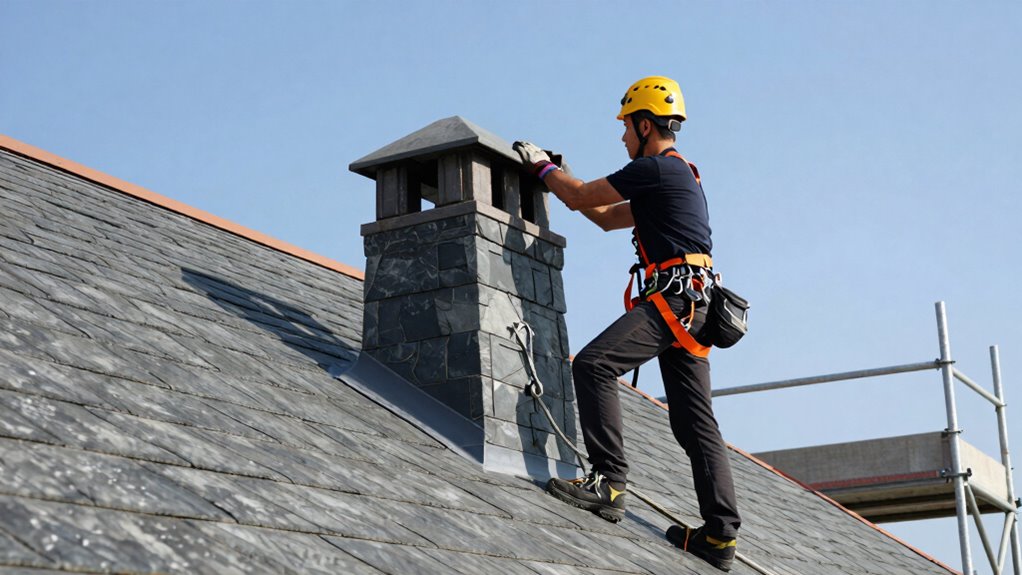
When planning to install or maintain a chimney, roof safety gear shouldn’t be an afterthought; it must be an integral part of the process. Your safety depends on how well you prepare before climbing onto the roof. One of the most critical aspects is ensuring ladder stability. You want to secure your ladder properly, placing it on firm, level ground, and using ladder stabilizers or braces to prevent any shifting. A wobbly ladder can lead to falls, and that risk is simply too high to ignore. Take the time to inspect the ladder for any damage before use, and always maintain three points of contact when climbing—two hands and one foot, or two feet and one hand. This simple habit significantly reduces your chance of slipping.
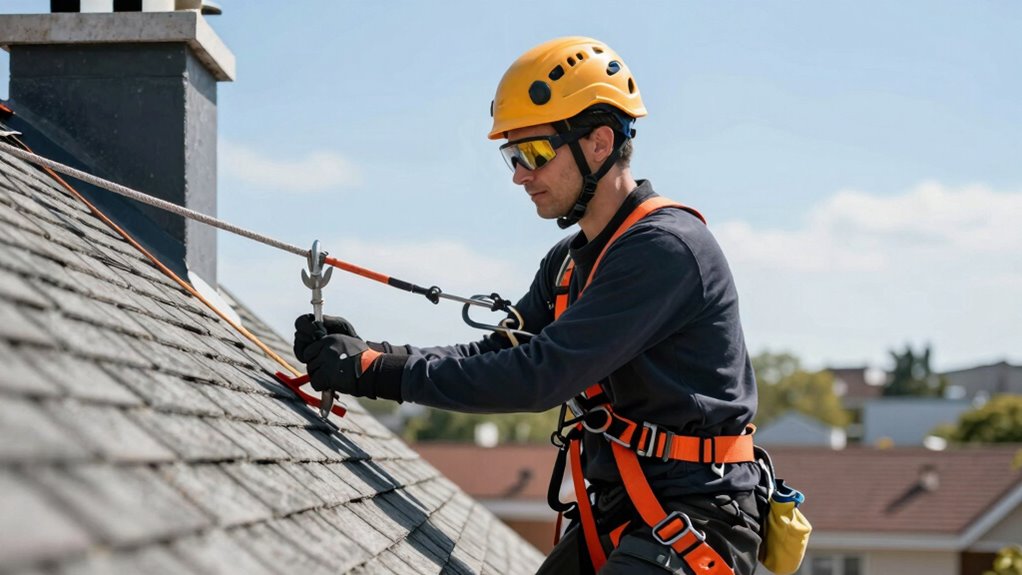
Once you’re on the roof, harness fitting becomes paramount. A well-fitted harness distributes pressure evenly across your body, reducing fatigue and the risk of injury if you slip. Before starting work, double-check that your harness fits snugly but comfortably. The straps should be tight enough to prevent slipping but not so tight that they cut into your skin or restrict movement. Attach your lanyard securely to a sturdy anchor point—never to something that might give way under load. Proper harness fitting isn’t just about comfort; it’s about ensuring your safety if you lose your footing. Always perform a quick safety check of your harness and lanyard before climbing, making sure all buckles are secure and there’s no sign of wear or damage. Additionally, understanding the importance of roof safety gear can help you recognize the critical role it plays in preventing accidents. Being familiar with the proper safety equipment maintenance and inspection routines can further enhance your safety measures.
Planning your roof safety gear isn’t just about having the right equipment; it’s about understanding how to use it correctly. Your ladder should be stable and positioned at the proper angle—about 75 degrees—to prevent slipping or tipping. Don’t rush the setup; take the time to confirm stability and ensure it’s anchored well. When it comes to harness fitting, don’t just put it on and forget about it. Adjust the straps for a snug fit, check all buckles, and test your lanyard’s attachment point. Remember, equipment that isn’t fitted properly offers no protection at all. By prioritizing ladder stability and harness fitting during your planning stage, you significantly reduce the risk of accidents and make your chimney work safer and more efficient. Your safety starts long before you step onto the roof, so don’t cut corners—prepare thoroughly.
As an affiliate, we earn on qualifying purchases.
Frequently Asked Questions
What Are the Most Essential Roof Safety Gear Items for Chimney Work?
The most essential roof safety gear items for chimney work include a helmet with a chin strap, non-slip shoes, and a harness with secure lanyards. When performing a chimney inspection or working on roof venting, always wear fall protection and use a sturdy ladder. These items protect you from falls and accidents, ensuring safety while you inspect or repair the chimney, especially in high or steep roof areas.
How Often Should Roof Safety Equipment Be Inspected or Replaced?
You should inspect your roof safety equipment at least every six months and after any severe weather. Follow your maintenance schedules carefully to guarantee all gear remains in top condition. Replacing worn or damaged items promptly is crucial. Also, verify your safety certifications are up to date, as they confirm your gear meets safety standards. Regular inspections and timely replacements help you stay safe during chimney work.
Are There Specific Safety Gear Requirements for Different Roof Types?
Don’t put all your eggs in one basket; safety gear varies by roof type. For steep, sloped roofs, you need harnesses with reliable anchors and non-slip footwear suited for weather considerations like rain or snow. Flat roofs demand slip-resistant shoes and fall arrest systems that accommodate their surface. Always check gear compatibility with your roof type and weather conditions to stay safe. Proper gear tailored to your roof minimizes risks and keeps you secure.
How Can I Ensure Proper Training on Using Roof Safety Gear?
You can guarantee proper training by enrolling in certified safety training courses that focus on roof safety gear. Practice using the equipment regularly to stay familiar with its operation. Always follow manufacturer instructions and conduct routine equipment maintenance to keep gear in top condition. Additionally, seek updates on safety protocols and attend refresher sessions to stay current. This proactive approach helps you work safely and confidently on any roof.
What Are Common Mistakes to Avoid With Roof Safety Gear?
You should avoid common mistakes like neglecting proper fall protection and skipping gear maintenance. Always check that your safety gear is in good condition before use, ensuring straps and anchors are secure. Don’t underestimate the importance of proper training, and never improvise or reuse damaged gear. Regularly inspect and maintain your roof safety equipment to prevent failures, and follow manufacturer guidelines to stay safe while working on the roof.
Conclusion
Just like Icarus soared too close to the sun without wings, neglecting roof safety gear puts you at risk. Think of it as your safety net, woven into your chimney plans from the start, not an afterthought to be tacked on. When you prioritize safety early, you’re building a fortress, not a trap. So, plan wisely, gear up, and remember: safety isn’t an accessory, it’s your foundation—your flight’s true wings.