Supplemental heat in small homes is surprisingly effective because it targets cold spots, boosts comfort, and reduces your reliance on the main heating system. It heats quickly, retains warmth better with proper insulation, and can be moved to trouble areas for maximum efficiency. This approach not only lowers your energy bills but also makes your home cozier during winter. Keep exploring to discover how combining these strategies can transform your heating experience.
Key Takeaways
- Supplemental heat effectively targets cold spots, improving overall comfort in small homes.
- It reduces reliance on primary systems, lowering energy costs and increasing efficiency.
- Proper insulation enhances the performance and benefits of supplemental heating devices.
- Portable and focused heaters provide flexibility, heating specific areas as needed.
- Combining supplemental heat with insulation extends system lifespan and boosts energy savings.
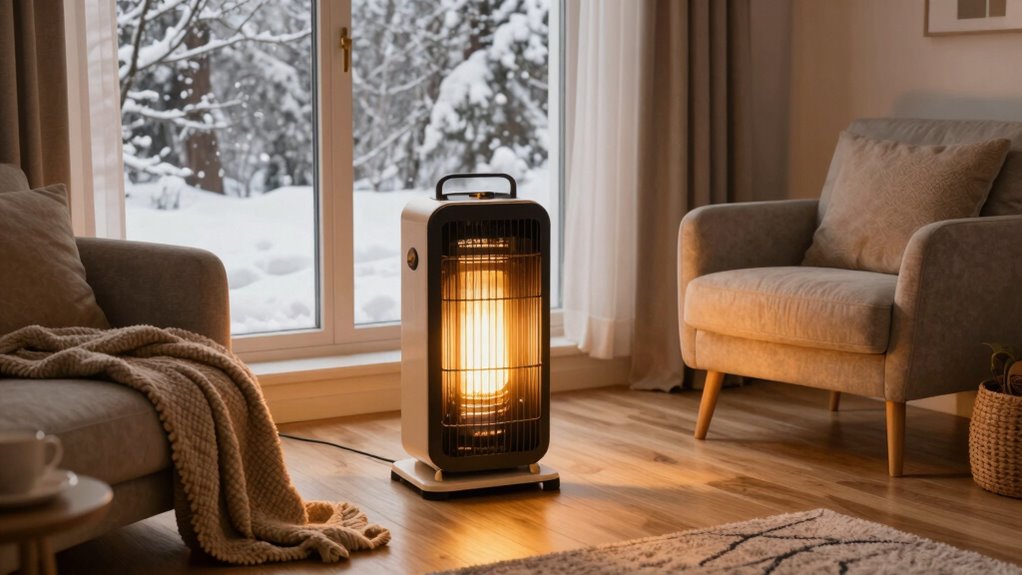
If you’re living in a small home, relying solely on your primary heating system might not be enough to keep every corner comfortably warm. Small spaces tend to heat up quickly, but they also lose heat just as fast, especially if your insulation isn’t up to par. That’s where supplemental heat sources can make a real difference. Not only do they help maintain a consistent temperature, but they also improve overall energy efficiency by reducing the workload on your main heater. When your home is better insulated, heat stays in longer, making it easier to keep warm without cranking up the thermostat constantly. Upgrading insulation is a smart move because it minimizes heat loss, allowing your supplemental heat to work more effectively. Incorporating sustainable living practices can further enhance your home’s energy efficiency and reduce your environmental impact.
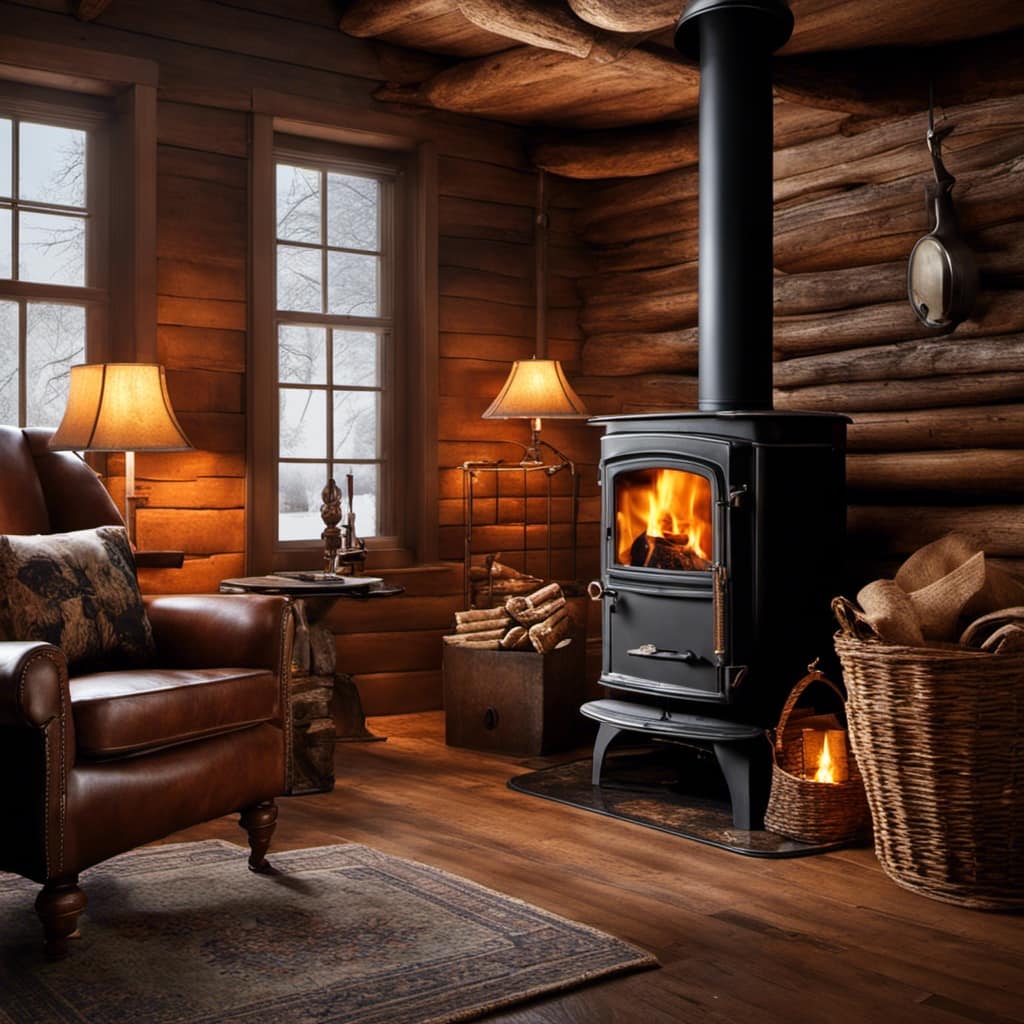
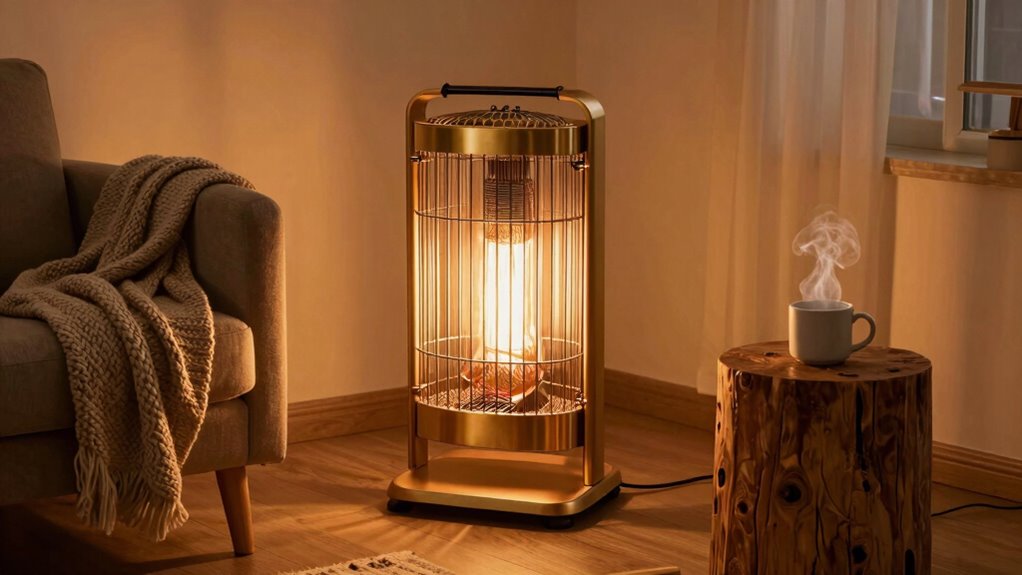
Using supplemental heat doesn’t mean you have to rely on bulky or inefficient devices. There are many options that fit small homes perfectly—electric space heaters, pellet stoves, or even portable infrared panels. These devices are designed to target specific areas that tend to be colder, like a drafty corner or a room far from the main heating source. By focusing heat where it’s needed most, you maximize energy efficiency and reduce unnecessary energy consumption. That helps you save money on utility bills and reduces your carbon footprint. Plus, these small, portable options give you flexibility—you can move them around depending on which rooms you’re using most. Energy efficiency is especially important in small homes because every degree counts toward reducing overall heating costs.
Another benefit of supplemental heat is that it can serve as a backup during peak cold snaps when your primary system struggles to keep up. Instead of overworking your furnace or boiler, you can activate a supplemental source to boost warmth without overtaxing the main system. This approach not only increases comfort but also extends the lifespan of your primary heating equipment. Keep in mind, though, that the key to making supplemental heat work efficiently is to pair it with proper insulation. Even the best supplemental heater won’t perform well if cold air continually leaks in or heated air escapes through poor insulation.
In small homes, every degree counts. When you combine supplemental heat with insulation improvements, you create an environment where heat stays in longer and energy is used more wisely. This synergy enhances your home’s overall energy efficiency, making it warmer, more comfortable, and more cost-effective to heat. So, don’t underestimate the power of a well-placed supplemental heat source—it can be a game-changer in keeping your small home cozy all winter long.
electric space heater for small rooms
As an affiliate, we earn on qualifying purchases.
As an affiliate, we earn on qualifying purchases.
Frequently Asked Questions
How Does Supplemental Heat Impact Overall Energy Bills?
Supplemental heat can substantially reduce your overall energy bills by boosting energy efficiency and enabling you to heat only the spaces you use. This targeted approach minimizes the need for running your main heating system constantly, leading to cost savings. By adding supplemental heat sources, you can maintain comfort without overpaying for unnecessary energy consumption, making your small home more affordable to heat during cold months.
Are There Safety Concerns With Portable Supplemental Heaters?
Ever thought about safety hazards when using portable supplemental heaters? They can pose risks like fire hazards if not used properly. Ventilation concerns also come into play, especially if the heater releases fumes or exhaust gases. Always keep heaters away from flammable objects, use them on stable surfaces, and make certain proper ventilation. Staying vigilant helps you enjoy supplemental heat safely without risking accidents or health issues.
What Maintenance Is Required for Supplemental Heating Systems?
You should perform regular maintenance checks on your supplemental heating system, like cleaning filters and inspecting vents, to keep it running efficiently. Always follow safety precautions, such as ensuring proper clearance around heaters and checking for damaged cords or parts. Schedule annual professional inspections if possible, and keep an eye out for any signs of wear or malfunction. Proper maintenance and safety measures help prevent accidents and extend your heater’s lifespan.
Can Supplemental Heat Be Used in All Small Home Designs?
Yes, supplemental heat can be used in most small home designs, but its effectiveness depends on proper design integration. You should consider alternative heating options that fit seamlessly into your space, ensuring efficient distribution and comfort. While some layouts may require adjustments or specific placements, with thoughtful planning, you can incorporate supplemental heat into nearly any small home design to enhance warmth and energy efficiency.
How Quickly Can Supplemental Heat Improve Room Temperature?
Supplemental heat can improve room temperature within minutes, depending on the heating method used. It boosts temperature regulation quickly by adding targeted warmth, making your space more comfortable fast. This approach enhances heating efficiency because it focuses heat where needed most, reducing energy waste. Whether using electric heaters or space heaters, you’ll notice a temperature rise almost immediately, ensuring your small home stays cozy even during colder days.
Conclusion
So, next time you’re freezing in your tiny home, remember: a little supplemental heat might just be your secret weapon. Who knew that a small space could wield such power? Embrace the cozy chaos, and thank your clever self for discovering that sometimes, more heat doesn’t mean more hassle—just a little extra warmth for your tiny kingdom. Stay warm, stay witty, and keep those heaters close!