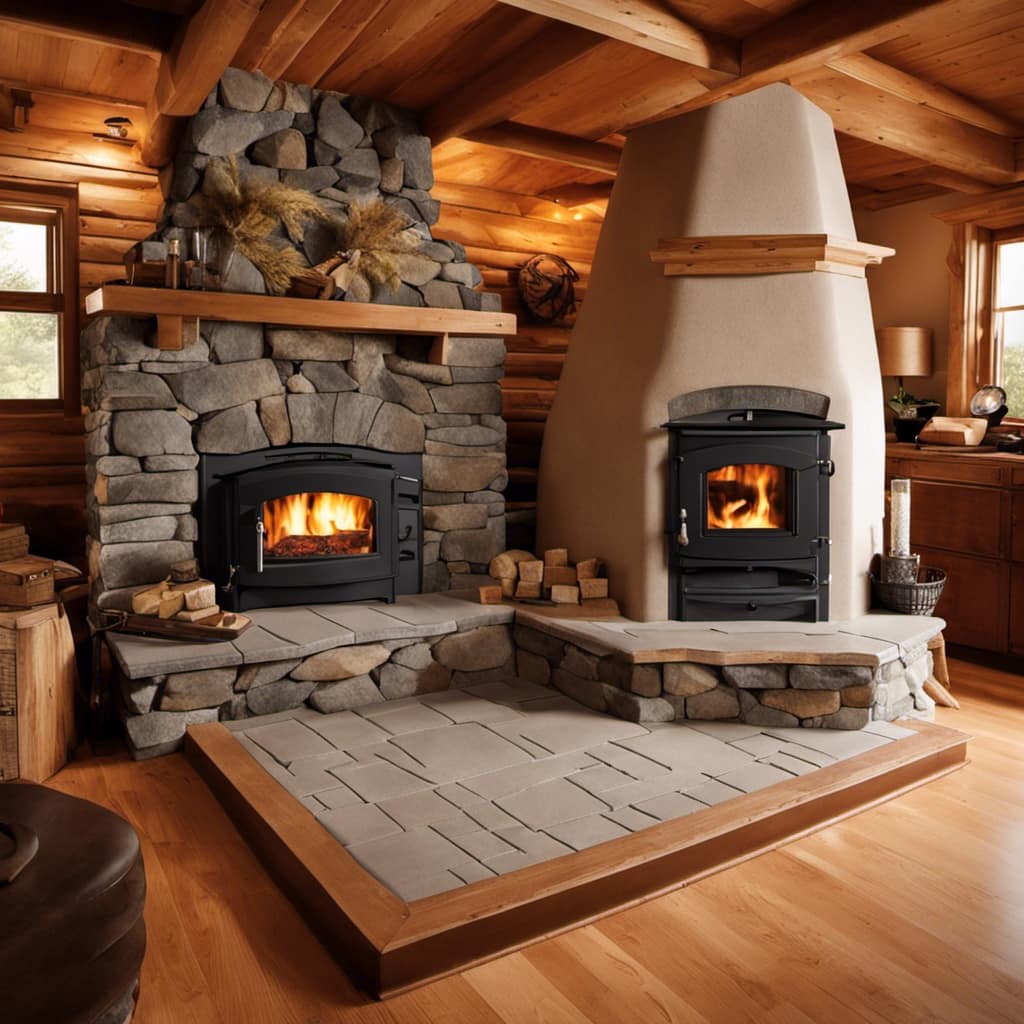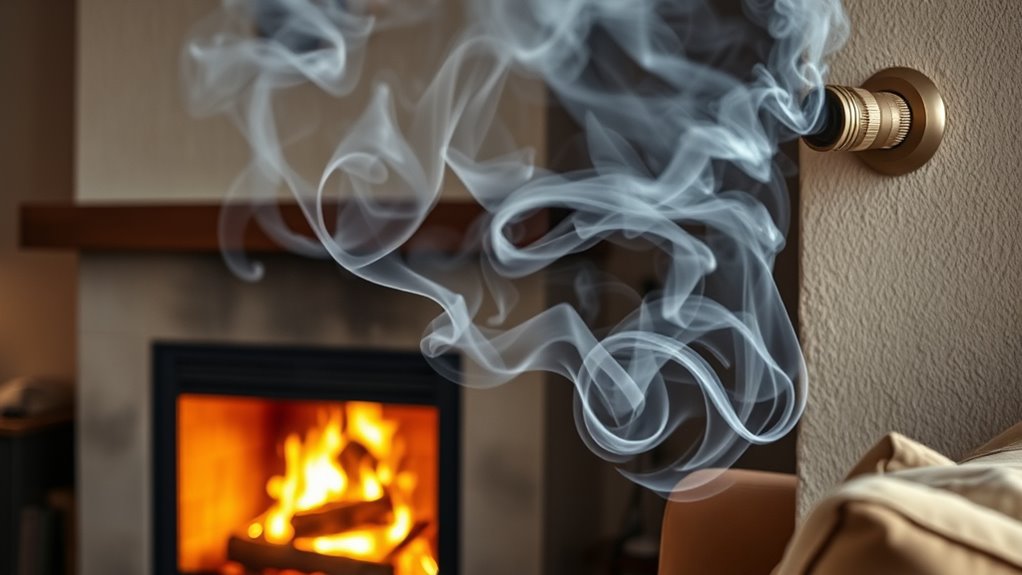
To prevent smoke backdrafts, guarantee proper ventilation and chimney maintenance. Avoid sealing vents or flues tightly, as this traps smoke inside and creates negative pressure. Keep vents and air passages open, and consider adding extra vents or exhaust fans to improve airflow. Regularly inspect and clean your chimney to maintain a strong draft. Managing airflow and ventilation is key—keep reading to learn more about effective fixes and long-term prevention strategies.
Key Takeaways
- Ensure proper ventilation by opening vents and ensuring unobstructed air passages.
- Maintain chimney height, diameter, and cleanliness to promote effective natural draft.
- Avoid sealing vents, doors, or windows tightly, which can trap smoke and create negative pressure.
- Use additional exhaust fans or vents to improve airflow and prevent negative pressure buildup.
- Regularly inspect and repair chimney and ventilation systems to prevent blockages and ensure efficient smoke evacuation.
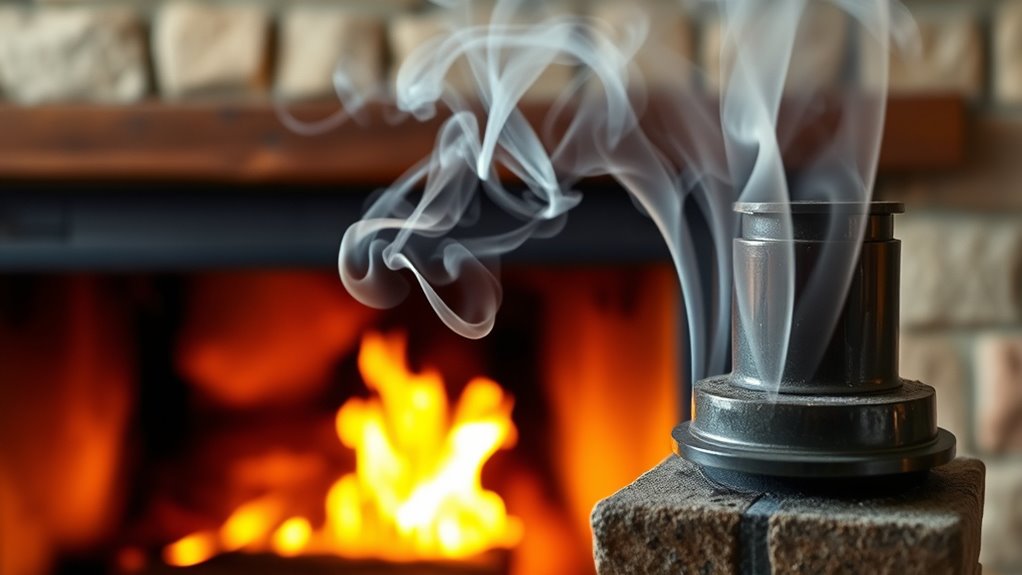
Smoke backdrafts can occur when negative pressure from a fire causes smoke to be forced back into a building instead of escaping through vents. When this happens, it can create unsafe conditions, reduce visibility, and lead to smoke inhalation risks. To prevent such backdrafts, you need to understand the role of ventilation issues and how chimney design influences airflow. Proper ventilation ensures that smoke and heat exit efficiently, maintaining a balanced pressure inside the building. If ventilation is inadequate, the buildup of negative pressure becomes more likely, which can suck smoke back into the structure instead of venting it outside.
Chimney design plays an essential role in this process. A well-designed chimney creates a natural draft, pulling smoke upward and out of the building. Factors like chimney height, diameter, and material affect the flow of air and smoke. If the chimney is too short or narrow, it limits the upward flow, making it harder for smoke to escape and increasing the chances of backdrafts. Conversely, a taller, properly sized chimney enhances the draft, promoting consistent smoke evacuation. When designing or inspecting your chimney, focus on guaranteeing it is free of obstructions, properly lined, and correctly vented to the outside.
Another common issue stems from inadequate or blocked ventilation pathways inside the building. For example, if vents are closed or blocked, negative pressure can develop when fires burn, especially in tightly sealed spaces. Sealing windows, doors, or vents during a fire can trap smoke and cause it to backflow through other openings or cracks. To prevent this, make sure vents and air passages are open and unobstructed, allowing fresh air to enter and smoke to exit freely. Installing additional vents or exhaust fans can also help maintain proper airflow, reducing the risk of negative pressure buildup.
In addition, it’s essential to consider the overall airflow balance. Sometimes, opening a window or door on the opposite side of the building can equalize pressure and prevent smoke from being sucked back inside. Regularly inspecting your chimney and ventilation system for blockages or damage is vital. Also, avoid creating tight seals around vents or flues that can inadvertently trap smoke. Proper chimney maintenance and ventilation management help sustain a steady flow of air, reducing the likelihood of smoke backdrafts. Additionally, incorporating vertical storage solutions and clear organization can improve overall safety by ensuring that ventilation pathways remain accessible and unobstructed during maintenance or emergencies.

Sealegend 30FT Chimney Sweep Kit Rotary Flexible Cleaning Brush with 9 Rods
- Button Locking Design: Secure chrome-plated locking mechanism
- Effective Soot & Creosote Removal: Cleans chimney buildup efficiently
- Compatible with Electric Drill: Rotates for thorough cleaning
As an affiliate, we earn on qualifying purchases.
As an affiliate, we earn on qualifying purchases.
Frequently Asked Questions
Can Weather Changes Trigger Smoke Backdrafts?
Yes, weather fluctuations can trigger smoke backdrafts. Changes in wind speed and pressure can disrupt your chimney’s draft, especially if your chimney design isn’t ideal. When wind blows strongly or pressure drops, smoke might be pushed back into your home. To prevent this, ensure your chimney is well-designed with proper caps and consider weather-resistant features that help maintain a steady draft regardless of weather changes.
Are There Specific Appliances That Increase Backdraft Risk?
Think of certain appliances as open windows into your home’s venting system; if not maintained, they can invite trouble. Gas water heaters, wood stoves, and fireplaces, especially if poorly maintained or improperly vented, increase backdraft risk. Regular appliance maintenance and meeting ventilation requirements are key to preventing smoke from sneaking back inside. Keep these appliances in check, and your home’s air will stay safe and fresh.
How Long Does It Take to Fix a Smoke Backdraft Problem?
Fixing a smoke backdraft issue can take anywhere from a few hours to a couple of days, depending on the ventilation issues and chimney design. You’ll need to identify and address airflow problems, which might involve installing or repairing vents, updating chimney components, or improving overall ventilation. Consulting a professional guarantees the problem’s fixed efficiently, preventing future backdrafts and ensuring your home’s safety and proper ventilation.
Can Smoke Backdrafts Cause Health Issues?
Think of smoke backdrafts as silent intruders invading your indoor air quality. Yes, they can cause health issues by releasing harmful pollutants and irritating your respiratory health. Breathing in these toxins may lead to coughing, headaches, or worse over time. To protect yourself, guarantee proper ventilation and fix backdraft problems promptly. Your respiratory health depends on maintaining a safe, smoke-free environment where clean air flows freely and shields you from unseen dangers.
Is Professional Inspection Necessary to Prevent Backdrafts?
Yes, a professional inspection is essential to prevent backdrafts. You should prioritize an inspection importance, as a professional assessment can identify potential issues with your venting system or chimney. These experts know how to spot problems early, ensuring your system functions safely and efficiently. Regular assessments help prevent dangerous smoke build-up and health risks, giving you peace of mind and keeping your home safe from backdraft-related hazards.
Conclusion
By understanding the causes and implementing simple fixes, you can keep smoke where it belongs—outside your home. Think of your chimney as a welcoming gatekeeper, preventing unwanted visitors from sneaking in. Regular maintenance, proper venting, and sealing gaps act like sturdy fences, blocking smoke backdrafts before they start. With these steps, you’ll create a safer, cleaner living space, ensuring your home breathes easy and keeps smoke out—like a well-guarded fortress standing strong against intruders.