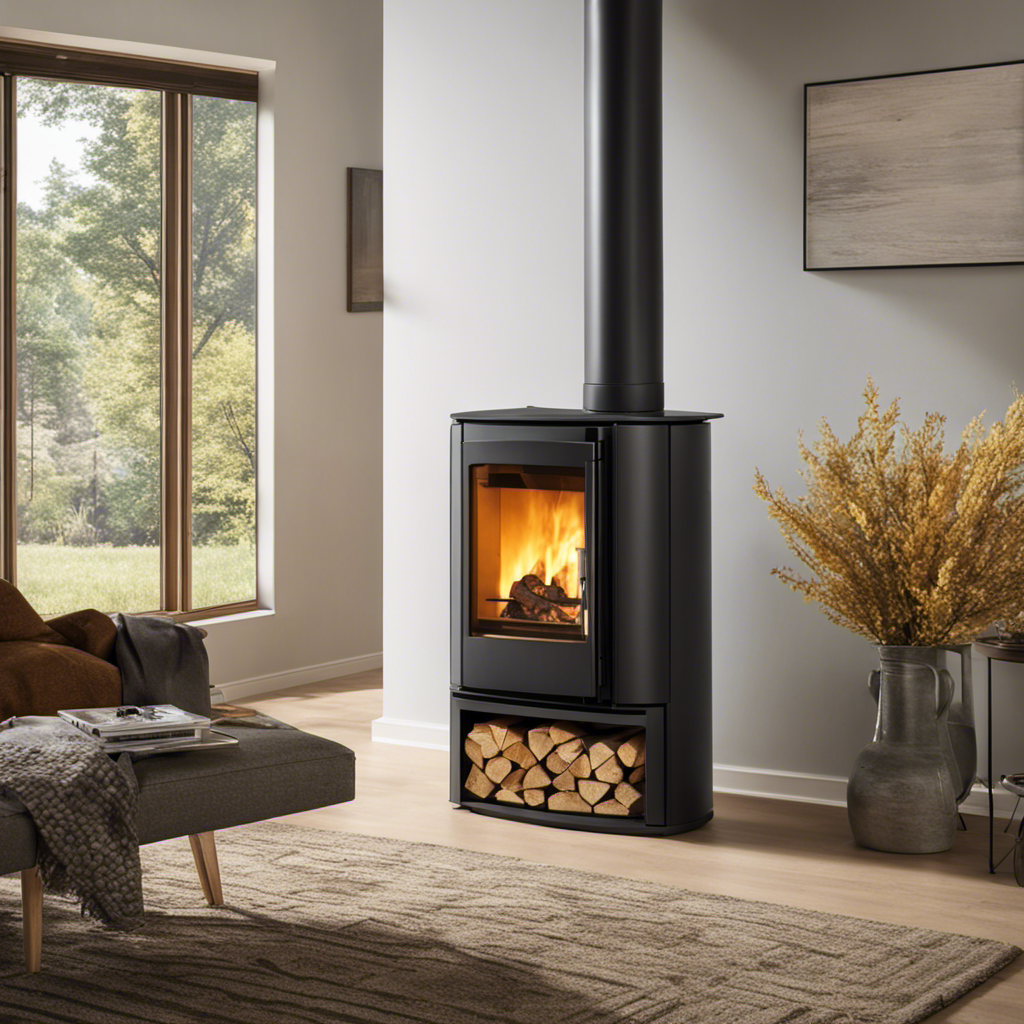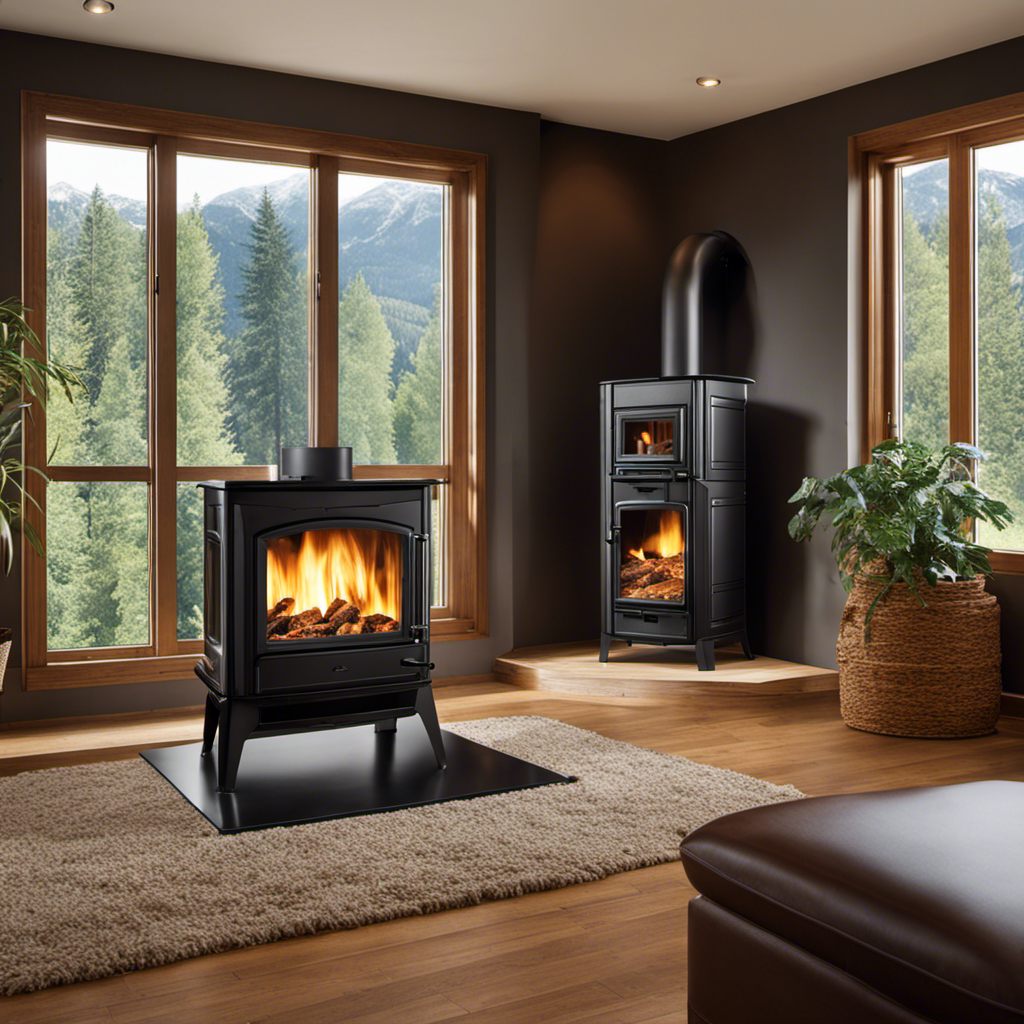
To keep your pellet stove safe and prevent hopper fires, store pellets in dry, well-ventilated areas away from heat and flames, and avoid overfilling the hopper. Always inspect and clean the hopper and auger regularly to prevent jams and debris buildup. Handle pellets carefully, ensuring they are moisture-free, and maintain good airflow within storage. Keeping these precautions in mind helps reduce risks—there’s more to know about safe pellet handling and fire prevention.
Key Takeaways
- Store pellets in dry, ventilated areas away from heat and flames to prevent moisture buildup and fire risks.
- Avoid overfilling the hopper; maintain proper pellet levels to prevent jams and uneven feeding that can cause fires.
- Regularly clean the hopper and auger to remove debris, dust, and prevent blockages or pellet bridging.
- Inspect and maintain the pellet storage area and stove components to reduce ignition sources and ensure safe operation.
- Follow safety guidelines and perform routine maintenance, including cleaning and part replacements, to prevent hopper fires.
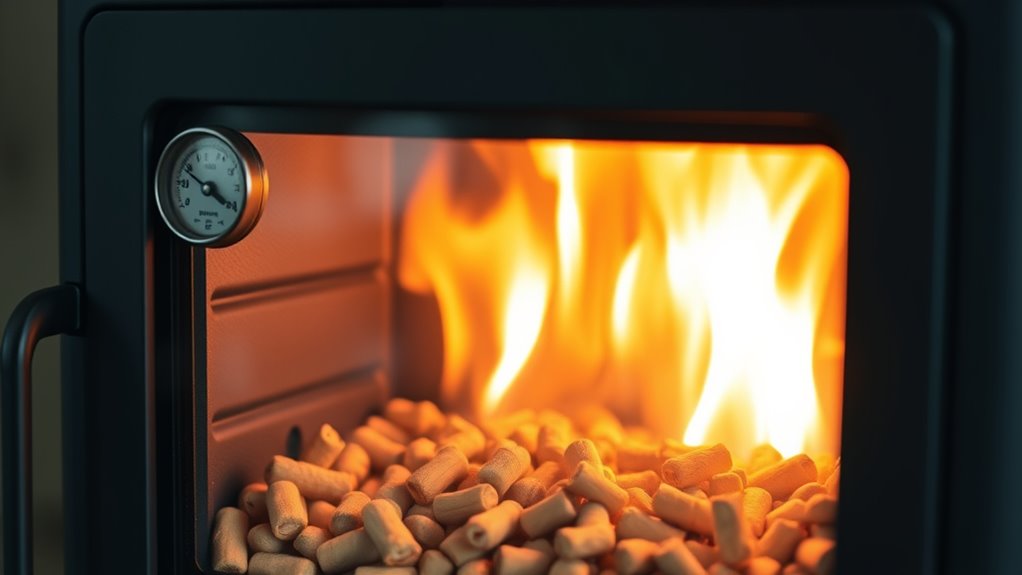
Pellet stoves are a convenient and efficient way to heat your home, but safety should always come first. One of the most important aspects of maintaining a safe pellet stove is understanding how to handle pellets and prevent hopper fires. Hopper fires can occur if pellets are improperly stored or if the stove’s ignition system isn’t functioning correctly. To reduce these risks, it’s essential to stay on top of ignition troubleshooting and follow a thorough maintenance checklist. These steps help ensure your stove operates safely and efficiently.
When dealing with ignition troubleshooting, start by checking the ignition system itself. If your stove isn’t igniting properly, it could be due to a faulty igniter, blocked sensors, or an electrical issue. Always turn off the stove and unplug it before inspecting or cleaning any components. Sometimes, the igniter element might be dirty or worn out and needs replacement. If you notice that the igniter isn’t sparking or the ignition takes too long, replacing or repairing it can prevent potential hopper fires caused by unburned pellets accumulating in the hopper. Regularly inspecting the ignition system as part of your maintenance checklist helps catch issues early, avoiding dangerous situations.
Handling pellets correctly is also crucial for safety. Store pellets in a dry, well-ventilated area away from heat sources or open flames. Moisture-laden pellets can cause inefficient burning, leading to excess ash and unburned pellets in the hopper. These unburned pellets can ignite unexpectedly if they accumulate or if the stove’s airflow becomes restricted. Always fill the hopper with the recommended amount of pellets and avoid overfilling, which can cause jams or uneven feeding. Maintaining a clean hopper and auger system reduces the chance of pellet jams or fires. Check regularly for any signs of pellet bridging or blockages, and remove any debris or dust that could ignite. Additionally, understanding design considerations for pellet storage can help prevent moisture buildup and reduce safety risks.
Store pellets in a dry, ventilated area and avoid overfilling to prevent fires and jams.
Your maintenance checklist should include regular cleaning of the burn pot, replacing worn gaskets, and inspecting the venting system for obstructions. Keep the stove’s interior clean and free of ash buildup, which can obstruct airflow and cause overheating. Always check for signs of wear or damage in electrical components and replace them as needed. Keeping these parts in good condition minimizes the risk of malfunctions that might lead to hopper fires or other safety hazards.
pellet stove hopper safety cover
As an affiliate, we earn on qualifying purchases.
As an affiliate, we earn on qualifying purchases.
Frequently Asked Questions
How Often Should I Inspect My Pellet Stove’s Venting System?
You should inspect your pellet stove’s venting system at least once a year as part of your maintenance schedule. Regular vent inspection helps prevent blockages, creosote buildup, and potential fires. If you use your stove heavily or notice any issues like poor airflow or strange odors, increase the frequency of inspections. Staying on top of vent maintenance guarantees safe operation and prolongs the life of your stove.
Can Pellet Stove Ashes Be Safely Used in Compost?
You can safely use pellet stove ashes in compost if you handle ash disposal carefully. Make sure the ashes are completely cooled before adding them to your compost pile. Pellet stove ashes are rich in potassium and other minerals, which can benefit plants. However, avoid using too much ash, especially if it contains a lot of unburned material, to maintain compost safety and prevent pH imbalances.
What Is the Lifespan of Typical Pellet Stove Components?
You can anticipate the ignition system in your pellet stove to last around 3 to 5 years with proper maintenance. The hopper’s durability varies, but it typically lasts 5 to 10 years before needing replacement or repair. Regular cleaning and inspections help extend the lifespan of these components. Keep an eye on wear and tear, and replace parts promptly to ensure your stove runs efficiently and safely.
Are There Specific Safety Tips for Children Around Pellet Stoves?
Sure, because kids always love to get close to hot stoves, right? The key safety tips are to keep a close eye on child supervision and install sturdy stove barriers. Never leave children alone near the stove, and make certain barriers are secure to prevent accidental burns or injuries. Remember, a little extra caution goes a long way in making sure your little explorers stay safe around heat sources like pellet stoves.
How Do I Troubleshoot Pellet Stove Startup Issues?
When troubleshooting your pellet stove startup issues, start by checking the ignition system for proper function. If the stove doesn’t ignite, inspect the ignition components and clean or replace them if needed. Also, examine the pellet feed; ensure the hopper has enough pellets and that the feed mechanism isn’t jammed. Regularly clean the burn pot and vents to prevent blockages, which can cause startup problems.
pellet stove auger cleaning kit
As an affiliate, we earn on qualifying purchases.
As an affiliate, we earn on qualifying purchases.
Conclusion
Just like Icarus learned when flying too close to the sun, pushing your luck with pellet stoves can lead to trouble. By handling your pellets carefully and keeping an eye on the hopper, you prevent the fiery fate of a hopper fire. Stay vigilant and treat your stove with respect—think of it as your trusty Daedalus, guiding you safely through the warmth without risking a fall. Safety first keeps your home cozy and your worries at bay.

Leafory Wood Pellet Storage Container 20-25lbs, Airtight Bin with Locking Lid & Clear Window, Collapsible Pellet Bucket with Wheels, Scoop & Labels, Gray
Visible Dry and Fresh: Leafory Pellet Storage Container keeps your wood pellets dry and fresh for consistent grilling….
As an affiliate, we earn on qualifying purchases.
As an affiliate, we earn on qualifying purchases.
pellet stove ignition system replacement
As an affiliate, we earn on qualifying purchases.
As an affiliate, we earn on qualifying purchases.