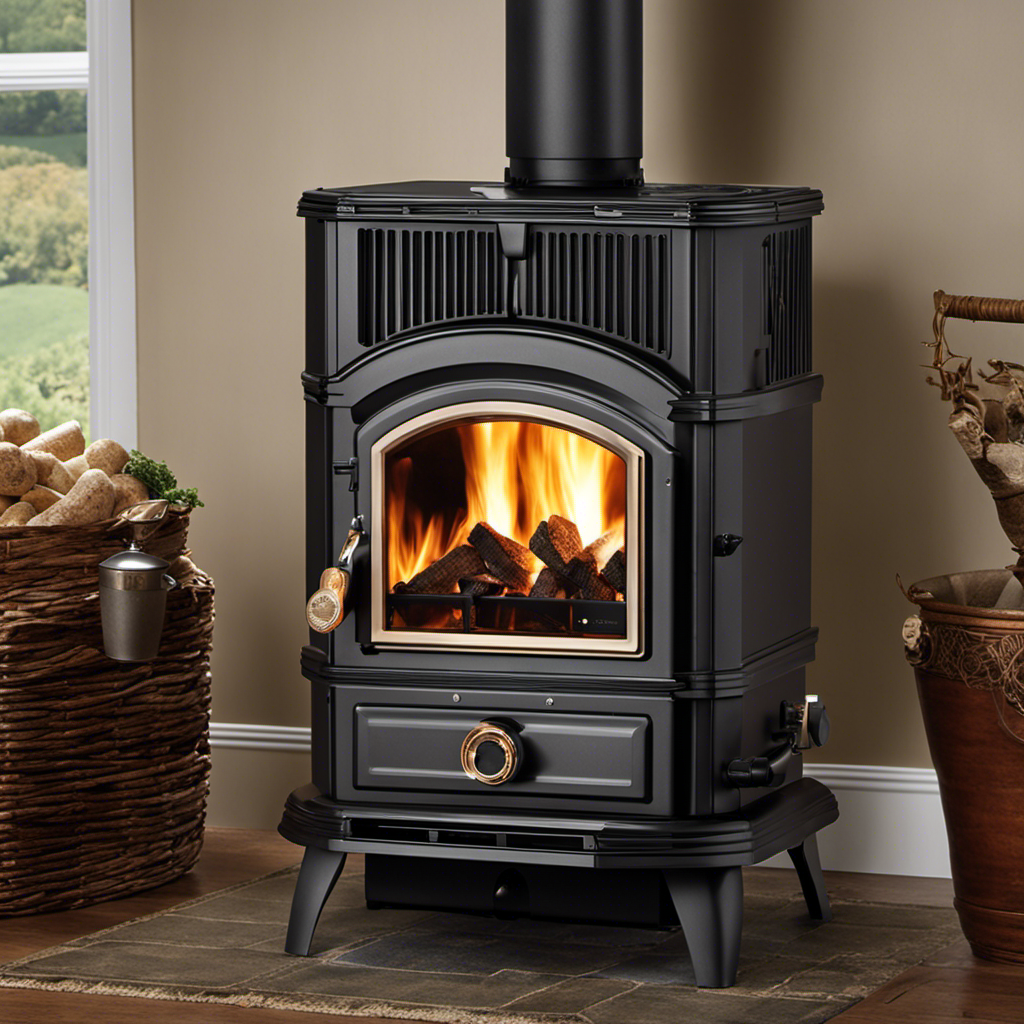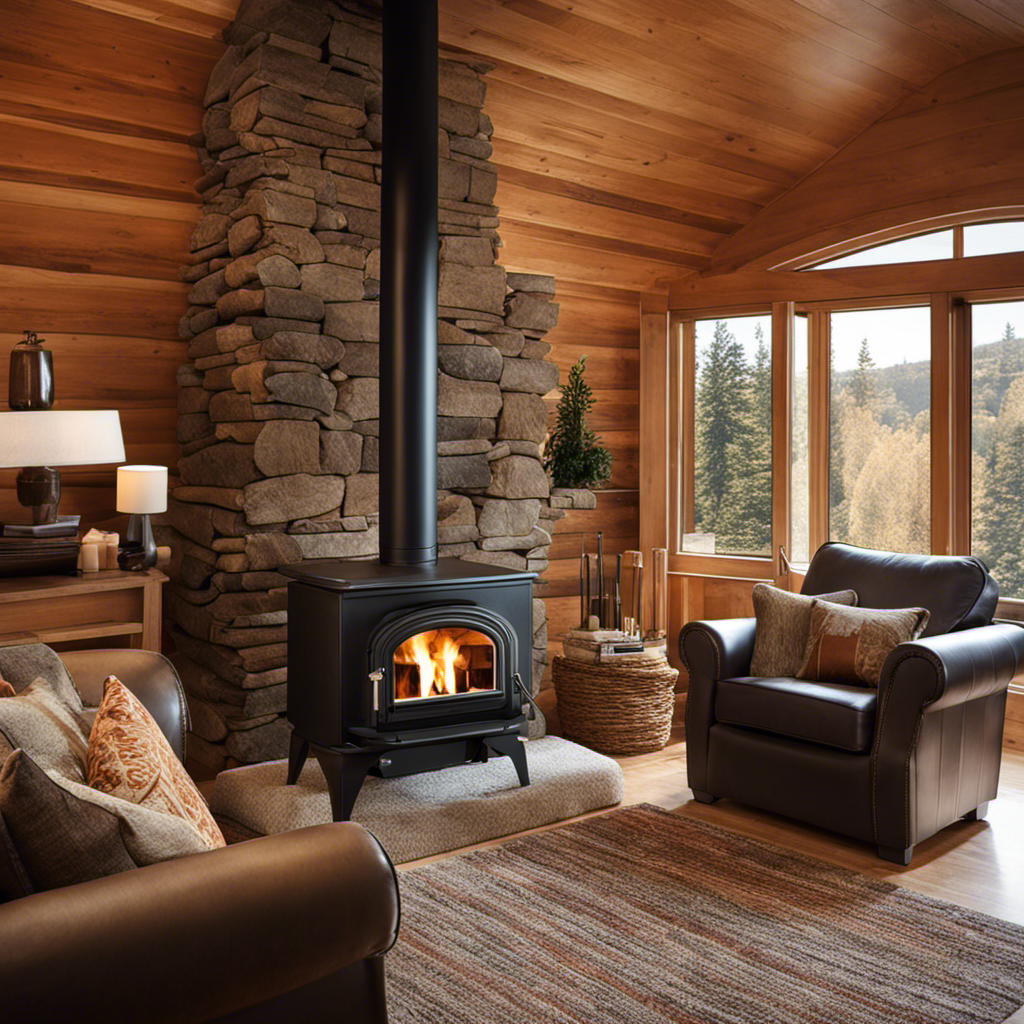
If you’re using a pellet stove, it’s important to know that EPA and EU standards set strict limits on emissions like particulate matter and carbon monoxide to protect your air quality and the environment. Compliant models incorporate advanced technologies to guarantee cleaner, more efficient combustion, reducing pollutants and health risks. Choosing certified stoves helps you operate more sustainably and saves money over time. Keep exploring to discover how these standards impact your options and what features to look for.
Key Takeaways
- EPA and EU standards set limits on particulate matter and carbon monoxide emissions from pellet stoves.
- Certified stoves must meet rigorous testing and certification procedures before market release.
- Compliance ensures reduced indoor and outdoor air pollution, promoting healthier environments.
- Non-compliant models often produce higher emissions due to inferior combustion technology.
- Choosing EPA or EU-certified stoves guarantees cleaner operation, better efficiency, and environmental responsibility.
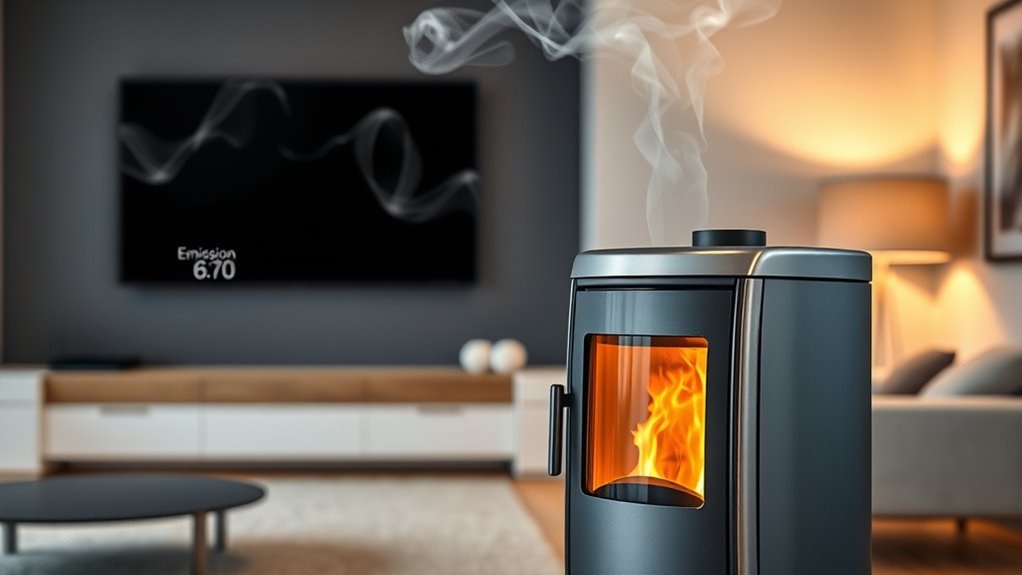
Pellet stove emissions are an important consideration when choosing a heating option, as they can impact both indoor air quality and the environment. When evaluating pellet stoves, it’s crucial to understand how combustion efficiency and emission standards influence their environmental footprint. Combustion efficiency measures how completely the stove burns the pellets, directly affecting the amount of pollutants released. Higher efficiency means more complete combustion, which reduces smoke, particulate matter, and harmful gases. Conversely, inefficient stoves tend to produce more emissions, contributing to air pollution and health issues.
Pellet stove emissions impact air quality and environmental health.
Emission standards set by regulatory bodies like the EPA in the United States and the European Union aim to limit the amount of pollutants released from pellet stoves. These standards are designed to ensure that stoves operate cleanly, minimizing their environmental impact. Many modern pellet stoves are built to meet or exceed these standards, incorporating advanced combustion technology that maximizes efficiency and reduces emissions. When shopping for a stove, checking if it complies with EPA and EU standards can help you select a model that’s environmentally friendly and healthier for your indoor air quality.
The EPA’s standards, for instance, require pellet stoves to emit a limited amount of particulate matter and carbon monoxide. These limits push manufacturers to develop stoves with better combustion technology, often featuring automatic controls, secondary combustion chambers, or catalytic converters that enhance efficiency and clean burning. Similarly, the EU has strict regulations that set maximum emission levels, encouraging the adoption of cleaner-burning designs across member countries. These standards ensure that pellet stoves remain a sustainable heating option, reducing their contribution to local and global pollution.
It’s worth noting that not all pellet stoves on the market meet these standards. Some cheaper models may produce higher emissions due to inferior design or lower combustion efficiency. Investing in a stove that complies with EPA or EU standards guarantees you’re choosing a cleaner, more efficient appliance. It also means your stove is likely to operate at peak performance, saving you money on fuel and maintenance over time. Furthermore, meeting these standards typically involves rigorous testing and certification, providing you with peace of mind that your heating system is environmentally responsible. Additionally, understanding combustion efficiency can help you select a stove that minimizes emissions and maximizes performance.

PelPro PP150 Pellet Stove for Home Heating – 150 lb Hopper, 49,200 BTU Heats up to 2,500 Sq. Ft., Easy-Dial Temp Control, Built-in Thermostat with Auto-Ignition, Powerful & Quiet 265CFM Blower
PP150 pellet stoves for fireplaces are efficient for home heating up to 2,500 sq. ft. at almost 50,000…
As an affiliate, we earn on qualifying purchases.
As an affiliate, we earn on qualifying purchases.
Frequently Asked Questions
How Do Emissions Vary Between Different Pellet Stove Brands?
When comparing pellet stove brands, you’ll notice emission variability markedly impacts performance. Some brands prioritize cleaner burning, resulting in lower emissions, while others may produce more pollutants. A thorough brand comparison reveals that models with advanced combustion technology tend to emit fewer particles and gases. By choosing a reputable brand known for emission control, you’ll enjoy a more efficient, eco-friendly heating experience and help reduce your environmental footprint.
Are There Health Risks Associated With Pellet Stove Emissions?
You might experience health risks from pellet stove emissions if indoor air quality isn’t maintained. For example, a homeowner noticed increased coughing and respiratory issues after installing a stove without proper ventilation. Emissions can release fine particles and volatile organic compounds, which can harm your respiratory health over time. To protect yourself, make certain of good ventilation, use EPA-certified stoves, and regularly clean your stove and chimney.
How Often Should Pellet Stoves Be Maintained to Ensure Low Emissions?
You should maintain your pellet stove at least once a year to ensure low emissions. Regularly check and replace the air filter to keep airflow ideal, reducing smoke and soot. Additionally, schedule chimney cleaning every few months during the heating season to prevent creosote buildup. Proper air filter maintenance and chimney cleaning help your stove operate efficiently, minimizing emissions and protecting your indoor air quality.
What Are the Future Trends in Pellet Stove Emissions Standards?
Think of future pellet stove standards like a rising tide, lifting emissions to cleaner heights. You’ll see innovations in filtration and more rigorous emission testing, pushing stoves to be eco-friendlier. Manufacturers will adopt cutting-edge technology, making emissions nearly vanish like smoke in the wind. As regulations tighten, you’ll benefit from cleaner air and more efficient stoves, all driven by the relentless pursuit of innovation and environmental responsibility.
How Does Pellet Fuel Quality Affect Emission Levels?
Your pellet fuel quality directly impacts emission levels because higher-quality pellets have better composition and consistency. Proper pellet composition guarantees complete combustion, boosting efficiency and reducing smoke and particulate emissions. Low-quality pellets may contain more binders or moisture, decreasing combustion efficiency and increasing harmful emissions. To minimize emissions, always choose pellets with consistent composition and low moisture content, which helps your stove burn cleaner and more efficiently.

GREEN STOVE Pellet Stove with Oven, Portable Wood Burning Stove for Outdoor, Cooking, Hiking,Hot Tent Stove with Stainless Steel Construction. Chimney Pipes Included(Model: Greenstovehori 5)
Power Adjustment : Matching the pellet control knob setting with the chimney damper opening is absolutely critical. Failure…
As an affiliate, we earn on qualifying purchases.
As an affiliate, we earn on qualifying purchases.
Conclusion
Now that you know about the strict EPA and EU standards, you might wonder if your pellet stove truly keeps emissions low. With proper maintenance and choosing certified models, you can enjoy cozy warmth while protecting the environment. Isn’t it worth investing in a stove that meets these standards? By doing so, you’re not just heating your home—you’re making a conscious choice for cleaner air and a healthier planet. Isn’t that a goal worth aiming for?
PelPro PP150 Pellet Stove for Home Heating – 150 lb Hopper, 49,200 BTU Heats up to 2,500 Sq. Ft., Easy-Dial Temp Control, Built-in Thermostat with Auto-Ignition, Powerful & Quiet 265CFM Blower
PP150 pellet stoves for fireplaces are efficient for home heating up to 2,500 sq. ft. at almost 50,000…
As an affiliate, we earn on qualifying purchases.
As an affiliate, we earn on qualifying purchases.

Medium Pellet Stove – 60lb Hopper
Built-in WiFi – Smart Home Technology
As an affiliate, we earn on qualifying purchases.
As an affiliate, we earn on qualifying purchases.