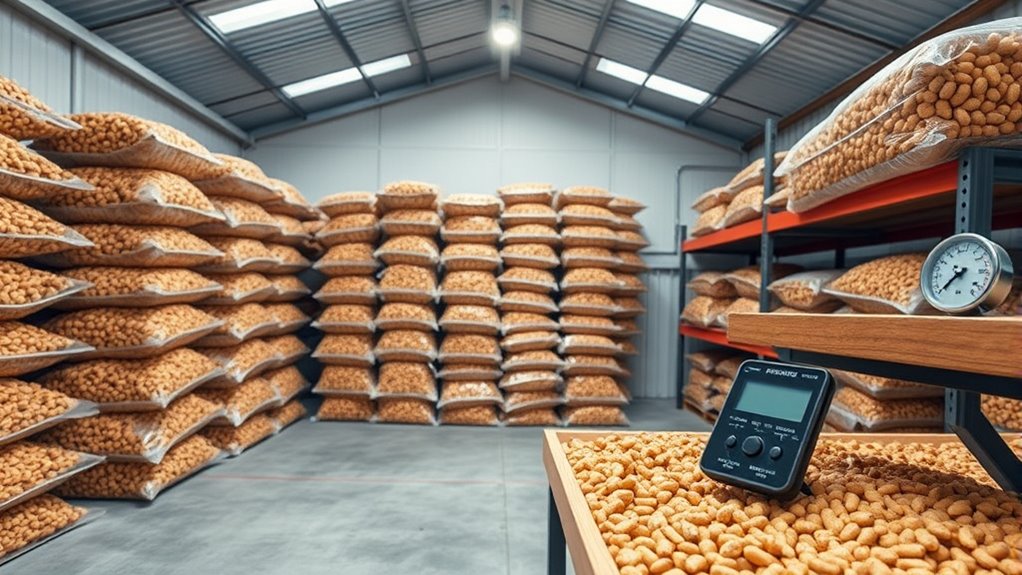

To store wood pellets properly, keep them in a dry, cool, and well-ventilated area away from moisture and direct sunlight. Use sealed containers, pallets, or bags elevated from damp surfaces to prevent humidity exposure. Incorporate moisture barriers like desiccant packs or dehumidifiers, and regularly check for signs of mold or clumping. Good storage practices prolong shelf life and guarantee ideal burning, so continue exploring how to maintain their quality effectively.
Key Takeaways
- Store wood pellets in a dry, cool, well-ventilated area to prevent moisture absorption.
- Use sealed containers or plastic bins with desiccant packs to keep pellets dry.
- Elevate pallets or bags off the ground to improve airflow and avoid contact with damp surfaces.
- Employ dehumidifiers in humid environments to reduce ambient moisture levels.
- Regularly inspect pellets for signs of mold, clumping, or musty odors, and dispose of compromised batches.
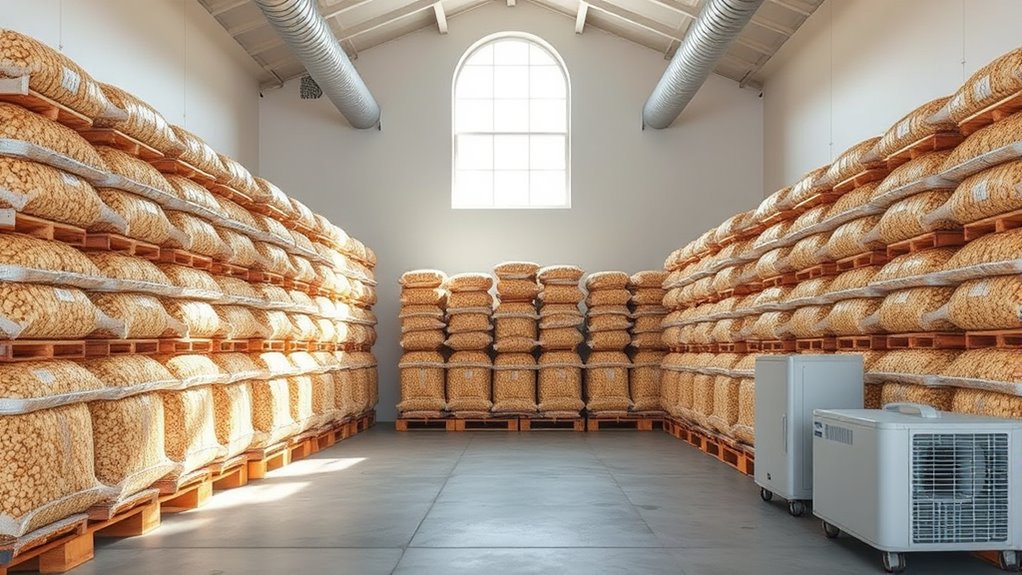
Storing wood pellets properly is vital to maintain their quality and guarantee they burn efficiently. When it comes to storage, your main goal is to keep moisture out because excess moisture can cause pellets to degrade, jam your stove, or produce more ash than usual. The key to preventing this is managing your storage environment carefully. Moisture barriers are essential in this regard—they act as a shield against humidity and spills, helping to keep your pellets dry and in peak condition. Without proper moisture barriers, even a slightly damp storage space can quickly compromise your pellets, leading to poor combustion and decreased heating efficiency.
Proper storage with moisture barriers keeps wood pellets dry and ensures efficient burning.
The storage environment itself plays a significant role in preserving pellet quality. Ideally, you want a dry, cool, and well-ventilated space that’s protected from the elements. Garages, sheds, or dedicated storage rooms work well, as long as you guarantee they stay dry. Avoid storing pellets directly on the ground, especially if the floor isn’t concrete or sealed, because moisture can seep in from underneath. Elevate your pallets or bags on pallets or shelves to promote airflow and prevent contact with damp surfaces. Also, consider using sealed plastic bins or containers with airtight lids for smaller quantities, as they provide an extra layer of protection against moisture and pests.
Controlling the humidity within your storage environment is vital. Use dehumidifiers if you live in a humid climate, or place desiccant packs inside containers to absorb excess moisture. Regularly inspect your pellets for signs of moisture, such as mold, clumping, or a musty smell. If you notice any of these, it’s best to dispose of affected pellets rather than risking poor performance or damage to your stove. Remember, even small amounts of moisture can cause the pellets to swell or break apart, making them difficult to feed into your stove and reducing their energy output.
Additionally, keep your storage area clean and free of debris that could introduce moisture or pests. Properly sealed bags or containers should be stored away from direct sunlight or heat sources, as fluctuating temperatures can cause condensation inside the packaging. Being aware of industry transformations and innovations can help you adapt your storage solutions more effectively. By paying close attention to your storage environment and using moisture barriers effectively, you guarantee your wood pellets stay dry and maintain their high energy content. This not only prolongs their shelf life but also assures you get the most efficient, clean-burning heat from every bag.
As an affiliate, we earn on qualifying purchases.
Frequently Asked Questions
How Long Can Wood Pellets Be Stored Without Losing Quality?
You can typically store wood pellets for about 6 to 12 months without significant quality loss if properly kept. During this time, moisture absorption is your main concern, as excess humidity can lead to pellet degradation. To prolong freshness, keep pellets in a dry, airtight container, away from moisture, and avoid temperature fluctuations. Proper storage guarantees your pellets stay effective and maintain their burning quality over time.
What Are the Signs of Moisture Damage in Stored Pellets?
You’ll notice moisture damage in your stored pellets through mold growth and pellet clumping. Mold appears as fuzzy or discolored spots, often with a musty smell, indicating excessive moisture. Pellet clumping makes the pellets stick together in uneven masses, signaling they’ve absorbed too much moisture. If you see these signs, it’s best to dry or replace the pellets to maintain their quality and prevent further spoilage.
Can Stored Wood Pellets Spontaneously Combust?
Yes, stored wood pellets can spontaneously combust if they develop pellet mold and absorb excess moisture. The fire risk increases when moisture triggers microbial activity, generating heat within the pile. To prevent this, always keep pellets dry and store them in a well-ventilated area. If you notice mold or a musty smell, discard the affected pellets immediately to avoid fire hazards caused by heat buildup.
Is It Safe to Store Pellets Outdoors Year-Round?
Storing pellets outdoors year-round is generally safe if you take proper precautions. Use a weatherproof container or cover to protect against moisture, which can cause mold and spoilage. guarantee good outdoor storage practices by keeping the pellets off the ground to prevent pest infestation and promote airflow. Regularly check for signs of pests or moisture, and reseal the container tightly after each use to maintain pellet quality and safety.
How Does Temperature Affect Pellet Storage Longevity?
Temperature fluctuations can considerably impact your pellet storage longevity. When temperatures vary, moisture levels may increase, leading to mold or degradation. Cold weather can slow down pest activity, but warmer periods might invite pests, risking infestation. To guarantee your pellets stay fresh and effective, keep your storage area as stable as possible and protected from extreme temperature changes. Proper insulation and ventilation help maintain ideal conditions and prevent pests from invading.
Conclusion
So, after all that effort to keep your wood pellets dry, it’s almost funny how a tiny leak or a forgotten vent can turn your perfect storage into a moldy mess. You spend so much time controlling moisture, only to find that neglect or a small mistake ruins everything. Ironically, the best way to protect your pellets is to stay vigilant—because in the end, moisture’s sneakiest trick is just waiting for you to slip up.