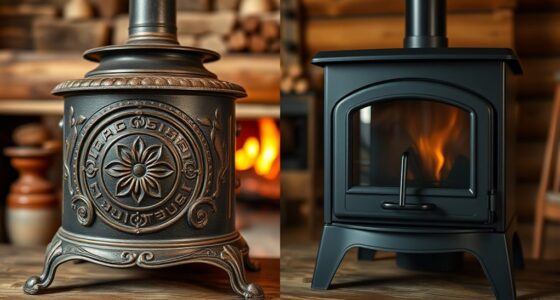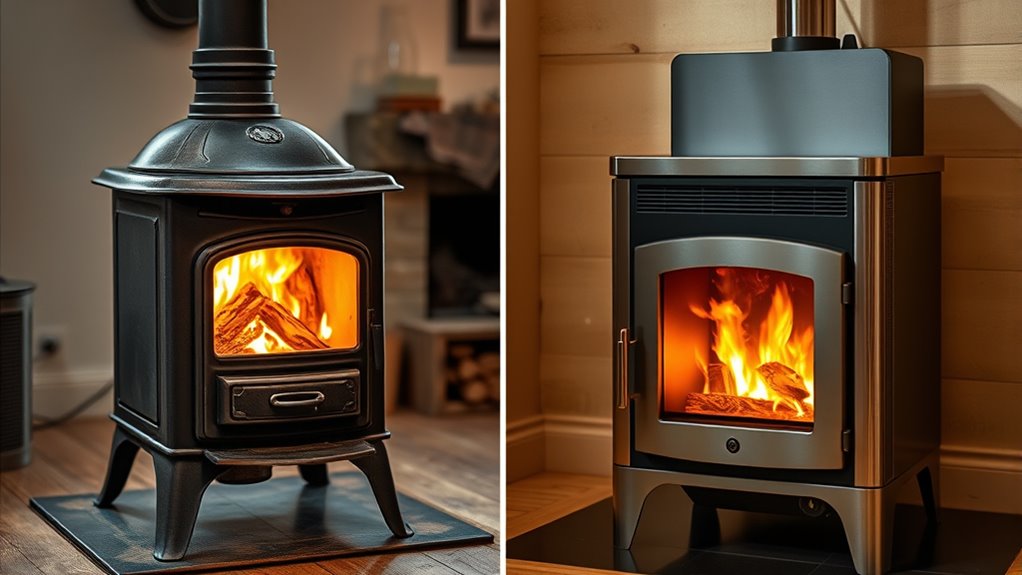

When choosing between top-loading and front-loading wood stoves, consider your priorities for efficiency, safety, and style. Top-loading stoves are easier to refuel, often more straightforward to install, and tend to be safer since they reduce sparks escaping. Front-loading models offer a charming look with glass viewing windows but may require more maintenance and careful handling. To understand which option fits your needs best, keep exploring the key differences and practical tips provided.
Key Takeaways
- Top-loading stoves allow easier refueling and better fuel efficiency due to frequent small wood additions.
- Front-loading stoves offer a traditional look with a viewing window, enhancing aesthetic appeal.
- Top-loading models generally have simpler installation, potentially lowering costs and safety clearance requirements.
- Front-loading stoves may experience heat loss during door opening, affecting overall efficiency.
- Ease of use and safety features vary, with top-loading reducing sparks and mess, while front-loading provides visual fire monitoring.
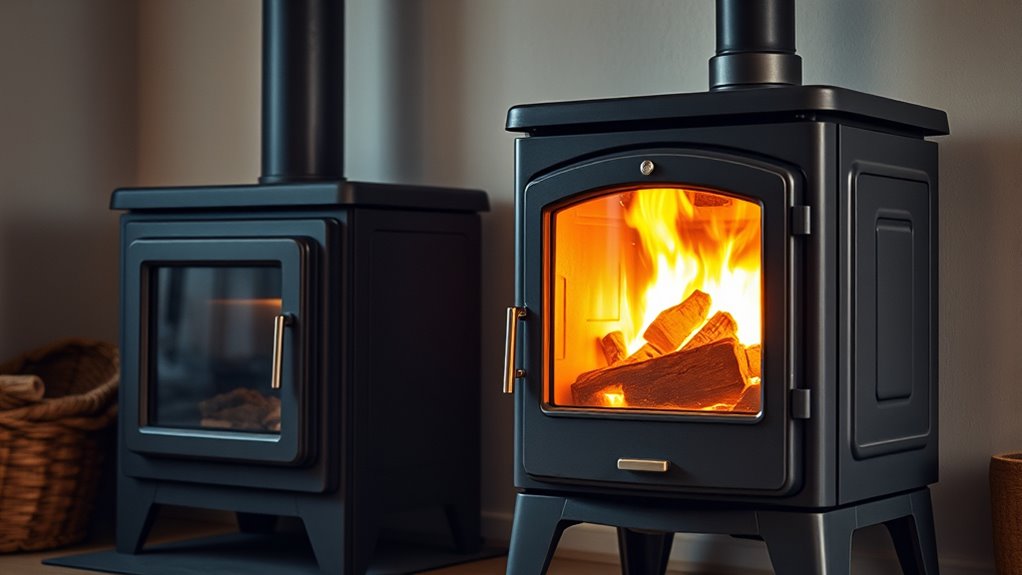
When choosing a wood stove, understanding the differences between top-loading and front-loading models can help you make an informed decision. One of the key factors to contemplate is fuel efficiency. Top-loading stoves often allow for easier refueling, which can help you add wood more frequently and keep the fire burning steadily. This can result in better combustion and improved fuel efficiency, as you can load smaller amounts of wood more often instead of letting the fire die down. On the other hand, front-loading stoves typically require you to open a door to add wood, which might cause more heat loss during the process, potentially reducing overall fuel efficiency if not managed carefully. Proper installation and venting are essential to ensure safety and optimal performance, regardless of the model you choose. Another important aspect is installation costs. Top-loading stoves tend to be simpler in design, often requiring less complex venting and fewer safety clearances. This simplicity can translate into lower installation costs, especially if you’re upgrading an existing setup or installing a stove in a space with limited clearance. Front-loading models, however, might involve more intricate installation procedures due to their doors, glass panels, and specific venting requirements. If you’re on a tight budget or want to keep installation costs manageable, a top-loading stove might be the more economical choice. However, it’s essential to factor in long-term maintenance and operational costs, which can differ based on the stove’s design and your usage habits. Ease of use is another consideration. With a top-loading stove, you open the lid from the top to add wood, which can be quicker and less messy if you prefer stacking wood vertically. This design also means you don’t have to open a door, reducing the risk of sparks escaping and making it safer for some users. Front-loading stoves, with their doors and glass panels, often provide a more traditional look and a viewing window to watch the fire burn. While this can be aesthetically pleasing, it requires careful handling to avoid heat loss and maintain safety. The choice between these styles depends largely on your personal preferences for convenience, safety, and appearance.
top-loading wood stove
As an affiliate, we earn on qualifying purchases.
As an affiliate, we earn on qualifying purchases.
Frequently Asked Questions
Which Stove Type Is More Energy-Efficient?
You’ll find front-loading wood stoves usually more energy-efficient because they often have better insulation and controlled airflow. While installation can be more complex, they offer improved heat retention, saving you wood and fuel. Top-loading stoves are simpler to install and may appeal aesthetically, but they tend to lose more heat. Ultimately, choose a stove that balances energy efficiency with your installation skills and preferred aesthetic appeal.
How Easy Is It to Clean Each Stove?
Cleaning each stove is a breeze if you stay on top of ash removal and door cleaning. With a top-loading stove, you can quickly scoop out ashes without opening the main door, making cleanup easier. Front-loading stoves often require opening the door for ash removal and cleaning, which can be messier but more thorough. Either way, regular maintenance keeps your stove efficient and safe, like tending a well-kept garden.
Are There Safety Differences Between the Two?
You’ll find that safety differences between top‑loading and front‑loading stoves mainly depend on installation challenges and aesthetic appeal. Front‑loading stoves often have safer, more accessible designs, reducing the risk of accidents during loading. Top‑loaders may pose more challenges during installation and cleaning, but they blend well with rustic aesthetics. Overall, choose based on your space and comfort level, ensuring proper installation and safety features for peace of mind.
Which Stove Has a Longer Lifespan?
You wonder which stove lasts longer. In this durability comparison, top-loading stoves often edge out front-loading models because they’re easier to clean and maintain, reducing wear over time. Less hassle means fewer parts break down, extending their lifespan. Plus, their sturdy design withstands the test of time. So, if longevity’s your goal, a top-loading stove might be your best bet, giving you years of reliable warmth and fewer repairs.
Can They Both Heat Large Spaces Effectively?
Both stove types can effectively heat large spaces, but your choice depends on installation ease and aesthetic appeal. Front-loading stoves often offer easier installation, making them suitable for bigger rooms or open areas. They also tend to have a sleek look that enhances your space’s aesthetic. Top-loading stoves may require more effort to install but can be just as effective if properly set up. Consider your needs for style and setup to choose the best option.
front-loading wood stove with glass window
As an affiliate, we earn on qualifying purchases.
As an affiliate, we earn on qualifying purchases.
Conclusion
Choosing between top-loading and front-loading stoves is like selecting a trusted guardian for your home’s warmth. Each style holds its own promise—one a vigilant sentinel, easily accessible, the other a quiet protector, built for efficiency. Your decision symbolizes more than convenience; it reflects your approach to comfort and tradition. Whichever you pick, remember it’s not just a stove, but a steady flame that keeps your hearth alive, guiding your cozy moments through the seasons.
wood stove with easy refuel design
As an affiliate, we earn on qualifying purchases.
As an affiliate, we earn on qualifying purchases.

VEVOR 118" Camping Wood Stove, Portable Alloy Steel Tent Stove with 3000in³ Firebox, Outdoor Heating & Cooking Stove with Chimney Pipes & Gloves, Includes 8 Pipes for Efficient Heating
3000in³ Firebox for Efficient Heating: This high-capacity firebox delivers quick, long-lasting heat without needing constant refueling. Featuring a…
As an affiliate, we earn on qualifying purchases.
As an affiliate, we earn on qualifying purchases.