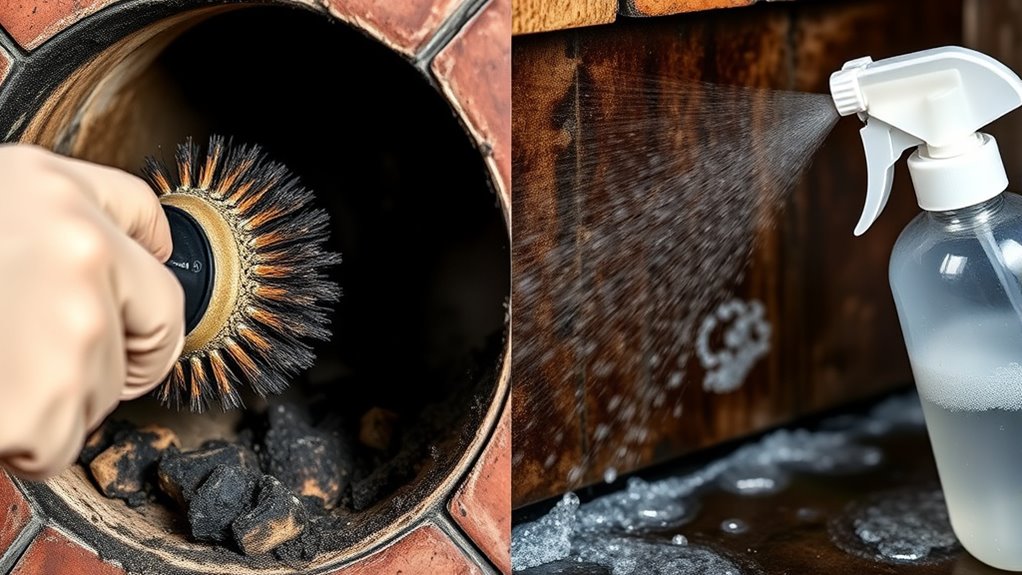

When removing creosote, mechanical methods like brushes and scrapers provide a thorough clean and are ideal for heavy buildup, while chemical cleaners are easier to use for light or preventative maintenance. Mechanical cleaning allows you to inspect for damage and guarantees complete removal, reducing fire risks. Chemical treatments are convenient but may not handle hardened deposits well. To learn how to choose the best method for your situation, consider the pros and cons in more detail.
Key Takeaways
- Mechanical cleaning thoroughly removes thick, hardened creosote and allows inspection for chimney damage.
- Chemical methods are easy to apply and effective for light to moderate creosote buildup.
- Mechanical cleaning is essential for safety, reducing fire risk and detecting structural issues.
- Chemical treatments are suitable for preventative maintenance but may not eliminate stubborn deposits.
- Combining both methods ensures comprehensive creosote removal and optimal chimney safety.

Have you noticed a layer of creosote buildup inside your chimney or stove? If so, you’re probably aware that this residue isn’t just a nuisance—it’s a serious fire hazard. Regular chimney maintenance is vital to keep your heating system safe and efficient. Removing creosote effectively can be achieved through two primary methods: mechanical and chemical. Understanding the differences between these approaches will help you decide which one best suits your needs and guarantees your home remains safe.
Mechanical removal involves physically cleaning the creosote from your chimney using specialized tools such as brushes, scrapers, and vacuums. This method is often preferred because it provides a thorough clean, especially if the buildup is thick or hardened. When you perform a mechanical cleaning, you’ll need to access the chimney’s interior, typically from the top or bottom, and scrub away the creosote layer. It’s a labor-intensive process but highly effective at removing all types of creosote deposits, including the more stubborn, tar-like residues. Regular mechanical cleaning is vital for fire safety because it prevents buildup from reaching dangerous levels, reducing the risk of chimney fires. Plus, it allows you to inspect the chimney lining for cracks, blockages, or other damage that could compromise safety. Additionally, mechanical cleaning can help identify underlying issues that chemical treatments might not address.
Mechanical cleaning uses brushes, scrapers, and vacuums for a thorough creosote removal.
On the other hand, chemical methods involve applying specially formulated cleaning agents designed to dissolve or loosen creosote. These products are usually available as liquids, powders, or foams and are easy to use—simply pour or spray them into your chimney. Once applied, you typically need to let the chemicals sit for a specified period before burning a small fire to activate the cleaning process. The heat from the fire helps the chemicals break down the creosote, making it easier to remove during subsequent inspections or professional cleaning. Chemical treatments are convenient for light to moderate buildup and can be a good supplement to regular maintenance. However, they shouldn’t replace mechanical cleaning altogether, especially if the buildup has become thick or hardened, as chemical methods might not reach all the creosote deposits. For fire safety, it’s essential to follow manufacturer instructions carefully when using chemicals and to have your chimney inspected regularly by professionals.
Both methods have their place in maintaining a safe and efficient chimney. Mechanical cleaning provides a more exhaustive removal, which is particularly important if you notice excessive buildup or perform frequent fires. Chemical methods can serve as an effective preventative or supplementary step, especially in between professional cleanings. Regular chimney maintenance is crucial for preventing dangerous fires and ensuring your heating system functions safely throughout the season. Remember, a clean chimney not only improves fire safety but also boosts your stove’s efficiency and longevity.

Sealegend 30FT Chimney Sweep Kit Rotary Flexible Cleaning Brush with 9 Rods
- Button Locking Design: Secure chrome-plated locking mechanism
- Effective Soot & Creosote Removal: Cleans chimney buildup efficiently
- Compatible with Electric Drill: Rotates for thorough cleaning
As an affiliate, we earn on qualifying purchases.
As an affiliate, we earn on qualifying purchases.
Frequently Asked Questions
How Often Should Creosote Buildup Be Checked?
You should check your chimney for creosote accumulation at least once a year with a professional chimney inspection. Regular inspections help you identify buildup early, preventing chimney fires and improving efficiency. If you burn wood frequently or use your fireplace often, consider inspecting more often, like every six months. Keeping an eye on creosote buildup guarantees your chimney stays safe and functions correctly, especially during peak burning seasons.
Are There Environmental Concerns With Chemical Creosote Removal?
You should be aware that chemical creosote removal can raise environmental concerns due to potential environmental impact. Chemicals might cause runoff that contaminates soil and water, harming wildlife and plant life. To minimize risks, use environmentally friendly products and ensure proper containment during application. Always follow safety guidelines and consider consulting professionals to reduce chemical runoff and protect your surroundings while effectively removing creosote.
Can DIY Methods Damage My Chimney?
Think of your chimney as a delicate musical instrument—you risk damaging its intricate parts if you’re not careful. DIY methods, especially if you bypass proper chimney inspection and safety precautions, can cause cracks or dislodgment of bricks. Always prioritize DIY safety, follow clear instructions, and know your limits. If unsure, consult a professional. Proper maintenance ensures your chimney stays safe and sound, avoiding costly repairs down the line.
How Long Does a Typical Creosote Removal Process Take?
A typical creosote removal process takes about 1 to 3 hours, depending on how much buildup you have. Before starting, you should schedule a chimney inspection to identify creosote types and assess safety. The process varies with the amount of creosote; light buildup is quicker, while heavy deposits take longer. Proper tools and safety precautions guarantee effective removal without damaging your chimney.
What Safety Precautions Are Needed for Chemical Removal?
Oh, sure, just toss on some chemicals without thinking—what could go wrong? In reality, you need to prioritize chemical safety by wearing proper protective equipment like gloves, goggles, and masks. Make sure the area is well-ventilated, and follow the manufacturer’s instructions carefully. Staying cautious protects you from harmful fumes and skin irritation, turning what seems simple into a safe, effective creosote removal process.
Conclusion
When it comes to removing creosote, choose the method that suits your situation—mechanical or chemical. Remember, patience and proper technique often save the day, much like a knight wielding a trusty sword. Don’t rush, or you might end up like Don Quixote chasing windmills. Whether you opt for scrapers or chemical cleaners, make sure you prioritize safety and thoroughness. In this quest, a steady hand and clear mind will keep your chimney pristine and your hearth happily humming.