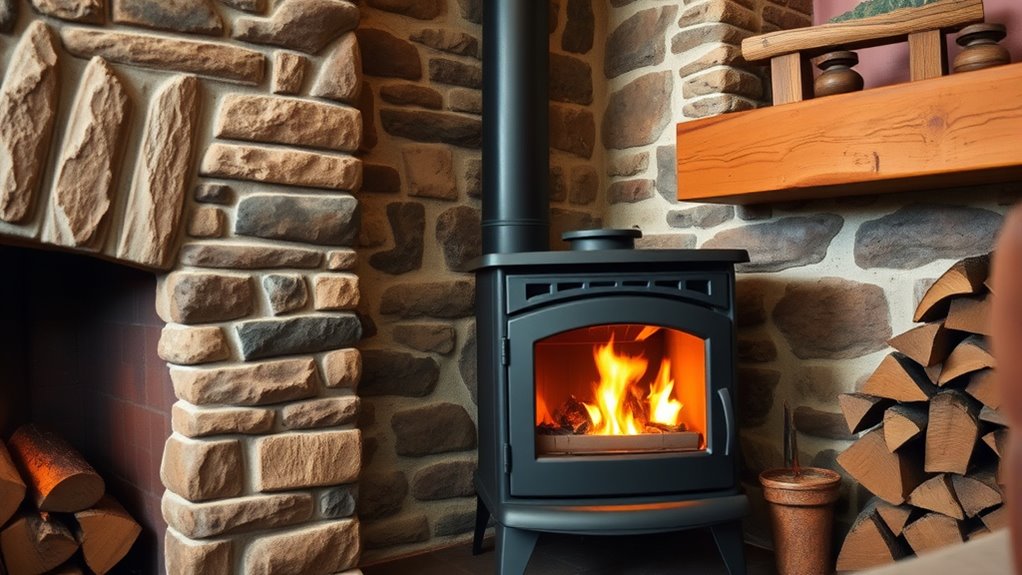

Yes, you typically need a permit to install a wood stove to guarantee your setup meets local building codes, safety standards, and insurance requirements. Obtaining this permit helps confirm proper placement, venting, and clearances from combustible materials. Failing to do so can lead to fines, insurance issues, or safety hazards. If you want to learn more about the specific steps and regulations in your area, keep exploring how to stay compliant.
Key Takeaways
- Most local building departments require permits for wood stove installation to ensure safety and code compliance.
- Permits help verify proper venting, clearance, and installation standards to prevent fire hazards.
- Installing without a permit may lead to fines, insurance claim issues, or safety violations.
- Inspections are often necessary to confirm the stove is correctly installed and vented according to regulations.
- Consulting your local authorities ensures adherence to building codes and avoids legal or insurance complications.
If you plan to install a wood stove in your home, you’ll likely need to obtain a permit first. This step isn’t just about following local rules; it’s vital for guaranteeing your safety and compliance with building codes. Building codes set the standards for safe installation, including proper clearance from combustible materials, venting requirements, and fire safety measures. Ignoring these regulations can lead to dangerous situations, potential fines, and difficulties when selling or insuring your home. Before you start, check with your local building department to understand what specific codes apply in your area. They can provide guidance on the correct placement, venting systems, and materials approved for your installation.
Getting a permit isn’t just about legality; it also plays a vital role in your insurance requirements. Many insurance policies demand proof that your stove installation adheres to local building codes and safety standards. If you install a stove without a permit and something goes wrong—like a fire caused by improper venting or clearance—you might find your insurance claim denied. This can leave you financially responsible for damages and repairs. Additionally, some insurance companies require documented inspections or permits before they consider a claim related to wood stove issues. It’s wise to consult your insurer beforehand to understand their specific requirements, so you don’t face surprises later.
The permit process usually involves submitting plans or specifications for your stove installation, demonstrating that it complies with all relevant building codes. Sometimes, inspections are required during and after the installation to verify that everything meets safety standards. These inspections ensure that the stove’s placement, venting, and clearances are correctly installed, reducing the risk of fire hazards or smoke leaks. Working with licensed professionals or contractors familiar with local regulations can streamline this process and help you avoid costly mistakes or rework. Additionally, understanding building code compliance can help ensure your installation is safe and legally sound.
As an affiliate, we earn on qualifying purchases.
Frequently Asked Questions
How Long Does the Permit Approval Process Usually Take?
The permit approval process typically takes anywhere from a few days to a few weeks, depending on your local jurisdiction. During this time, the permit timeline involves reviewing your application, inspections, and possibly addressing any required modifications. You can usually check your permit status online or contact your local building department. Planning ahead and submitting complete, accurate paperwork can help speed up the approval process.
Are There Any Costs Associated With Obtaining a Wood Stove Permit?
Like a small pebble causing ripples, permit costs can vary. You’ll likely encounter permit fees during the application process, which differ based on your location and stove type. These fees cover inspections and paperwork, ensuring safety standards are met. While some areas have minimal costs, others may charge more. Always check with local authorities beforehand so you’re prepared for any expenses that come with installing your wood stove legally and safely.
Can I Install a Wood Stove Myself Without a Professional?
You can attempt a DIY installation of your wood stove, but you need to prioritize safety considerations. Make sure you understand local building codes and manufacturer instructions, and consider consulting a professional if you’re unsure. Proper clearance, ventilation, and secure placement are essential to prevent fire hazards and ensure efficient operation. Remember, a cautious approach helps safeguard your home and loved ones during the installation process.
What Are the Consequences of Installing Without a Permit?
Installing a wood stove without a permit can lead to permit violations and legal penalties. Authorities may order you to remove or modify the stove, which can be costly and time-consuming. If a fire or accident occurs, you could face insurance issues or liability for damages. Always check local regulations to avoid these risks, and get the necessary permits to guarantee your installation is legal, safe, and compliant.
Do Permit Requirements Vary Between Cities and Counties?
Almost 60% of cities and counties have different permit requirements for wood stove installations. You should check local zoning restrictions and environmental regulations because they vary widely. Some areas may require permits to guarantee safety and compliance, while others may not. Always verify with your local building department to avoid fines or needing to redo your installation later. Staying informed helps you install your wood stove legally and safely.
Conclusion
So, yes, you absolutely need a permit to install a wood stove—don’t risk turning your cozy haven into a legal nightmare or a fiery catastrophe. Without it, you could face fines, forced removals, or even endangering everyone’s lives in your home. Think of the permit as your ultimate shield, protecting you from chaos and catastrophe. So, play by the rules, get that permit, and keep your wood stove dreams safe, sound, and perfectly legal.