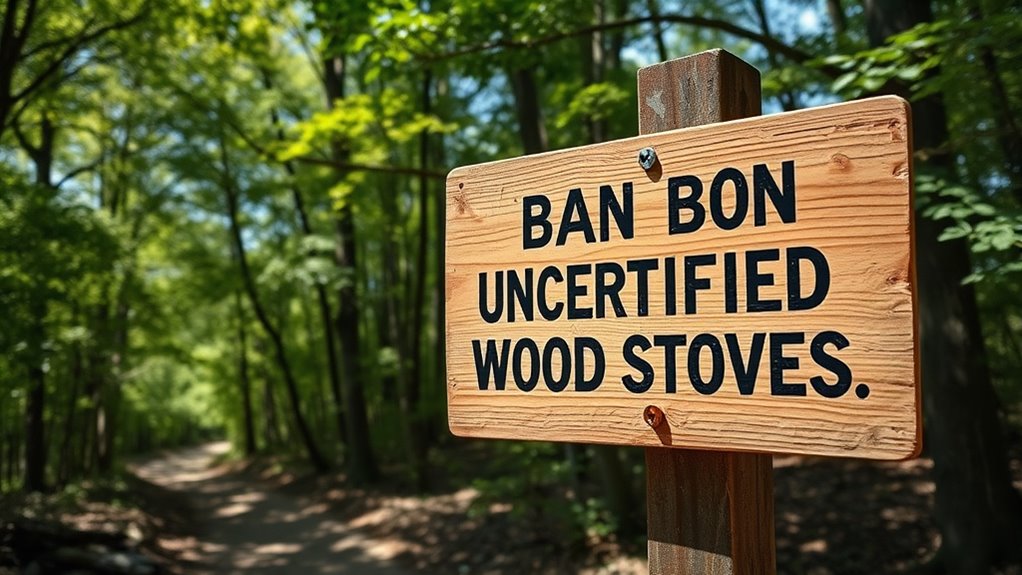

Local bans on uncertified wood stoves aim to improve air quality and protect public health by restricting outdated technologies that emit more smoke and pollutants. These restrictions often require homeowners to replace or upgrade their stoves within a set timeframe and may include incentives like rebates. Understanding these regulations helps you stay compliant and supports healthier communities. If you want to learn more about how these bans work and what’s involved, keep exploring further.
Key Takeaways
- Local bans prohibit the use of uncertified wood stoves to reduce harmful emissions and improve air quality.
- Restrictions typically require homeowners to replace uncertified stoves with certified, EPA-compliant models within a set timeframe.
- Uncertified stoves emit more particulate matter, contributing to outdoor pollution and health risks for vulnerable populations.
- Violating local bans may result in fines or penalties, emphasizing the importance of compliance.
- Incentive programs or rebates may be available to support the transition to certified, environmentally friendly wood stoves.
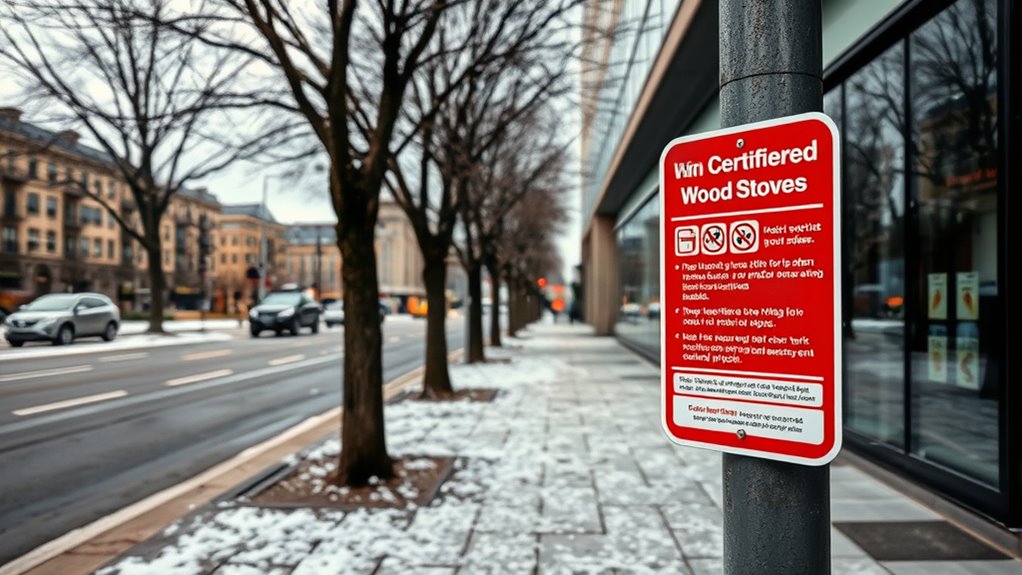
Many local governments are now banning the use of uncertified wood stoves to improve air quality and protect public health. If you rely on a wood stove for heating, it’s essential to understand how these restrictions might affect you and why they’re being implemented. The primary goal is to reduce harmful emissions released into the air, which can have serious health consequences, especially for vulnerable populations like children, seniors, and those with respiratory conditions. Uncertified wood stoves often produce more smoke and particulate matter because they don’t meet current environmental standards. This not only contributes to outdoor pollution but also impacts indoor air quality, as pollutants can seep inside your home.
One of the key reasons for these bans is to promote better combustion efficiency. Certified stoves are designed to burn wood more completely, which means less smoke, fewer emissions, and more heat extracted from each log. When your stove operates efficiently, you get more warmth with less fuel, saving you money and reducing your carbon footprint. In contrast, uncertified models tend to be less efficient, leaving behind unburned particles and pollutants that compromise indoor air quality. Poor combustion efficiency means you’re essentially wasting energy and increasing the risk of indoor air contamination. Additionally, switching to certified stoves can help you meet local regulations and avoid potential fines or penalties.
Understanding the restrictions helps you see the bigger picture. Local authorities aim to encourage residents to upgrade to cleaner, more efficient stoves or switch to alternative heating methods. These bans are often accompanied by programs offering rebates or financial incentives to replace older, uncertified units. Transitioning might seem inconvenient, but it’s a proactive step toward healthier living conditions and environmental sustainability. Plus, newer certified stoves often come with advanced features that improve heating performance and reduce emissions further.
If you’re affected by a ban, it’s crucial to check your local regulations to ensure compliance. You might need to replace your current stove within a specified timeframe or face fines. Before making a purchase, look for stoves that meet or exceed certification standards, ensuring you’re investing in a product that maximizes combustion efficiency while minimizing pollutants. Additionally, proper installation and regular maintenance are vital for maintaining indoor air quality and ensuring your stove operates at peak efficiency.
Ultimately, these restrictions aim to create healthier communities and protect the environment. While they may require adjustments on your part, embracing cleaner technology benefits not only your health but also contributes to cleaner air for everyone. Staying informed about local bans and choosing certified, efficient stoves will help you adapt smoothly and continue to enjoy warmth during the colder months. Being aware of emission standards can guide you in selecting the most environmentally friendly options for your home.

US Stove US1100E-BL 1,200 sqft Wood Stove with Blower
- Heating Capacity: Heats up to 1,200 sq. ft.
- BTU Output: 68,000 BTUs for powerful heat
- Cast Iron Feed Door: Large 15.5 x 8-inch ceramic glass window
As an affiliate, we earn on qualifying purchases.
As an affiliate, we earn on qualifying purchases.
Frequently Asked Questions
How Can I Tell if My Wood Stove Is Certified or Not?
To tell if your wood stove is certified, look for certification labels usually placed on the stove or its manual. You can also check if it has passed a stove inspection, which verifies compliance with safety and efficiency standards. If you’re unsure, contact the manufacturer or a local inspector. Certified stoves meet regulations, so verifying these labels and inspections helps confirm your stove is legal and safe to use.
Are There Any Exemptions for Rural or Low-Income Households?
Exemption policies and income-based allowances vary by area, so you should check your local regulations. Some rural or low-income households might qualify for exemptions or allowances if they meet specific criteria. Contact your local air quality or environmental agency to learn about available options. They can provide details on whether you’re eligible for exemptions based on income or residency status, and guide you through the application process if applicable.
What Are the Penalties for Violating Local Wood Stove Bans?
Violating local wood stove bans is like throwing a stone into a still pond—expect ripples of consequences. You could face hefty penalty fines that drain your pockets and legal consequences that could lead to court appearances or restrictions. Authorities take these violations seriously, aiming to protect air quality. So, if you ignore the rules, be prepared for the financial and legal fallout that comes with breaking the restrictions.
Can I Still Use My Existing Uncertified Stove During a Ban?
During a ban, you generally can’t use your uncertified wood stove due to stricter wood stove regulations and uncertified stove restrictions. These rules aim to reduce pollution, so authorities typically prohibit operation of non-compliant stoves until they’re certified. If you’re caught using your stove during a ban, you could face fines or other penalties. It’s best to check local regulations to see when you can safely use your stove again.
How Do Local Bans Impact Air Quality Improvement Goals?
Local bans on uncertified wood stoves help achieve air quality goals by reducing emissions that contribute to pollution. You directly support pollution reduction strategies, which improve air quality metrics like particulate matter levels. These bans encourage cleaner heating options, leading to healthier communities and a cleaner environment. By following local regulations, you contribute to long-term air quality improvements and help meet regional air quality improvement goals.
Conclusion
So, now that you know the restrictions on uncertified wood stoves, you might wonder what’s coming next. Will more cities follow suit, tightening the grip on wood-burning appliances? Or will new innovations challenge these bans? The future remains uncertain, and your choices could shape upcoming regulations. Stay informed and prepared—because what’s next could change your heating plans unexpectedly. The next move is in your hands.