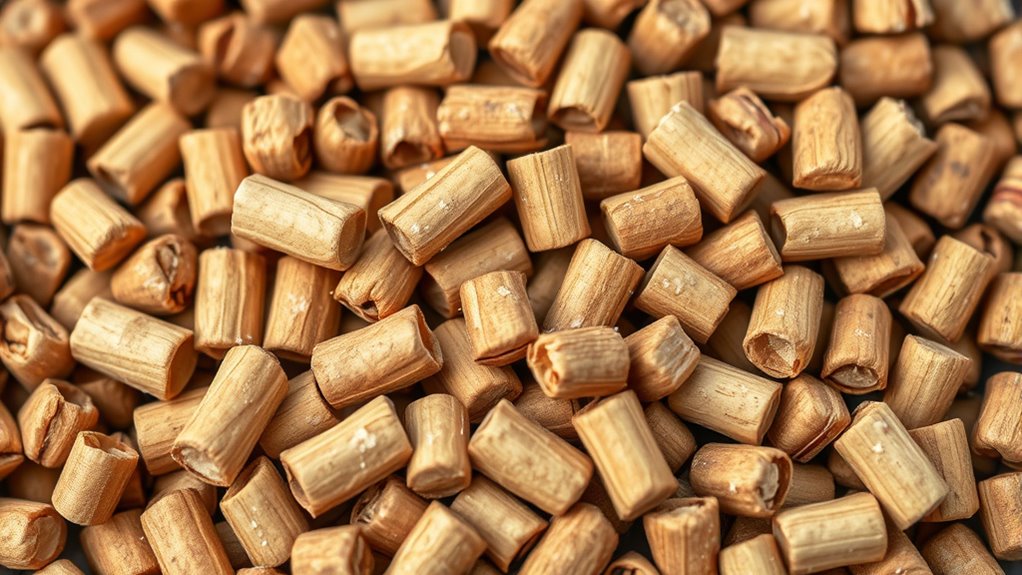
To guarantee good pellet quality and low ash content, check product specifications for ash levels—ideally below 1-2%. Choose pellets made from refined feedstocks with low mineral content, and look for certifications that confirm standards. Proper storage and handling also help prevent contamination that can increase ash. Staying aware of these factors will help you select cleaner, more efficient pellets, making it worth exploring further if you want to optimize your pellet use.
Key Takeaways
- Check pellet specifications for low ash content, ideally below 1-2%.
- Verify certifications and quality standards indicating consistent low ash levels.
- Select feedstocks with low mineral content to minimize ash production.
- Ensure proper storage to prevent contamination that can increase ash.
- Maintain quality control during manufacturing for reliable, cleaner-burning pellets.

The ash content in pellets directly correlates with their feedstock classification and the processing methods used. High-quality pellets typically have low ash content, often below 1-2%, indicating a cleaner burn and less residue to manage. Conversely, pellets with higher ash levels tend to come from less refined feedstocks or those with higher mineral content, which can lead to increased ash handling requirements and potential damage to your equipment. To guarantee you’re getting pellets with optimal ash content, always review product specifications and look for certifications that verify low ash levels and adherence to quality standards. Additionally, selecting feedstocks with low mineral content can further reduce ash production and improve overall combustion efficiency. Being aware of ash content standards can help ensure you’re choosing the most efficient and environmentally friendly pellets available, as consistent quality control in manufacturing processes plays a crucial role in maintaining low ash levels. Implementing proper storage practices can also prevent contamination that might increase ash levels and compromise pellet quality.
Frequently Asked Questions
How Does Pellet Size Affect Combustion Efficiency?
Pellet sizing directly impacts combustion efficiency, as uniform pellets promote consistent burning. When your pellets are appropriately sized, they ignite easily and burn more evenly, maximizing heat output. Small or uneven pellets can cause inefficient combustion, leading to more ash and wasted fuel. To improve efficiency, choose pellets with a consistent size that fit your stove’s specifications, ensuring ideal airflow and complete combustion for better heat and lower ash production.
What Are the Environmental Impacts of High Ash Content?
High ash content in pellets increases environmental pollution because it releases more particulate matter when burned. You’ll also face challenges with ash disposal, as excess ash needs proper handling to prevent soil and water contamination. This not only affects the environment but also raises disposal costs. To minimize these impacts, opt for pellets with low ash content, reducing pollution and simplifying ash management.
Can Pellet Quality Vary by Manufacturer or Region?
Did you know pellet quality can differ by up to 20% between manufacturers? Yes, it can vary considerably by manufacturer or region due to differing manufacturing standards and regional resources. Some regions may prioritize sustainability, affecting pellet composition, while others focus on cost-efficiency, impacting ash content and durability. Always check for certifications and regional standards to make sure you’re getting high-quality pellets suited to your needs.
How Do Moisture Levels Influence Pellet Durability?
Moisture levels substantially influence pellet durability because excess moisture weakens the structure, making pellets more prone to breaking or crumbling during handling and combustion. Low moisture content enhances durability, ensuring pellets stay intact longer. Durability factors include ideal moisture balance, proper manufacturing processes, and storage conditions. You should always check moisture influence on pellets to maintain quality, as high moisture can compromise performance and increase waste.
What Are the Health Risks Associated With Ash Inhalation?
Ash inhalation risks can silently damage your respiratory health, like dust settling unseen on your lungs. Breathing in ash particles may cause irritation, coughing, or long-term respiratory issues. Protect yourself by ensuring proper ventilation and wearing masks when handling pellets. Ignoring these risks is like inviting trouble—your lungs deserve care, not exposure. Stay vigilant, and prioritize your respiratory health to prevent avoidable health problems.
Conclusion
By paying attention to pellet quality and ash content, you guarantee efficient, clean-burning fuel for your needs. Don’t you want to maximize heat output while minimizing maintenance and emissions? Choosing high-quality pellets with low ash content simplifies your experience and keeps your equipment running smoothly. So, next time you shop for pellets, ask yourself—are you prioritizing quality or just the price? Remember, investing in better fuel pays off in performance and peace of mind.

Terra grew up with a soul deeply connected to nature. Her earliest memories are of sun-drenched meadows, whispering woods, and the rhythmic dance of waves on a moonlit night. Every gust of wind, rustling leaf, and distant horizon beckoned her with tales waiting to be told.