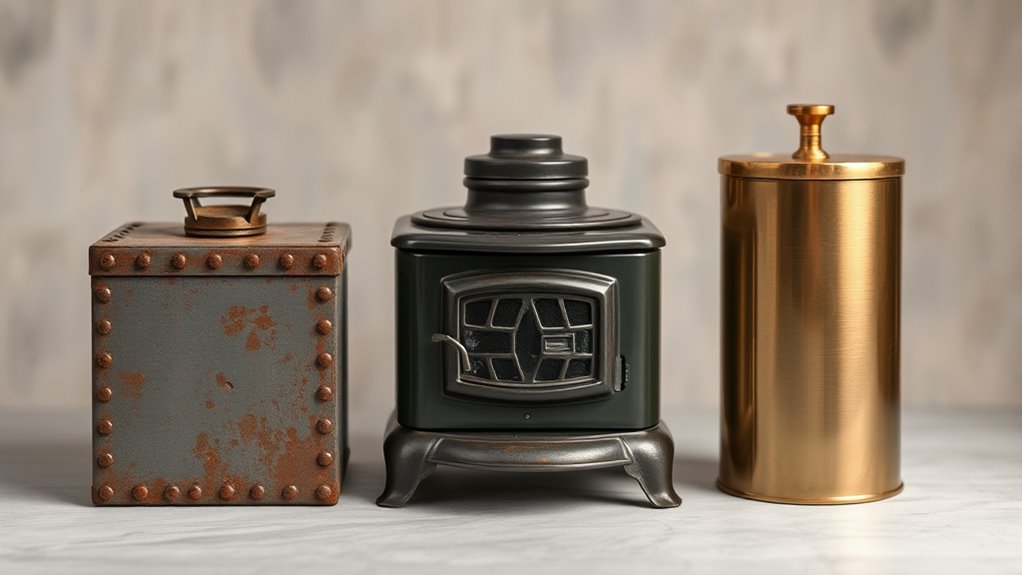

The classic small stove forms—box, potbelly, and cylinder—each have unique designs shaped by practical needs and technological advances. You’ll notice the box shape’s simple, angular structure for durability, the potbelly’s rounded form for efficient heating, and the cylinder’s sleek, space-saving design ideal for urban homes. These forms reflect their era’s household patterns and technological progress. Explore further to discover how these iconic shapes influenced modern stove designs and their enduring appeal.
Key Takeaways
- The box-shaped stove is a simple, angular design emphasizing durability and practicality, commonly used in early colonial homes.
- Potbelly stoves are distinguished by their rounded midsection, offering larger fireboxes for efficient heating in colder climates.
- Cylinder stoves feature sleek, rounded, compact forms suitable for space-saving and even heat distribution in urban settings.
- Each shape reflects technological advances and household needs, evolving with improved insulation and material availability.
- These classic forms continue to influence modern stove design, blending iconic shapes with contemporary materials and innovations.
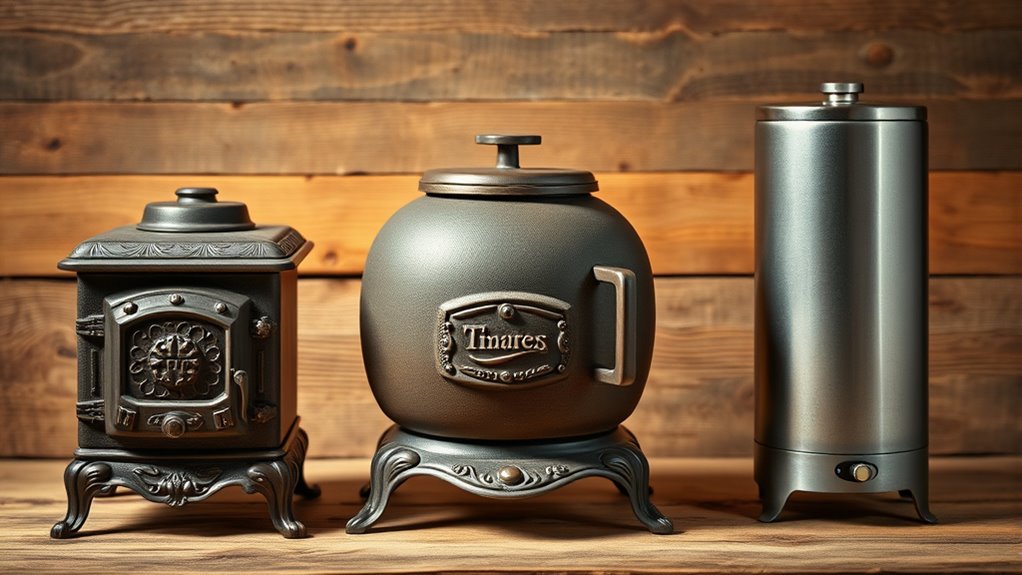
Throughout history, small stoves have taken on various iconic shapes, with box, potbelly, and cylinder forms standing out as timeless designs. These shapes reflect not only aesthetic preferences but also practical considerations that shaped stove design evolution over centuries. As you explore these forms, you’ll notice how their unique features mirror the historical usage patterns and technological advancements of their respective eras. The box-shaped stove, for instance, emerged as a straightforward, efficient design that offered ample cooking space and ease of construction. Its simple, angular form became popular in early colonial homes, where durability and functionality were paramount. Over time, as heating needs grew and materials improved, these stoves evolved to incorporate better insulation and more refined finishes, accommodating changing household patterns and technological innovations.
Small stoves like box, potbelly, and cylinder shapes reflect evolving design and technological progress throughout history.
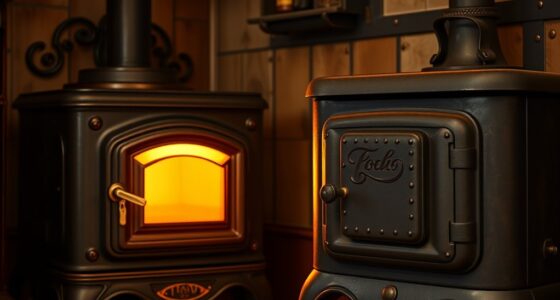
The potbelly stove, characterized by its rounded, bulging midsection, gained popularity during the 19th century, especially in North America. Its distinctive shape wasn’t just for style; it served practical purposes too. The rounded form allowed for a larger firebox, which meant more efficient heating and longer burn times—crucial in colder climates and larger spaces. You can see how its design aligns with historical usage patterns that prioritized warmth and reliability, especially in rural or industrial settings. As technology advanced, the potbelly stove became more refined, incorporating features like stovetop surfaces and improved airflow systems, reflecting an ongoing adaptation to domestic needs and technological possibilities. The development of insulation materials significantly improved their ability to retain heat and operate more safely.
Cylinder stoves, with their sleek, rounded forms, marked another phase in stove design evolution. These stoves often featured a more compact profile, making them suitable for urban homes or spaces where saving room was essential. Their shape facilitated even heat distribution, which was particularly beneficial for baking and cooking. The cylindrical design also made manufacturing more straightforward, allowing mass production and contributing to broader accessibility. Historically, these stoves were used in both domestic and commercial contexts, aligning with usage patterns that demanded efficiency and versatility. Over time, innovations in materials and engineering enhanced their performance, leading to more durable and heat-efficient models. The evolution of these forms was influenced by technological advancements, which continually improved their performance and efficiency. For example, the development of improved insulation materials helped these stoves retain heat better and operate more safely. As you consider these classic forms, you’ll see that each shape—box, potbelly, and cylinder—embodies a response to specific needs and technological advancements of its time. Their enduring popularity demonstrates how functional design can evolve yet remain rooted in practicality. The historical usage patterns that influenced each form reveal a continuous dialogue between technological innovation, material availability, and household requirements. Today, these shapes continue to inspire modern stove designs, blending their iconic forms with contemporary materials and techniques, proving their timeless appeal.
As an affiliate, we earn on qualifying purchases.
Frequently Asked Questions
What Materials Are Commonly Used for These Small Stoves?
You’ll find that these small stoves are commonly made from metals like cast iron and steel, which offer excellent metal durability to withstand high temperatures. These materials also add to their aesthetic appeal, giving a vintage or industrial look that many find attractive. You might also see some stoves with decorative elements or finishes, enhancing their visual charm while maintaining strong, heat-resistant construction.
How Do These Stove Shapes Influence Heat Distribution?
You’ll find that these stove shapes influence heat distribution by optimizing airflow, ensuring even warmth across your space. Their forms promote better airflow, which enhances efficiency and prevents hotspots. Plus, their classic shapes add aesthetic appeal, blending function with style. The design encourages air circulation, making the stove more effective at distributing heat uniformly, so you stay cozy and enjoy the visual charm of your stove’s timeless form.
Are There Safety Differences Among Box, Potbelly, and Cylinder Stoves?
You might notice that safety features vary among stove shapes, affecting fire hazard levels. Box stoves often have more enclosed designs, reducing accidental contact, while potbelly models may lack certain modern safeguards. Cylinder stoves, with their rounded surfaces, tend to distribute heat evenly, but could pose a risk if vents or safety mechanisms aren’t properly installed. Always check safety features to minimize fire hazards, regardless of shape.
What Are the Maintenance Requirements for Each Stove Type?
You need to regularly maintain each stove type by cleaning the chimney and removing ash. For all models, inspect and clean the chimney to prevent buildup and guarantee safe operation. Ash removal is essential to keep airflow unobstructed and maintain efficiency. Depending on usage, you might also need to check seals and vents periodically. Staying consistent with these tasks helps your stove perform safely and efficiently over time.
Which Stove Shape Is Most Energy-Efficient?
You’ll find that the cylinder shape is most energy-efficient, like a smooth river flowing heat evenly. Its rounded form enhances insulation effectiveness, reducing heat loss and maximizing warmth. Plus, its sleek, modern aesthetic appeal blends seamlessly into various spaces. As you use it, you notice how the shape’s natural design conserves energy, making it an excellent choice for efficient heating and stylish decor.
Conclusion
As you explore these classic stove forms—box, potbelly, and cylinder—you see how each shape tells its own story, embodying both function and artistry. Like timeless characters in a well-worn novel, they invite you to appreciate their enduring charm. These forms aren’t just vessels for heat; they’re silent poets, whispering tales of tradition and innovation. In embracing their simplicity, you embrace a legacy that continues to warm hearts and homes alike.