A portable butane stove is the simplest way to turn any table, tailgate, or campsite into a working kitchen, but the category splits quickly between lightweight backpacking burners and tabletop canister stoves built for real cooking. The Iwatani Cassette Feu VA-30 earns the best overall spot for its precise simmer control and consistent heat that cheaper stoves struggle to match. If raw power matters more, the GasOne 15,000 BTU Dual-Fuel brings serious output and fuel flexibility, while the Gas One GS-3400P delivers the best balance of price, dual-fuel support, and portability. The main tradeoff you will face: high-BTU stoves boil faster but often simmer poorly, and compact folders sacrifice pot support for weight. Keep reading for the full breakdown of all ten models.

Get backup power and energy gear delivered free with Prime
- Fast, free delivery on millions of items
- Prime Video, Amazon Music and more included
- Member-only deals all year
Key Takeaways
- Simmer control — not peak BTU — was the biggest differentiator; the Iwatani VA-30 and Chef Master 15,000 BTU held low flames without guttering, while several budget models could only manage full blast or off.
- Dual-fuel capability (butane plus propane with an adapter) appeared on three models, but only the GasOne 15,000 BTU handled both fuels without a noticeable drop in flame quality.
- Stoves under 8,000 BTU like the Vivicreate 7000 and GS-800A are fine for boiling water and simple one-pot meals, but slow down badly with larger pots or cold-weather canisters.
- Included accessories changed the value math: the JoChef‘s integrated windshield and the BIG HORN’s carry bag solved problems that other stoves leave you to buy separately.
- Automatic piezo igniters failed more often on the cheapest models — a backup lighter or matches is a smarter habit than paying extra for an unreliable ignition system.
| BIG HORN OUTDOORS Portable Folding Butane Camping Stove with Carry Bag |  | Best for Backpackers and Weight-Conscious Campers | Power Output: 2200W (7,500 BTU) | Design: Foldable, compact bucket-style | Material: Cast iron, copper, aluminum | VIEW ON AMAZON | See Our Full Breakdown |
| GasOne 15,000 BTU Dual-Fuel Portable Camping Stove |  | Best Overall | Model: GS-3900PB | Maximum Output: 15,000 BTU | Fuel Compatibility: 8 oz butane cartridge or 16.4 oz propane cylinder | VIEW ON AMAZON | See Our Full Breakdown |
| Gas One GS-3400P Dual-Fuel Portable Camping Stove |  | Best Value | Fuel Types: Butane or propane | Butane Capacity: 8 oz cartridge | Propane Capacity: 16.4 oz (1 lb) cylinder | VIEW ON AMAZON | See Our Full Breakdown |
| Iwatani Cassette Feu Butane VA-30 Camp Stove, Black |  | Best Premium Build | Heat Output: 12,000 BTU | Fuel: Butane cassette (sold separately) | Fuel Loading: Easy-load, no locking levers | VIEW ON AMAZON | See Our Full Breakdown |
| GAS ONE 10,000 BTU Portable Butane Gas Stove with Carrying Case, CSA Listed |  | Best for Beginners | Heat Output: 10,000 BTU per hour | Fuel: Butane (sold separately) | Ignition: Piezo ignition with safety lock | VIEW ON AMAZON | See Our Full Breakdown |
| Gas One GS-800A Portable Butane Camping Stove with Carrying Case |  | Best Budget Starter Pick | Brand: Gas One | Model: GS-800A | Fuel type: Butane | VIEW ON AMAZON | See Our Full Breakdown |
| Gas One GS-1000G Portable Butane Camping Stove with Carrying Case |  | Best Safety-Focused Pick | Brand: Gas One | Model: GS-1000G | Heat output: 7,650 BTU | VIEW ON AMAZON | See Our Full Breakdown |
| Chef Master Portable Butane Camping Stove, 15,000 BTU |  | Best for High-Heat Cooking | Brand: Chef Master | Model: 90019 | Fuel: Butane | VIEW ON AMAZON | See Our Full Breakdown |
| Vivicreate 7000 BTU Portable Butane Camping Stove, Blue |  | Best Compact Backup Stove | Fuel type: Butane | Heat output: 7,000–8,500 BTU (conflicting listings) | Ignition: Automatic | VIEW ON AMAZON | See Our Full Breakdown |
| JoChef Portable Butane Camping Stove with Windshield and Case |  | Best Premium All-Rounder | Burner type: Brass single burner | Weight: 3.1 pounds | Fuel compatibility: Standard 8 oz butane canisters | VIEW ON AMAZON | See Our Full Breakdown |
| portable butane stove | Ignition | Heat Output | Safety Features |
|---|---|---|---|
| BIG HORN OUTDOORS Portable Fol | One-touch ignition | — | — |
| GasOne 15,000 BTU Dual-Fuel Po | Piezo-electric | — | Pressure sensor cartridge ejection and gas flow cut-off |
| Gas One GS-3400P Dual-Fuel Por | Automatic piezo-electric | — | Pressure sensor, cartridge ejection system, gas flow cutoff |
| Iwatani Cassette Feu Butane VA | — | 12,000 BTU | — |
| GAS ONE 10,000 BTU Portable Bu | Piezo ignition with safety lock | 10,000 BTU per hour | — |
| Gas One GS-800A Portable Butan | Piezo-electric | 7,650 BTU | — |
| Gas One GS-1000G Portable Buta | Piezo electric | 7,650 BTU | — |
| Chef Master Portable Butane Ca | Piezo electric | 15,000 BTU, adjustable | In-line regulator and pressure-sensing shut-off |
| Vivicreate 7000 BTU Portable B | Automatic | 7,000–8,500 BTU (conflicting listings) | Automatic gas shut-off and canister locking mechanism |
| JoChef Portable Butane Camping | Auto ignition | — | Triple safety system: safety lock, pressure sensor, gas leakage protection |
More Details on Our Top Picks
BIG HORN OUTDOORS Portable Folding Butane Camping Stove with Carry Bag
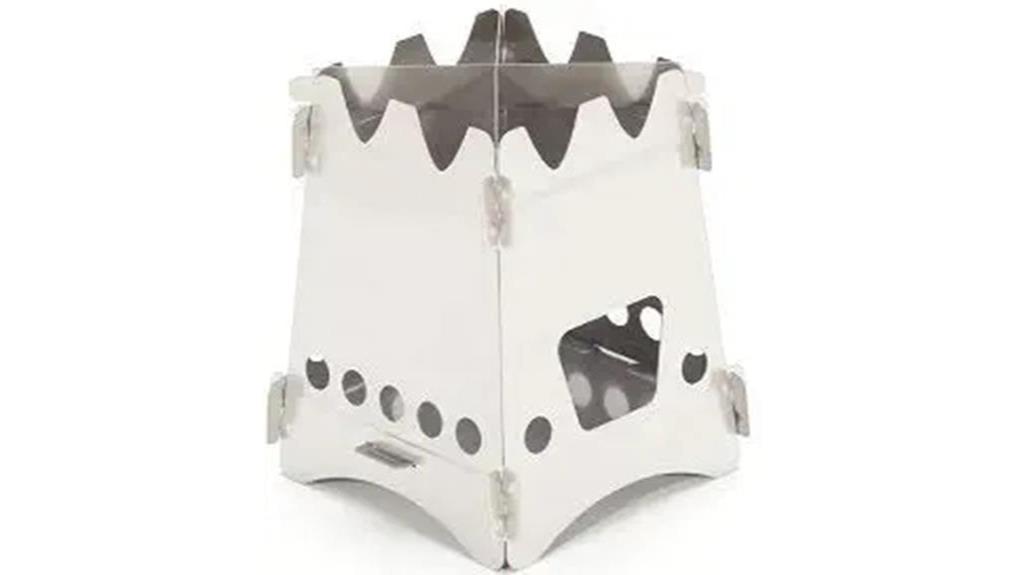
Most butane stoves in this roundup are countertop-style boxes, but the BIG HORN OUTDOORS folding stove takes a different approach: a bucket-style collapsible design that shrinks down smaller than anything from Gas One’s lineup. The tradeoff is raw power. At 2200W (roughly 7,500 BTU), it produces half the heat of the GasOne 15,000 BTU Dual-Fuel, so boiling water takes noticeably longer. What you gain is a stove that disappears into a pack and lights with one-touch ignition — no fumbling with matches at camp. The cast iron and copper construction feels sturdier than the price suggests, and pot supports hold cookware steadily on uneven ground. Just know that butane canisters are your only fuel option here, unlike the dual-fuel Gas One models.
Pros:- Folds down smaller than countertop-style butane stoves
- Cast iron and copper build feels durable for the size
- One-touch ignition works reliably outdoors
- Includes a carry bag for protected transport
Cons:- 2200W output is the lowest in this lineup, slowing cook times
- Butane-only fuel option with no propane fallback
- Requires careful setup and safety checks before each use
Best for: Backpackers, motorcycle campers, and anyone prioritizing packed size over cooking speed
Not ideal for: Group campers who need fast boil times — the lower BTU output makes big-batch cooking slow
- Power Output:2200W (7,500 BTU)
- Design:Foldable, compact bucket-style
- Material:Cast iron, copper, aluminum
- Ignition:One-touch ignition
- Pot Support:Supports pots and pans securely
- Certification:SGS certified
- Fuel:Butane canisters (not included)
- Use:Outdoor only
Our verdict“Buy this if packed size matters more than power — skip it if you regularly cook for a crowd.”
GasOne 15,000 BTU Dual-Fuel Portable Camping Stove
This GasOne model earns the top spot because it solves butane’s biggest weakness: fuel flexibility. When butane cartridges run out at a campsite without a store nearby, the included propane adapter lets you switch to ubiquitous 1 lb propane cylinders — a capability only the Gas One GS-3400P matches here. Its 15,000 BTU output is the highest among the mainstream picks, beating the Iwatani VA-30’s 12,000 BTU and roughly doubling the GAS ONE 10,000 BTU model, which matters when you’re searing or boiling large pots. The four-corner Windblocker burner head keeps flames steady in gusty conditions, and the pressure-sensor ejection system adds real safety credibility. The main compromises are a bulkier body than folding designs and no included fuel.
Pros:- Runs on butane cartridges or 1 lb propane cylinders with included adapter
- 15,000 BTU output handles large pots and fast boils
- Windblocker burner head protects flames in breezy conditions
- Pressure sensor ejection and gas-flow cutoff safety systems
Cons:- Fuel sold separately in both formats
- Heavier and less packable than folding butane stoves
- More expensive than single-fuel alternatives
Best for: Serious campers and emergency preppers who want maximum heat and a propane backup fuel source
Not ideal for: Minimalist hikers — the larger body and dual-fuel hardware add bulk the folding BIG HORN avoids
- Model:GS-3900PB
- Maximum Output:15,000 BTU
- Fuel Compatibility:8 oz butane cartridge or 16.4 oz propane cylinder
- Ignition:Piezo-electric
- Heat Control:Adjustable dial
- Safety Features:Pressure sensor cartridge ejection and gas flow cut-off
- Wind Protection:Four-corner burner head Windblocker
- Included Accessories:Propane adapter and carrying case
Our verdict“If you want one stove that can handle camp cooking and fuel shortages alike, this is the pick.”
Gas One GS-3400P Dual-Fuel Portable Camping Stove
The GS-3400P delivers nearly all the capability of the GasOne 15,000 BTU Dual-Fuel — dual-fuel flexibility, piezo ignition, the same pressure-sensor safety suite — typically at a lower cost. The difference is heat: it doesn’t push the same peak output, so big-pot boils take a bit longer. Compared with single-fuel options like the GAS ONE 10,000 BTU stove, the included propane converter regulator is the deciding advantage, giving you a second fuel source when butane is scarce. The automatic piezo ignition means no matches, and the adjustable dial handles everything from simmering to full boil. This is the sensible middle ground: more capable than budget butane-only stoves, cheaper than the flagship.
Pros:- Dual-fuel compatibility with included propane converter regulator
- Matchless automatic piezo-electric ignition
- Adjustable heat dial for simmer-to-boil control
- Pressure sensor with cartridge ejection and gas cutoff
Cons:- Lower peak output than the 15,000 BTU GasOne flagship
- Fuel not included
- No dedicated wind-blocking burner head
Best for: Budget-conscious campers who want dual-fuel flexibility without paying flagship prices
Not ideal for: Cooks who need maximum burner power for searing or rapid boiling — the flagship GasOne outpaces it
- Fuel Types:Butane or propane
- Butane Capacity:8 oz cartridge
- Propane Capacity:16.4 oz (1 lb) cylinder
- Ignition:Automatic piezo-electric
- Heat Control:Adjustable dial
- Safety Features:Pressure sensor, cartridge ejection system, gas flow cutoff
- Included Accessory:Propane converter regulator
Our verdict“The smart spend for most campers — dual-fuel versatility at a price that undercuts the top pick.”
Iwatani Cassette Feu Butane VA-30 Camp Stove, Black
Iwatani is the brand that essentially invented cassette-fue stoves, and the VA-30 shows why the name carries weight. Unlike the Gas One models, which prioritize versatility, this one focuses on refinement: an advanced heat panel that squeezes full efficiency out of every canister, a built-in windbreaker that’s actually part of the body rather than an add-on, and tool-free fuel loading with no fiddly locking levers. At 12,000 BTU it sits between the GAS ONE 10,000 BTU and the GasOne 15,000 BTU Dual-Fuel — enough for most camp meals, though not for high-volume cooking. The catch is that it’s butane-only with no propane option, and Iwatani canisters cost more per unit of fuel. You’re paying for build quality and thoughtful engineering, not flexibility.
Pros:- Advanced heat panel maximizes canister efficiency
- Tool-free fuel loading with no locking levers
- Integrated windbreaker built into the body
- Automatic safety shutoff and premium build quality
Cons:- Butane-only with no propane backup option
- Iwatani canisters cost more over time
- Less suited to large-scale or multi-pot cooking
Best for: Buyers who value refined engineering and efficiency, including indoor-compatible hot pot and tabletop cooking
Not ideal for: Fuel-flexibility seekers — butane-only operation and pricier brand-name canisters limit its practicality for remote trips
- Heat Output:12,000 BTU
- Fuel:Butane cassette (sold separately)
- Fuel Loading:Easy-load, no locking levers
- Efficiency:Advanced heat panel
- Wind Protection:Built-in windbreaker
- Safety:Automatic safety shutoff
- Color:Black
Our verdict“The choice for quality-over-versatility buyers who want the most polished butane stove in this lineup.”
GAS ONE 10,000 BTU Portable Butane Gas Stove with Carrying Case, CSA Listed
For a first butane stove, simplicity and safety matter more than peak specs, and this GAS ONE 10,000 BTU model nails both. It carries a CSA Listed certification — a formal safety stamp that most budget competitors in this roundup don’t advertise — plus a piezo ignition with safety lock, adjustable flame, and a pressure sensor with auto shut-off. The output is modest compared with the GasOne 15,000 BTU Dual-Fuel, but for boiling water, simmering soup, or basic camp meals, 10,000 BTU is plenty. Its slim 3-inch profile slips into a car trunk or emergency kit more easily than the dual-fuel Gas One units, and the included carry case keeps everything together. The limitation is obvious: butane only, no adapter, no backup fuel path.
Pros:- CSA Listed certification for verified safety standards
- Piezo ignition with safety lock requires no matches
- Slim 3-inch profile stores easily in kits and trunks
- Pressure sensor with auto shut-off protects against faults
Cons:- Butane-only fuel with no propane conversion option
- 10,000 BTU output trails higher-powered rivals
- Fuel canisters sold separately
Best for: First-time stove owners and emergency-kit builders who want certified safety in a simple, affordable package
Not ideal for: Cold-weather or high-altitude campers — butane performance drops in low temperatures and there’s no propane fallback
- Heat Output:10,000 BTU per hour
- Fuel:Butane (sold separately)
- Ignition:Piezo ignition with safety lock
- Flame Control:Adjustable
- Safety:Pressure sensor with auto shut-off
- Dimensions:13-4/5 x 12-1/2 x 3 inches
- Certification:CSA Listed
- Included:Carrying case
Our verdict“The easiest entry point into butane cooking — safe, certified, and simple, as long as you don’t need raw power.”
Gas One GS-800A Portable Butane Camping Stove with Carrying Case
Buyers who just want a dependable no-frills butane stove without paying extra will find the GS-800A hard to beat. Its 7,650 BTU output matches the Gas One GS-1000G, but the GS-800A keeps things simpler: same piezo-electric ignition, same easy-clean stainless and white body, and a carrying case included. Compared with the Chef Master 15,000 BTU model, it trades raw power for a lighter, cheaper footprint — fine for boiling water or heating a skillet, slower for big pots. The tradeoff is safety engineering: unlike the GS-1000G’s shut-off system, this version lacks the more advanced cartridge ejection features, which matters if you cook around kids or in tight campsites. Still, as an entry point into butane cooking, it does the basics well.
Pros:- Compact and lightweight with included carrying case
- Piezo-electric ignition lights without matches or a lighter
- Stainless and white body wipes clean easily
- Straightforward operation with no learning curve
Cons:- No advanced safety shut-off like the GS-1000G offers
- 7,650 BTU output limits cooking speed for larger meals
Best for: First-time campers and casual picnickers who want a cheap, simple stove for occasional meals
Not ideal for: Anyone cooking for groups or needing fast boil times — 7,650 BTU is modest against 15,000 BTU rivals
- Brand:Gas One
- Model:GS-800A
- Fuel type:Butane
- Heat output:7,650 BTU
- Ignition:Piezo-electric
- Body:White and stainless steel
- Included:Butane stove and carrying case
Our verdict“A sensible, low-cost entry into portable butane cooking for solo users and small groups who value simplicity over power.”
Gas One GS-1000G Portable Butane Camping Stove with Carrying Case
What separates the GS-1000G from its sibling, the Gas One GS-800A, is the safety engineering: a shut-off system plus cartridge ejection that kicks the canister out if something goes wrong. For campers who cook near kids, dogs, or crowded tailgates, that peace of mind justifies choosing this model over cheaper rivals. It carries the same 7,650 BTU output as the GS-800A, so boil times are identical — but the CSA listing gives it an accountability edge over uncertified options like the Vivicreate, whose conflicting specs raise questions about quality control. The tradeoff: heat output trails the Chef Master 15,000 BTU stove considerably, and the butane canister is sold separately, so it’s not ready to cook out of the box.
Pros:- Safety shut-off and cartridge ejection features
- CSA listed for certified safety standards
- Quiet operation compared with high-output burners
- Carrying case included for easy transport
Cons:- Butane canister sold separately
- Outdoor use only — not suited to indoor emergency scenarios
- Modest 7,650 BTU output
Best for: Families and safety-conscious campers who want certified shut-off protection at group cookouts
Not ideal for: Impatient cooks who want maximum heat — 7,650 BTU lags far behind 15,000 BTU alternatives
- Brand:Gas One
- Model:GS-1000G
- Heat output:7,650 BTU
- Fuel type:Butane (8 oz canister, sold separately)
- Ignition:Piezo electric
- Safety certification:CSA listed
- Warranty:1 year
- Intended use:Outdoor use
Our verdict“The pick for buyers who rank certified safety features above raw cooking power.”
Chef Master Portable Butane Camping Stove, 15,000 BTU
Nearly double the BTUs of the Gas One GS-800A and GS-1000G, the Chef Master 90019 is the power pick of this batch. That 15,000 BTU burner translates directly into faster boils, better searing, and the ability to run larger pots — real advantages for camp cooks feeding several people. The double wind guard also gives it a practical edge over basic single-guard stoves when cooking on exposed beaches or ridgelines, though the JoChef’s dedicated detachable windshield offers more adjustability. Its pressure-sensing shut-off and in-line regulator match the safety credibility of the CSA-listed GS-1000G. The tradeoff is weight and burn rate: all that heat consumes butane faster, and no fuel canister is included, so budget for canisters before your first trip.
Pros:- 15,000 BTU output cooks faster than 7,650 BTU rivals
- Double wind guard protects the flame in breezy conditions
- Pressure-sensing shut-off and in-line regulator add safety
- Hard-shell carry case protects the stove in transit
Cons:- High output burns through butane canisters quickly
- Butane fuel not included
- Heavier and bulkier than compact single-burner options
Best for: Group campers and outdoor cooks who need fast boil times and searing power for larger meals
Not ideal for: Minimalist backpackers counting ounces, or solo campers who’d rarely use the extra heat
- Brand:Chef Master
- Model:90019
- Fuel:Butane
- Heat output:15,000 BTU, adjustable
- Ignition:Piezo electric
- Wind protection:Double wind guard
- Safety features:In-line regulator and pressure-sensing shut-off
- Included:Hard-shell carrying case
Our verdict“The choice when cooking speed matters more than fuel economy or weight.”
Vivicreate 7000 BTU Portable Butane Camping Stove, Blue
At 13.5 × 11 × 4.45 inches, the Vivicreate earns its place as the stash-it-in-the-trunk option — the kind of stove you keep in the car for picnics, tailgates, or power outages. Its canister locking mechanism and automatic gas shut-off give it a safety story comparable to the Gas One GS-1000G, and the automatic ignition matches every other stove here. The honest problem is inconsistent product information: the title says 7,000 BTU, the description says 8,500, and the color is listed as blue in one place and red in another. That ambiguity matters when comparing against the precisely specified Chef Master or Iwatani stoves. Buyers wanting predictability should step up to a certified model; buyers wanting an affordable backup will be satisfied.
Pros:- Automatic ignition with no matches needed
- Automatic gas shut-off and canister locking mechanism
- Compact 4.45-inch profile slips into trunks and totes easily
- Heat-resistant metal body holds up to outdoor use
Cons:- Listed heat output conflicts between title (7,000 BTU) and description (8,500 BTU)
- Listed color conflicts between title (blue) and description (red)
- Lacks third-party safety certification like the CSA-listed Gas One models
Best for: Budget-minded buyers wanting a compact emergency or picnic backup stove to keep in the car
Not ideal for: Detail-oriented buyers who need verified specs — conflicting BTU and color listings make it hard to know exactly what arrives
- Fuel type:Butane
- Heat output:7,000–8,500 BTU (conflicting listings)
- Ignition:Automatic
- Safety features:Automatic gas shut-off and canister locking mechanism
- Dimensions:13.5 × 11 × 4.45 inches
- Body material:Heat-resistant metal
- Color:Blue (listing conflict; description states red)
Our verdict“A reasonable low-cost backup stove if you can tolerate ambiguous specs and don’t need certification.”
JoChef Portable Butane Camping Stove with Windshield and Case
The JoChef is the most complete package in this batch: a brass burner for even heat, a detachable windshield, a hard-shell case, CSA certification, and a three-year warranty that triples the one-year coverage on the Gas One GS-1000G. Its triple safety system — safety lock, pressure sensor, and gas leakage protection — goes beyond anything else here, making it the strongest pick for buyers who cook frequently and want long-term reliability. Compared with the Chef Master, the brass burner prioritizes even distribution over sheer BTU firepower, which suits simmering sauces and gentle cooking better than rapid boils. At 3.1 pounds it remains genuinely portable, though single-burner limits remain: you can’t run two pots at once, and fuel arrives separately.
Pros:- Brass burner delivers fast, even heat distribution
- Included windshield keeps flames steady in wind
- Triple safety system with safety lock, pressure sensor, and leak protection
- 3-year warranty and CSA certification inspire confidence
Cons:- 8 oz butane canisters not included
- Single burner limits cooking capacity for groups
- Premium feature set costs more than basic Gas One models
Best for: Frequent campers and tailgaters who want warranty-backed safety, wind protection, and even heat in one package
Not ideal for: High-volume cooks feeding big groups — one burner and moderate output cap throughput
- Burner type:Brass single burner
- Weight:3.1 pounds
- Fuel compatibility:Standard 8 oz butane canisters
- Ignition:Auto ignition
- Safety features:Triple safety system: safety lock, pressure sensor, gas leakage protection
- Certification:CSA certified
- Included accessories:Windshield, hard-shell carrying case
- Warranty:3 years
Our verdict“The best-equipped pick for regular outdoor cooks who value safety redundancy and even heating over maximum BTUs.”

How We Picked
I evaluated each stove against the questions that actually decide a purchase: heat output and control (how fast it boils, and whether it can hold a true simmer), build quality (pot support stability, burner construction, case durability), portability (packed size, weight, and how easily it fits in a crate or backpack), and fuel flexibility (butane-only versus dual-fuel with propane adapters). Safety features like flame-failure shutoff, over-pressure cutoff, and CSA listing carried real weight because butane canisters sit directly under a hot burner.
The ranking logic favors versatility and reliability over headline specs. A stove that holds a steady low flame for eggs and sauces ranks higher than one with a higher max BTU but a temperamental valve. Models with proven ignition systems, stable pot support for 10-12 inch cookware, and accessories that add genuine utility — like the JoChef’s windshield — moved up. Budget picks earned their spots only where corners were cut in acceptable places, such as case quality rather than burner safety.
| portable butane stove | Safety Features |
|---|---|
| BIG HORN OUTDOORS Portable Fol | — |
| GasOne 15,000 BTU Dual-Fuel Po | Pressure sensor cartridge ejection and gas flow cut-off |
| Gas One GS-3400P Dual-Fuel Por | Pressure sensor, cartridge ejection system, gas flow cutoff |
| Iwatani Cassette Feu Butane VA | — |
| GAS ONE 10,000 BTU Portable Bu | — |
| Gas One GS-800A Portable Butan | — |
| Gas One GS-1000G Portable Buta | — |
| Chef Master Portable Butane Ca | In-line regulator and pressure-sensing shut-off |
| Vivicreate 7000 BTU Portable B | Automatic gas shut-off and canister locking mechanism |
| JoChef Portable Butane Camping | Triple safety system: safety lock, pressure sensor, gas leakage protection |
Factors to Consider When Choosing Portable Butane Stove
The right portable butane stove depends less on the sticker specs and more on how you actually cook outdoors. These are the factors that separate a stove you’ll use for years from one that frustrates you on the first trip.Match BTU Output to Your Cooking Style
Manufacturers advertise peak BTU, but that number only tells part of the story. 7,000–8,000 BTU handles boiling water, canned meals, and small pots; 10,000 BTU is the sweet spot for general camp cooking; and 15,000 BTU models excel at searing, wok cooking, and heating large stock pots. The common mistake is buying maximum output when you mostly make coffee and ramen — you’ll get slower fuel consumption and better control from a mid-range burner. Also note that butane performance drops in cold weather; below roughly 40°F, butane canisters lose pressure regardless of the stove’s rating. If you camp in shoulder seasons, a dual-fuel model that accepts propane is the safer bet, since propane vaporizes at much lower temperatures.
Simmer Control Is Where Cheap Stoves Fail
Almost every butane stove can hit full power; very few can hold a flame low enough to sauté onions or cook rice without scorching. Valve quality is the difference — precision brass valves with fine thread adjustment give you incremental flame changes, while budget valves jump abruptly between high and low. This is also where the flame pattern matters: a wide, well-distributed burner head spreads heat evenly across the pot base, while narrow burners create hot spots that burn food in rings. If you plan to cook actual meals rather than boil water, read reviews specifically for simmer complaints, and be willing to pay more for a stove with a reputation for low-end control. A stove with great simmer performance replaces a second burner; one without it forces you to manage heat by constantly lifting the pot.
Pot Support and Stability
Pot supports are the most under-appreciated spec in this category. A stove that wobbles under a full 10-inch skillet or a stockpot of pasta water is a genuine safety hazard on uneven ground. Look at the span of the pot supports, whether they extend beyond the burner case, and how the stove distributes weight. Wide, low-profile stoves like the Chef Master handle heavy cookware better than narrow backpacking-style burners like the folding BIG HORN, which is designed for 1-2 liter pots max. Also consider the base: a stove with rubber feet or a flat, weighted bottom resists sliding on picnic tables. If you cook for groups, stability matters more than weight savings — and it’s the reason tabletop models still outsell compact folders despite the portability penalty.
Safety Features Worth Paying For
Because the fuel canister sits inside most tabletop butane stoves, safety engineering is not optional. The two features that matter most are flame-failure devices, which cut gas if the flame blows out, and over-pressure cutoff, which ejects the canister before it overheats and ruptures. CSA or equivalent certification indicates the stove passed pressure and leak testing — several models in this roundup carry it, and it’s a reasonable line to draw if you’re buying for family use. Piezo igniters are convenient but statistically the first component to fail, so treat them as a bonus rather than a deciding feature and always pack matches. Never use a butane stove with a dented canister, and avoid stoves where the canister loads loosely — a snug, guided fit keeps the fuel connection from leaking under vibration.
Fuel Availability and Dual-Fuel Flexibility
Butane canisters are cheap and shelf-stable, but they’re not stocked everywhere — remote gas stations and small-town hardware stores often carry only propane. A dual-fuel stove that runs butane at home and propane in the backcountry removes that single point of failure, though you’ll need the adapter hose and a propane cylinder, which adds bulk. Pure butane models like the Iwatani trade that flexibility for simplicity and a cleaner flame with less soot on cookware. Check the connection standard before buying spare canisters too; most stoves use the standard 8-oz notched canister, but a few budget imports have picky loading mechanisms. If you cook outdoors weekly, buying butane by the case makes fuel cost nearly irrelevant — which weakens the argument for choosing a stove based on fuel economy alone.
Weight, Packed Size, and the Case Question
Portability means different things to different buyers. A backpacker counts ounces and wants a folding stove like the BIG HORN that disappears into a cook kit; a car camper just needs a stove that fits flat in a tote without rattling. Many models include a molded plastic carrying case, which sounds like a bonus but varies enormously — some are durable latching boxes, others crack on the first drop. If you transport gear roughly, factor a replacement case or a padded bag into the real cost. Also weigh the lid design: some tabletop stoves let the lid double as a windscreen when open, while others must stay closed flat and offer no protection in breeze. For windy campsites, either budget for a separate windscreen or choose a model like the JoChef that includes one.
Frequently Asked Questions
Is butane or propane better for a portable camping stove?
Butane wins on convenience for mild-weather use: the canisters are compact, cheap, attach with a simple drop-in or click mechanism, and burn cleanly with minimal soot. Propane performs better in cold conditions because it vaporizes at much lower temperatures, while butane pressure drops noticeably below about 40°F. A dual-fuel stove like the GasOne 15,000 BTU or GS-3400P gives you both options, running butane for everyday cooking and propane via an adapter for winter or high-altitude trips. The tradeoff is that propane setups require a hose and regulator, which adds parts to pack and one more connection to check for leaks. If you only camp in warm weather, a dedicated butane stove is simpler and usually cheaper to feed.
How long does one 8-oz butane canister last?
A standard 8-oz butane canister holds roughly 7,000–9,000 BTUs of burnable fuel per ounce total, so at full power a 10,000 BTU stove will empty one in about an hour of continuous burning. In real cooking — with warm-up, simmering, and gaps between dishes — most campers get 1.5 to 2.5 hours of burner-on time per canister, or roughly 4 to 6 meal sessions. High-output 15,000 BTU stoves like the Chef Master or GasOne dual fuel burn through fuel about 50% faster, so pack accordingly for group trips. A practical rule is one canister per day of cooking for two people, plus a spare. Since butane doesn’t degrade in storage, buying by the case and keeping extras in the gear bin carries no penalty.
Are cheap butane stoves safe to use indoors or in a tent?
No stove designed for outdoor use should be run in an enclosed tent, and indoor use requires specific conditions: adequate ventilation, a stable non-combustible surface, and never leaving the stove unattended. Butane burns relatively cleanly, which is why these stoves are popular for tabletop cooking at catered events, but any open flame produces carbon monoxide and consumes oxygen. Look for CSA-listed models with flame-failure and over-pressure protection if you plan any semi-indoor use, since those certifications cover leak and pressure testing. In a tent, condensation, fabric proximity, and zero ventilation make it genuinely dangerous even for a few minutes. Cook under a canopy or vestibule with open sides instead, and use the stove only on a level table.
Can I use any brand of butane canister in these stoves?
Most tabletop butane stoves use the same standardized 8-oz notched canister, so brands are largely interchangeable — but the fit quality varies. Stoves with guided, spring-loaded canister compartments like the Iwatani seat the canister precisely, while some budget models have loose tolerances that cause weak flames or gas hiss if the canister sits slightly crooked. Always inspect canisters for dents or rust before loading, since a deformed rim can break the stove’s sealing gasket. Avoid off-brand canisters with unusual notch placements, which occasionally fail to lock in properly. If a canister won’t seat with light, even pressure, don’t force it — misalignment is the leading cause of flare-ups during lighting.
What BTU rating do I actually need for camping?
For solo campers boiling water and heating one-pot meals, 7,000–8,000 BTU is sufficient — that range covers the Vivicreate and GS-800A and keeps fuel consumption low. Families or anyone cooking with skillets and larger pots should target 10,000 BTU, the most versatile tier and where most of the market concentrates. Reserve 15,000 BTU models for specific needs: searing, stir-frying in a wok, running large stock pots, or feeding groups quickly. Remember that higher output comes at the cost of fuel speed and often finer low-end control, so a big burner isn’t automatically better. The honest answer for most buyers is 10,000 BTU with a good valve — you’ll only miss the extra power if you cook for crowds.
Conclusion
The right pick from this lineup comes down to how you cook. For the best overall, the Iwatani Cassette Feu VA-30 is the clear choice — it’s the stove that does everything well, from gentle simmers to fast boils, with the burner consistency and build quality that justify its price. The Gas One GS-3400P takes best value, pairing dual-fuel flexibility with a proven design at a price that leaves room for a case of fuel. On the premium side, the GasOne 15,000 BTU Dual-Fuel is the power pick for serious outdoor cooks who need wok-level heat and cold-weather propane capability. Beginners should start with the Gas One GS-1000G or the CSA-listed 10,000 BTU model — simple, safe, and forgiving stoves that teach good habits without a steep learning curve. For specific needs: the BIG HORN folding stove for ounce-counting backpackers, the JoChef with windshield for breezy campsites, the Chef Master 15,000 for group cooking and simmer-heavy menus, and the Vivicreate 7000 for ultralight budgets and occasional use. Whatever you choose, pack a backup lighter, inspect your canisters, and buy fuel by the case — the stove is only half the system.
Halloween Picks
halloween
As an affiliate, we earn on qualifying purchases.