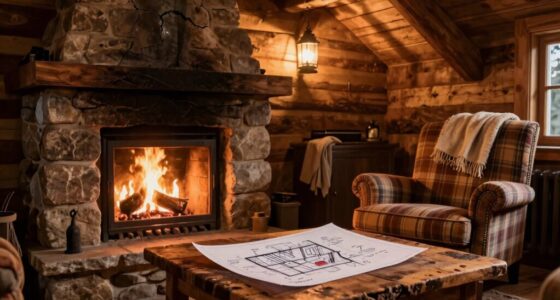
I’ve always known the saying ‘Better safe than sorry,’ and it certainly applies when talking about wood stoves.

Get backup power and energy gear delivered free with Prime
- Fast, free delivery on millions of items
- Prime Video, Amazon Music and more included
- Member-only deals all year
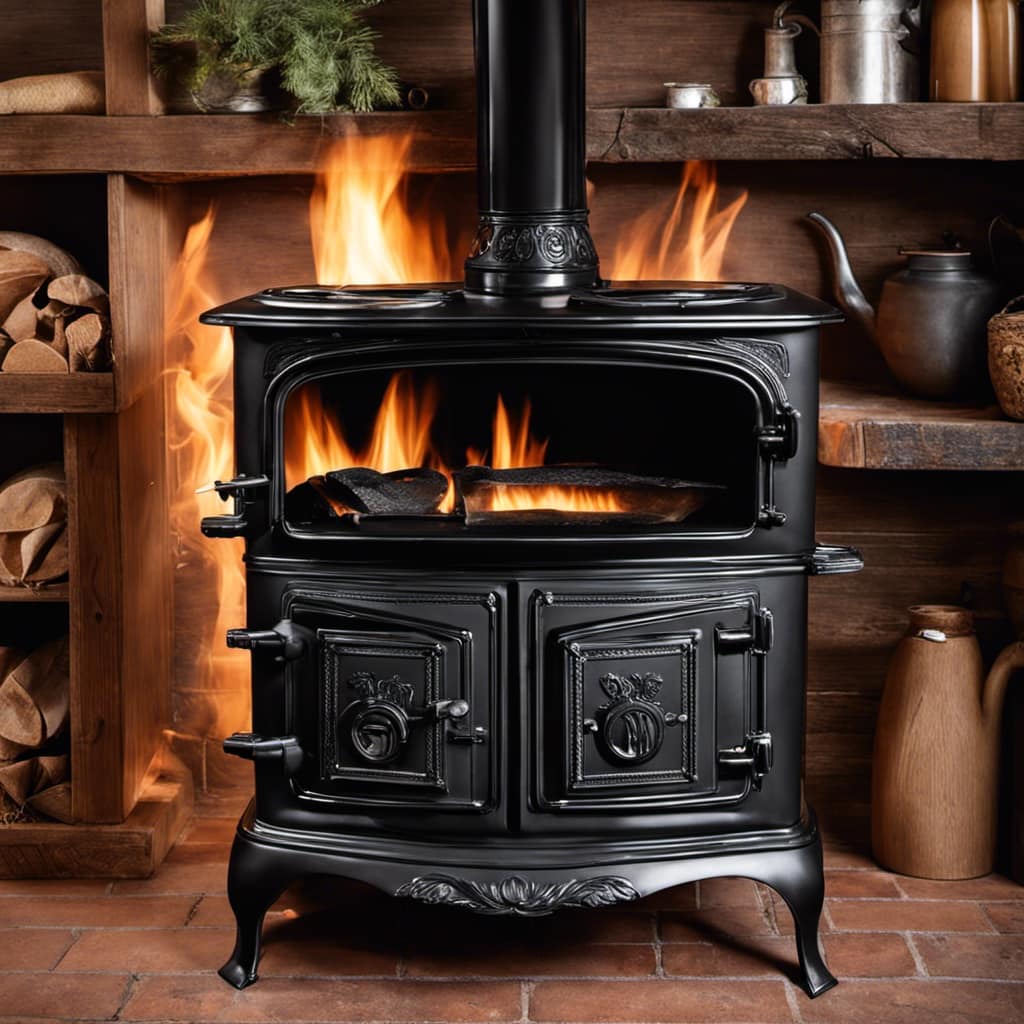
Knowing how much space to leave around a wood stove is crucial for safety and efficiency.
In this article, I’ll share the minimum clearance from walls, distance from furniture, recommended spacing around the chimney, and the importance of maintaining proper airflow.
So, let’s dive in and make sure we’re keeping our homes warm and cozy without compromising safety.
Key Takeaways
- National Fire Protection Association (NFPA) recommends a minimum clearance of 36 inches from walls for wood stoves.
- Consult the wood stove’s manual for specific clearance requirements from furniture and other flammable materials.
- Maintain adequate space around the stove for proper air circulation and heat distribution efficiency.
- Use heat-resistant materials for floor protection and ensure proper airflow around the stove.
As an affiliate, we earn on qualifying purchases.
Minimum Clearance From Walls
I need to find out what the minimum clearance is from walls for my wood stove. It’s essential to understand the required distance to ensure the safety of my home and loved ones.
According to the safety precautions set by the National Fire Protection Association (NFPA), the minimum clearance from walls is typically 36 inches. However, this distance may vary depending on the specific model and manufacturer’s guidelines, so it’s crucial to consult the stove’s installation manual.
Maintaining proper clearance is essential to prevent heat transfer to combustible materials, reducing the risk of fire. It also allows for proper airflow and ventilation around the stove, ensuring efficient combustion and minimizing the buildup of carbon monoxide.
Distance From Furniture and Other Flammable Materials
The wood stove’s manual recommends keeping a safe distance from furniture and other flammable materials, but it’s important to consult the manufacturer’s guidelines for specific clearance requirements.
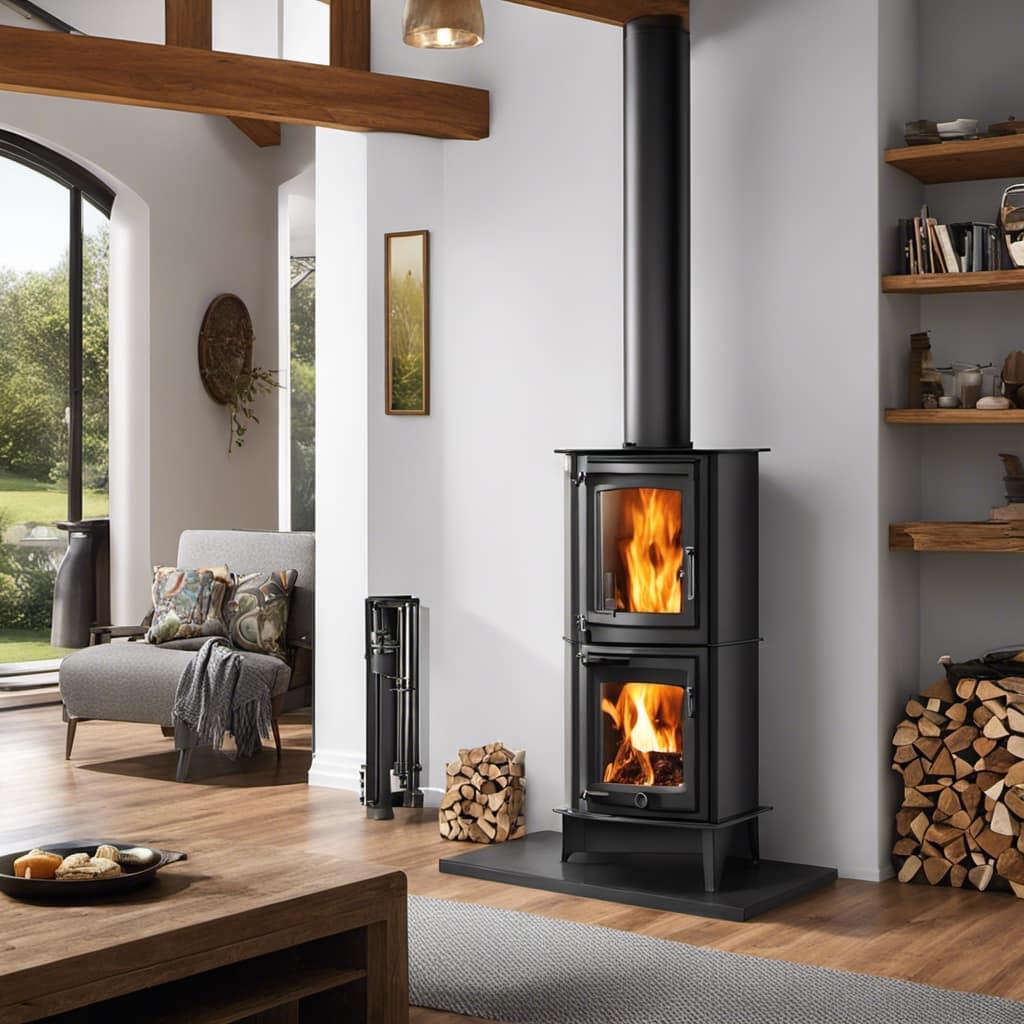
When it comes to fire safety precautions, maintaining proper clearance around a wood stove is crucial. Here are some key points to consider:
Clearances: The manufacturer’s guidelines will specify the minimum distance required between the stove and furniture or other flammable materials.
Combustible materials: Avoid placing rugs, curtains, or any other combustible materials near the stove.
Heat shields: Consider installing a heat shield on the wall behind the wood stove to reduce the clearance requirements.
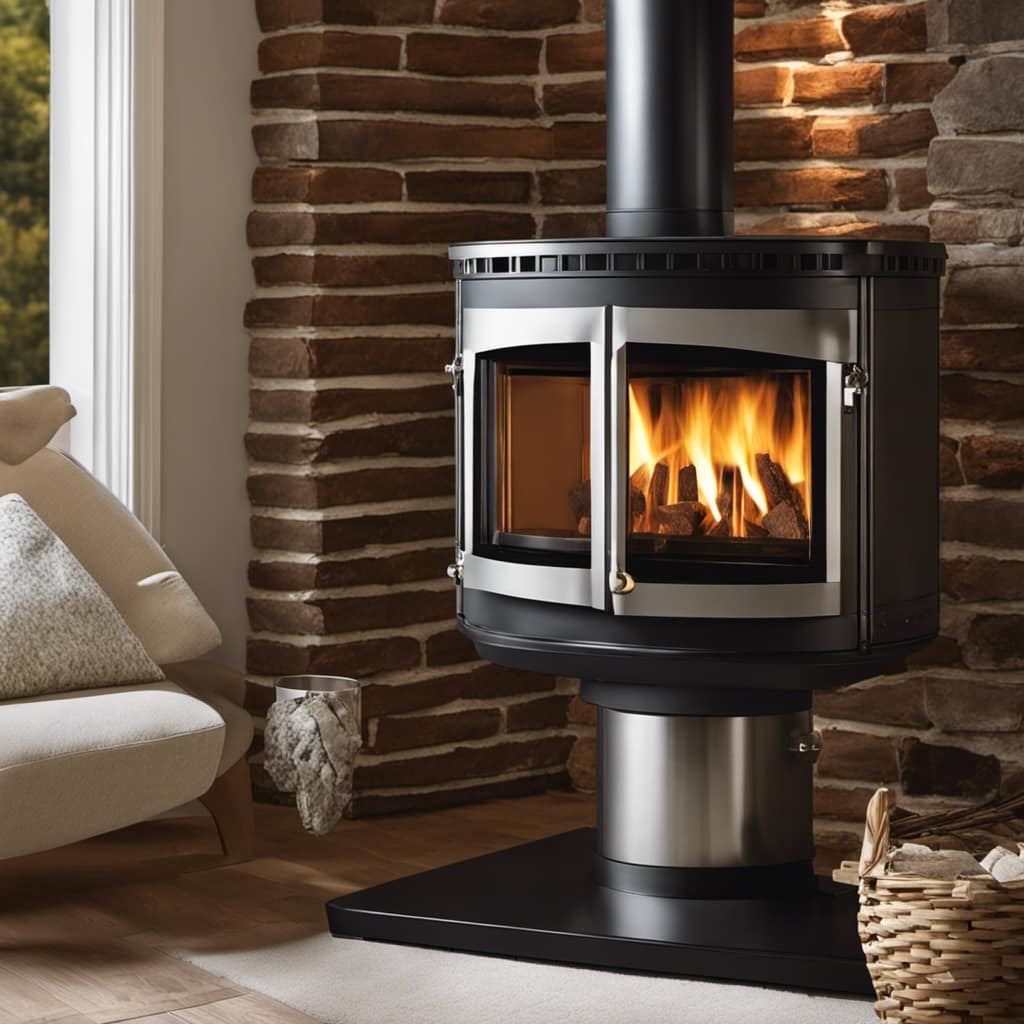
Air circulation: Maintain adequate space around the stove to allow for proper air circulation and heat distribution efficiency.
Regular maintenance: Keep the stove and surrounding area clean and free from debris to prevent any potential fire hazards.
Recommended Spacing Around the Chimney
The chimney’s recommended spacing is essential to prevent any potential fire hazards and ensure proper ventilation. When it comes to chimney installation requirements, it is crucial to follow the manufacturer’s guidelines for the appropriate clearance around the chimney. This not only ensures the safety of the wood stove but also maintains the efficiency of the ventilation system.
Considerations for proper ventilation are also important in determining the recommended spacing around the chimney. A well-ventilated area allows for the proper flow of air, which enables the wood stove to burn efficiently and reduces the risk of hazardous gases being trapped.
To provide a clear understanding, here is a table summarizing the recommended spacing around the chimney:
| Distance | Minimum Requirement (inches) |
|---|---|
| Front | 36 |
| Back | 18 |
| Sides | 18 |
| Ceiling | 36 |
| Floor | 0 |
Clearances for Floor Protection
Having proper clearances for floor protection is crucial when installing a wood stove. It’s important to follow the installation requirements to ensure the safety and efficiency of the stove. Here are five key points to consider:
Clearances: Ensure that there’s enough space between the stove and any combustible materials, such as walls, furniture, or curtains. Consult the manufacturer’s guidelines for specific clearance distances.
Heat resistant materials: Use heat resistant materials for the floor protection. This can include materials like ceramic tiles, concrete, or fire-resistant boards. These materials can withstand the high temperatures generated by the wood stove.
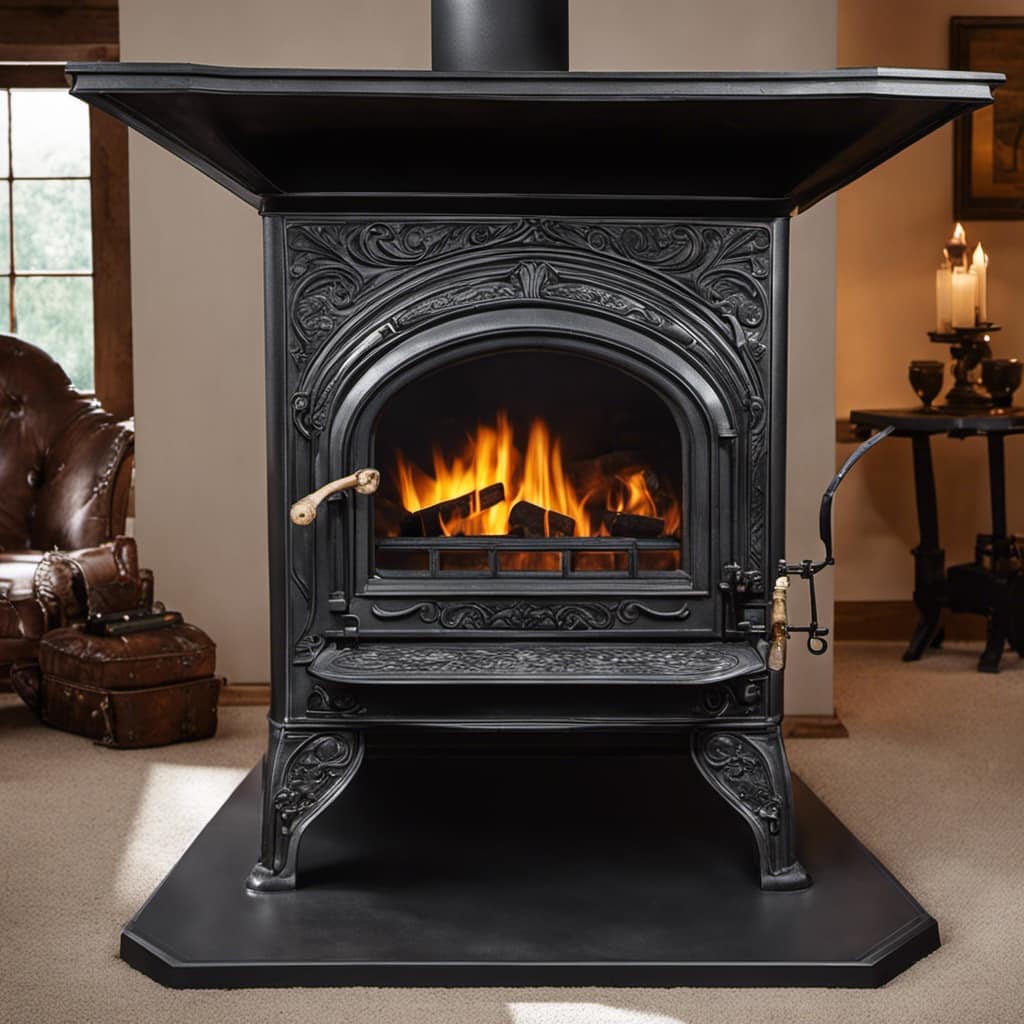
Size and weight: Consider the size and weight of the stove when selecting the floor protection. The material should be able to support the weight of the stove and provide a stable surface.
Ventilation: Adequate ventilation is essential to prevent the buildup of harmful gases. Ensure that there’s proper airflow around the stove and that any ventilation requirements are met.
Professional installation: It’s highly recommended to have a professional install the wood stove. They’ll have the expertise to ensure all installation requirements are met and that the stove is installed safely and correctly.
Importance of Maintaining Proper Airflow Around the Wood Stove
Maintaining proper airflow around my wood stove is crucial for its efficient operation. Not only does it help ensure that the stove burns fuel effectively, but it also plays a significant role in ventilation requirements and safety considerations.
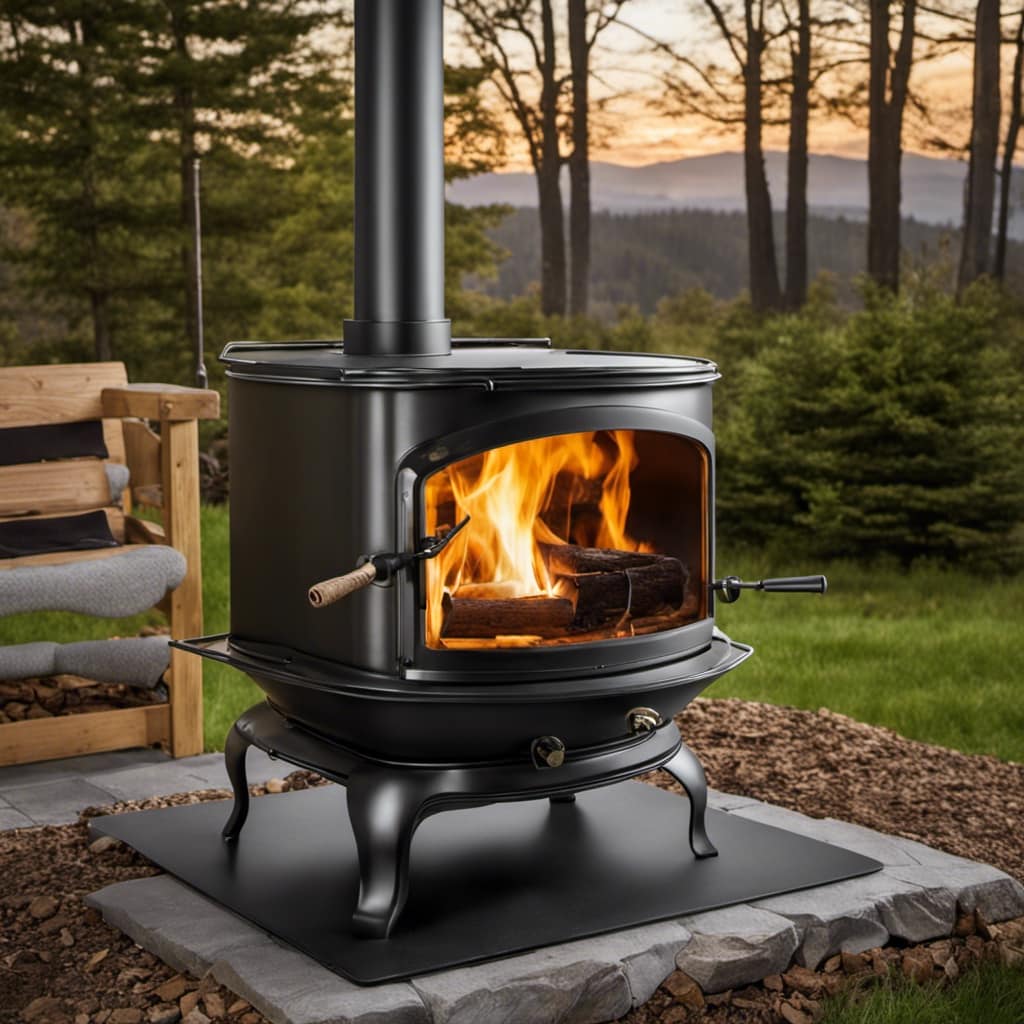
Adequate airflow is necessary to facilitate the combustion process and prevent the build-up of harmful gases, such as carbon monoxide. Without proper ventilation, these gases can accumulate and pose serious health risks. In addition, maintaining proper airflow helps prevent overheating of the stove and its surrounding areas, reducing the risk of fire hazards.
To ensure optimal airflow, it’s important to follow the manufacturer’s guidelines for clearance distances around the stove. This includes maintaining sufficient space between the stove and any combustible materials, such as furniture or curtains. Regularly inspecting and cleaning the stove and its ventilation system is also essential to maintain proper airflow and ensure safe operation.
Is It Safe to Have a Christmas Tree Near a Wood Stove?
Having a Christmas tree near a wood stove can pose a fire hazard. To ensure wood stove safety for Christmas, keep the tree at a safe distance from the stove and regularly water it to prevent drying out. Also, consider using a fire-resistant tree skirt to further minimize the risk.
Frequently Asked Questions
Can I Place a Wood Stove Directly Against a Wall if I Use a Non-Combustible Wall Shield?
Yes, you can place a wood stove directly against a wall if you use a non-combustible wall shield. This installation method ensures wood stove safety by providing a protective barrier between the stove and the wall.
What Is the Minimum Distance That Should Be Maintained Between a Wood Stove and Upholstered Furniture?
To ensure wood stove safety and prevent fires, it is crucial to maintain a minimum distance between the stove and upholstered furniture. This prevents potential accidents and allows for proper ventilation.
Is There a Recommended Distance That Should Be Maintained Between a Wood Stove and the Chimney Flue?
There is a recommended distance that should be maintained between a wood stove and the chimney flue. It is important to ensure proper ventilation and prevent any potential fire hazards.
Are There Specific Clearance Requirements for the Floor Protection Underneath a Wood Stove?
Clearance requirements for floor protection underneath a wood stove are essential to ensure safety. It is crucial to maintain proper distances to prevent heat damage and fire hazards. Following these guidelines is a must.
Besides Maintaining Proper Airflow, Are There Any Other Reasons Why It Is Important to Keep the Space Around a Wood Stove Clear?
Keeping the space around a wood stove clear is crucial for safety regulations and proper heat distribution. It allows for adequate airflow, prevents potential fire hazards, and ensures even heating throughout the room.
Conclusion
In conclusion, it’s absolutely crucial to maintain proper clearances and spacing around your wood stove. Failing to do so could result in disastrous consequences, such as fire or damage to your home.

So, make sure you give your wood stove plenty of space to breathe and keep it away from flammable materials.
Remember, it’s better to be safe than sorry when it comes to your wood stove and the safety of your home.
Fall Picks
fall essentials
As an affiliate, we earn on qualifying purchases.