
TL;DR

Get backup power and energy gear delivered free with Prime
- Fast, free delivery on millions of items
- Prime Video, Amazon Music and more included
- Member-only deals all year
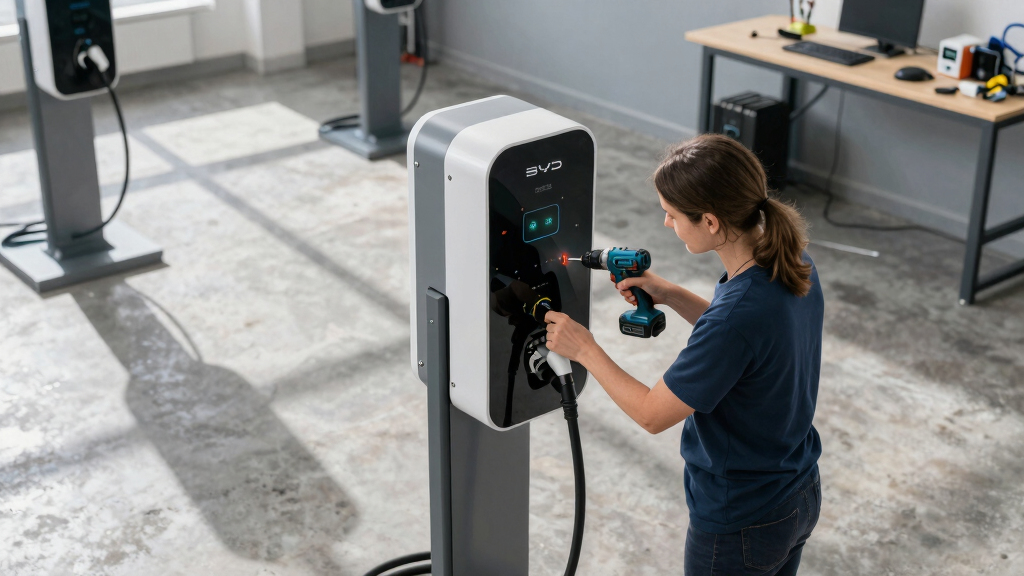
BYD announced plans to deploy 3,000 ultrafast EV chargers in Europe by 2027, with about 600 in the UK. The chargers will use battery systems to minimize grid strain, aiming to boost EV infrastructure and address driver impatience.
BYD has announced plans to install 3,000 ultrafast electric vehicle (EV) chargers across Europe by 2027, including approximately 600 in the UK. The chargers will feature integrated battery systems to reduce the load on local grids, marking a significant push to expand ultrafast charging infrastructure in the region. This development is important as it aims to improve EV charging accessibility and address driver impatience, supporting the broader adoption of electric vehicles in Europe.
The Chinese automaker and EV technology company BYD revealed its plan to deploy 3,000 ‘Flash’ ultrafast chargers in Europe by 2027. These chargers are capable of charging an EV in about five minutes, depending on the vehicle model, and will be equipped with their own battery systems to supply electricity from stored energy, thereby alleviating pressure on local electrical grids. Of these, about 600 will be installed in the UK, where the company emphasizes the importance of rapid infrastructure development.
BYD’s top international executive, Stella Li, stated that each station requires nearly half a million pounds of investment, underscoring the high capital cost but also the commitment to building a robust network. The chargers’ battery pairing allows for more flexible and efficient energy use, especially during peak demand times, which is critical for integrating ultrafast charging into existing energy systems.
Industry experts note that ultrafast chargers serve mainly long-distance travelers, providing a quick top-up during rest stops. While many EV drivers may not need a five-minute charge regularly, the availability of such high-speed options could help reduce range anxiety and improve public perception of EV charging times. Additionally, the rapid deployment of these chargers may outpace the time required to permit and build traditional gas stations, potentially accelerating the transition to electric mobility.
Impact on EV Infrastructure and Driver Experience
This expansion of ultrafast charging stations by BYD could significantly influence EV adoption in Europe by providing faster, more reliable charging options. The integration of battery systems with chargers helps mitigate grid overloads, making widespread deployment more feasible. For drivers, especially those on long trips, ultrafast chargers can reduce charging time from 30–40 minutes to just a few minutes, addressing one of the main barriers to EV adoption. The project also demonstrates a strategic shift towards faster infrastructure development, which could set new standards for EV charging networks across the continent.
As an affiliate, we earn on qualifying purchases.
Europe’s EV Charging Expansion and Industry Trends
Europe has been rapidly expanding its EV charging infrastructure in recent years to meet ambitious climate goals and support the growing EV market. The deployment of ultrafast chargers has become a key focus, with several companies investing in high-capacity stations to cater to long-distance drivers. Historically, EV charging networks have lagged behind the pace of vehicle adoption, but recent efforts aim to bridge this gap. BYD’s announcement aligns with broader industry trends emphasizing fast, high-capacity charging solutions, and the use of battery systems to support grid stability.
Previous projects have shown that ultrafast chargers can be installed relatively quickly compared to traditional gas stations, with permitting and construction often taking less time. The focus on rapid deployment reflects a strategic effort to enhance public perception of EV convenience and performance, critical for accelerating market penetration.
“The integration of batteries with chargers is a game-changer for reducing grid stress and enabling rapid deployment.”
— an anonymous industry expert
Uncertainties About Deployment Timeline and Adoption
It is not yet clear how quickly the full deployment of 3,000 chargers will occur beyond the announced timeline, or how widely they will be adopted by EV drivers. The actual operational performance of the battery-integrated chargers and their impact on local grids remain to be tested in real-world conditions. Additionally, regulatory approval processes and local permitting could influence deployment speed.
Next Steps for BYD and European EV Charging Expansion
BYD is expected to begin installing the initial batch of chargers in the coming months, with full deployment targeted for 2027. Industry analysts will monitor how the chargers perform in different regions and how they influence driver behavior. Further announcements may detail partnerships with local authorities and utilities to facilitate faster permitting and grid integration.
Key Questions
When will the first BYD ultrafast chargers be operational in Europe?
Specific deployment dates have not been announced, but initial installations are expected to begin in the coming months, with full rollout by 2027.
How do the battery systems in these chargers work?
The chargers will be paired with batteries that store energy, allowing them to supply power during peak demand and reduce strain on local grids, enabling faster charging times.
Will these ultrafast chargers be available for all EV models?
While designed to support a wide range of EVs, charging speed may vary depending on the vehicle’s charging capacity. Most modern EVs can benefit from ultrafast charging, but some older models may charge more slowly.
What is the cost of installing each charger?
Each station is estimated to cost nearly half a million pounds, reflecting the advanced technology and infrastructure required.
How will these chargers impact local energy grids?
The integration of battery systems aims to minimize grid impact by providing stored energy and smoothing demand, facilitating rapid deployment without overloading existing infrastructure.
Source: CleanTechnica
Halloween Picks
halloween
As an affiliate, we earn on qualifying purchases.