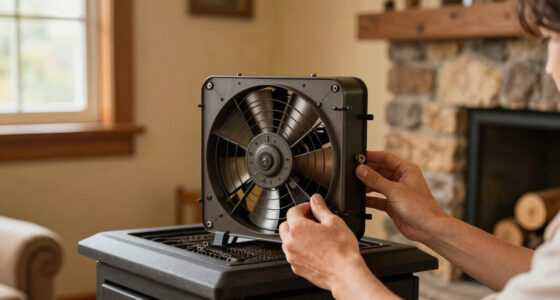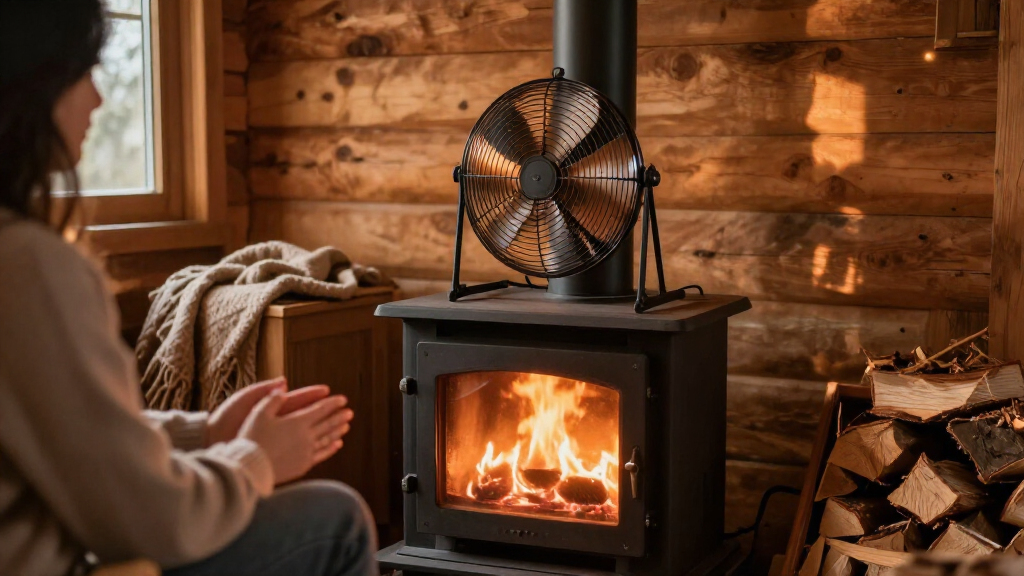
Choosing the right indoor wood stove fans can transform a cozy room into a uniformly heated space without relying on electricity. My top recommendation is the Tovisel 12-Blade Dual-Motor Heat-Powered Wood Stove Fan because its dual motors provide superior airflow compared to single-motor competitors, ensuring heat reaches distant corners of the room. For those prioritizing simplicity and lower maintenance, the Tomersun 6-Blade Heat-Powered Wood Stove Fan offers a reliable, quiet operation that fits most standard stove tops. The main tradeoff you will face is between airflow volume and noise levels; fans with more blades and motors push more heat but may generate more mechanical sound. Continue reading for a detailed breakdown of how these models compare in performance, durability, and suitability for different stove sizes.

Get backup power and energy gear delivered free with Prime
- Fast, free delivery on millions of items
- Prime Video, Amazon Music and more included
- Member-only deals all year
Key Takeaways
- Dual-motor fans consistently outperform single-motor units in rooms larger than 200 square feet by pushing air further across the floor.
- Fans with 12 blades generally operate more quietly than 4-blade models at equivalent speeds due to smoother air displacement.
- Integrated thermometers are most useful when placed on the fan body rather than the stove, as they reflect the temperature driving the fan’s performance.
- Build quality varies widely; models with ceramic-coated bases resist heat damage better than plain aluminum bases over multiple heating seasons.
- Smaller 4-blade fans are ideal for compact stoves but struggle to circulate heat in open-plan living areas with high ceilings.
| Tovisel 12-Blade Dual-Motor Heat-Powered Wood Stove Fan |  | Best for Broad Air Circulation | Power source: Heat-powered | Blade count: 12 | Motors: 2 | VIEW LATEST PRICE | See Our Full Breakdown |
| Tomersun 6-Blade Heat-Powered Wood Stove Fan |  | Best for Multi-Fuel Compatibility | Power source: Heat-powered | Blade count: 6 | Material: Anodized aluminum | VIEW LATEST PRICE | See Our Full Breakdown |
| Miaton Heat-Powered Wood Stove Fan with Thermometer, 6-Blade, Black |  | Best for Straightforward Setup | Power source: Heat-powered | Blade count: 6 | Material: Anodized aluminum | VIEW LATEST PRICE | See Our Full Breakdown |
| GALAFIRE N429 Heat-Powered Wood Stove Fan with Magnetic Thermometer, 4 Blades, Black |  | Best Compact Pick | Model: N429 | Power source: Heat-powered | Blade count: 4 | VIEW LATEST PRICE | See Our Full Breakdown |
| BLFIRE Heat-Powered Dual-Motor Wood Stove Fan with Thermometer |  | Best for Quiet Dual-Motor Operation | Power source: Heat-powered | Motor design: Dual motor | Blade count: 12 | VIEW LATEST PRICE | See Our Full Breakdown |
| Drtulz 4-Blade Heat-Powered Stove Fan |  | Best for Low-Temperature Starts | Power source: Heat powered | Blade count: 4 | Airflow capacity: 220 CFM | VIEW LATEST PRICE | See Our Full Breakdown |
| Heat-Powered Wood Stove Fan with Dual Motors and 6 Blades |  | Best for Multi-Direction Airflow | Power source: Heat powered | Design: Dual head, dual motor | Blade count: 6 | VIEW LATEST PRICE | See Our Full Breakdown |
| COMBIUBIU 4-Blade Heat-Powered Wood Stove Fan |  | Best for Simple Setup | Power source: Heat powered; no electricity or batteries | Blade count: 4 | Airflow capacity: 210 CFM | VIEW LATEST PRICE | See Our Full Breakdown |
| Heat-Powered 12-Blade Dual-Motor Wood Stove Fan |  | Best for High Listed Airflow | Power source: Heat powered | Motors: 2 | Blade count: 12 | VIEW LATEST PRICE | See Our Full Breakdown |
| VODA Heat-Powered Wood Stove Fan with 4 Blades |  | Best for High Airflow in a Four-Blade Design | Power source: Heat powered | Material: Anodized aluminum | Blade count: 4 | VIEW LATEST PRICE | See Our Full Breakdown |
| Xmasneed Heat-Powered Wood Stove Fan |  | Best for Large Room Coverage | Power Source: Heat Powered | Blade Count: 5 | Noise Level: < 25 dB | VIEW LATEST PRICE | See Our Full Breakdown |
| Hanaoyo Heat-Powered 6-Blade Wood Stove Fan |  | Best Durability | Power Source: Heat Powered | Blade Count: 6 | Material: Anodized Aluminum (Body & Blades) | VIEW LATEST PRICE | See Our Full Breakdown |
| VODA 8-Blade Heat-Powered Wood Stove Fan |  | Best for Maximum Airflow | Power Source: Heat Powered | Blade Count: 8 | Start Temperature: ~140°F | VIEW LATEST PRICE | See Our Full Breakdown |
| JossaColar Heat-Powered Wood Stove Fan |  | Best Compact Design | Power Source: Heat Powered | Blade Count: 6 | Dimensions: 4.5 x 6.8 x 8 in | VIEW LATEST PRICE | See Our Full Breakdown |
| Tomersun 6-Blade Heat-Powered Wood Stove Fan |  | Best Overall Balance | Power Source: Heat Powered | Blade Count: 6 | Airflow Capacity: 180 CFM | VIEW LATEST PRICE | See Our Full Breakdown |
| indoor wood stove fan | Power source | Blade count | Noise level | Dimensions |
|---|---|---|---|---|
| Tovisel 12-Blade Dual-Motor He | Heat-powered | 12 | Under 25 dB | 4.3 × 9 × 5.5 in |
| Tomersun 6-Blade Heat-Powered | Heat-powered | 6 | Under 25 dB | 4.33 × 6.89 × 8.46 in |
| Miaton Heat-Powered Wood Stove | Heat-powered | 6 | Up to 25 dB | 6.3 × 4.5 × 7.3 in |
| GALAFIRE N429 Heat-Powered Woo | Heat-powered | 4 | 25 dB | 3.81 × 7.06 × 7.44 in |
| BLFIRE Heat-Powered Dual-Motor | Heat-powered | 12 | 20 dB | 4.25 × 6.06 × 8.5 in |
| Drtulz 4-Blade Heat-Powered St | Heat powered | 4 | 36 dB | 7.48 in high; 4.09 in base |
| Heat-Powered Wood Stove Fan wi | Heat powered | 6 | Below 25 dB | — |
| COMBIUBIU 4-Blade Heat-Powered | Heat powered; no electricity or batteries | 4 | 25 dB | 7.1 × 7.1 × 8.8 in |
| Heat-Powered 12-Blade Dual-Mot | Heat powered | 12 | Below 25 dB | — |
| VODA Heat-Powered Wood Stove F | Heat powered | 4 | Less than 25 dB | — |
| Xmasneed Heat-Powered Wood Sto | Heat Powered | 5 | < 25 dB | 17.5" D × 12.8" W × 25" H |
| Hanaoyo Heat-Powered 6-Blade W | Heat Powered | 6 | < 25 dB | 11 × 10 × 5 in |
| VODA 8-Blade Heat-Powered Wood | Heat Powered | 8 | 25 dB | — |
| JossaColar Heat-Powered Wood S | Heat Powered | 6 | 25 dB | 4.5 x 6.8 x 8 in |
| Tomersun 6-Blade Heat-Powered | Heat Powered | 6 | < 25 dB | — |
More Details on Our Top Picks
Tovisel 12-Blade Dual-Motor Heat-Powered Wood Stove Fan
For buyers who want more than a basic single-motor fan, the Tovisel pairs two motors with 12 blades to spread stove heat across a wider area without a cord or batteries. Its magnetic thermometer helps track stove temperature, while overheat protection adds a safeguard when the stove runs hot. At under 25 dB, it is intended to circulate air quietly; the coated aluminum body and balanced fan heads are also designed for stable tabletop placement.
Compared with the GALAFIRE N429, which prioritizes a compact four-blade footprint, Tovisel favors greater blade and motor capacity over a smaller setup. The tradeoff is a 2.2-pound body that needs a hot, level surface and must remain below 570°F. It suits rooms where broader circulation matters more than minimizing stovetop space.
Pros:- Dual motors and 12 blades are designed to circulate warm air across a wider area.
- Runs on stove heat without batteries or an electrical connection.
- Includes a magnetic thermometer and overheat protection.
- Coated aluminum body is designed for quiet, stable operation under 25 dB.
Cons:- Needs a compatible hot, level surface to operate.
- Must stay below its 570°F maximum temperature.
- At 2.2 pounds, it is heavier than the compact GALAFIRE N429.
Best for: Wood- or pellet-stove owners seeking a cord-free fan with dual motors for moving warm air across a larger room.
Not ideal for: Owners with limited stovetop space, an uneven stove top, or surface temperatures above the fan’s 570°F maximum.
- Power source:Heat-powered
- Blade count:12
- Motors:2
- Dimensions:4.3 × 9 × 5.5 in
- Weight:2.2 lb
- Noise level:Under 25 dB
- Recommended operating temperature:350–530°F
- Maximum temperature:570°F
- Included component:Magnetic thermometer
Our verdict“Choose the Tovisel if broader circulation and dual-motor operation matter more than a compact, lightweight fan.”
Tomersun 6-Blade Heat-Powered Wood Stove Fan
The Tomersun works with wood, coal, and pellet stoves, making it a flexible pick for households that use more than one fuel type. Its six angled blades are designed to send warm air sideways, and heat-powered operation avoids cords, outlets, and batteries. The bimetallic safety lift helps protect the fan as the stovetop gets hot, while the anodized aluminum body keeps the design relatively light at 678 g.
Compared with the dual-motor Tovisel, Tomersun takes a simpler six-blade approach rather than emphasizing broader circulation. That can suit buyers who want a straightforward fan, but it offers fewer stated circulation components and no included thermometer. Its 185°F–660°F operating range also means buyers need to match it to their stove’s heat profile, and placement requires a smooth, flat surface.
Pros:- Compatible with wood, coal, and pellet stoves.
- Runs on stove heat without cords, outlets, or batteries.
- Six angled blades are designed to circulate air sideways.
- Bimetallic safety lift helps protect the fan at high temperatures.
Cons:- Requires a smooth, flat stovetop for stable placement.
- Must operate within the specified stove-temperature range.
- Does not include a thermometer, unlike the Tovisel and GALAFIRE N429.
Best for: Households using wood, coal, or pellet stoves that want one heat-powered fan compatible with multiple fuel types.
Not ideal for: Buyers who want an included thermometer, a dual-motor design, or a fan that can sit on an uneven stovetop.
- Power source:Heat-powered
- Blade count:6
- Material:Anodized aluminum
- Operating temperature range:185°F–660°F
- Peak temperature zone:482°F–572°F
- Noise level:Under 25 dB
- Safety feature:Bimetallic safety lift
- Dimensions:4.33 × 6.89 × 8.46 in
- Compatible stove types:Wood, coal, and pellet
Our verdict“Choose Tomersun if multi-fuel compatibility matters more than a thermometer or dual-motor circulation.”
Miaton Heat-Powered Wood Stove Fan with Thermometer, 6-Blade, Black
The Miaton needs no installation: place it on a flat stove surface, ideally beside the chimney pipe, and stove heat powers its six aluminum blades. That makes it a practical choice for buyers who want a simple tabletop fan rather than a mounted or wired device. Its stated 150 CFM airflow gives shoppers a circulation figure to compare, and noise is rated at up to 25 dB. Overheat protection lifts the fan when temperatures exceed 660°F.
Unlike the Tomersun six-blade fan, Miaton lists airflow and includes a thermometer, giving buyers more stated operating information. It does not, however, offer the Tovisel’s dual motors and 12 blades for buyers prioritizing broader circulation. The flat-surface requirement and recommended chimney-side placement limit where it can work well, so this is less suited to crowded or irregular stovetops.
Pros:- No installation is required; it sits on a flat stove surface.
- Lists airflow at 150 CFM.
- Includes overheat protection that lifts the fan above 660°F.
- Heat-powered operation avoids cords and batteries.
Cons:- Requires a flat surface and is recommended for placement beside the chimney pipe.
- Has one speed and six blades rather than the Tovisel’s dual-motor, 12-blade setup.
- Noise is rated at up to 25 dB, slightly higher than the BLFIRE’s listed 20 dB.
Best for: Stove owners who want a no-installation fan with a stated airflow figure and thermometer for monitoring heat.
Not ideal for: People with crowded or uneven stove tops, or buyers seeking a dual-motor, 12-blade design for broader circulation.
- Power source:Heat-powered
- Blade count:6
- Material:Anodized aluminum
- Airflow:150 CFM
- Noise level:Up to 25 dB
- Number of speeds:1
- Dimensions:6.3 × 4.5 × 7.3 in
- Overheat protection:Lifts the fan above 350°C (660°F)
- Warranty:1 year
Our verdict“Choose the Miaton if you want a simple tabletop setup with stated airflow and included temperature monitoring.”
GALAFIRE N429 Heat-Powered Wood Stove Fan with Magnetic Thermometer, 4 Blades, Black
The GALAFIRE N429 is the compact choice in this group: its four-blade design and 1.7-pound weight make it easier to fit on a narrow stovetop than the larger Tovisel. It starts at 122°F, so it can begin running at a lower stated temperature than the Tomersun, which lists an operating range starting at 185°F. A magnetic thermometer is included, and the fan runs at a stated 25 dB while producing 220 CFM.
This smaller format trades blade count and motor complexity for a lighter footprint. Buyers who want a dual-motor design or more blades should compare it with the BLFIRE or Tovisel instead. GALAFIRE also cautions against use with stoves whose maximum top temperature is below 212°F, so it is not a universal fit for every low-heat appliance. Its two-year warranty is the longest specified among these five options.
Pros:- Compact 1.7-pound design suits narrow stovetop spaces.
- Starts at a stated 122°F.
- Includes a magnetic thermometer.
- Lists 220 CFM airflow and a two-year warranty.
Cons:- Four blades provide a simpler design than the six-blade Miaton or 12-blade Tovisel.
- Not recommended for stoves with a maximum top temperature below 212°F.
- Requires sufficient stove heat to operate.
Best for: Owners of narrow stovetops who want a lightweight fan, a lower listed start temperature, and a magnetic thermometer.
Not ideal for: Buyers seeking dual motors or many blades, or owners of stoves that cannot reach the recommended operating heat.
- Model:N429
- Power source:Heat-powered
- Blade count:4
- Start temperature:122°F (50°C)
- Airflow capacity:220 CFM
- Noise level:25 dB
- Dimensions:3.81 × 7.06 × 7.44 in
- Weight:1.7 lb
- Warranty:2 years
Our verdict“Choose the GALAFIRE N429 when stovetop space and a low listed start temperature matter more than extra blades or motors.”
BLFIRE Heat-Powered Dual-Motor Wood Stove Fan with Thermometer
The BLFIRE combines dual motors and 12 blades with a listed noise level of just 20 dB, making it the quiet-focused alternative to the similarly equipped Tovisel. It runs on stove heat, includes a thermometer, and has a temperature-sensing module that lifts the fan slightly when the stove gets too hot. Its no-installation design can suit indoor or outdoor use with a compatible heater, offering more placement flexibility than a fan intended only for a stovetop.
Its stated airflow capacity is 250 cubic centimeters per minute, but that unit is unusual for a fan and differs from the CFM figure listed for the Miaton; buyers should not treat the two numbers as directly comparable. BLFIRE also provides no temperature range in the supplied specifications. Choose it for its quiet rating and heat-triggered lift, but favor Tovisel if a defined maximum temperature is more useful to your setup.
Pros:- Dual motors and 12 blades are designed to circulate warm air.
- Listed noise level is 20 dB.
- Temperature-sensing module lifts the fan when the stove gets too hot.
- Includes a thermometer and is listed for indoor and outdoor use.
Cons:- Airflow is listed as 250 cubic centimeters per minute, which is difficult to compare with CFM ratings.
- The supplied specifications do not state an operating-temperature range.
- Requires heat from a stove or compatible heater to operate.
Best for: Buyers prioritizing a quiet dual-motor fan with 12 blades, a thermometer, and indoor/outdoor use for compatible heaters.
Not ideal for: Shoppers who need a clearly stated operating-temperature range or an airflow figure that can be readily compared with CFM listings.
- Power source:Heat-powered
- Motor design:Dual motor
- Blade count:12
- Noise level:20 dB
- Airflow capacity:250 cubic centimeters per minute
- Dimensions:4.25 × 6.06 × 8.5 in
- Mounting type:No installation required
- Indoor/outdoor use:Indoor and outdoor
- Included components:Dual-motor fan and thermometer
Our verdict“Choose the BLFIRE if low listed noise and dual-motor circulation are your priorities, and the unusual airflow unit is acceptable.”
Drtulz 4-Blade Heat-Powered Stove Fan
The 50°C start temperature gives this Drtulz an advantage when you want air movement before the stovetop becomes very hot. Its listed 220 CFM airflow sits between the COMBIUBIU’s 210 CFM and the VODA 4-blade fan’s 240 CFM, making it a middle-ground choice rather than the highest-output option here. The anodized aluminum body and bi-metallic overheat protection add useful safeguards, while 36 dB is quiet in ordinary use but louder on paper than the sub-25 dB models in this group. It needs a smooth, flat surface, and its temperature limits call for attention: the listed protection threshold is 250°C, while the product instructions also say to remove it above 653°F. I’d choose it for earlier startup, not for near-silent operation.
Pros:- Starts at a listed 50°C, earlier than models with higher activation temperatures
- 220 CFM rating offers a middle ground between the COMBIUBIU and VODA 4-blade fan
- Anodized aluminum body with a bi-metallic overheat-protection feature
- Works with wood, pellet, and gas stoves without external power
Cons:- Listed 36 dB noise level is higher than the sub-25 dB alternatives
- Requires a smooth, flat stovetop for stable placement
- Temperature guidance includes a 250°C protection threshold and a separate removal warning above 653°F
Best for: Wood- or pellet-stove owners who want a fan that begins circulating air at a relatively low stove temperature.
Not ideal for: Buyers prioritizing very quiet operation or those whose stove has an uneven or crowded top.
- Power source:Heat powered
- Blade count:4
- Airflow capacity:220 CFM
- Start temperature:50°C (122°F)
- Noise level:36 dB
- Maximum working temperature:350°C (662°F)
- Dimensions:7.48 in high; 4.09 in base
- Weight:11.52 oz
Our verdict“Choose the Drtulz if early heat-powered startup matters more than the quieter operation offered by several alternatives.”
Heat-Powered Wood Stove Fan with Dual Motors and 6 Blades
This dual-head layout is the main reason to choose this fan: it sends warm air in more than one direction, unlike the single-head Drtulz or COMBIUBIU. Its below-25 dB noise claim also makes it a stronger fit for quiet living spaces. The tradeoff is its 185 CFM rating, which is lower than the listed airflow for those two four-blade models, so the wider directional spread does not mean the highest stated volume. It has one speed, and it needs the stove to reach its operating range before it runs. A magnetic thermometer is included, while the tilt mechanism is intended to help with overheating. I’d pick it when spreading warmth across a broader seating area matters more than adjusting fan speed or maximizing the published CFM figure.
Pros:- Dual heads distribute warm air in multiple directions
- Quiet operation is specified as below 25 dB
- Includes a magnetic thermometer for checking stove temperature
- Runs from stove heat and uses aluminum blades
Cons:- 185 CFM is lower than the listed airflow of the Drtulz, COMBIUBIU, and VODA 4-blade models
- Single-speed operation offers no way to adjust airflow
- Requires the stove to reach its operating temperature range before it works
Best for: Households with a broad or open seating area who want warm air directed in multiple directions from one stovetop fan.
Not ideal for: Buyers seeking adjustable speeds or the highest listed airflow capacity in this group.
- Power source:Heat powered
- Design:Dual head, dual motor
- Blade count:6
- Airflow capacity:185 CFM
- Noise level:Below 25 dB
- Operating temperature range:60–345°C (140–650°F)
- Speeds:1
- Included accessory:Magnetic thermometer
Our verdict“Choose this model for quiet, multi-direction circulation, but pick a higher-CFM option if maximum listed airflow is your priority.”
COMBIUBIU 4-Blade Heat-Powered Wood Stove Fan
The COMBIUBIU is the straightforward pick for someone who wants a four-blade, no-assembly fan without extra controls or accessories to manage. It lists 210 CFM, just below the Drtulz’s 220 CFM and the VODA’s 240 CFM, so its appeal is simplicity rather than maximum stated airflow. Its 25 dB noise level is quieter on paper than the Drtulz’s 36 dB, though the dual-head fan claims below 25 dB. This model is specified for indoor use on a wood-burning stove, which gives it a narrower fit than the Drtulz and VODA, both described for several fuel types. The 80°C activation point also means it will not begin as early as the Drtulz. I’d shortlist it for a wood-stove owner who values basic, ready-to-place operation.
Pros:- Requires no assembly
- Operates without batteries or electricity
- Listed 210 CFM airflow with a four-blade design
- 25 dB noise specification
Cons:- Specified for indoor use on a wood-burning stove, limiting its stated compatibility
- 80°C activation temperature is higher than the Drtulz’s 50°C start point
- Single-speed design provides no airflow adjustment
Best for: Wood-stove owners who want a simple, ready-to-use fan and do not need multi-direction heads or a thermometer.
Not ideal for: Owners of gas, pellet, or oil stoves, or anyone seeking a low-temperature start or adjustable operation.
- Power source:Heat powered; no electricity or batteries
- Blade count:4
- Airflow capacity:210 CFM
- Operating temperature:80–250°C (176–482°F)
- Maximum stove temperature:350°C (662°F)
- Speed:1,100 rpm
- Noise level:25 dB
- Dimensions:7.1 × 7.1 × 8.8 in
Our verdict“Pick the COMBIUBIU for simple, quiet operation on a wood stove, but choose the Drtulz for earlier startup or broader stated fuel compatibility.”
Heat-Powered 12-Blade Dual-Motor Wood Stove Fan
With two motors and 12 blades, this fan is the high-capacity pick on paper: its airflow is listed as up to 250 CFM, though the same product data also gives 195 CFM. That makes it a potentially stronger airflow choice than the single-motor Drtulz and COMBIUBIU, but the conflicting figures make direct performance comparisons less certain. Its below-25 dB noise claim and approximate 50° start point are appealing for quiet, relatively early circulation. The anodized aluminum body and built-in overheat protection add practical reassurance, but the fan still needs a flat stovetop and sufficient heat. Unlike the dual-head six-blade model, it is a tabletop design that does not specifically promise airflow in multiple directions. I’d favor it when the larger blade-and-motor setup is the draw, while treating the airflow rating cautiously.
Pros:- Dual motors and 12 blades distinguish it from the single-motor four-blade options
- Published airflow reaches up to 250 CFM
- Noise level is specified as below 25 dB
- Anodized aluminum body, overheat protection, and no installation requirement
Cons:- Airflow data conflicts, listing both up to 250 CFM and 195 CFM
- Requires a flat stovetop and enough heat to start operating
- Designed for indoor use only
Best for: Indoor stove owners who want a dual-motor design and are willing to accept uncertainty in the published airflow figures.
Not ideal for: Buyers who need a single, clearly stated airflow rating or whose stovetop lacks a flat placement area.
- Power source:Heat powered
- Motors:2
- Blade count:12
- Airflow capacity:Up to 250 CFM; 195 CFM also listed
- Noise level:Below 25 dB
- Start temperature:About 50°
- Mounting type:Tabletop
- Warranty:1 year
Our verdict“Choose this fan for its dual-motor, 12-blade configuration if the airflow claim appeals, but favor the VODA when you want a less ambiguous listed CFM figure.”
VODA Heat-Powered Wood Stove Fan with 4 Blades
The VODA pairs a familiar four-blade layout with a listed 240 CFM airflow rating, the highest clearly stated figure among these three four-blade models. That puts it ahead of the COMBIUBIU at 210 CFM and Drtulz at 220 CFM on published capacity, though real circulation also depends on stove heat and room layout. Its 8.3-inch blades and sub-25 dB noise specification make it a plausible choice for moving warmth without adding much sound. The compromise is its approximately 80°C activation point: the Drtulz starts at a lower listed temperature. The VODA is also single-speed, so airflow changes with stovetop temperature rather than a user-selected setting. I’d choose it over the simpler COMBIUBIU when the higher listed CFM matters, but not for earlier startup or adjustable control.
Pros:- 240 CFM is higher than the listed figures for the Drtulz and COMBIUBIU
- Large 8.3-inch blades are designed to move warm air around the room
- Noise level is specified as less than 25 dB
- Anodized aluminum construction and overheat protection
Cons:- Activation temperature around 80°C is higher than the Drtulz’s 50°C start point
- Single-speed operation means output varies with stovetop temperature
- Requires a sufficiently hot, flat surface
Best for: Owners of wood, gas, or oil stoves who want a quiet four-blade fan with a high listed airflow figure.
Not ideal for: Buyers whose stove runs cooler or who want a fan that starts at a lower temperature than the Drtulz.
- Power source:Heat powered
- Material:Anodized aluminum
- Blade count:4
- Blade diameter:8.3 in
- Airflow capacity:240 CFM
- Activation temperature:Around 80°C (176°F)
- Noise level:Less than 25 dB
- Overheat protection temperature:Around 482°F
Our verdict“Choose the VODA for the strongest clearly stated airflow among these four-blade picks, and choose the Drtulz if you need an earlier start.”
Xmasneed Heat-Powered Wood Stove Fan
This model stands out for its five-blade design, which generates more airflow than the standard four-blade options like the GALAFIRE N429. The larger footprint allows it to push warm air further into a room, making it ideal for open-plan living spaces where heat tends to stratify near the ceiling. While it operates quietly at under 25 dB, its tall 25-inch profile requires careful placement to avoid blocking sightlines or catching on clothing. Compared to the compact JossaColar, this fan moves more volume but demands more floor space behind it, adhering to strict clearance guidelines. It is a robust choice for those prioritizing circulation power over minimalism.
Pros:- Five blades create stronger airflow than standard four-blade competitors
- Includes a magnetic thermometer for easy temperature monitoring
- Bimetallic strip automatically lifts the fan to protect the motor from overheating
- Operates silently at less than 25 dB
Cons:- Requires 15 cm of clearance behind the unit, limiting placement options
- Plastic blades may feel less premium than all-aluminum alternatives
- Tall stature can look bulky on smaller stovetops
Best for: Homeowners with large, open-concept living areas who need strong horizontal air movement to eliminate cold spots.
Not ideal for: Owners of small cabins or tight corners, as the tall frame and required rear clearance make it difficult to place discreetly.
- Power Source:Heat Powered
- Blade Count:5
- Noise Level:< 25 dB
- Dimensions:17.5″ D × 12.8″ W × 25″ H
- Material:Aluminum Body, Plastic Blades
- Operating Temp:158°F – 644°F
- Included Accessory:Magnetic Thermometer
Our verdict“Choose the Xmasneed if you have a large room and need maximum air displacement, provided you have the floor space to accommodate its size.”
Hanaoyo Heat-Powered 6-Blade Wood Stove Fan
The Hanaoyo distinguishes itself with a fully anodized aluminum construction, including the blades. This is a significant upgrade over models like the Xmasneed, which uses plastic blades that may degrade or warp over years of high-heat exposure. The all-metal build enhances heat conduction to the thermoelectric motor, potentially improving efficiency. While it matches the Tomersun in blade count, the Hanaoyo’s dual-metal safety device offers a robust layer of protection against overheating. It is a compact, rust-resistant option that feels built to last, though its lighter weight means it may shift slightly on uneven stove surfaces if bumped.
Pros:- Anodized aluminum blades resist warping and corrosion better than plastic
- Dual-metal safety device provides reliable overheating protection
- Lightweight 650g design is easy to move or store
- Compact footprint fits easily on most freestanding stoves
Cons:- Lighter weight may make it prone to tipping if the stove is bumped
- No speed control; airflow is dictated solely by stove temperature
- Smaller size generates less total CFM than larger five or eight-blade models
Best for: Buyers who prioritize long-term durability and want an all-metal build that resists corrosion and heat damage.
Not ideal for: Those looking for the absolute highest airflow volume, as its compact size limits total air movement compared to larger multi-motor units.
- Power Source:Heat Powered
- Blade Count:6
- Material:Anodized Aluminum (Body & Blades)
- Noise Level:< 25 dB
- Weight:650 g
- Dimensions:11 × 10 × 5 in
- Safety Feature:Dual-Metal Overheat Protection
Our verdict“The Hanaoyo is the smart pick for durability-focused buyers who want an all-metal fan that withstands the test of time.”
VODA 8-Blade Heat-Powered Wood Stove Fan
This fan is engineered for volume, featuring eight blades that significantly outperform the six-blade Hanaoyo in air circulation. The increased blade count allows it to push a wider column of warm air, making it highly effective in drafty older homes or rooms with high ceilings. It begins spinning at a relatively low 140°F, meaning it starts working sooner than competitors like the Tomersun, which waits for 158°F. However, this aggressive design comes with a caution: the unit is more sensitive to extreme heat, requiring removal if the stove exceeds 653°F. It is a high-performance choice for those who need immediate, powerful heat distribution.
Pros:- Eight blades generate superior airflow compared to standard six-blade fans
- Starts operating at a lower temperature (140°F) for quicker heat distribution
- Includes a magnetic thermometer for real-time monitoring
- Horizontal air direction helps prevent heat from escaping up the chimney
Cons:- Narrower safe operating range requires vigilance against overheating
- Higher blade count can create more air turbulence noise if not balanced perfectly
- Larger surface area collects more dust and requires frequent cleaning
Best for: Users in drafty or large spaces who need immediate, high-volume heat distribution and don’t mind monitoring stove temperatures closely.
Not ideal for: Owners of small, well-insulated rooms or those who prefer a ‘set it and forget it’ solution, as the high blade count requires careful temperature management.
- Power Source:Heat Powered
- Blade Count:8
- Start Temperature:~140°F
- Max Safe Temp:653°F
- Noise Level:25 dB
- Material:Aluminum
- Warranty:12-Month Replacement
Our verdict“The VODA is the best option for buyers who prioritize maximum air movement and rapid heat response over ease of maintenance.”
JossaColar Heat-Powered Wood Stove Fan
The JossaColar is a study in efficiency, packing a thermoelectric motor into a tiny 4.5 x 6.8 x 8-inch frame. This makes it far less obtrusive than the tall Xmasneed or the bulky VODA. Despite its small size, the six curved aluminum blades are designed to spread heat effectively in smaller rooms. It is an excellent fit for stoves with limited flat surface area where larger fans would hang off the edge. While it lacks the raw power of the Tomersun, its minimalist footprint makes it the go-to choice for apartment dwellers or those with decorative stoves where aesthetics matter. It’s quiet, unassuming, and easy to hide when not in use.
Pros:- Ultra-compact size fits on small or irregular stove tops
- Lightweight 0.5 kg design is easy to store or move
- Curved aluminum blades optimize airflow for its small size
- Includes a magnetic thermometer for accurate stove monitoring
Cons:- Lower airflow capacity compared to larger six or eight-blade models
- Small footprint may not generate enough heat for rooms over 300 sq ft
- Single speed means no way to adjust airflow if the stove runs very hot
Best for: Apartment dwellers or owners of small stoves with limited flat surface area who need a discreet, space-saving solution.
Not ideal for: Users with large, open-plan rooms, as its compact size and single-speed operation limit its ability to circulate air across long distances.
- Power Source:Heat Powered
- Blade Count:6
- Dimensions:4.5 x 6.8 x 8 in
- Weight:0.5 kg
- Noise Level:25 dB
- Material:Aluminum
- Warranty:1-Year Replacement
Our verdict“The JossaColar is ideal for small spaces where a large fan would look out of place or physically not fit.”
Tomersun 6-Blade Heat-Powered Wood Stove Fan
The Tomersun strikes a compelling balance between size, power, and durability. With anodized aluminum blades and a 180 CFM airflow rating, it outperforms the compact JossaColar while avoiding the overheating sensitivity of the VODA. The anodized finish is a key differentiator, resisting heat discoloration better than the standard aluminum found on the Hanaoyo. It starts spinning at a standard 158°F, providing reliable performance without the risk of premature motor wear. While it lacks the multi-motor power of the Tovisel, it is more affordable and easier to maintain. This model is the safest bet for most users who want consistent, quiet heat circulation without extreme specifications.
Pros:- Anodized aluminum blades resist high temperatures and corrosion
- Solid 180 CFM airflow provides effective room circulation
- Wide operating range (185°F–660°F) offers flexibility in stove usage
- Silent operation below 25 dB ensures a peaceful environment
Cons:- Single speed limits control over air intensity
- Must be removed if stove exceeds 660°F, which can happen with aggressive burning
- Heavier at 2 lb than lighter compact models
Best for: The average homeowner looking for a reliable, durable, and well-balanced fan that works well in most standard-sized rooms.
Not ideal for: Users with very large rooms requiring maximum CFM, or those with small stoves who need the absolute smallest footprint possible.
- Power Source:Heat Powered
- Blade Count:6
- Airflow Capacity:180 CFM
- Operating Temp:185°F – 660°F
- Start Temp:~158°F
- Noise Level:< 25 dB
- Material:Anodized Aluminum
Our verdict“The Tomersun is the best all-around choice for most buyers, offering durability and airflow without the risks of more extreme models.”
How We Picked
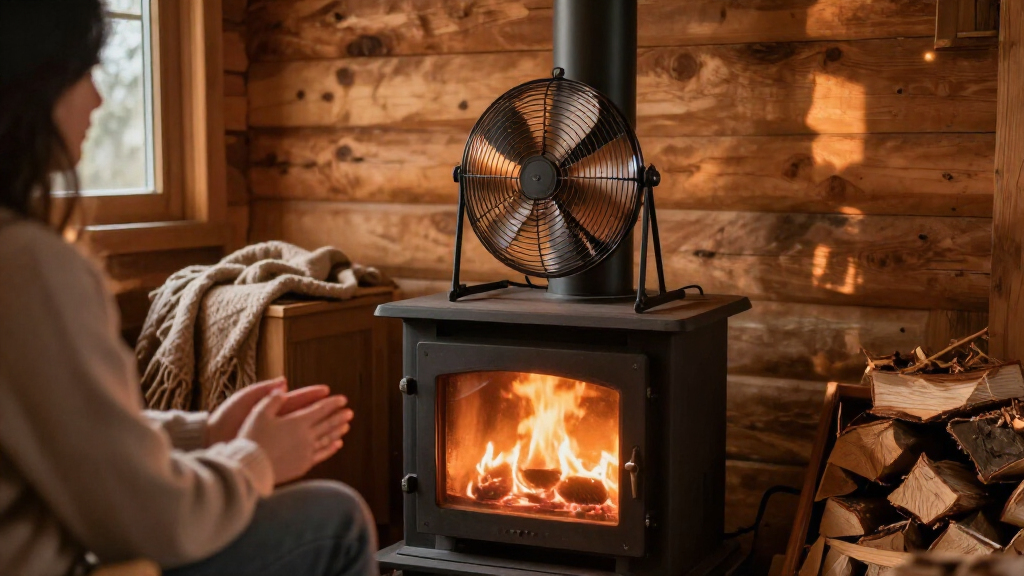
I evaluated these indoor wood stove fans based on their ability to convert stove heat into usable airflow efficiently. The primary criteria included airflow volume (measured by blade count and motor configuration), noise levels at operating temperatures, and build durability, particularly how well the base and casing withstand prolonged exposure to high heat. I also considered the utility of added features like magnetic thermometers, assessing whether they provided accurate readings that help users maintain the ideal stove temperature for fan operation.
Ranking logic prioritized models that offer a balance of power and quietness. While dual-motor fans with 12 blades typically offer the highest performance, I penalized units that produced excessive rattling or vibration. Single-motor models were ranked higher if they demonstrated exceptional stability and longevity, making them better suited for smaller spaces where high volume is less critical. This approach ensures that the recommendations suit various room sizes and user preferences for silence versus power.
| indoor wood stove fan | Power source | Material |
|---|---|---|
| Tovisel 12-Blade Dual-Motor He | Heat-powered | — |
| Tomersun 6-Blade Heat-Powered | Heat-powered | Anodized aluminum |
| Miaton Heat-Powered Wood Stove | Heat-powered | Anodized aluminum |
| GALAFIRE N429 Heat-Powered Woo | Heat-powered | — |
| BLFIRE Heat-Powered Dual-Motor | Heat-powered | — |
| Drtulz 4-Blade Heat-Powered St | Heat powered | — |
| Heat-Powered Wood Stove Fan wi | Heat powered | — |
| COMBIUBIU 4-Blade Heat-Powered | Heat powered; no electricity or batteries | — |
| Heat-Powered 12-Blade Dual-Mot | Heat powered | — |
| VODA Heat-Powered Wood Stove F | Heat powered | Anodized aluminum |
| Xmasneed Heat-Powered Wood Sto | Heat Powered | Aluminum Body, Plastic Blades |
| Hanaoyo Heat-Powered 6-Blade W | Heat Powered | Anodized Aluminum (Body & Blades) |
| VODA 8-Blade Heat-Powered Wood | Heat Powered | Aluminum |
| JossaColar Heat-Powered Wood S | Heat Powered | Aluminum |
| Tomersun 6-Blade Heat-Powered | Heat Powered | Anodized Aluminum |
Factors to Consider When Choosing Indoor Wood Stove Fans
Selecting the right heat-powered fan requires understanding how your specific stove and room dynamics interact with fan mechanics. This guide breaks down the technical factors that influence performance and longevity.Motor Configuration: Single vs. Dual
The number of motors in a heat-powered fan directly impacts its ability to circulate air in larger spaces. Dual-motor fans typically drive two sets of blades or a single larger blade assembly with more torque, allowing them to push air further across the room floor. This is beneficial for open-concept homes where heat tends to rise and get trapped in the ceiling. In contrast, single-motor fans are often quieter and simpler, with fewer moving parts that can wear out. If your room is under 150 square feet, a single motor is usually sufficient and more cost-effective. However, for rooms over 200 square feet, the extra investment in a dual-motor unit pays off in more consistent warmth distribution.
Blade Count and Airflow Dynamics
Blade count influences both the volume of air moved and the noise profile of the fan. 12-blade models tend to move air more smoothly and quietly because the smaller blades slice through the air with less resistance per rotation. This design often results in a more consistent breeze without the ‘chopping’ sound associated with fewer, larger blades. 4-blade fans can move a significant amount of air per rotation but may produce a louder, rhythmic hum as they spin. When choosing, consider your tolerance for background noise; if you plan to use the fan near a seating area or bedroom, higher blade counts generally offer a more pleasant experience.
Thermometer Integration and Accuracy
Many modern indoor wood stove fans come with built-in or magnetic thermometers, but their placement matters. A thermometer mounted on the fan body reads the temperature of the air being moved or the fan’s own heat, which can differ from the stove’s surface temperature. Magnetic thermometers that stick directly to the stove provide a more accurate reading of the heat source driving the fan. This helps you maintain the stove within the 50-66°C range where most fans operate most efficiently. Without accurate temperature monitoring, you might run the stove too cool, reducing fan speed, or too hot, potentially damaging the fan’s internal mechanism over time.
Base Material and Heat Resistance
The base of the fan sits directly on the hot stove surface, making its material composition a critical factor in longevity. Aluminum bases are common and conduct heat well to the Stirling engine inside, but they can warp or discolor if exposed to extreme temperatures for prolonged periods. Ceramic-coated or insulated bases offer better protection against heat damage and often include non-slip pads to prevent scratching the stove top. I recommend checking if the base is designed to dissipate heat away from the engine or if it relies solely on conduction. Poor heat management in the base can lead to premature failure of the thermal engine, which is the heart of the fan.
Room Size and Stove Placement
Matching the fan’s capacity to your room size is essential for effective heating. A small 4-blade fan will struggle to circulate heat in a large, high-ceilinged living room, leaving you cold despite a hot stove. Conversely, a powerful 12-blade dual-motor fan might be overkill for a small cabin or a room with low ceilings, potentially creating drafts that feel uncomfortable. Consider the layout: if your stove is in a corner, you need a fan with directional airflow capabilities or higher volume to push heat across the room. For central stove placements, moderate airflow is usually sufficient to distribute warmth evenly in all directions.
Frequently Asked Questions
Do indoor wood stove fans work if the stove is not very hot?
Most heat-powered fans require the stove surface to reach at least 50°C (122°F) to begin rotating. Below this temperature, the Stirling engine inside does not generate enough torque to turn the blades. If your stove runs cool, the fan will remain stationary, providing no heat circulation. For optimal performance, you need to maintain a steady fire that keeps the stove top within the recommended operating range, usually between 50°C and 66°C. If the stove gets too hot, above 343°C (650°F), the fan may stop spinning to protect its internal components from damage.Are dual-motor fans significantly louder than single-motor models?
Not necessarily. While dual-motor fans have more moving parts, many high-quality models are designed with balanced rotors and dampening materials to minimize noise. In fact, some 12-blade dual-motor fans operate more quietly than cheaper single-motor units because the workload is distributed across two motors, reducing the strain on each. However, poorly constructed dual-motor fans can suffer from vibration and rattling if the motors are not perfectly aligned. When comparing models, look for reviews that specifically mention sound profiles rather than assuming more motors equal more noise.Can I use a heat-powered fan on a gas or electric stove?
No, heat-powered wood stove fans are designed specifically for the heat transfer characteristics of wood-burning stoves. Gas and electric stoves often have glass tops or different heat distribution patterns that do not provide the consistent, direct conduction needed to power the Stirling engine effectively. Additionally, the heat output from a gas log set may not reach the temperatures required to spin the fan, or it may be too intense in certain spots, risking damage to the fan’s base. Always check the manufacturer’s guidelines; most explicitly state that these fans are for wood-burning stoves only.How does blade count affect the direction of airflow?
Blade count primarily affects volume and noise, but the angle and shape of the blades determine the airflow direction. Most heat-powered fans are designed to blow air horizontally across the room floor, where heat tends to accumulate. Higher blade counts (like 12) often create a smoother, less turbulent stream, which can travel further without dissipating quickly. Lower blade counts (like 4) may create a more turbulent, choppy airflow that mixes with room air faster but loses momentum sooner. For pushing heat down a hallway or across a large room, a higher blade count with a steeper pitch is generally more effective.What maintenance do indoor wood stove fans require?
Heat-powered fans require minimal maintenance, but regular care extends their lifespan. You should occasionally wipe down the base and casing with a soft, damp cloth to remove dust and soot, ensuring that heat can transfer efficiently to the engine. Avoid using harsh chemicals or submerging the unit in water. It is also wise to check for wobbling or unusual noises during operation, which can indicate loose screws or a need for slight realignment. Since there are no electrical components, you do not need to worry about wiring or batteries, but keeping the fan clean prevents debris from interfering with the rotating blades.Conclusion
To choose the best indoor wood stove fan, match the model to your room size and noise sensitivity. The Tovisel 12-Blade Dual-Motor stands out as the Best Overall for large spaces needing powerful, quiet circulation. If you are on a budget or have a smaller room, the Tomersun 6-Blade is the Best Value, offering reliable performance without unnecessary complexity. For those who want precise temperature monitoring, the Miaton with Thermometer is a strong contender, while the VODA 8-Blade serves well as a Best Compact option for smaller stoves. Ultimately, prioritize build quality and motor configuration over decorative features to ensure your fan lasts through many heating seasons.