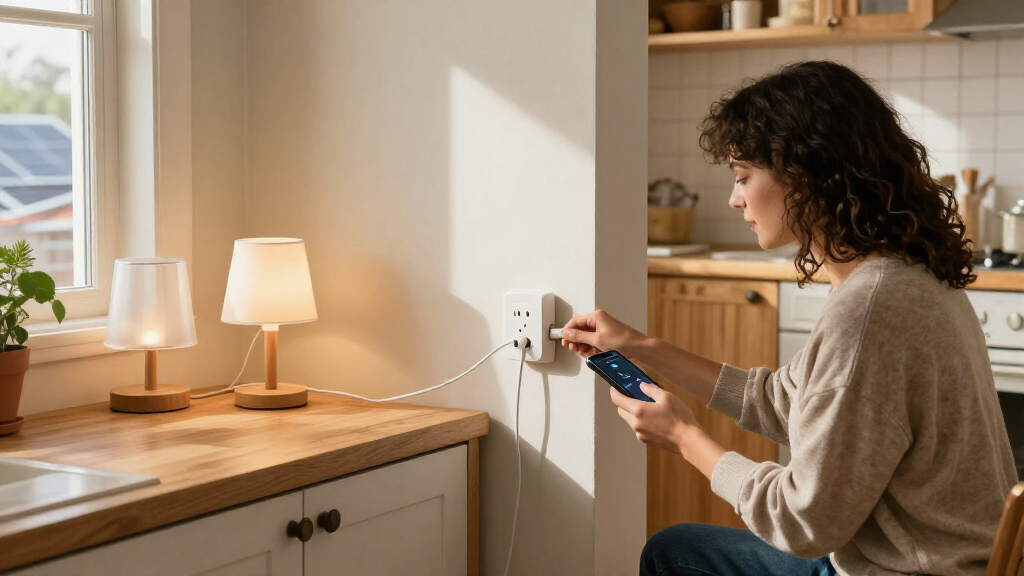
The best smart plugs with energy monitoring pair dependable outlet control with useful power data, and my best overall pick is the Tapo P115 4-Pack for its 15A rating and practical multipack format. The Kasa Matter Smart Plug stands out for buyers who want Matter compatibility, while the Emporia Wi-Fi Energy Monitoring Smart Plugs suit households that want energy tracking to play a larger role. The main tradeoffs are whether you need Matter, how much detail you want from energy reports, and whether a compact plug or a multi-pack better fits your outlets and rooms. Pack size can change the value of a choice, but the cheapest-looking bundle is not useful if its app or ecosystem does not fit your setup. Read on for my full comparison and guidance on choosing the right plug for your devices.

Get backup power and energy gear delivered free with Prime
- Fast, free delivery on millions of items
- Prime Video, Amazon Music and more included
- Member-only deals all year
Key Takeaways
- Tapo P115 is my overall pick because its 15A rating and four-plug bundle balance everyday control and broad household coverage; the two-pack is a better fit for smaller setups.
- Kasa Matter models distinguish themselves through Matter support, making them the stronger direction for shoppers who prioritize cross-platform smart-home compatibility.
- A product name that includes energy monitoring does not make every model equally suited to energy analysis; compare the companion app’s reporting and controls before buying for detailed tracking.
- Several choices come in both two- and four-packs, including Tapo P115, Govee, and Kasa Matter, so the right bundle depends on how many outlets you plan to monitor rather than pack size alone.
- Not every plug in the lineup is positioned around energy monitoring: the Kasa EP10P2 is listed as a smart plug without monitoring, so buyers seeking wattage or consumption data should verify the exact model before purchase.



| smart plugs with energy monitoring | Model | Connectivity | Pack size | Operating voltage |
|---|---|---|---|---|
| Tapo P115 Wi-Fi Smart Plug wit | P115 | 2.4 GHz Wi-Fi | 4 plugs | 110 V AC |
| Kasa Matter Smart Plug with En | KP125MP4 | Matter and 2.4 GHz Wi-Fi | 4 plugs | 120 V |
| Kasa Smart Plug Mini 15A with | EP25P4 | 2.4 GHz Wi-Fi | 4 plugs | 120 V AC |
| Kasa Smart Plug Mini with Ener | KP115 | 2.4 GHz Wi-Fi | — | 120 V AC |
| Tapo P110M Matter-Certified Sm | P110M | Matter and 2.4 GHz Wi-Fi | 4 plugs | — |
| Tapo P115 Smart Wi-Fi Plug wit | P115 | 2.4 GHz Wi-Fi | 2 plugs | 125 V |
| Govee Smart Plug with Energy M | H5086 | Wi-Fi and Bluetooth; no 5 GHz Wi-Fi | 4 plugs | — |
| Govee Smart Plug with Energy M | H5086 | Wi-Fi and Bluetooth; no 5 GHz Wi-Fi | 2 plugs | — |
| THIRDREALITY Smart Plug Gen3 | Smart Plug Gen3 | Zigbee 3.0 | 4 plugs | 110 V |
| Kasa Matter Smart Plug with En | KP125MP2 | Matter and Wi-Fi | 2 plugs | 120 V |
| Kasa Smart Wi-Fi Plug Mini 15A | EP10P2 | 2.4 GHz Wi-Fi | — | 120 V AC |
| AiSeek Smart Plug with Energy | KT-US-EM-15AP | 2.4 GHz Wi-Fi | — | 120 V |
| Emporia Wi-Fi Energy Monitorin | EMSO1-4 | 2.4 GHz Wi-Fi; 5 GHz not supported | 4 plugs | 120 V |
| Linkind Matter Smart Plug | LC09003256 | — | 4 plugs | — |
More Details on Our Top Picks
Tapo P115 Wi-Fi Smart Plug with Energy Monitoring, 4-Pack, 15A
The Tapo P115 four-pack suits buyers who want energy charts and device control in one app, with a useful extra: configurable charging cut-off for devices that should not stay powered indefinitely. Its scheduling, remote access, and voice-assistant support make it a flexible set for several rooms, while the compact body is designed to leave adjacent outlets usable. Compared with the Tapo P110M, this model lists charging cut-off and overload shutoff, whereas the P110M adds Matter support for broader smart-home platform integration. The tradeoff is that the P115 relies on 2.4 GHz Wi-Fi and its cost estimates depend on accurate settings and electricity rates. I’d choose it for app-centered tracking and charging management, not for a Matter-first setup.
Pros:- Four-plug pack makes it practical to monitor several devices around the home.
- Tapo app provides energy statistics and estimated electricity costs.
- Charging cut-off and overload shutoff add power-management and protection options.
- Compact design is intended to preserve access to neighboring outlets.
Cons:- Requires a 2.4 GHz Wi-Fi network.
- Electricity-cost estimates depend on user settings, device use, and local tariffs.
Best for: Households that want app-based usage charts and charging cut-off across several everyday devices
Not ideal for: Matter-focused smart-home owners or anyone whose network does not support 2.4 GHz Wi-Fi
- Model:P115
- Pack size:4 plugs
- Connectivity:2.4 GHz Wi-Fi
- Maximum load:1800 W
- Operating voltage:110 V AC
- Control:Tapo app, Amazon Alexa, Google Assistant, SmartThings
- Energy features:Energy monitoring, usage statistics, estimated electricity costs
- Safety features:Configurable charging cut-off and overload shutoff
- Certification:ETL
Our verdict“Choose the Tapo P115 if you want four app-managed plugs with charging cut-off, but pick the Tapo P110M if Matter support matters more.”
Kasa Matter Smart Plug with Energy Monitoring, 15A/1800W, 4-Pack
For a home already using several smart-home platforms, the Kasa KP125MP4 pairs energy monitoring with Matter compatibility across Apple Home, Alexa, Google Home, and SmartThings. Its local Matter control can keep compatible on/off commands working on the home network during an internet outage, a practical difference from plugs whose control depends more heavily on cloud access. The four-pack also gives buyers room to monitor multiple appliances without mixing plug brands. Compared with the Kasa EP25P4, this model’s standout advantage is Matter and local network control; the EP25P4 instead explicitly lists HomeKit and real-time plus historical usage. Both are limited to 2.4 GHz Wi-Fi and a 15 A, 1800 W maximum, so this is not a route to monitoring higher-load equipment. Its value is platform flexibility, not extra electrical capacity.
Pros:- Matter support spans several major smart-home platforms.
- Local Matter control can maintain compatible control on the home network when internet access is down.
- Energy monitoring adds consumption visibility to remote and voice control.
- Compact, UL-certified flame-retardant design.
Cons:- Wi-Fi connectivity requires a 2.4 GHz network.
- Maximum load is limited to 15 A or 1800 W.
Best for: Smart-home households using Matter-compatible Apple, Google, Alexa, or SmartThings systems that want four monitored outlets
Not ideal for: Buyers with devices above 1800 W or people who need Wi-Fi connectivity on a 5 GHz-only network
- Model:KP125MP4
- Pack size:4 plugs
- Maximum load:15 A / 1800 W
- Operating voltage:120 V
- Connectivity:Matter and 2.4 GHz Wi-Fi
- Compatible platforms:Apple Home, Amazon Alexa, Google Home, Samsung SmartThings
- Energy feature:Energy monitoring
- Safety:UL-certified flame-retardant design
- Warranty:2-year limited warranty
Our verdict“Pick the KP125MP4 for a four-plug Matter setup with energy tracking and local control; choose the EP25P4 if explicit HomeKit support is your priority.”
Kasa Smart Plug Mini 15A with Energy Monitoring, 4-Pack (EP25P4)
The Kasa EP25P4 is the most clearly specified choice here for households that want Apple HomeKit and Siri alongside energy tracking. It reports real-time and historical use, and its schedules, timers, and remote control can help show when an appliance draws power and limit unnecessary run time. Because it needs no hub, it is easier to add to a standard Wi-Fi setup than a system built around a separate controller. Compared with the Kasa KP125MP4, the EP25P4 names HomeKit support directly, while the KP125MP4’s stronger distinction is Matter-based local control when the internet is unavailable. The EP25P4’s stated 2.4 GHz requirement still applies, and HomeKit remote control requires an additional networked Apple device at home. Buyers outside Apple’s ecosystem may get more flexibility from the Matter model.
Pros:- Supports Apple HomeKit and Siri as well as Alexa, Google Assistant, and SmartThings.
- Provides real-time and historical energy-use information.
- Scheduling, timers, and remote control work without a hub.
- Compact, UL-certified design helps retain access to nearby outlets.
Cons:- Requires 2.4 GHz Wi-Fi.
- HomeKit remote control requires an additional networked Apple device at home.
Best for: Apple HomeKit households seeking four compact plugs with real-time and historical energy data
Not ideal for: Buyers who need HomeKit remote access but cannot keep a networked Apple device at home, or who require 5 GHz Wi-Fi
- Model:EP25P4
- Pack size:4 plugs
- Maximum load:15 A / 1800 W
- Operating voltage:120 V AC
- Connectivity:2.4 GHz Wi-Fi
- Compatible platforms:Apple HomeKit, Siri, Amazon Alexa, Google Assistant, SmartThings
- Energy monitoring:Real-time and historical usage
- Hub requirement:No hub required
- Safety and warranty:UL certified; 2-year limited warranty
Our verdict“Choose the EP25P4 if HomeKit and detailed usage history are central to your setup; choose the KP125MP4 for Matter-based local control instead.”
Kasa Smart Plug Mini with Energy Monitoring (KP115)
The Kasa KP115 is a straightforward pick for buyers who want to check an appliance’s energy use and control it through the Kasa app, Alexa, Google Home, or IFTTT. Its listed overheating protection and fireproof materials make safety features part of the appeal, while the 1800 W limit covers compatible everyday loads. Compared with the newer Kasa EP25P4, the KP115 has a simpler stated platform list and does not specify real-time and historical readings, HomeKit, or a four-pack in the supplied product details. That makes it a better fit for someone prioritizing basic Kasa app monitoring than for an Apple-focused household seeking broader controls. It also requires 2.4 GHz Wi-Fi and has no stated outdoor rating, so I’d keep it indoors and away from wet locations.
Pros:- Energy monitoring helps track connected-device power use.
- Works with Alexa, Google Home, and IFTTT.
- Overheating protection and a fireproof shell are listed safety features.
- Kasa app setup does not require a hub.
Cons:- Requires a 2.4 GHz Wi-Fi network.
- No IP rating is listed for outdoor or wet-area use.
- The supplied specifications do not state support for Apple HomeKit or detailed historical usage.
Best for: Kasa app users who want basic energy monitoring and remote control for an indoor appliance
Not ideal for: Apple HomeKit users, buyers seeking detailed usage-history specifications, or anyone needing an outdoor-rated plug
- Model:KP115
- Connectivity:2.4 GHz Wi-Fi
- Maximum load:1800 W
- Operating voltage:120 V AC
- Control and compatibility:Kasa app, Amazon Alexa, Google Home, IFTTT
- Energy feature:Real-time energy monitoring
- Dimensions:2.62 x 1.57 x 1.5 inches
- Safety certification:UL certified
- Warranty:2 years
Our verdict“Choose the KP115 for basic indoor Kasa energy monitoring, but favor the EP25P4 if you need HomeKit support and explicitly listed usage history.”
Tapo P110M Matter-Certified Smart Plugs with Energy Monitoring, 15A, 4-Pack
The Tapo P110M combines a four-plug pack with Matter compatibility, energy-use statistics, cost estimates, schedules, and configurable power thresholds. Those thresholds give it a power-management angle beyond simply checking consumption: buyers can set automation around the connected device’s draw. Its compact shape is designed to leave neighboring outlets accessible, a useful fit when several plugs share a wall plate. Compared with the Tapo P115, the P110M’s main advantage is Matter support across platforms such as Apple HomeKit, Alexa, Google Home, and SmartThings; the P115 instead lists charging cut-off and overload shutoff. The P110M is limited to 2.4 GHz Wi-Fi and 1800 W, and its monitoring and remote control depend on the app and a compatible smart-home setup. Choose it for cross-platform automation, not for the P115’s specified charging protections.
Pros:- Matter support connects with major smart-home platforms.
- Energy monitoring includes usage statistics and cost estimates.
- Configurable power thresholds and schedules support automated power management.
- Compact design is intended to avoid blocking neighboring outlets.
Cons:- Wi-Fi connectivity is limited to 2.4 GHz.
- Monitoring and remote control rely on the app and a compatible smart-home setup.
- Maximum power is 1800 W.
Best for: Matter households that want energy statistics, cost estimates, and threshold-based automation across several outlets
Not ideal for: Buyers who need charging cut-off or overload shutoff specifically, or whose Wi-Fi network lacks 2.4 GHz
- Model:P110M
- Pack size:4 plugs
- Connectivity:Matter and 2.4 GHz Wi-Fi
- Maximum power:1800 W
- Compatible platforms:Alexa, Apple HomeKit, Google Home, Samsung SmartThings
- Control:App, voice control, scheduling
- Energy features:Usage statistics and cost estimates
- Power management:Configurable power thresholds
- Certification:UL certified
Our verdict“Choose the P110M for Matter-based energy tracking and threshold automation, but pick the P115 if charging cut-off and overload shutoff are more useful to you.”
Tapo P115 Smart Wi-Fi Plug with Energy Monitoring, 2-Pack, 15A
The Tapo P115 2-pack is a strong fit when outlet space matters as much as energy tracking. Its compact body is designed to leave neighboring sockets accessible, while the Tapo app provides usage statistics and charts alongside scheduling and remote control. Compared with the Govee H5086 2-pack, the P115 adds stated compatibility with Samsung SmartThings and automatic overload shutoff; Govee instead gives more detail on monitoring power, current, and voltage and retaining historical data for up to a year. Tapo’s battery-limit charging controls also suit people managing charging routines. The tradeoff is a 2.4 GHz Wi-Fi requirement and a maximum output of 1800 W, so this is not for higher-load appliances. I’d choose it for a small, practical setup rather than the broadest monitoring history.
Pros:- Energy-use statistics and charts help identify devices that draw power over time.
- Compact design helps keep the adjacent outlet available.
- Works with Alexa, Google Assistant, and Samsung SmartThings.
- Automatic overload shutoff adds a safety measure.
Cons:- Requires a 2.4 GHz Wi-Fi network.
- The 1800 W maximum rules out appliances above its rated capacity.
Best for: Apartment dwellers and smart-home users who want two compact, app-controlled plugs with energy charts and SmartThings compatibility.
Not ideal for: People with 5 GHz-only Wi-Fi or appliances that exceed the 1800 W maximum.
- Model:P115
- Pack size:2 plugs
- Connectivity:2.4 GHz Wi-Fi
- Maximum output:15 A; 1800 W
- Operating voltage:125 V
- Energy monitoring:Yes; statistics and charts in the Tapo app
- Voice assistants:Amazon Alexa and Google Assistant
- Other compatibility:Samsung SmartThings
- Safety and certification:Automatic overload shutoff; ETL, FCC, and RoHS
Our verdict“Choose the Tapo P115 2-pack for compact energy monitoring with SmartThings support, provided your network and appliance loads fit its limits.”
Govee Smart Plug with Energy Monitoring, Wi-Fi and Bluetooth, 4-Pack
For buyers who want a fuller record of what plugged-in devices consume, the Govee H5086 4-pack stands out with monitoring for power, current, and voltage and app history that can extend up to one year. That makes it more informative for comparing usage patterns than the Tapo P115 2-pack, whose supplied details emphasize statistics and charts without specifying a year-long record. Four plugs also cover more appliances in one setup, with scheduling, group control, and Alexa or Google Assistant voice control. Bluetooth joins Wi-Fi for connectivity, and no hub is required. The tradeoffs are app dependence for setup and app-based features, plus no 5 GHz Wi-Fi support. I’d pick Govee for multi-device tracking, but not for a smart home that avoids the Govee Home app.
Pros:- Monitors power, current, and voltage rather than energy use alone.
- Historical data is available for up to one year.
- Four plugs support grouped control and scheduling across multiple devices.
- Works with Alexa and Google Assistant without a hub.
Cons:- Does not support 5 GHz Wi-Fi.
- Setup and app-based features require the Govee Home app.
- The listed operating voltage is 120 V, which may not suit other electrical systems.
Best for: Households tracking several appliances over time and wanting power, current, and voltage data in one app.
Not ideal for: Users who require 5 GHz Wi-Fi, want to avoid a brand-specific app, or need compatibility beyond Alexa and Google Assistant.
- Model:H5086
- Pack size:4 plugs
- Connectivity:Wi-Fi and Bluetooth; no 5 GHz Wi-Fi
- Voltage:120 V maximum; 110 V also listed
- Current:15 A
- Energy monitoring:Power, current, voltage, and up to one year of historical data
- Control features:Remote control, scheduling, and group control
- Voice assistants:Amazon Alexa and Google Assistant
- Certification:ETL and FCC
Our verdict“Pick this four-pack if year-long, multi-measurement tracking across several appliances matters more than app flexibility.”
Govee Smart Plug with Energy Monitoring, Wi-Fi and Bluetooth, 2-Pack
The Govee H5086 2-pack brings the same detailed monitoring approach as its four-plug sibling to buyers who only need a couple of outlets covered. The app tracks power, current, and voltage, with historical data available for up to a year; remote control, schedules, and group control add everyday utility. Against the Tapo P115 2-pack, Govee offers explicitly stated multi-measurement history, while Tapo lists Samsung SmartThings compatibility and automatic overload shutoff. This Govee version uses black, fire-resistant plastic and supports Alexa and Google Assistant without a hub. Its main compromise is the same network and app dependence as the four-pack: it uses 2.4 GHz Wi-Fi rather than 5 GHz and relies on Govee Home for setup and app features. Choose it for targeted monitoring, not platform breadth.
Pros:- Tracks power, current, and voltage with up to one year of historical data.
- Two-plug format suits a focused setup without adding unneeded outlets.
- Supports scheduling, grouped control, and remote operation.
- Fire-resistant plastic and ETL and FCC certifications are specified.
Cons:- Does not support 5 GHz Wi-Fi.
- Setup and app-based controls require the Govee Home app.
- Voice assistant support is limited to Alexa and Google Assistant.
Best for: Govee app users who need detailed energy data for one or two appliances rather than a larger home-wide rollout.
Not ideal for: Buyers seeking 5 GHz Wi-Fi, SmartThings support, or app-independent setup and monitoring.
- Model:H5086
- Pack size:2 plugs
- Connectivity:Wi-Fi and Bluetooth; no 5 GHz Wi-Fi
- Voltage:120 V; 110 V also listed
- Current:15 A
- Energy monitoring:Power, current, voltage, and up to one year of historical data
- Voice assistants:Amazon Alexa and Google Assistant
- Material:Fire-resistant plastic
- Certification:FCC and ETL
Our verdict“Choose this Govee two-pack for detailed, long-term monitoring of a small number of appliances if you are comfortable using its app.”
THIRDREALITY Smart Plug Gen3, 4-Pack with Power Monitoring
The THIRDREALITY Smart Plug Gen3 is the specialist pick here: its Zigbee 3.0 connection suits a hub-based smart home, and stated ±1% power-monitoring accuracy gives buyers a clear accuracy claim to weigh against app-first Wi-Fi options such as the Govee H5086 4-pack. Each plug also acts as a Zigbee repeater, which can help extend a mesh network while adding monitored outlets. Support includes Home Assistant, SmartThings, Hubitat, compatible Echo devices, and other listed Zigbee hubs. The cost of that flexibility is setup complexity: a compatible hub is required, unlike Govee’s hub-free plugs. There is also a specific restoration limitation: power-on state restoration is currently supported only by THIRDREALITY Hub Gen 2 and Home Assistant. I’d choose this pack for an existing Zigbee system, not as a standalone starter.
Pros:- Real-time power monitoring includes a stated ±1% detection accuracy.
- Zigbee repeater function can help extend network coverage.
- Works with several listed hub platforms, including Home Assistant and SmartThings.
- Compact design is intended to leave adjacent outlets accessible.
Cons:- Requires a compatible Zigbee hub.
- Power-on state restoration is currently limited to THIRDREALITY Hub Gen 2 and Home Assistant.
- The listed operating voltage is 110 V.
Best for: Home Assistant, SmartThings, or Hubitat users who already own a compatible Zigbee hub and want monitoring plugs that also repeat the mesh signal.
Not ideal for: Buyers without a Zigbee hub or those wanting simple direct Wi-Fi setup and broad power-on state restoration.
- Model:Smart Plug Gen3
- Pack size:4 plugs
- Connectivity:Zigbee 3.0
- Hub requirement:Compatible Zigbee hub required
- Operating voltage:110 V
- Power-monitoring accuracy:±1% stated detection accuracy
- Compatible platforms:Home Assistant, SmartThings, Hubitat, compatible Echo devices, and other listed Zigbee hubs
- Network function:Zigbee repeater
- Certification and warranty:ETL certified; 1-year warranty
Our verdict“Buy this four-pack if you already run a compatible Zigbee hub and value the repeater function alongside stated monitoring accuracy.”
Kasa Matter Smart Plug with Energy Monitoring, 15A/1800W Max, 2-Pack
The Kasa KP125MP2 2-pack makes the most sense when your household spans multiple smart-home ecosystems. Matter compatibility covers Apple Home, Alexa, Google Home, and Samsung SmartThings, while local-network control can continue after setup even when internet access is unavailable. That gives it a different advantage from the Tapo P115 2-pack, which lists SmartThings support but not the same broad Matter platform coverage. Energy monitoring is included through the Kasa app or compatible voice assistants, and the compact, UL-certified flame-retardant design helps preserve access to nearby outlets. The limit is a familiar one: 2.4 GHz Wi-Fi and a maximum of 15 A or 1800 W. I’d favor Kasa for a mixed-platform home, but not for loads above that rating.
Pros:- Matter support spans Apple Home, Alexa, Google Home, and SmartThings.
- Local-network control can continue without internet access after setup.
- Energy monitoring works through the Kasa app or compatible voice assistants.
- Compact, UL-certified flame-retardant design helps keep adjacent outlets accessible.
Cons:- Wi-Fi connectivity is limited to 2.4 GHz.
- Maximum load is 15 A and 1800 W.
- The supplied details do not specify the monitoring history duration or measurement granularity.
Best for: Households using a mix of Apple Home, Alexa, Google Home, and SmartThings that want local control and energy monitoring.
Not ideal for: Buyers with 5 GHz-only Wi-Fi or appliances that exceed 15 A or 1800 W.
- Model:KP125MP2
- Pack size:2 plugs
- Connectivity:Matter and Wi-Fi
- Wi-Fi band:2.4 GHz
- Maximum current:15 A
- Maximum wattage:1800 W
- Operating voltage:120 V
- Compatible platforms:Apple Home, Amazon Alexa, Google Home, and Samsung SmartThings
- Safety:UL-certified flame-retardant design
Our verdict“Choose the Kasa Matter two-pack for energy monitoring and local control across several major smart-home platforms, within its 1800 W limit.”
Kasa Smart Wi-Fi Plug Mini 15A, EP10P2, 2-Pack
The Kasa EP10P2 is a good fit for buyers who want two compact, app-controlled outlets, but it does not list energy monitoring. That makes it less suitable for tracking appliance consumption than the AiSeek Smart Plug with Energy Monitoring or the Emporia Wi-Fi Energy Monitoring Smart Plugs. Its strength is straightforward control: Kasa or Tapo app access, voice commands, schedules, timers, and Away Mode work without a hub. The compact body is designed to leave the neighboring outlet free, useful when a wall receptacle has limited space. Each plug supports up to 15 A and 1800 W, though that capacity does not compensate for the missing usage data if monitoring is your main goal. Choose this pair for simple automation; skip it if measuring energy use is essential.
Pros:- Compact design is intended to leave the second outlet available.
- Works over 2.4 GHz Wi-Fi without a hub.
- Supports app and voice control, schedules, timers, and Away Mode.
- UL certified and rated for loads up to 15 A.
Cons:- Energy monitoring is not listed, unlike the AiSeek and Emporia options in this roundup.
- Requires a 2.4 GHz Wi-Fi network.
- The 15 A maximum limits use with loads beyond its stated capacity.
Best for: Buyers who want two compact, hub-free plugs for scheduling and voice control and do not need energy-use tracking.
Not ideal for: Households choosing plugs mainly to measure appliance consumption; this model’s supplied features do not include energy monitoring.
- Model:EP10P2
- Pack quantity:2 plugs
- Maximum current:15 A
- Maximum wattage:1800 W
- Operating voltage:120 V AC
- Connectivity:2.4 GHz Wi-Fi
- Hub required:No
- Certifications:UL, FCC, IC, RoHS
Our verdict“Choose the EP10P2 for compact, hub-free automation in a two-plug set, but pick an energy-monitoring model if consumption data matters.”
AiSeek Smart Plug with Energy Monitoring, 15A, 2.4 GHz Wi-Fi, 4-Pack
For buyers who want energy data across several appliances, the AiSeek four-pack offers a direct route: it reports real-time power and energy use through the SmartLife app and adds schedules, timers, remote control, and group control. That monitoring makes it a more relevant pick for this roundup than the Kasa EP10P2, which offers automation but does not list energy tracking. AiSeek also gives you four plugs and supports loads up to 1800 W per its supplied data, with short-circuit and overload protection. The tradeoff is a more app-dependent setup: Alexa and Google Assistant voice control require linking through SmartLife, and the plugs need 2.4 GHz Wi-Fi. This is the practical choice for spreading monitoring across multiple devices, not for buyers who want Matter-based platform flexibility like the Linkind Matter Smart Plug.
Pros:- Tracks real-time power and energy use through the SmartLife app.
- Four-plug pack supports monitoring and control across multiple devices.
- Offers schedules, timers, remote operation, and group control.
- Includes short-circuit and overload protection and requires no hub.
Cons:- Requires a 2.4 GHz Wi-Fi connection.
- Alexa and Google Assistant control require linking through SmartLife.
- Platform support is less flexible than the Matter-based Linkind option.
Best for: Households that want to monitor energy use on several appliances and manage them together through SmartLife.
Not ideal for: Buyers who need Matter platform integration or want voice control without first linking accounts through SmartLife.
- Model:KT-US-EM-15AP
- Pack count:4 plugs
- Maximum load:1800 W
- Operating voltage:120 V
- Connectivity:2.4 GHz Wi-Fi
- App:SmartLife
- Voice assistants:Amazon Alexa, Google Assistant
- Safety:FCC certified; short-circuit and overload protection
- Warranty:2 years
Our verdict“Pick AiSeek when you want energy monitoring across four devices with group control, provided SmartLife and 2.4 GHz Wi-Fi suit your setup.”
Emporia Wi-Fi Energy Monitoring Smart Plugs, 4-Pack
The Emporia four-pack pairs energy monitoring with remote app control and scheduling, making it a useful choice for buyers already organizing household energy data through Emporia. Its key distinction is the load limit: it supports 10 A continuously, with a stated 15 A peak only for up to one hour per day. That is more restrictive than the AiSeek and Linkind plugs, both listed at 1800 W, so I would reserve Emporia for lower-draw devices and check appliance requirements before buying. Alexa and Google Assistant support add hands-free control, but the 2.4 GHz-only connection rules out 5 GHz networks. The pack is a better match for scheduled monitoring of modest loads than for high-demand appliances or buyers seeking the wider platform reach of Linkind’s Matter support.
Pros:- Monitors connected devices’ energy use through the Emporia app.
- Four plugs support remote control and on/off scheduling.
- Works with Amazon Alexa and Google Assistant.
- ETL and FCC certified.
Cons:- Continuous load is limited to 10 A, below the 15 A rating listed for AiSeek and Linkind.
- Only supports 2.4 GHz Wi-Fi.
- The 15 A peak allowance is limited to up to one hour per day.
Best for: Emporia app users who want to track and schedule lower-draw household devices across four monitored outlets.
Not ideal for: People connecting appliances that need more than 10 A continuously, or households whose Wi-Fi setup only supports 5 GHz.
- Model:EMSO1-4
- Pack size:4 plugs
- Operating voltage:120 V
- Continuous load:10 A maximum
- Peak load:15 A for up to 1 hour per day
- Wattage:1200 W
- Connectivity:2.4 GHz Wi-Fi; 5 GHz not supported
- Voice assistants:Amazon Alexa, Google Assistant
- Certifications:ETL, FCC
Our verdict“Choose Emporia for app-based energy tracking and schedules on lower-draw devices, not for appliances that need a 15 A continuous rating.”
Linkind Matter Smart Plug, 4-Pack
The Linkind four-pack is the platform-flexible pick here, with Matter support for Apple Home, Alexa, Google Home, and SmartThings, plus local network control when internet access is unavailable. Its 15 A / 1800 W capacity matches the higher load class offered by AiSeek, while Matter gives it broader smart-home integration than Emporia’s app-and-assistant approach. However, the supplied product details do not list energy monitoring, so buyers focused on tracking consumption should favor the AiSeek or Emporia instead. Linkind also has setup requirements: it uses 2.4 GHz Wi-Fi and needs IPv6, while the listed Matter platforms require a Matter-certified hub or controller. The AiDot app can be used without a hub, but that does not replace the missing energy-use feature.
Pros:- Matter support spans Apple Home, Alexa, Google Home, and SmartThings.
- Local network control can continue when internet access is unavailable.
- Rated for up to 15 A and 1800 W.
- Includes scheduling, timers, overload protection, and short-circuit protection.
Cons:- Energy monitoring is not listed, unlike the AiSeek and Emporia models.
- Requires 2.4 GHz Wi-Fi and IPv6.
- A Matter-certified hub or controller is required for several supported platforms.
Best for: Smart-home households using Apple Home, Google Home, Alexa, or SmartThings that value Matter compatibility and local control.
Not ideal for: Buyers whose main goal is measuring appliance energy use, or who lack IPv6 and a compatible Matter controller for their preferred platform.
- Model:LC09003256
- Pack size:4 plugs
- Matter support:Yes
- Compatible platforms:Apple Home, Alexa, Google Home, SmartThings, AiDot
- Wi-Fi:2.4 GHz only
- Network requirement:IPv6
- Maximum amperage:15 A
- Maximum power:1800 W
- Hub requirement:Matter-certified hub or controller for Apple Home, Alexa, Google Home, and SmartThings; AiDot app can be used without a hub
Our verdict“Choose Linkind for Matter-based smart-home control and local operation, but select AiSeek or Emporia if energy monitoring is your priority.”
How We Picked
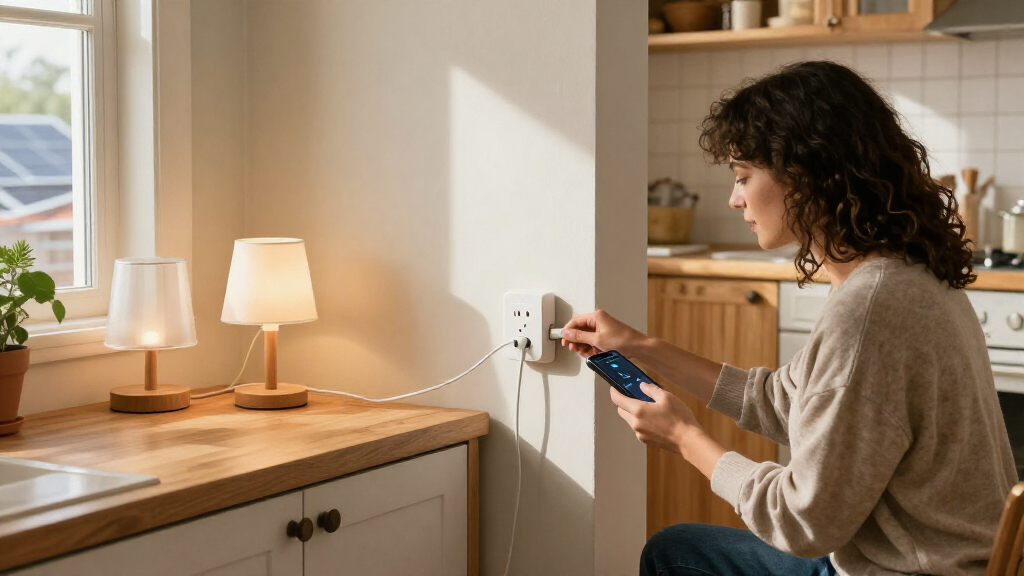
I ranked these plugs around the things that shape a useful monitoring setup: whether energy tracking is explicitly included, stated electrical capacity, smart-home compatibility, outlet-friendly design, app usability, and the practicality of each pack size. Monitoring should help a buyer understand a device’s consumption, not just switch it on and off, so I gave greater weight to options whose stated feature set clearly includes energy monitoring. Matter support earned credit for shoppers building across smart-home platforms, while a straightforward Wi-Fi option can be a better fit for people who do not need another protocol.
The order reflects those buyer priorities rather than treating all bundles as interchangeable. I favored options with a clear combination of monitoring, everyday usability, and useful coverage, then placed more specialized, less clearly differentiated, or non-monitoring models lower. I also treated a two-pack and four-pack of the same plug as different buying choices, not different levels of product performance. Product claims and regional compatibility can vary, so buyers should confirm the exact model and app features before ordering.
Factors to Consider When Choosing Smart Plugs With Energy Monitoring
Energy monitoring adds a layer of decision-making that a basic on/off plug does not provide. I would choose by matching the plug’s data, connectivity, and electrical limits to the appliance and the way you plan to use the information.
Decide What You Want the Energy Data to Tell You
Before choosing a plug, decide whether you want a quick check of current power use or ongoing consumption records that help compare devices and routines. These are different needs: a number visible in an app may not provide the history, export options, or cost estimates needed for serious tracking. Check what the app actually reports and how long it keeps the data, rather than relying on the phrase “energy monitoring” alone. If you mainly want to spot a standby load, simple readings may be enough. If you want to track a device over weeks or compare costs, app history and reporting matter more than bundle size. Avoid buying a monitoring plug for appliances whose power draw varies in ways the app cannot explain or record usefully.
Match the Plug’s Rating to the Appliance
A smart plug is not a substitute for checking an appliance’s electrical requirements. Compare the plug’s stated amperage and wattage limits with the device label, and account for the appliance’s type and how it operates. A 15A rating appears across many options here, but that does not mean every plug is suitable for every high-draw or motor-driven device. Avoid connecting equipment that exceeds the plug’s limit, and follow the manufacturer’s instructions for heaters, pumps, and other demanding loads. When a device needs a dedicated circuit or has special installation requirements, use an appropriate solution instead of assuming a plug makes it safe to control. Leave capacity headroom rather than choosing a plug whose limit is close to the appliance’s maximum draw.
Choose Matter or Wi-Fi Based on Your Smart-Home Setup
Matter can make a plug easier to include across compatible smart-home platforms, but it only helps if your controller and the plug’s required setup support the features you want. A Wi-Fi model may be simpler if you already use its manufacturer’s app and do not need cross-platform control. Check whether energy readings themselves are available through your preferred platform; compatibility with basic on/off commands does not always mean every monitoring feature appears there. Also confirm network requirements, including supported Wi-Fi band, before ordering. Buyers who mix ecosystems should prioritize verified compatibility, while people with a single-platform setup may prefer the simplest app experience. Avoid choosing by protocol label alone: the practical question is which app will show the data you intend to use.
Check Outlet Layout and Plug Dimensions
Even a compact smart plug can block a neighboring socket, especially on a crowded power strip or a double wall outlet. Compare the plug’s shape and dimensions with the outlet location, and check whether you need access to both sockets at once. A multi-pack does not solve a fit problem if each unit crowds adjacent outlets. If the plug will sit behind furniture, consider whether its indicator lights and reset button will remain accessible. Avoid using a smart plug as a workaround for an overloaded power strip or extension setup. For tight spaces, physical fit can matter more to daily convenience than a small difference in app features.
Buy the Pack Size That Matches Your Monitoring Plan
Two- and four-packs make sense for different jobs: a smaller bundle works for checking a few priority devices, while a larger one can cover a room or a group of similar appliances. Start by listing the outlets you will actually monitor, not every outlet you might someday automate. Consider whether the app presents several plugs clearly enough to compare their readings; managing many devices is less helpful if their data becomes hard to interpret. Bundles may also include models or features that differ from another product with a similar name, so verify the exact model number and monitoring support. If you are unsure whether energy tracking will change your decisions, begin with fewer plugs and expand after you have a clear use for the data.
Know When to Pay More for Monitoring and Compatibility
Paying more can make sense when a plug adds a feature you will use, such as verified Matter support or richer energy reporting in an app that fits your routine. A higher-priced option is not automatically better at measuring consumption, and a bundle with more units can be poor value if several plugs will sit unused. Compare the supported data, automation options, ecosystem fit, and outlet design before weighing the number of plugs in the package. Beginners often benefit more from an easy-to-follow app and clear setup than from advanced integrations. If all you need is remote switching, an energy-monitoring model may add complexity without changing your decisions. Spend on capabilities that solve a specific problem, not on labels alone.
Frequently Asked Questions
Will every smart-home platform show the plug’s energy readings?
No. A plug may support basic on/off control in a platform while keeping energy readings inside its own app. Before buying, check compatibility for monitoring data specifically, not only voice control or switching. Matter support can help devices work across compatible ecosystems, but feature availability can still depend on the plug, controller, and app. If you rely on one platform for energy records, confirm that the exact model exposes those readings there.
Can I use a 15A smart plug with any appliance rated below 15A?
Not automatically. The appliance’s operating characteristics and the plug maker’s instructions matter alongside the stated current limit. Some devices, especially those with motors or heating elements, may have requirements that make a general-purpose smart plug unsuitable even when the number appears to fit. Check both the appliance label and plug documentation, and do not use a plug beyond its stated load limits. If the device requires special wiring or a dedicated circuit, choose a suitable installation rather than relying on a plug.
Is energy monitoring useful if I only want to control lamps?
It can be, but the added data may not change much for a lamp that is already low-draw or used for short periods. Monitoring is more useful when you want to compare usage, spot standby consumption, or understand how a device’s schedule affects its energy use. If the main goal is remote switching, a simpler plug may meet that need with less setup. In this roundup, the Kasa EP10P2 is listed without energy monitoring, so it is not a substitute if consumption data is a requirement.
Should I buy a two-pack or a four-pack before I know how much data I need?
Start with a two-pack if you have only a few clear targets or are still learning whether the readings will affect your choices. A four-pack is more practical when you already know which several devices or outlets you want to track. Buying extra plugs can create more app clutter without producing more useful insight. The lineup includes multiple products in both bundle sizes, so compare the exact model and monitoring features rather than assuming the larger pack is a different or better device. You can expand later once you know what you want to monitor.
Do Matter smart plugs always show energy data in every Matter app?
No. Matter support does not by itself guarantee that every app or controller displays every energy feature. Check the product’s stated monitoring support and the capabilities of your chosen smart-home platform before purchase. Some buyers may need the manufacturer’s app for detailed readings even when another platform handles basic control. If energy data is the reason you are choosing Matter, verify that the specific plug exposes those readings through the system you plan to use.
Conclusion
For most buyers, I recommend the Tapo P115 4-Pack as best overall: it combines stated energy monitoring with 15A capacity and enough plugs for a small setup. The best value depends on how many outlets you need; choose a two-pack of a suitable model when you have only a couple of devices to track, rather than buying unused plugs. For a best premium direction, consider the Kasa Matter Smart Plug if cross-platform compatibility is worth prioritizing, and compare the Emporia option if energy tracking is central to your setup. Beginners should pick the app and ecosystem they already find easiest to manage, then start with a smaller bundle. For buyers with a specific need, the Govee two- or four-pack offers Wi-Fi and Bluetooth connectivity, while anyone requiring monitoring should skip the listed Kasa EP10P2 and confirm the exact model’s energy-data features before buying.